Choosing among the best resin printers for jewelry design means balancing detail, build volume, castability, workflow speed, and operating cost. A printer that produces sharp prototypes may not be the right choice for direct casting, while a castable resin can require more careful burnout and process control.
This roundup covers compact entry-level printers, high-resolution MSLA machines, larger production models, and specialized jewelry casting resins. Use the guide below to match resolution and throughput with your studio’s design and manufacturing needs.
Best 10 Resin Printers for Jewelry Design Picks for 2026
Best Detail Value

- 10K screen with 17×17μm XY pixels
- Uniform LighTurbo light source
- Four-point leveling and power-loss recovery
Best For: Detailed jewelry prototypes and beginner-friendly resin printing
Best Casting Resin

- Wax-filled for strong filigree designs
- Low-temperature, ash-free burnout
- 22μm 8K printing capability
Best For: Jewelry models intended for metal casting
Best Smart Workflow

- 9K screen with 18μm XY resolution
- Up to 150mm/h printing speed
- AI camera and WiFi cluster printing
Best For: Connected jewelry-printing workflows and studio use
Best Beginner Castable

- Wax-containing formula for easier burnout
- Good plate adhesion and easy printing
- Compatible with most LCD and DLP printers
Best For: Rings, pendants, and small castable metal parts
Best for High-Detail Production

- 16K LCD with 14 x 19 μm XY resolution
- Heated resin tank supports consistent conditions
- Automatic leveling and smart monitoring
Best For: Intricate jewelry models, larger prototypes, and repeated production
Best Balanced Detail and Usability

- 10K mono LCD with 17 x 17 μm pixels
- Balanced LighTurbo matrix light source
- Stable platform and power-loss resume
Best For: Detailed jewelry prototypes and everyday design work
Best Easy-Setup Option
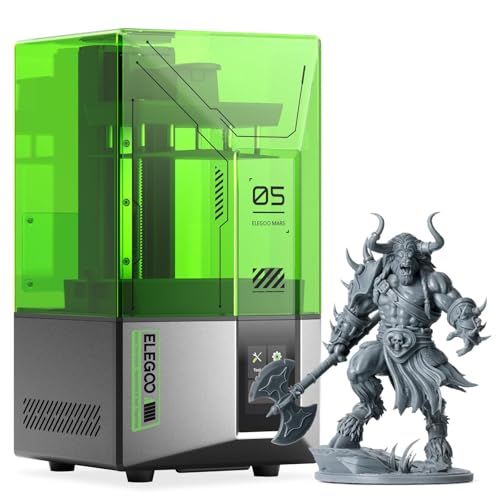
- One-click automatic leveling
- 4K mono LCD with COB light source
- Sensors and overheat protection reduce mishaps
Best For: Beginners and hobbyists prioritizing simple operation
Best Beginner Pick

- 2K LCD for detailed small prints
- Automatic calibration and leveling
- Compact magnetic build plate
Best For: Beginners and compact jewelry projects
Best Fast High-Resolution Option

- Printing speeds up to 150 mm/h
- 16K resolution with 14 × 19 μm XY detail
- AI camera and smart mechanical sensors
Best For: Fast, detailed production with automated monitoring
Best Detail Value – ANYCUBIC Photon Mono 4
For resin printers for jewelry design, the ANYCUBIC Photon Mono 4 combines a 10K monochrome screen with a stable light source to produce finely detailed models. Its generous build volume and beginner-friendly leveling system make it practical for jewelry prototypes and other small, intricate projects.
Best For: Jewelry makers who want high-resolution printing with straightforward setup and a useful build area.
Pros:
- 10K resolution with 17×17μm XY pixels for detailed designs
- Uniform LighTurbo illumination helps reduce layer lines
- Laser-engraved platform improves adhesion while keeping removal manageable
- Power-loss recovery and four-point leveling support easier operation
Cons:
- Anycubic APP service is not supported
- Resin printing still requires separate post-processing steps
The Photon Mono 4 is a strong choice when surface detail and accessible operation matter more than advanced connected features. Its 153.4 × 87 × 165mm build volume also leaves room for batches of smaller jewelry models.
Best Casting Resin – SuperCast 8K Jewelry Resin
SuperCast is a specialized option for resin printers for jewelry design when the goal is direct metal casting. Its wax-filled formula is designed for ultrafine details, low-temperature burnout, and compatibility with regular and monochrome LCD printers.
Best For: Jewelers creating filigree patterns and castable models that need clean burnout.
Pros:
- Wax-filled composition supports strong, stiff ultrafine designs
- Designed to burn out completely at a lower temperature without ash
- 22μm resolution supports high-resolution 8K printing
- Compatible with regular and mono LCD 3D printers
Cons:
- Post-curing is not recommended because it can cause incomplete burning
- This is casting resin rather than a general-purpose modeling resin
SuperCast is best viewed as a casting-focused material rather than a printer. Its no-post-cure requirement is important to account for in the workflow, but its wax content and burnout characteristics suit jewelry investment casting.
Best Smart Workflow – ELEGOO Mars 5 Ultra
For resin printers for jewelry design, the ELEGOO Mars 5 Ultra adds workflow automation to high-resolution MSLA printing. Its 9K screen, smart mechanical sensor, AI camera, and wireless file transfer can help users monitor detailed jewelry prints with less hands-on intervention.
Best For: Jewelry designers who value speed, monitoring, and connected printer management.
Pros:
- 9K screen provides 18μm XY resolution for fine model detail
- Printing speeds reach up to 150mm/h with tilt-release technology
- AI camera can detect empty plates and model warping
- WiFi transfer supports remote control and cluster printing
Cons:
- Its 24.6-pound weight makes it less portable
- Smart features add complexity compared with a basic resin printer
The Mars 5 Ultra is a capable choice for a jewelry studio that prints frequently or manages multiple machines. Its sensor and camera features are especially useful when catching interruptions, adhesion issues, or warping matters.
Best Beginner Castable – Siraya Tech Cast Resin
Siraya Tech Cast is a practical material for resin printers for jewelry design, particularly when producing rings, pendants, and other small parts for metal casting. Its wax-containing formula is designed for easier burnout, while good plate adhesion and broad printer compatibility make it approachable for new users.
Best For: Beginners and experienced makers producing castable jewelry models on LCD or DLP printers.
Pros:
- Wax content makes the material easier to burn out
- Good plate adhesion supports a simpler printing process
- High-resolution purple prints have a smooth surface
- Works with most LCD and DLP printers and is 8K capable
Cons:
- Castable resin is specialized for casting rather than everyday prints
- Burnout and casting still require an appropriate jewelry workflow
Siraya Tech Cast offers a balanced entry point for jewelry casting projects. It does not require a very dry environment or special additive according to the supplied specifications, which can simplify setup for makers developing rings, pendants, or small metal parts.
Best for High-Detail Production – Saturn 4 Ultra 16K
For jewelry designers who need exceptionally fine detail and a larger working area, the ELEGOO Saturn 4 Ultra 16K is a strong option among resin printers for jewelry design. Its 16K screen, heated resin tank, and automatic leveling support detailed, repeatable printing.
Best For: Designers producing intricate jewelry models, larger batches, or detailed prototypes.
Pros:
- 16K LCD with 14 x 19 μm XY resolution for highly detailed models
- Heated resin tank helps maintain printing conditions when temperatures fall below 25°C
- Automatic leveling, self-checks, resin monitoring, and power-resume features simplify operation
- Up to 150 mm/h printing speed with Wi-Fi transfer and cluster-printing support
Cons:
- Its 35.4-pound weight and larger footprint require substantial workspace
- The extensive feature set may be more than beginners need for occasional projects
The Saturn 4 Ultra 16K is best suited to serious jewelry workflows where detail, print volume, and monitoring features matter. Its heated tank and automation are especially useful for improving consistency across repeated prints.
Best Balanced Detail and Usability – Photon Mono 4
The ANYCUBIC Photon Mono 4 combines a detailed 10K display with a compact, approachable design, making it a practical choice among resin printers for jewelry design. Its stable build platform and pre-shipment calibration help reduce setup friction.
Best For: Jewelry designers seeking fine detail, a moderate build volume, and straightforward operation.
Pros:
- 7-inch 10K mono LCD provides 17 x 17 μm XY pixels for detailed models
- LighTurbo matrix lighting is designed for balanced exposure and smoother surfaces
- Build platform is engineered to improve adhesion while simplifying model removal
- Power-loss resume and a 153.4 x 87 x 165 mm build volume support practical workflows
Cons:
- Its build volume is smaller than the Saturn 4 Ultra 16K
- It requires first leveling after unboxing despite being assembled and tested before shipment
With its strong resolution, manageable size, and stability-focused platform, the Photon Mono 4 offers a well-rounded starting point for detailed jewelry prototypes and everyday design work.
Best Easy-Setup Option – Mars 5 4K
The ELEGOO Mars 5 emphasizes simple setup and print safeguards, making it a sensible entry point for resin printers for jewelry design. One-click automatic leveling, self-checks, and a 4K mono LCD help beginners move from model preparation to printing with fewer setup hurdles.
Best For: Beginners and hobbyist jewelry designers who prioritize easy operation and reliable safeguards.
Pros:
- One-click automatic leveling reduces calibration work
- 4K mono LCD and COB light source reproduce intricate details
- Mechanical sensors detect residue, resin shortages, and leveling failures
- Overheat protection stops printing if LED temperature exceeds 80°C
Cons:
- Its 4K resolution is lower than the 10K and 16K alternatives in this roundup
- The supplied notes do not specify its build volume or printing speed
The Mars 5 is a straightforward choice when convenience and protective monitoring outweigh maximum resolution. It is particularly appealing for new users making smaller, detail-focused jewelry projects.
Best Beginner Pick – MALYAN S100 Mini
For shoppers comparing resin printers for jewelry design, the MALYAN S100 is a compact entry-level option focused on straightforward setup and detailed small prints. Its 2K LCD, 57W parallel LED array, and 115 × 65 × 110 mm build area suit smaller projects, while automatic calibration and leveling simplify the initial workflow.
Best For: Beginners and jewelry makers working on compact models or small batches.
Pros:
- 2K LCD and upgraded parallel lighting support fine details and smoother surfaces.
- Automatic calibration and leveling help streamline setup.
- Magnetic, laser-engraved build plate is designed for easier removal and stronger adhesion.
- Compact size and 7.7-pound weight fit smaller workspaces.
Cons:
- The 115 × 65 × 110 mm build volume limits larger designs and batch sizes.
- As an entry-level 2K printer, it offers less resolution than the 16K models in this roundup.
The S100 is a practical starting point when ease of use and a small footprint matter most. Match resin-specific printing parameters carefully to help improve print success.
Best Large-Format Detail – ELEGOO Jupiter 2
The ELEGOO Jupiter 2 is a large-format choice for resin printers for jewelry design when you need substantial capacity for bigger pieces or multiple models in one job. Its 302.4 × 161.98 × 300 mm build volume combines with 16K resolution, temperature management, and automated resin handling for a feature-rich workflow.
Best For: Studios producing larger jewelry components, multiple pieces, or sizeable batches.
Pros:
- Large build volume accommodates bigger objects and multiple smaller prints.
- 16K resolution with 20 × 26 μm XY resolution targets highly detailed results.
- Multi-point auto leveling and smart tank heating simplify print preparation.
- Resin shortage, residue detection, and leveling failure alarms add operational safeguards.
Cons:
- At 63.8 pounds, it is substantially heavier and less portable than compact printers.
- The large footprint requires considerable workspace.
- Its extensive feature set may be more than beginners need.
Choose the Jupiter 2 when production capacity is as important as fine detail. The enclosed design, quick-release build plate, Wi-Fi, and monitoring features are especially useful for a dedicated workspace.
Best Fast High-Resolution Option – ELEGOO Saturn 4 Ultra 16K
For resin printers for jewelry design that balance detailed output with production speed, the ELEGOO Saturn 4 Ultra 16K offers a feature-rich option. Tilt-release technology supports printing speeds up to 150 mm/h, while the 16K mono LCD, 14 × 19 μm XY resolution, and 92% COB light uniformity target precise results.
Best For: Makers who want high-resolution prints, faster turnaround, and automated oversight.
Pros:
- Up to 150 mm/h printing speed can shorten production cycles.
- 16K screen and 14 × 19 μm XY resolution support fine jewelry details.
- One-click calibration and smart sensors help detect resin, debris, temperature, and leveling issues.
- AI camera enables monitoring for empty build plates and model warping.
Cons:
- Its 40.7-pound weight and sizeable dimensions demand dedicated space.
- The advanced monitoring and heating features may be unnecessary for occasional users.
- Fast printing does not remove the need to prepare models and resin settings appropriately.
The Saturn 4 Ultra is a strong fit for users prioritizing throughput without giving up very fine resolution. Automatic resin heating to 25°C and power-loss recovery add convenience for longer print sessions.
How We Picked the Best Resin Printers for Jewelry Design
We focused on the characteristics that matter most for jewelry workflows: LCD resolution, pixel size, repeatability, build volume, leveling and sensing features, print speed, and compatibility with dependable resin-processing software. We also included castable and wax-filled materials because the printer is only one part of a successful lost-wax or resin casting workflow.
Resolution alone does not guarantee a successful ring, pendant, or filigree model. Exposure calibration, supports, washing, curing, burnout, and investment technique all affect the final result. The strongest choices offer a useful combination of fine detail, stable operation, and a workflow appropriate to the user’s experience.
Quick Comparison
| Best For | Look For | Recommended Type |
|---|---|---|
| Small studios and beginners | Simple leveling, guided setup, manageable footprint | Compact 2K–9K MSLA printer |
| Fine prototypes and master models | High XY resolution and consistent exposure | 10K–16K resin printer |
| Multiple pieces or larger models | Large build plate and dependable throughput | Large-format 16K printer |
| Direct casting | Low-ash, castable or wax-filled resin compatibility | Jewelry-specific castable resin |
Key Buying Factors for Resin Printers for Jewelry Design
Resolution and Surface Detail
Higher LCD resolution and smaller pixel size can preserve engraving, prongs, pavé details, and delicate textures. However, model orientation and support placement remain equally important. Look for a printer with reliable exposure control rather than choosing solely by its advertised pixel count.
Build Volume and Workflow
A compact printer can be ideal for individual rings and small prototypes, while a larger machine is more efficient for batches, larger jewelry models, or production tooling. Consider the space required for the printer, wash station, curing equipment, ventilation, and resin storage.
Material Compatibility
Standard gray or detail resin is useful for visual prototypes, but it is not automatically suitable for burnout. For casting, choose a resin specifically designed for jewelry and follow its exposure, washing, curing, investment, and burnout instructions. Wax-filled formulations may behave differently from conventional castable resins.
Ease of Use and Safety
Auto-leveling, mechanical sensors, resin-vat monitoring, and remote controls can reduce setup errors, especially for new users. All resin printing still requires gloves, eye protection, ventilation, careful handling of uncured resin, and proper disposal of contaminated materials.
Who Should Buy Which Resin Printers for Jewelry Design?
Beginners and hobby jewelers: Choose a smaller, easier-to-level printer with affordable consumables and a straightforward setup. It is the practical starting point for learning supports, exposure calibration, and post-processing.
Designers focused on intricate prototypes: Prioritize a 10K or 16K machine with strong detail reproduction and stable layer exposure. These printers are well suited to presentation models, fit checks, and highly detailed masters.
Jewelry businesses and batch users: Select a larger-format printer when throughput matters more than minimum footprint. A larger build plate can reduce the number of print runs, provided the machine fits your ventilation and post-processing setup.
Direct-casting workflows: Pair a compatible printer with a proven jewelry castable or wax-filled resin. Confirm the resin’s required exposure profile and burnout schedule before committing to production, and test the complete investment-and-furnace process on noncritical pieces first.