Engineering students need more than sharp-looking miniatures from a resin printer. The right model should produce accurate prototypes, fit a realistic student budget, and offer a manageable workflow for classrooms, workshops, or home labs.
This roundup compares ten strong options across resolution, build volume, speed, automation, and bundled post-processing equipment so you can choose a printer that matches your projects and experience level.
Best 10 Resin Printers for Engineering Students Picks for 2026
High-Resolution Workhorse

- 16K resolution with 14 x 19 μm XY detail
- Large 8.33 x 4.66 x 8.66-inch build area
- Heated tank, AI camera, and automatic leveling
Best For: Detailed prototypes and larger engineering models
Precision-Focused Platform

- Ball screws and precision rails reduce vibration
- LighTurbo 4.0 targets sharp, uniform exposure
- AI checks and intelligent leveling aid reliability
Best For: Precision-focused coursework and repeatable prints
Complete Prototyping Bundle
Saturn 4 Ultra with Mercury Plus

- Pairs a 16K printer with wash-and-cure equipment
- Includes a 7.5-liter Mercury Plus station
- Offers 30°C tank heating and a large build area
Best For: Students creating a complete resin-printing workstation
Accessible Detail Starter

- 10K LCD with 17 x 17 μm XY pixels
- Compact 153.4 x 87 x 165 mm build volume
- Pre-tested setup with power-loss resume
Best For: Beginners and compact student workspaces
High-Detail Workhorse

- 12K resolution with 19 × 24 μm XY detail
- Large 218.88 × 122.88 × 250 mm build volume
- Uniform COB/Fresnel light and strong plate adhesion
Best For: Detailed prototypes and larger technical models
Fast Precision Pick

- 10K LCD with 17 × 17 μm pixels
- Up to 120 mm/h with High Speed Resin 2.0
- Self-check features and multilingual touch interface
Best For: Fast, detailed prototype iterations
Beginner-Friendly Choice
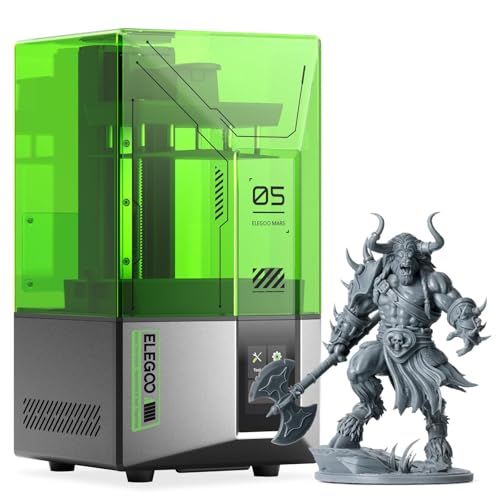
- One-click automatic leveling simplifies setup
- Self-checks and residue detection reduce printing issues
- 4K mono LCD with COB light source for detailed models
Best For: New users making compact engineering prototypes
Best Detail-and-Workflow Bundle

- 10K resolution with 17 × 17 μm XY pixels
- Includes Wash & Cure 3.0 with a 4L bucket
- 153.4 × 87 × 165 mm build volume
Best For: Detailed student prototypes with streamlined post-processing
Best Smart High-Speed Option

- Prints up to 150 mm/h
- 14 × 19 μm XY resolution from a 16K LCD
- AI camera and smart mechanical sensor
Best For: Fast, monitored prototype iteration
Best Large-Format Production Choice

- 33 × 18.5 × 30 cm build plate
- 43 μm detail from a 15-inch 8K LCD
- Built-in drip hanger for resin recovery
Best For: Large batches and oversized student prototypes
High-Resolution Workhorse – Saturn 4 Ultra 16K
For engineering students who need resin printers for engineering students projects involving detailed prototypes, the ELEGOO Saturn 4 Ultra 16K combines very high resolution with a comparatively large build area. Automatic resin heating, leveling, monitoring, and Wi-Fi transfer make it a practical choice for repeated technical prints.
Best For: Detailed engineering prototypes, larger assemblies, and students who value automated monitoring.
Pros:
- 16K LCD provides 14 x 19 μm XY resolution for intricate models.
- Large 8.33 x 4.66 x 8.66-inch printing volume.
- Automatic resin-tank heating helps maintain printing conditions below 25°C.
- AI camera, automatic leveling, power-loss resume, and Wi-Fi transfer support easier operation.
Cons:
- At 35.4 pounds, it is relatively heavy to move between workspaces.
- Its advanced feature set may be more than needed for basic student projects.
The Saturn 4 Ultra 16K is a strong fit when fine detail, build capacity, and workflow automation matter more than portability. Its heated tank and monitoring features can also reduce hands-on oversight during longer prints.
Precision-Focused Platform – Photon P1 14K
The ANYCUBIC Photon P1 is one of the resin printers for engineering students suited to precision-oriented coursework. Its ball-screw structure, precision rails, calibrated lighting, and intelligent leveling system are designed to support stable, repeatable model production.
Best For: Students prioritizing dimensional consistency, intricate details, and guided setup.
Pros:
- Industrial-grade ball screws and precision guide rails help dampen vibration.
- 14K-class LighTurbo 4.0 lighting targets sharp details and over 92% illumination uniformity.
- Intelligent Leveling 3.0 includes pre-print checks and four-corner force values.
- AI-assisted inspections can detect build-plate issues, separation, resin levels, and residue.
Cons:
- The supplied notes do not specify its build volume or exact XY resolution.
- Its precision-focused systems may be unnecessary for simple, low-detail prints.
The Photon P1 emphasizes controlled mechanics and preventative checks rather than simply listing speed. That makes it appealing for engineering students who want assistance with calibration and early detection of common print problems.
Complete Prototyping Bundle – Saturn 4 Ultra with Mercury Plus
ELEGOO Saturn 4 Ultra 16K Resin 3D Printer and ELEGOO Mercury Plus V3.0 Wash and Cure Station
Check Price On AmazonEngineering students comparing resin printers for engineering students should consider the post-processing workflow as well as print quality. This bundle pairs the ELEGOO Saturn 4 Ultra 16K with a Mercury Plus V3.0 wash-and-cure station, creating a more complete setup for printing, washing, and curing resin prototypes.
Best For: Students building a dedicated resin-printing workspace and needing integrated post-processing.
Pros:
- Includes the Saturn 4 Ultra 16K printer and Mercury Plus V3.0 wash-and-cure station.
- Printer offers a large 8.33 x 4.66 x 8.66-inch build area.
- Smart tank heating at 30°C supports more consistent resin conditions.
- Mercury Plus provides a 7.5-liter capacity and broad printer compatibility.
Cons:
- The bundle requires more workspace than the printer alone.
- It may be unnecessary if you already own suitable washing and curing equipment.
This package is particularly practical for students starting from scratch because it addresses the main print and post-print stages together. It is a better fit for a permanent lab or workshop setup than a highly portable arrangement.
Accessible Detail Starter – Photon Mono 4
The ANYCUBIC Photon Mono 4 offers a straightforward entry point for engineering students seeking resin printers for engineering students projects without stepping up to a larger machine. Its 10K display, stable light source, compact build volume, and pre-shipment testing support detailed everyday prototypes.
Best For: Beginners, compact workspaces, and routine student-scale models.
Pros:
- 7-inch 10K mono LCD delivers 17 x 17 μm XY pixel detail.
- LighTurbo matrix lighting is designed for stable, uniform exposure.
- 153.4 x 87 x 165 mm build volume accommodates many coursework models.
- Pre-assembled calibration, power-loss resume, one-year warranty, and lifetime technical support add convenience.
Cons:
- Its build volume is smaller than the Saturn models in this roundup.
- It lacks the supplied notes’ automatic resin heating and AI camera features.
The Photon Mono 4 is a sensible choice when affordability, manageable size, and reliable basic operation are priorities. It provides strong stated resolution for small-to-medium prototypes while keeping the setup relatively uncomplicated.
High-Detail Workhorse – Saturn 3 12K
For engineering students choosing resin printers for engineering students, the ELEGOO Saturn 3 stands out when detailed prototypes and larger project parts matter. Its 12K display, generous build volume, and uniform light source support precise, consistent printing.
Best For: Students printing detailed prototypes, larger assemblies, and ambitious technical models.
Pros:
- 12K mono LCD with 19 × 24 μm XY resolution for intricate details.
- Generous 218.88 × 122.88 × 250 mm build volume.
- COB and Fresnel light system provides over 90% light uniformity.
- Laser-carved build plate is designed for strong print adhesion.
Cons:
- At 33 pounds, it is less convenient to move between workspaces.
- The larger format may require more desk space than compact resin printers.
The Saturn 3 is a strong fit for engineering coursework that benefits from both fine detail and a taller, roomier build area. Its third-party slicer compatibility also adds workflow flexibility.
Fast Precision Pick – Photon Mono 4 Ultra
The ANYCUBIC Photon Mono 4 Ultra is a practical option among resin printers for engineering students who want fine detail with a faster workflow. Its 10K screen, precision motion components, self-check features, and support for speeds up to 120 mm/h make it well suited to frequent model iterations.
Best For: Students prioritizing detailed prints, quick iterations, and simpler operation.
Pros:
- 10K LCD delivers 17 × 17 μm pixel detail.
- COB light source and Fresnel lens provide at least 90% light uniformity.
- Maximum speed reaches 120 mm/h with High Speed Resin 2.0.
- Intelligent self-check functions and an eight-language interface simplify operation.
Cons:
- Its 7-inch screen and listed specifications provide less detail and scale than the Saturn 3’s 12K, larger-format setup.
- The stated top speed depends on using High Speed Resin 2.0.
Choose the Photon Mono 4 Ultra when productivity and approachable controls are as important as precision. It combines a compact 7-inch 10K format with features intended to reduce setup and release-related friction.
Beginner-Friendly Choice – Mars 5 4K
For students new to resin printers for engineering students, the ELEGOO Mars 5 emphasizes straightforward setup and print monitoring. Automatic leveling, one-click self-checks, residue detection, and a 4K mono LCD make it a practical entry point for classroom prototypes and smaller projects.
Best For: Beginners who want guided setup, safety alerts, and reliable detail for compact models.
Pros:
- One-click automatic leveling reduces calibration work.
- Residue detection, resin-shortage alerts, and leveling-failure alarms help limit waste.
- 4K mono LCD with COB lighting reproduces intricate details.
- Overheat protection pauses printing if LED temperature exceeds 80°C.
Cons:
- Its 4K LCD offers less stated resolution than the 10K and 12K alternatives.
- The supplied notes do not specify its build volume or maximum printing speed.
The Mars 5 is especially appealing when ease of use and safeguards outweigh maximum resolution or documented throughput. Its automated checks can help students spend less time troubleshooting and more time iterating.
Best Detail-and-Workflow Bundle – ANYCUBIC Photon Mono 4
For engineering students seeking resin printers for engineering students, the ANYCUBIC Photon Mono 4 bundle combines fine 10K resolution with a dedicated wash-and-cure station. Its 153.4 × 87 × 165 mm build volume suits detailed prototypes and regular coursework projects, while the included Wash & Cure 3.0 streamlines post-processing.
Best For: Students who want high-detail prints and an integrated washing and curing workflow.
Pros:
- 10K resolution with 17 × 17 μm XY pixels for detailed models
- Uniform LighTurbo illumination helps reduce layer lines
- Wash & Cure 3.0 has a 4L cleaning bucket and larger basket capacity
- Gooseneck curing light strengthens curing on subtle model areas
Cons:
- Build volume is smaller than the larger-format printers in this roundup
- Its detailed resin workflow still requires washing and curing after printing
This is a practical all-in-one choice for students prioritizing surface detail and a less fragmented post-processing setup over maximum print size or production speed.
Best Smart High-Speed Option – ELEGOO Saturn 4 Ultra 16K
For engineering students comparing resin printers for engineering students, the ELEGOO Saturn 4 Ultra 16K emphasizes speed, precision, and automated monitoring. Tilt-release technology supports printing up to 150 mm/h, while the 14 × 19 μm XY resolution is suited to fine prototype details.
Best For: Students who value fast iterations, automated checks, and consistent resin temperature.
Pros:
- Print speeds up to 150 mm/h with fast and slow modes
- 16K mono LCD provides 14 × 19 μm XY resolution
- Smart sensor supports one-click calibration and detects several print issues
- Built-in AI camera monitors for empty plates and model warping
Cons:
- At 40.7 pounds, it is relatively heavy for moving between workspaces
- Advanced features may be more than beginners need for occasional printing
Its combination of high resolution, rapid printing, power-loss recovery, and resin tray heating makes it especially appealing when coursework involves repeated prototype revisions.
Best Large-Format Production Choice – Phrozen Sonic Mega 8K S
For engineering students who need resin printers for engineering students with substantial capacity, the Phrozen Sonic Mega 8K S offers a 33 × 18.5 × 30 cm build plate and 43 μm XY resolution. Its large workspace can support batches of models or bigger prototypes, while the lift-up lid and drip hanger help manage a crowded workspace.
Best For: Advanced student labs, teams, or projects requiring large batches and oversized resin prints.
Pros:
- Large 33 × 18.5 × 30 cm printing volume
- 15-inch 8K mono LCD delivers 43 μm XY resolution
- Designed for high-volume output, including up to 80 miniatures in 90 minutes
- Built-in metal drip hanger helps recover excess resin
Cons:
- Its 57.3-pound weight makes relocation difficult
- Large-format capacity may be unnecessary for basic individual coursework
- Fast-printing claims depend on the ACF film and TR300 high-speed resin workflow
This is the strongest fit when scale and throughput matter more than portability. Its industrial-style capacity can serve team projects, lab work, and repeated prototype batches, provided the workspace can accommodate it.
How We Picked the Best Resin Printers for Engineering Students
We focused on the features that matter most for student engineering work: dimensional detail, usable build volume, print consistency, setup requirements, safety considerations, and total cost. Resolution is important for fine features, but it is only one part of the decision. A printer also needs dependable leveling, practical software support, replacement parts, and a workflow that students can manage between classes.
The selection includes compact entry-level printers, high-resolution mid-size machines, bundled wash-and-cure packages, and large-format options for producing bigger prototypes or multiple parts in one batch.
Quick Comparison
- Best overall balance: ELEGOO Saturn 4 Ultra 16K
- Best beginner-friendly option: ELEGOO Mars 5
- Best compact value: ANYCUBIC Photon Mono 4
- Best printer-and-post-processing bundle: ANYCUBIC Photon Mono 4 with Wash & Cure 3.0
- Best for fast, detailed prototyping: ELEGOO Saturn 4 Ultra models
- Best for large parts and batch production: Phrozen Sonic Mega 8K
Key Buying Factors for Resin Printers for Engineering Students
Resolution and Dimensional Detail
Higher pixel resolution can help with small mechanical features, text, holes, and surface transitions. However, exposure settings, resin formulation, calibration, and support placement also affect accuracy. Choose a high-resolution model when intricate parts are central to your coursework; otherwise, a 10K or 12K printer may offer better value.
Build Volume
Measure the largest parts you expect to print before buying. Compact printers suit brackets, housings, scaled components, and individual prototypes. Larger Saturn and Mega models are more useful for oversized parts or printing several components simultaneously, but they require more workspace and resin.
Speed and Workflow
Fast printing is valuable when project deadlines are tight, but the complete workflow includes slicing, washing, curing, support removal, and cleanup. A bundled wash-and-cure station can make a major difference in a dorm-compatible or shared workspace.
Safety and Operating Cost
Resin printing requires ventilation, nitrile gloves, eye protection, careful spill control, and proper curing and disposal practices. Also budget for resin, wash solution, build-plate accessories, replacement films, and failed prints. An inexpensive printer may cost more over time if consumables or cleanup equipment are overlooked.
Who Should Buy Which Resin Printers for Engineering Students?
Choose the ELEGOO Mars 5 or ANYCUBIC Photon Mono 4 if you are new to resin printing, have limited space, or mainly print small detailed components. Choose a Saturn 4 Ultra, Saturn 3 MSLA, or Photon Mono 4 Ultra if you need a stronger balance of detail, capacity, and productivity for regular coursework.
Choose a bundle with a wash-and-cure station if you want a simpler end-to-end setup and do not already own post-processing equipment. Choose the Phrozen Sonic Mega 8K when large prototypes, high-volume batches, or an expansive build area justify the additional cost, space, and resin consumption.