The best VR headset for gaming depends on how you play. Wireless standalone models offer simple setup and room-scale freedom, while PC-connected headsets can deliver sharper visuals and deeper simulator immersion.
We compared these 10 models across display quality, tracking, comfort, game compatibility, connectivity, and value to help you choose the right headset for your budget and gaming setup.
Best 10 Vr Headset for Gaming Picks for 2026
Best Budget-Friendly Pick
Meta Quest 3S 128GB Gorilla Tag Bundle

- Standalone, cable-free VR gaming
- Snapdragon XR2 Gen 2 and 8GB RAM
- Includes Gorilla Tag content and 3-month trial
Best For: Casual gaming and mixed reality without a PC
Best for Simulation Detail
Pimax Crystal Super VR Headset

- 3840x3840 resolution per eye
- 140-degree field of view
- Eye tracking and up to 90Hz refresh rate
Best For: PC flight and racing simulators
Best Storage Upgrade
Meta Quest 3 512GB Gorilla Tag Bundle

- 512GB storage for a larger library
- Wireless standalone VR and mixed reality
- Includes Gorilla Tag content and 3-month trial
Best For: Frequent players who want extra storage
Best Hybrid PC VR Option

- Standalone and wired PC VR support
- Full-color passthrough with depth sensor
- Includes fit and facial-interface accessories
Best For: Gamers switching between standalone and PC VR
Best for Visual Fidelity
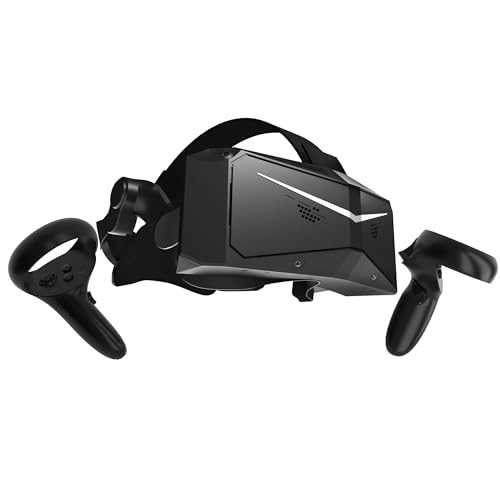
- 2880 x 2880 resolution per eye
- QLED with local dimming and HDR
- SteamVR-compatible PC headset
Best For: PC gamers and simulation enthusiasts who prioritize clarity
Best Standalone Value
Meta Quest 3 512GB Renewed Premium

- Wireless standalone VR gaming
- 512GB storage capacity
- Full-color mixed-reality passthrough
Best For: Players seeking portable, cable-free VR
Best for Comfort

- Standalone and DisplayPort PC VR
- 2448 x 2448 resolution per eye
- Hot-swappable battery system
Best For: Gamers who want flexible standalone and PC VR play
Best All-Around Pick
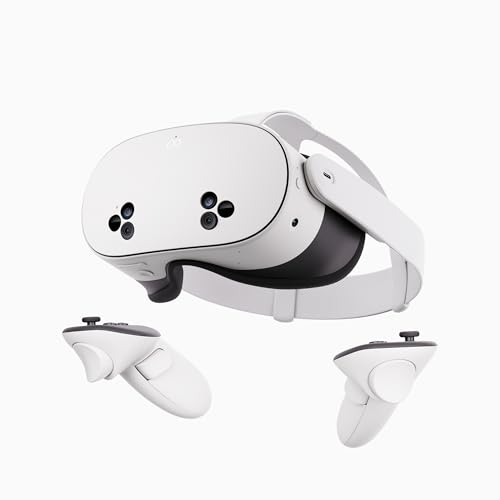
- Standalone wireless design with Snapdragon XR2 Gen 2
- Full-color passthrough for mixed-reality gaming
- Includes a 3-month trial for a 40+ game catalog
Best For: Gamers seeking a modern wireless VR experience
Premium Mixed-Reality Pick

- Pancake lenses and advanced display technologies
- Self-tracking Touch Pro Controllers with haptics
- 256GB storage and 12GB RAM for broader VR use
Best For: VR enthusiasts who want premium gaming and mixed reality
Value Storage Pick

- Standalone headset with 256GB of storage
- 1832 x 1920 resolution per eye at 90Hz
- Includes grip covers and adjustable knuckle straps
Best For: Budget-focused gamers who want ample storage
Best Budget-Friendly Pick – Meta Quest 3S 128GB Gorilla Tag Bundle
The Meta Quest 3S is a practical vr headset for gaming if you want a standalone system without cables. Its Snapdragon XR2 Gen 2 platform, 8GB of RAM, full-color passthrough, and included controllers support both immersive games and mixed-reality experiences.
Best For: Casual and family gaming, mixed reality, and shoppers wanting a cable-free headset with a game bundle.
Pros:
- Standalone design requires no gaming PC or wired connection.
- Snapdragon XR2 Gen 2 processor and 8GB of RAM support responsive gameplay.
- Includes Gorilla Tag content and a three-month Meta Horizon+ trial.
- Dual RGB cameras provide full-color passthrough.
Cons:
- 128GB storage is more limited than the 512GB Quest 3.
- Battery life is approximately 2 to 2.5 hours.
- Display resolution is lower than the Meta Quest 3.
The Quest 3S focuses on easy, untethered access to VR and mixed reality. It is a strong fit when convenience, included content, and standalone play matter more than maximum storage or display detail.
Best for Simulation Detail – Pimax Crystal Super VR Headset
The Pimax Crystal Super is a high-resolution vr headset for gaming designed for PC users who prioritize visual clarity and peripheral vision. Its 3840×3840-per-eye QLED display, 50 PPD lenses, 140-degree field of view, and DisplayPort connection are especially suited to demanding flight and racing simulations.
Best For: PC-based flight and racing simulators, competitive simulation play, and users with a powerful Windows gaming computer.
Pros:
- 3840×3840 resolution per eye and 50 PPD target sharp, detailed visuals.
- 140-degree field of view expands peripheral awareness.
- Eye tracking and dynamic FOV optimization can help balance performance and GPU demands.
- Supports refresh rates up to 90Hz and includes spatial audio.
Cons:
- Requires a Windows PC and wired DisplayPort connection.
- High-resolution output may demand substantial GPU performance.
- Designed for PC VR rather than standalone play.
The Crystal Super is aimed at enthusiasts who want an expansive, sharp view for simulator cockpits and fast-moving scenarios. It makes the most sense when you already have compatible PC hardware and value image quality over portability.
Best Storage Upgrade – Meta Quest 3 512GB Gorilla Tag Bundle
The Meta Quest 3 is a versatile vr headset for gaming with standalone operation, 512GB of storage, and mixed-reality features. Its Snapdragon XR2 Gen 2 processor, 4K+ display, 120Hz support, and full-color passthrough make it suitable for a broad library of games and fitness experiences.
Best For: Players who want substantial game storage, wireless gaming, mixed reality, and access to both standalone and compatible connected devices.
Pros:
- 512GB capacity provides room for a larger installed game library.
- Standalone, wire-free design supports flexible play.
- Includes Gorilla Tag content and a three-month Meta Horizon+ trial.
- Snapdragon XR2 Gen 2, 8GB RAM, and up to 120Hz support smooth, responsive experiences.
Cons:
- Battery life is approximately 2.2 hours.
- LCD display may not deliver OLED-style black levels.
- Full performance still depends on the capabilities of compatible connected devices for PC-based use.
Compared with the Quest 3S, this model’s main practical advantage is its larger storage capacity and higher-resolution display. It is a compelling all-around choice for users who expect to keep many games installed and want room for mixed-reality content.
Best Hybrid PC VR Option – HTC Vive XR Elite Deluxe Pack
HTC Vive XR Elite with Deluxe Pack — Mixed Reality and PC VR Headset + Controllers
Check Price On AmazonThe HTC Vive XR Elite is a flexible vr headset for gaming that combines standalone XR play with wired PC VR. It offers 3840×1920 combined resolution, a 110-degree field of view, 90Hz refresh rate, inside-out tracking, and a Deluxe Pack with additional fit and facial-interface accessories.
Best For: Gamers who want one headset for standalone mixed reality and low-latency PC VR, with adjustable fit and replaceable battery support.
Pros:
- Supports both standalone XR and PC VR without base stations.
- Full-color passthrough and a depth sensor enable mixed-reality experiences.
- Stepless IPD and diopter adjustments help personalize viewing comfort.
- Hot-swappable battery and Deluxe Pack accessories support longer sessions and fit customization.
Cons:
- Battery life is up to approximately 2 hours.
- PC VR requires a compatible Windows gaming computer and USB connection.
- 128GB storage is smaller than the Meta Quest 3’s 512GB capacity.
The XR Elite stands out for versatility rather than maximum storage or resolution. Choose it if you value base-station-free tracking, adjustable optics, and the ability to switch between standalone mixed reality and PC-powered gaming.
Best for Visual Fidelity – Pimax Crystal Light
If you want a PC-focused vr headset for gaming with highly detailed visuals, the Pimax Crystal Light emphasizes resolution, contrast, and lens clarity. Its 2880 x 2880-per-eye QLED display, local dimming, and SteamVR compatibility make it particularly suited to demanding simulations and desktop VR setups.
Best For: PC gamers, flight-sim enthusiasts, and iRacing users who prioritize sharp visuals.
Pros:
- High 2880 x 2880-per-eye resolution with 16.6 million pixels.
- QLED display with local dimming and HDR support for vivid contrast.
- Glass aspheric lenses provide edge-to-edge clarity and reduced distortion.
- Supports up to a 120Hz refresh rate and SteamVR setups.
Cons:
- At approximately 815 grams, it is relatively substantial for extended wear.
- Designed for Windows PC VR rather than standalone play.
- Its advanced display features may be more than casual players need.
The Crystal Light is a strong choice when image quality is the priority. Its PC-only design and weight are worth considering, but simulation fans and detail-focused gamers get a capable, high-resolution SteamVR headset.
Best Standalone Value – Meta Quest 3 512GB Renewed Premium
The Meta Quest 3 is a flexible vr headset for gaming that works without a PC or cable. This renewed premium 512GB model combines standalone play, Snapdragon XR2 Gen 2 processing, mixed-reality passthrough, and access to the Meta Quest platform in a portable design.
Best For: Players who want wireless gaming, mixed reality, and generous built-in storage.
Pros:
- Standalone design enables wireless play without a gaming PC.
- 512GB of storage provides room for a large game library.
- Snapdragon XR2 Gen 2 delivers twice the graphical processing power of its predecessor.
- Dual RGB cameras support high-fidelity full-color passthrough and mixed reality.
Cons:
- Listed battery life is approximately 2.2 hours.
- This is a renewed premium model, so condition may differ from a new unit.
- It is primarily a standalone headset, rather than a dedicated PC VR display.
Quest 3 is the most convenient option here for cable-free gaming and mixed-reality use. Its shorter battery runtime is the main limitation, while the 512GB capacity and portable platform make it appealing for broad, everyday use.
Best for Comfort – HTC Vive Focus Vision
HTC Vive Focus Vision — Mixed Reality and PC VR Headset + Controllers — Consumer Edition
Check Price On AmazonThe HTC Vive Focus Vision is a versatile vr headset for gaming that supports both standalone experiences and PC VR. It combines a 5K display, DisplayPort mode, eye tracking, mixed-reality features, and a hot-swappable battery for players who want more flexibility than a single-mode headset provides.
Best For: Gamers who want standalone and PC VR options, plus extended-play battery flexibility.
Pros:
- Supports standalone VR and low-latency PC VR through DisplayPort mode.
- 2448 x 2448 resolution per eye with up to a 120-degree field of view.
- Auto-IPD adjustment helps align the lenses for a clearer fit.
- Hot-swappable battery design supports longer gaming sessions.
Cons:
- Its listed refresh rate is 90Hz, below some competing PC headsets.
- Standalone storage is limited to 128GB.
- PC VR streaming requires an Ethernet-connected PC for the described setup.
The Focus Vision stands out for its hybrid design and replaceable power system. It is a practical fit for players moving between standalone and PC VR, although its 128GB storage and PC networking requirements deserve attention.
Best All-Around Pick – Meta Quest 3S 128GB
The Meta Quest 3S is a practical standalone VR headset for gaming if you want wireless play, current-generation processing, and mixed-reality features without connecting to a PC. Its Snapdragon XR2 Gen 2 chip, 8GB of RAM, and full-color passthrough support smooth gaming and room-aware experiences.
Best For: Gamers who want a wireless, standalone headset with modern graphics and mixed-reality capabilities.
Pros:
- Wireless standalone design supports gaming, exercise, and exploration without cords.
- Snapdragon XR2 Gen 2 processor provides faster loading and next-generation graphics.
- Full-color passthrough blends virtual objects with the physical environment.
- Includes access to a 3-month trial of a catalog with 40+ games.
Cons:
- 128GB of storage may fill more quickly than higher-capacity models.
- Battery life is rated at roughly 2 to 3 hours, depending on use.
- This is a renewed product, so condition may vary from a new unit.
With its newer processor, improved memory, and color passthrough, the Quest 3S is the strongest general-purpose choice here for buyers prioritizing modern standalone gaming. The main trade-offs are its limited storage and relatively short battery runtime.
Premium Mixed-Reality Pick – Meta Quest Pro 256GB
The Meta Quest Pro is a premium VR headset for gaming and social or productivity use, with 256GB of storage, pancake lenses, high-resolution mixed-reality passthrough, and advanced controllers. It is best suited to users who value visual clarity, expressive avatars, and multitasking alongside gameplay.
Best For: Enthusiasts who want premium mixed reality, precise controllers, and a headset that also supports social and work-focused VR.
Pros:
- Pancake lenses, increased pixel density, local dimming, and quantum dot technology target sharper visuals.
- Full-color passthrough helps connect virtual spaces with the physical environment.
- Touch Pro Controllers offer self-tracking, detailed finger actions, and advanced haptics.
- 256GB storage, 12GB RAM, spatial audio, and multiple resizable screens support demanding use.
Cons:
- Its feature set may be more than a casual gamer needs.
- The supplied notes do not identify a specific display resolution beyond “High.”
- The included field-trip subscription is limited to one month.
The Quest Pro stands out for premium optics, controller tracking, and mixed-reality interaction rather than simple plug-and-play gaming. Choose it when those higher-end features and broader VR uses justify moving beyond a basic standalone headset.
Value Storage Pick – Meta Quest 2 256GB
The renewed Meta Quest 2 remains a straightforward VR headset for gaming for buyers who want standalone play and generous 256GB storage at a potentially lower cost. Its 1832 x 1920-per-eye display, 90Hz refresh rate, hand tracking, and included controller accessories support an accessible all-in-one setup.
Best For: Budget-conscious gamers who want ample storage and a simple standalone headset with included grip and knuckle-strap accessories.
Pros:
- 256GB capacity provides room for a larger game and entertainment library.
- Standalone design supports gaming without requiring a PC.
- 1832 x 1920 resolution per eye and a 90Hz refresh rate support smooth viewing.
- Included silicone grip covers and adjustable knuckle straps improve controller handling.
Cons:
- It is a renewed model with a listed 90-day limited warranty.
- The supplied notes describe an older Quest 2 platform rather than the newer XR2 Gen 2 hardware.
- Its 90-degree field of view is narrower than the Quest Pro’s listed 110 degrees.
The Quest 2 makes the most sense when storage and value matter more than having the newest processor or mixed-reality hardware. Its included controller accessories are useful extras, but buyers should account for the renewed condition and shorter warranty.
How We Picked the Best Vr Headset for Gaming
We focused on the features that most affect everyday play: visual clarity, refresh rate, field of view, tracking reliability, controller quality, comfort, library access, and setup requirements. We also considered whether each headset works independently, connects to a gaming PC, or supports both modes.
The lineup includes current standalone headsets, renewed-value options, mixed-reality devices, and high-resolution PC VR models for demanding flight and racing simulators. Because bundles and renewed products can vary in included accessories and warranty coverage, check the current listing before buying.
Quick Comparison
| Best For | Recommended Type | What to Prioritize |
|---|---|---|
| Easy everyday VR | Standalone headset | Comfort, battery life, and game library |
| Wireless room-scale gaming | Meta Quest 3 or Quest 3S | Passthrough, tracking, and storage |
| PC VR enthusiasts | HTC Vive or Pimax | Resolution, connection, and PC requirements |
| Flight and racing simulators | High-resolution Pimax model | Lens clarity, field of view, and GPU power |
| Lower-cost entry | Renewed headset | Condition, return policy, and included controllers |
Key Buying Factors for a Vr Headset for Gaming
Standalone or PC-Connected
Standalone headsets are the simplest choice because they include processing hardware and do not require a gaming computer. PC VR models can provide better graphics and more demanding simulations, but they need a compatible computer, cables or reliable wireless networking, and more setup time.
Display Quality and Lenses
Higher resolution improves text, cockpit instruments, and distant detail. A wider field of view can make simulation games feel more immersive, while lens design affects how clear the image remains when your eyes move. Check your graphics card requirements before choosing an especially high-resolution headset.
Tracking, Comfort, and Battery Life
Inside-out tracking is convenient and avoids external base stations. Adjustable straps, balanced weight, ventilation, and prescription-lens support matter during longer sessions. Wireless headsets also benefit from a replaceable battery or charging accessory if you play for extended periods.
Storage and Software Compatibility
Choose more storage if you plan to keep many large games installed. Confirm access to the platforms you already use, including standalone stores, SteamVR, and other PC VR ecosystems. Mixed-reality passthrough is useful for room-aware games and productivity, but it should not replace core gaming features.
Who Should Buy Which Vr Headset for Gaming?
Choose a Meta Quest 3 or Quest 3S if you want the easiest all-around experience, wireless play, and access to a broad standalone library. The Quest 3 is the stronger choice for sharper visuals and newer mixed-reality features, while the Quest 3S is better for entry-level value.
Choose a Pimax Crystal Super or Crystal Light if visual precision is your priority, especially for flight and racing simulators. These headsets make the most sense for PC owners with powerful graphics hardware.
Choose an HTC Vive XR Elite or Vive Focus Vision if you want a premium mixed-reality or PC VR setup and value HTC’s ecosystem and accessory options.
Choose a renewed model when price matters most. Verify the seller, return window, warranty, battery condition, and included controllers before checkout.