VR headsets with eye tracking can make virtual reality feel sharper, more responsive, and easier to control. They can support features such as foveated rendering, gaze-based interaction, social presence, and more natural mixed-reality experiences.
This roundup covers ten notable options across PC VR, standalone use, enterprise deployment, simulation, and mixed reality. Pay close attention to display resolution, connection requirements, tracking features, comfort, and software compatibility before choosing.
Best 10 Vr Headsets with Eye Tracking Picks for 2026
Ultra-Wide Sim Specialist

- 3840x3840 resolution per eye with 50 PPD optics
- 140° FOV for stronger simulator awareness
- Eye tracking, Mini-LED local dimming, and up to 90Hz
Best For: Flight and racing simulator enthusiasts using a powerful Windows PC
Mixed-Reality Workstation
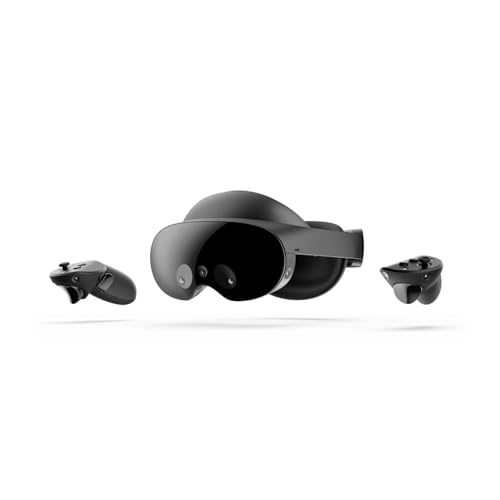
- Standalone headset with 256GB storage and 12GB RAM
- Full-color passthrough and 10 advanced VR/MR sensors
- Pancake lenses, local dimming, and expressive avatars
Best For: Standalone work, collaboration, creativity, and mixed-reality gaming
Micro-OLED Detail Champion

- 3840x3552 Micro-OLED resolution per eye
- 116° FOV with pancake lenses
- Eye tracking, 6DOF inside-out tracking, and 90Hz
Best For: PC VR simulation and gaming with an emphasis on visual sharpness
Eye-Tracking Analytics Veteran

- Precision eye tracking for gaze analysis and heatmaps
- Foveated rendering can reduce GPU workload
- 110° FOV, OLED display, and comfort-focused fit
Best For: Commercial VR, research, simulations, and user-experience analysis
Enterprise Eye-Tracking Standalone

- Eye, face, and color passthrough tracking
- Standalone 6DoF Android VR
- 4320 × 2160 resolution with 256GB storage
Best For: Business and standalone VR users needing eye and face tracking
Mixed-Reality Eye Tracking

- Eye tracking and low-light hand tracking
- 5K display with up to 120° field of view
- Standalone VR plus lossless DisplayPort PC VR
Best For: PC VR gamers and mixed-reality productivity users
High-Resolution Sim Racing Eye Tracking
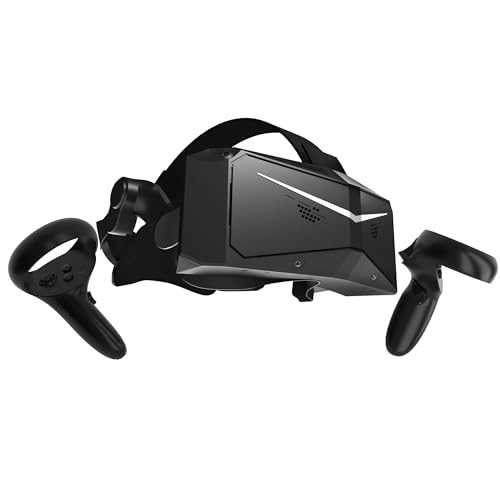
- 2880 × 2880 resolution per eye
- QLED, local dimming, and HDR display
- Eye tracking with SteamVR PC compatibility
Best For: Flight sims, iRacing, and detail-focused PC VR gaming
Best All-in-One Eye-Tracking VR Bundle
VIVE Focus Vision with Facial Tracker

- Eye and facial tracking support
- Standalone and DisplayPort PC VR
- 2448 x 2448 resolution per eye
Best For: Expressive social VR and flexible PC/standalone use
Best High-Resolution PC VR Headset

- 4896 x 2448 combined resolution
- 120Hz refresh rate and 120-degree FOV
- Adjustable IPD and balanced fit
Best For: PC VR gaming focused on clarity and smooth visuals
Best Eye-Tracking Standalone Headset
VIVE Focus Vision Wired Bundle
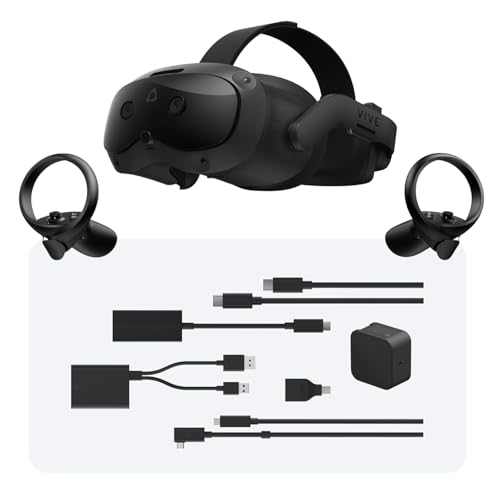
- Built-in eye and gesture tracking
- Standalone and DisplayPort PC VR
- 128GB storage and mixed-reality sensors
Best For: Flexible eye-tracked VR across standalone and PC modes
Ultra-Wide Sim Specialist – Pimax Crystal Super Ultrawide
For shoppers comparing VR headsets with eye tracking, the Pimax Crystal Super stands out with an ultra-wide 140-degree field of view, 3840×3840 resolution per eye, and a wired PC connection. Its eye tracking, high refresh rate, and dynamic FOV optimization make it especially focused on demanding simulator setups.
Best For: Flight and racing simulator users who prioritize expansive peripheral vision and extremely sharp PC VR visuals.
Pros:
- Very high 3840×3840-per-eye resolution with 50 PPD aspherical lenses.
- 140-degree field of view improves peripheral awareness in simulators.
- Eye tracking, inside-out tracking, and up to 90Hz refresh support responsive play.
- QLED and Mini-LED display technology provides local dimming and high contrast.
Cons:
- Requires a Windows PC and wired DisplayPort/USB connection.
- The high-resolution display may demand substantial GPU performance.
- Designed primarily for PC VR rather than standalone use.
The Crystal Super is a specialized choice for enthusiasts who want a wide, detailed view and eye-tracking features for simulator gaming. Its PC-only design and demanding resolution make it less suitable for casual or portable VR.
Mixed-Reality Workstation – Meta Quest Pro
The Meta Quest Pro is a standalone mixed-reality headset with pancake lenses, full-color passthrough, and 10 advanced VR/MR sensors. Among VR headsets with eye tracking, it is a practical fit for people who want to combine multitasking, collaboration, gaming, and virtual workspaces without relying on a PC.
Best For: Professionals and creators who want standalone mixed reality, multiple virtual screens, and expressive avatars.
Pros:
- Standalone design includes 256GB of storage and 12GB of RAM.
- Full-color passthrough supports interaction with the physical environment.
- Pancake lenses, local dimming, quantum dot technology, and increased pixel density enhance clarity.
- Touch Pro Controllers provide self-tracking, detailed finger actions, and advanced haptics.
Cons:
- A Meta account is required for use.
- Its 106-degree field of view is narrower than the ultra-wide Pimax option.
- At 879 grams, it may feel substantial during extended sessions.
Quest Pro makes the most sense when mixed reality and productivity matter as much as gaming. Its standalone platform simplifies setup, while passthrough, avatar expressions, and multitasking features support collaborative use.
Micro-OLED Detail Champion – Pimax Crystal Super OLED
This Pimax Crystal Super variant targets buyers seeking VR headsets with eye tracking and exceptionally crisp PC visuals. Its Micro-OLED displays deliver 3840×3552 pixels per eye, while pancake lenses, a 116-degree field of view, and 90Hz refresh are geared toward immersive flight, racing, and gaming sessions.
Best For: PC VR enthusiasts who want Micro-OLED clarity and accurate 6DOF tracking for simulation and gaming.
Pros:
- Micro-OLED displays provide 3840×3552 resolution per eye.
- 116-degree horizontal field of view reduces the tunnel effect.
- Eye tracking and inside-out 6DOF tracking support precise movement.
- 90Hz refresh helps reduce ghosting during fast gameplay.
Cons:
- Requires a PC VR setup and DisplayPort connection.
- Its 116-degree FOV is less expansive than the 140-degree ultrawide model.
- Designed for gaming rather than standalone operation.
Choose this model if display clarity is the priority and you already have a compatible PC VR setup. It balances high-resolution Micro-OLED imagery with eye tracking and a wide viewing angle, particularly for simulation-focused play.
Eye-Tracking Analytics Veteran – HTC Vive Pro Eye
The HTC Vive Pro Eye is built around precise eye tracking for PC VR, including gaze analysis, heatmapping, and foveated rendering. For buyers researching VR headsets with eye tracking, it is particularly relevant to commercial, creative, simulation, and user-experience applications rather than general standalone use.
Best For: Commercial VR teams, researchers, and simulation users who need gaze analytics or foveated rendering.
Pros:
- Precision eye tracking supports gaze analysis and user analytics.
- Foveated rendering can reduce GPU rendering workloads outside the user’s focus.
- OLED display and 110-degree field of view support detailed simulation visuals.
- Comfort-focused design accommodates varied head sizes and vision types.
Cons:
- Requires a Windows PC and wired DisplayPort/USB setup.
- The listed 1440×800 resolution is modest compared with newer high-resolution headsets.
- Its feature set is more specialized for analytics and commercial applications.
The Vive Pro Eye remains a focused option when eye tracking is needed for measurement, optimization, or research. Its older, lower listed resolution makes it less compelling for buyers seeking the sharpest consumer gaming image, but its analytics features are distinctive.
Enterprise Eye-Tracking Standalone – Pico 4E
The Pico 4E is a practical all-in-one option for buyers seeking VR headsets with eye tracking for business and personal use. It combines eye and face tracking with color passthrough, 6DoF operation, pancake lenses, and a high-resolution display without requiring a gaming PC for standalone VR.
Best For: Business applications, standalone VR users, and eye- and face-tracking experiences.
Pros:
- Built-in eye tracking, face tracking, and color passthrough.
- Standalone Android platform with 6DoF tracking.
- 4320 × 2160 resolution, 90Hz refresh rate, and 105-degree field of view.
- 256GB storage and two included hand controllers.
Cons:
- Listed battery life is approximately three hours.
- At 591g, it may feel substantial during extended sessions.
- Business-oriented features may be more than casual users need.
The Pico 4E stands out when eye tracking is a priority and standalone operation matters. Its storage, passthrough, and tracking features make it versatile, though buyers should consider the stated battery life and overall weight.
Mixed-Reality Eye Tracking – HTC Vive Focus Vision
HTC Vive Focus Vision — Mixed Reality and PC VR Headset + Controllers — Consumer Edition
Check Price On AmazonThe HTC Vive Focus Vision is a versatile choice among VR headsets with eye tracking, supporting both standalone and PC VR use. Its 5K display, automatic IPD adjustment, depth-sensor scene understanding, and DisplayPort mode make it especially suited to demanding gaming and mixed-reality setups.
Best For: PC VR gaming, mixed-reality productivity, and users who want standalone and wired options.
Pros:
- Built-in eye tracking with low-light hand tracking and support for face and body trackers.
- 2448 × 2448 pixels per eye, up to 120-degree field of view, and 90Hz refresh rate.
- DisplayPort mode provides lossless PC visuals, while standalone VR is also supported.
- Auto-IPD adjustment, depth sensing, spatial audio, and a hot-swappable battery.
Cons:
- Its PC-focused DisplayPort mode requires compatible hardware and setup.
- Storage is listed at 128GB.
- The headset is supplied with a one-year manufacturer warranty.
The Focus Vision is the strongest fit here for buyers who want eye tracking alongside high-resolution PC VR and mixed reality. Its broad feature set is compelling, but the additional connectivity and battery options may be unnecessary for simple standalone use.
High-Resolution Sim Racing Eye Tracking – Pimax Crystal Light
The Pimax Crystal Light targets PC VR buyers comparing VR headsets with eye tracking for flight simulators, iRacing, and detailed gaming. Its 2880 × 2880-per-eye QLED display, local dimming, HDR support, glass aspheric lenses, and up-to-120Hz refresh rate emphasize visual clarity and smooth motion.
Best For: PC-based flight simulation, iRacing, and SteamVR users who prioritize image detail.
Pros:
- High 2880 × 2880-per-eye resolution with 16.6 million pixels.
- QLED display with local dimming and HDR for contrast and vivid color.
- Glass aspheric lenses provide edge-to-edge clarity and reduced distortion.
- Eye tracking, fixed foveated rendering, inside-out tracking, and refresh rates up to 120Hz.
Cons:
- Designed for Windows PC VR rather than standalone operation.
- Approximately 815g, which may be heavy for extended sessions.
- Its advanced display features are most useful with a capable gaming PC.
The Crystal Light is a specialist option for simulation fans who value sharp visuals above portability. It offers impressive display specifications and eye-tracking-related rendering features, but its PC-only design and heavier build should factor into the purchase decision.
Best All-in-One Eye-Tracking VR Bundle – VIVE Focus Vision with Facial Tracker
For shoppers comparing vr headsets with eye tracking, this VIVE Focus Vision bundle combines standalone and PC VR, built-in eye tracking, and a facial tracker. Its DisplayPort connection, high-resolution panels, and mixed-reality features make it a flexible choice for gaming and social VR.
Best For: Users who want eye and facial tracking in a versatile standalone and wired PC VR setup.
Pros:
- Includes a facial tracker and built-in eye tracking support.
- Provides 2448 x 2448 resolution per eye, up to a 120-degree field of view, and a 90Hz refresh rate.
- Supports lossless DisplayPort PC streaming, mixed reality, hand tracking, and hot-swappable battery use.
- Auto-IPD adjustment helps align the lenses with the user’s pupils.
Cons:
- DisplayPort PC use requires a compatible Windows computer and setup.
- The bundle is more specialized than a basic VR headset because it includes facial-tracking hardware.
This is the most feature-rich option in the roundup for expressive avatars, VRChat, and mixed-reality experimentation. Choose it if you specifically want eye tracking paired with facial tracking and both standalone and PC VR modes.
Best High-Resolution PC VR Headset – HTC Vive Pro 2
The HTC Vive Pro 2 is a PC-focused option for buyers researching vr headsets with eye tracking who prioritize display clarity and smooth motion. It delivers combined 4896 x 2448 resolution, a wide field of view, and a 120Hz refresh rate, though the supplied specifications do not list built-in eye tracking.
Best For: PC VR gamers who value sharp visuals, a wide field of view, and high refresh-rate performance.
Pros:
- Offers combined 4896 x 2448 resolution with 2448 x 2448 per eye.
- Provides a 120-degree field of view and 120Hz refresh rate.
- Includes IPD adjustment and a balanced, adjustable design intended for extended comfort.
- Supports USB and DisplayPort connections for Windows PC VR.
Cons:
- The headset is listed as headset-only, so required SteamVR accessories may need to be purchased separately.
- Built-in eye tracking is not identified in the supplied product details.
- It is designed for PC VR rather than standalone use.
Choose the Vive Pro 2 when visual sharpness and refresh rate matter more than integrated eye-tracking features. It is a strong display-focused alternative, but shoppers requiring confirmed eye tracking should verify compatibility and included hardware before buying.
Best Eye-Tracking Standalone Headset – VIVE Focus Vision Wired Bundle
HTC Vive Focus Vision Wired Bundle — XR Headset with DisplayPort PC VR Streaming Kit
Check Price On AmazonThis VIVE Focus Vision wired bundle is a practical pick among vr headsets with eye tracking because it combines built-in eye tracking with standalone operation and DisplayPort PC VR. It also adds hand and low-light tracking, passthrough, and a depth sensor for mixed-reality use.
Best For: Users seeking eye-tracked standalone VR with a wired PC VR option and expanded hand tracking.
Pros:
- Supports built-in eye tracking, hand tracking, and low-light gesture tracking.
- Delivers 2448 x 2448 resolution per eye, up to a 120-degree field of view, and a 90Hz refresh rate.
- Offers standalone VR plus DisplayPort PC VR streaming.
- Includes 128GB storage, passthrough cameras, depth sensors, and a detachable battery.
Cons:
- It runs at 90Hz, below the 120Hz refresh rate listed for the Vive Pro 2.
- DisplayPort mode requires a compatible Windows PC and wired setup.
- Eye tracking is included, but a facial tracker is not listed with this bundle.
This model balances eye-tracking features with the convenience of standalone VR and the fidelity of wired PC streaming. It is a sensible middle ground for buyers who want modern tracking features without giving up access to PC VR.
How We Picked These Vr Headsets with Eye Tracking
We selected products representing the main buying paths in this category: high-resolution PC headsets for simulation and gaming, standalone or mixed-reality models, and enterprise-focused systems. We considered stated eye-tracking capability, display quality, field of view, tracking approach, PC connectivity, controller support, and the practical requirements of each headset.
Eye tracking is not implemented identically across all models. Some headsets use it for foveated rendering or gaze interaction, while others add broader facial or social-tracking features. Confirm which functions are supported by the headset, operating system, and individual applications before buying.
Quick Comparison
| Priority | What to look for | Best fit |
|---|---|---|
| Maximum visual detail | High pixels per eye, strong optics, and a wide field of view | Flight, racing, and simulation enthusiasts |
| Flexible room-scale use | Inside-out tracking, wireless capability, and robust controllers | General VR and mixed-reality users |
| PC performance | DisplayPort or dependable wired streaming and a capable GPU | PC VR gamers and professional users |
| Business deployment | Enterprise software support, facial or eye tracking, and service availability | Training, design, research, and collaboration |
Key Buying Factors for Vr Headsets with Eye Tracking
Display, Optics, and Field of View
Resolution per eye matters, but lens clarity, glare control, contrast, and edge-to-edge sharpness also affect what you see. A wider field of view can improve immersion, while OLED or local-dimming systems may deliver deeper blacks. Higher visual quality often increases weight, price, and PC requirements.
Tracking and Software Support
Check whether eye tracking works at the system level and whether your preferred games or applications can use it. Inside-out tracking is convenient, whereas external-base-station systems may offer a different balance of precision and setup complexity. Also verify whether controllers, hand tracking, facial tracking, and passthrough are included or optional.
Connection, Comfort, and Hardware Demands
Standalone headsets offer easier setup, but wired PC VR can provide higher-fidelity graphics and lower compression. Confirm the required ports, cable length, wireless network conditions, and graphics card. Weight distribution, lens adjustment, facial interface design, ventilation, and prescription-lens compatibility matter for longer sessions.
Who Should Buy Which Vr Headsets with Eye Tracking?
Choose a high-resolution Pimax model if sharpness, field of view, and simulator performance are your main priorities and you already have a powerful gaming PC. Consider a Meta Quest Pro or Pico 4E if you want a more flexible standalone or enterprise-oriented experience, subject to current software and availability.
Look at HTC Vive Pro Eye or Vive Focus Vision for professional workflows, eye-tracking research, mixed reality, or PC streaming. The wired Focus Vision bundles make more sense when you value a direct PC connection, while facial-tracker bundles suit social presence and avatar applications.
Consider the Pimax Crystal Light or HTC Vive Pro 2 when PC VR image quality is important but eye-tracking features are not your only deciding factor. Before checkout, verify the exact bundle contents, included controllers, regional support, warranty, and compatibility with your graphics card and software.