Switching between a MacBook, desktop Mac, or Windows PC should not require reconnecting displays, keyboards, mice, and storage devices. The right KVM switch can turn one workspace into a cleaner, faster setup with a single button press.
This roundup compares 10 KVM switches for Mac across USB-C, HDMI, and Thunderbolt 4 designs, with options for dual monitors, high refresh rates, multiple computers, and expanded USB connectivity.
Best 10 Kvm Switches for Mac Picks for 2026
Best Dual-Monitor USB-C KVM
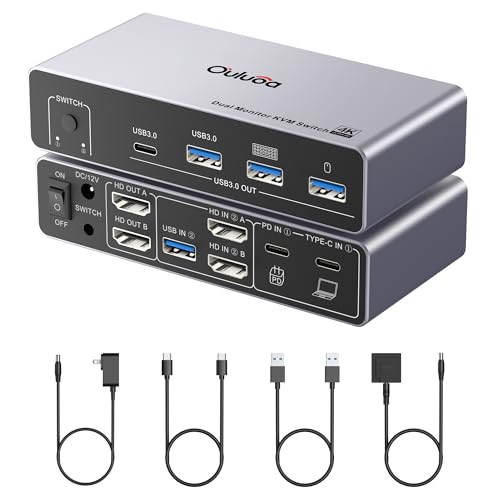
- Dual HDMI monitor support with macOS SST mode
- 8K@60Hz desktop output and 4K@60Hz laptop output
- 100W PD plus four USB expansion ports
Best For: Mixed Mac/Windows workstations with two monitors
Best Thunderbolt Pick
Sabrent Thunderbolt 4 KVM Switch
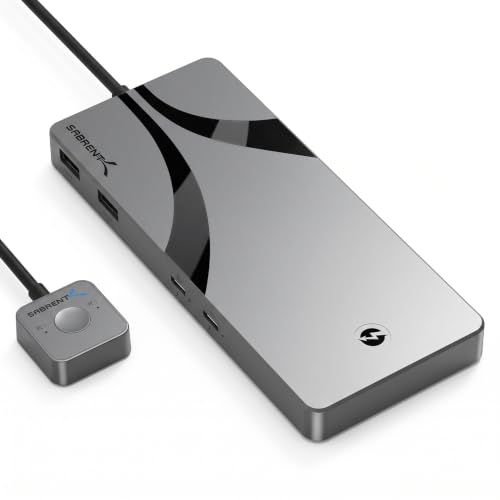
- 40Gbps Thunderbolt 4 connectivity
- Up to 8K@60Hz single-display output
- Four 10Gbps USB-A ports for accessories
Best For: Thunderbolt-equipped Mac workstations
Best HDMI Value

- 8K@60Hz and 4K@120Hz video support
- Four USB 3.0 peripheral-sharing ports
- Works with Mac OS and multiple operating systems
Best For: Dual-HDMI Mac and PC workstations
Best Docking-Station Upgrade

- 11-in-1 dock with displays, USB, Ethernet, audio, and SD
- 100W charging and dual 4K@60Hz over one laptop cable
- MacOS dual-monitor output mirrors rather than extends
Best For: Hybrid workers needing a full USB-C desk hub
Best 4-Computer Pick
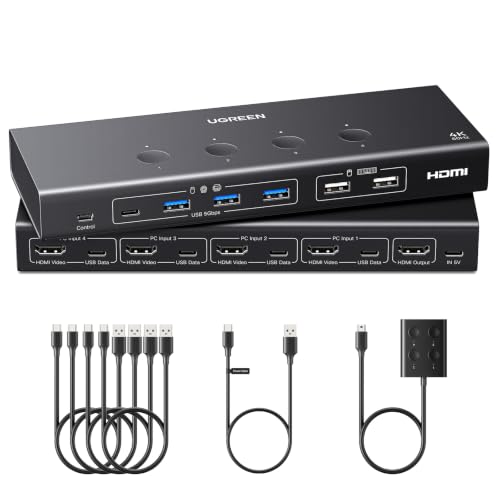
- Controls four computers from one monitor
- Supports 4K@60Hz and six USB ports
- Works with macOS, Windows, and Linux
Best For: Multi-computer Mac workstations needing extensive USB sharing
Best USB-C Docking Option
Triple-Monitor KVM for Two Laptops

- Switches two USB-C laptops
- Offers three display outputs and 100W PD
- Mac MST and extend-mode limits apply
Best For: USB-C laptop users sharing displays and peripherals
Best Dual-Monitor Pick

- Shares two HDMI monitors between two computers
- Supports 4K@60Hz and mirror or extend modes
- Includes cables, adapters, and a wired controller
Best For: Two-computer Mac and Windows dual-monitor setups
Top Dual-Display Pick
8K HDMI KVM Switch for 2 Computers

- Dual-monitor mirror and extend modes
- Up to 8K@60Hz and 4K@120Hz
- Four USB 3.0 ports with powered design
Best For: Two-computer Mac or PC workstations using two monitors
Best USB-C Setup
UGREEN USB-C and HDMI KVM Switch
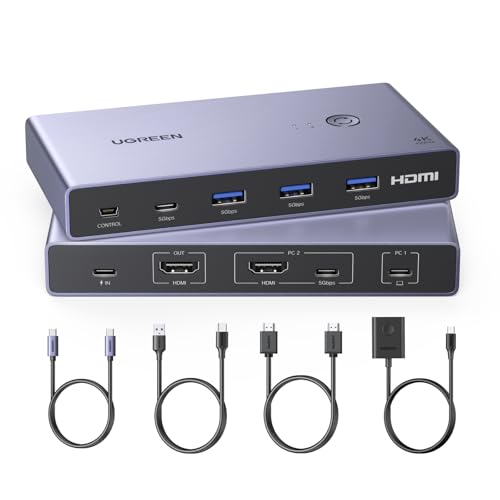
- Combines USB-C laptop and HDMI computer inputs
- Supports 4K@60Hz on one monitor
- Four USB 3.0 ports and included cables
Best For: MacBook-and-desktop setups sharing one HDMI monitor
Best Powered Option
8K Dual-Monitor HDMI KVM Switch

- Dual-monitor mirror and extend support
- 8K@60Hz and 4K@120Hz output
- Powered four-port USB 3.0 hub
Best For: High-resolution Mac, Windows, or Linux dual-monitor workstations
Best Dual-Monitor USB-C KVM – 8K USB-C Dual-Monitor KVM
For shoppers comparing kvm switches for mac, this USB-C model is a practical choice when a desktop and laptop need to share two HDMI monitors and common USB accessories. It supports macOS in SST mode, while Windows systems can use MST display mode.
Best For: Mac and Windows users sharing two monitors, peripherals, and a laptop charging connection.
Pros:
- Supports two HDMI displays in extended or mirrored modes; macOS uses SST mode.
- Offers up to 8K@60Hz from the desktop side and 4K@60Hz from the USB-C laptop connection.
- Includes 100W PD charging, three USB 3.0 ports, one USB-C port, wired remote, and external power.
Cons:
- macOS does not support the Windows MST display mode.
- HDMI cables within 6.56 feet are recommended for stable transmission.
- USB transfer bandwidth is shared across the four USB ports.
This is a well-equipped dual-monitor KVM for mixed desktop-and-laptop workspaces, especially when charging and peripheral sharing matter. Mac users should verify that SST mode fits their monitor arrangement before buying.
Best Thunderbolt Pick – Sabrent Thunderbolt 4 KVM Switch
This Sabrent model stands out among kvm switches for mac when your setup is built around Thunderbolt 4 or USB-C devices. It switches two host computers while sharing Thunderbolt peripherals, USB accessories, and an external DisplayPort-capable display.
Best For: Mac and Windows users with Thunderbolt 4 peripherals who want high-speed device sharing.
Pros:
- Provides Thunderbolt 4 connectivity with transfer speeds up to 40Gbps.
- Includes three Thunderbolt 4 ports and four USB-A ports supporting up to 10Gbps.
- Supports up to 8K@60Hz or 5K@60Hz on a DisplayPort-capable display and up to 4K@60Hz with two screens.
Cons:
- Display output requires a DisplayPort-capable display or compatible DP Alt Mode setup.
- Two-screen use is limited to up to 4K@60Hz.
- The supplied notes do not list a warranty.
With premium Thunderbolt bandwidth and an aluminum enclosure, this is a strong fit for Mac-centric desks using fast storage and other Thunderbolt hardware. Check your display connections and host compatibility before committing.
Best HDMI Value – 8K Dual-Monitor HDMI KVM
If you need kvm switches for mac that share two HDMI-connected computers, this model combines high-resolution video with straightforward button or wired-remote switching. It works with Mac OS, Windows, Linux, and Unix systems, but dual-monitor operation depends on suitable graphics outputs.
Best For: Mac users with two HDMI-capable computers and a dual-monitor workstation.
Pros:
- Supports up to 8K@60Hz and 4K@120Hz for detailed, smooth video.
- Shares four USB 3.0 ports with up to 5Gbps transfer speeds.
- Offers onboard-button and wired-controller switching, plus an external 12V power adapter.
Cons:
- Keyboard hotkey switching is not supported.
- Each computer needs two HDMI outputs and support for mirrored or extended desktop modes.
- Passive adapters and standard conversion cables may not carry video; an active adapter may be required.
This is a sensible HDMI-first option for a dual-monitor Mac setup, provided the computers already have the necessary video outputs. Its external power supply also helps support connected USB devices more reliably.
Best Docking-Station Upgrade – AV Access 8K Dual-Monitor KVM
For kvm switches for mac that also replace a desk hub, the AV Access iDock B10 combines KVM switching with an 11-in-1 USB-C docking station. It can connect a USB-C work laptop and desktop PC to shared monitors, USB devices, audio, storage, and Ethernet, though macOS has important display limitations.
Best For: Hybrid workers who want one dock-style setup for a USB-C laptop and desktop.
Pros:
- Combines KVM switching and docking with dual-monitor support, USB, audio, SD card, and Ethernet connections.
- Supports up to dual 8K@60Hz or dual 4K@165Hz from the desktop side, with high-refresh options for 1080p.
- Provides one-cable laptop connection with dual 4K@60Hz video, up to 10Gbps data, and up to 100W charging.
- Keeps both computers connected to Gigabit Ethernet while switching between them.
Cons:
- On macOS, two external monitors mirror rather than extend because of MST.
- Mac mini connections require HDMI, USB-C-to-USB-C, and USB-C-to-DisplayPort cables; the latter two are not included.
- Laptop resolution and refresh rate depend on the laptop’s USB-C video capabilities.
This is the most complete desk-hub option in the group, particularly for hybrid work and high-speed peripherals. Mac users who need independently extended dual displays should consider the noted compatibility limitation carefully.
Best 4-Computer Pick – UGREEN 4-Port HDMI KVM Switch
If you need kvm switches for mac that let you control several computers from one workstation, this UGREEN model supports four computers sharing one HDMI monitor and a set of USB peripherals. It works with macOS, Windows, and Linux, with up to 4K at 60Hz video output.
Best For: Mac users managing up to four computers with one monitor, keyboard, mouse, and other USB devices.
Pros:
- Supports four computers sharing one monitor and six USB ports.
- Handles up to 4K@60Hz and supports HDR, HDMI 2.0, and 3D.
- Offers button or wired desktop-controller switching.
- EDID emulation can help preserve display settings and reduce window rearrangement.
Cons:
- Each computer requires an HDMI cable and a USB-A-to-C data cable; these are not included.
- Requires a power connection for stable operation and USB peripheral use.
- Not compatible with docking stations.
This is a flexible choice for a multi-computer Mac setup, especially when four-way switching and extra USB connectivity matter. Plan for the required cables and power adapter before installation.
Best USB-C Docking Option – Triple-Monitor KVM for Two Laptops
For shoppers comparing kvm switches for mac with built-in docking features, this USB-C model combines two-laptop switching with three monitor outputs, USB 3.1 connectivity, and up to 100W PD input. Mac users should note that its three-monitor behavior is limited by macOS and does not provide independent MST output on M1/M2 systems.
Best For: Users switching between two USB-C laptops who want one dock for displays, peripherals, and laptop charging.
Pros:
- Switches two laptops while sharing up to three connected monitors and four USB peripherals.
- Provides dual 4K@60Hz plus 1080P@60Hz output capability on supported systems.
- Includes four USB 3.1 Gen 2 ports with transfer speeds up to 10Gbps.
- Supports 100W PD input and works with macOS, Windows, Linux, and Chrome OS.
Cons:
- Extend mode is not supported on Mac OS.
- On Mac M1/M2 systems, three monitors display the same screen or one different extended screen rather than independent MST screens.
- USB-C laptop ports must support DP Alt Mode, data, PD, and multiple-display output; cable-length requirements also apply.
This dock-style KVM is most compelling for compatible USB-C laptops and mixed-device desks. Mac buyers should verify their laptop generation and display requirements carefully, since the advertised triple-monitor MST behavior is restricted on macOS.
Best Dual-Monitor Pick – UGREEN 2-Computer HDMI KVM
This UGREEN model is a practical option among kvm switches for mac when two computers need to share two HDMI monitors, a keyboard, mouse, and other USB devices. It supports mirror and extend modes, but both monitors must show the selected computer rather than combining video sources from both computers.
Best For: Mac and Windows users with two HDMI-equipped computers and a dual-monitor workspace.
Pros:
- Switches two computers across two HDMI monitors with mirror or extend support.
- Supports up to 4K@60Hz and HDMI 2.0, HDR, HDR10+, HDCP, and 3D.
- Includes four USB 3.0 ports and supports button or wired-controller switching.
- Package includes HDMI cables, USB-A cables, power adapters, and the desktop controller.
Cons:
- Each computer needs two HDMI cables and one USB-A cable for full operation.
- Both monitors must display the selected computer; they cannot show PC1 and PC2 simultaneously.
- Does not support EDID emulation or keyboard-shortcut switching.
Choose this switch if your priority is straightforward dual-monitor sharing through HDMI and you value the included accessories. Mac laptops with only USB-C ports will need a USB-C-to-USB-A OTG adapter for the USB connection.
Top Dual-Display Pick – 8K HDMI KVM Switch for 2 Computers
For shoppers comparing KVM switches for Mac and other systems, this model is designed for two-computer, dual-monitor setups. It supports mirrored or extended displays, includes four USB 3.0 ports, and offers front-button or wired-controller switching.
Best For: Mac users and other computer owners who need one keyboard, mouse, USB accessory group, and two monitors shared between two computers.
Pros:
- Supports up to 8K at 60Hz and 4K at 120Hz.
- Provides dual-monitor copy and extension modes.
- Includes four USB 3.0 ports and a 12V power adapter for more stable use with USB devices.
- Works with Mac OS, Windows, Linux, Unix, and older Windows versions.
Cons:
- Extended dual-monitor mode requires two HDMI outputs and compatible graphics support on the computer.
- Switching is limited to the panel button or wired controller; keyboard hotkeys are not supported.
- The setup is not suitable for a computer with only one monitor output.
This is a strong option when dual-monitor capability and high refresh-rate HDMI output matter most. Confirm your Mac or PC has the required two HDMI outputs before buying.
Best USB-C Setup – UGREEN USB-C and HDMI KVM Switch
This UGREEN unit is a practical choice among KVM switches for Mac when one USB-C laptop and one HDMI computer need to share a single monitor. It combines HDMI and USB-C connectivity with four USB ports and simple button or desktop-controller switching.
Best For: MacBook users pairing a USB-C laptop with a desktop computer and one HDMI monitor.
Pros:
- Supports up to 4K at 60Hz, plus HDR 10+, HDCP 2.2, and 3D.
- Shares four USB 3.0 ports, including one USB-C port.
- Compatible with macOS, Windows, and Linux without extra drivers.
- Includes an HDMI cable, USB-C cable, USB-A-to-C data cable, and desktop controller.
Cons:
- Supports only one monitor with an HDMI interface.
- Automatic and keyboard-hotkey switching are not available.
- Power adapter and power cable are not included.
The USB-C and HDMI input combination makes this especially convenient for a MacBook-and-desktop arrangement. Check that the Mac’s USB-C port supports full audio and video transmission, and plan for a separate power supply if using higher-power USB devices.
Best Powered Option – 8K Dual-Monitor HDMI KVM Switch
For buyers seeking KVM switches for Mac with dual-display support, this powered HDMI model handles two computers and two monitors while adding four USB 3.0 ports. A wired remote and front button provide straightforward switching without software or drivers.
Best For: Windows, Mac, or Linux users building a high-resolution dual-monitor workstation with shared USB peripherals.
Pros:
- Supports 8K at 60Hz and 4K at 120Hz.
- Offers mirror and extend modes for two monitors.
- Includes four 5Gbps USB 3.0 ports and a 5V/2A adapter.
- Includes a braided 8K HDMI cable, two USB cables, and a wired remote.
Cons:
- Its notes do not specify support for keyboard-hotkey switching or automatic switching.
- Dual-monitor use requires a compatible two-monitor computer configuration.
- The setup uses HDMI connections, so users should confirm their Mac provides the necessary video outputs or adapters.
This model is appealing for high-resolution productivity or gaming setups that need a powered USB hub and two displays. Its included accessories simplify installation, but Mac users should verify their available video connections before purchasing.
How We Picked the Best Kvm Switches for Mac
We focused on the features that matter most in a Mac-centered desk setup: reliable display support, compatibility with modern USB-C and Thunderbolt hardware, switching convenience, USB peripheral sharing, and practical bandwidth. The selected models cover simple one-monitor systems as well as dual- and triple-display workstations.
Because Mac compatibility depends on the computer, dock, cables, and monitor arrangement, advertised resolution is only one part of the decision. We also considered whether a switch supports extended displays, high refresh rates, multiple computers, wired control, and plug-and-play operation.
Quick Comparison
- Best for Thunderbolt users: Choose a Thunderbolt 4 KVM when you need high bandwidth and premium Mac connectivity.
- Best for dual monitors: Look for an HDMI or USB-C model explicitly supporting two extended displays.
- Best for high refresh gaming: Prioritize 4K at 120Hz or 144Hz, plus compatible HDMI standards and cables.
- Best for several computers: A four-computer KVM reduces desk clutter when one monitor and one peripheral set serve multiple systems.
- Best for simple office use: A 4K 60Hz switch with USB 3.0 is usually sufficient for productivity, browsing, and video calls.
Key Buying Factors for Kvm Switches for Mac
Display Connections and Resolution
Check the ports on both your Mac and monitors before buying. USB-C and Thunderbolt models can simplify laptop docking, while HDMI KVMs may require separate video adapters or a dock. Confirm whether the switch supports extended mode rather than mirroring, especially with two or three displays.
Refresh Rate and Bandwidth
For office work, 4K at 60Hz is generally adequate. Gaming, animation, and smooth scrolling benefit from 4K at 120Hz or 144Hz, while 8K support provides additional headroom. Every device in the chain—including cables, adapters, monitors, and the Mac—must support the desired specification.
USB Sharing and Switching Method
Count the peripherals you want to share, such as a keyboard, mouse, webcam, microphone, printer, or external drive. USB 3.0 ports are preferable for faster storage and cameras. A wired remote or physical button can be more convenient than reaching behind the desk.
Power and Mac Compatibility
Some USB-C KVMs provide charging or docking functions, while others only switch data and video. Check the required power adapter, macOS display limitations, Apple Silicon compatibility, and whether your Mac needs DisplayLink software for additional monitors.
Who Should Buy Which Kvm Switches for Mac?
Choose a USB-C or Thunderbolt 4 model if you regularly move between a MacBook and another computer and want fewer cables. These are especially useful for compact desks and laptop docking.
Choose a dual-monitor HDMI KVM if your displays already use HDMI and you want to share two screens, a keyboard, mouse, and other USB devices between two computers.
Choose a multi-computer KVM if you manage several systems, test software, or use separate work and personal machines. A four-port option can be more convenient than adding another switch later.
Choose a high-refresh 8K model if gaming or demanding visual work is important. For ordinary productivity, spend more on the ports and switching reliability you need rather than on unused resolution.