The best smart home hubs with local processing can keep routines responsive and dependable, even when your internet connection is slow or unavailable. They also give you more control over device data and automation rules.
This roundup compares 10 notable hubs across major ecosystems, including Home Assistant, Hubitat, SmartThings, Matter, Zigbee, Z-Wave, and camera-focused platforms. Use the guide below to match connectivity, privacy, and setup requirements to your home.
Best 10 Smart Home Hubs with Local Processing Picks for 2026
Best Overall

- Preinstalled Home Assistant OS
- Local data storage for privacy
- USB expansion for Zigbee, Z-Wave, and Thread
Best For: DIY homeowners building a flexible, privacy-focused smart home
Best for Tapo Security

- Local storage for camera footage
- Supports up to 16 cameras and 64 sensors
- HDMI viewing and built-in security alarm
Best For: Tapo users managing cameras, doorbells, and sensors
Best for Advanced Automation

- Automations run locally without internet
- Matter, Z-Wave, Zigbee, and Bluetooth support
- Works with major voice assistants
Best For: Experienced DIY users managing mixed-brand devices
Best for eufy Security Systems

- Local camera storage with no monthly fees
- Supports up to 50 eufy devices
- Expandable storage up to 16TB
Best For: eufy users building a centralized local security system
Best Local-First Hub
YoLink Local Hub Smart Home Gateway

- Runs synced automations locally
- Local API supports Home Assistant
- LoRa range up to 2,034 feet
Best For: YoLink users wanting local control and long-range connectivity
Best Multi-Protocol Hub

- Local data processing for reliability
- Supports Zigbee, Matter, Thread, and Ethernet
- Works with 1,000+ brands without a subscription
Best For: Mixed-brand homes needing flexible local automation
Best Xiaomi-Centered Option

- Bluetooth 5 connectivity
- Compact 0.18-kilogram design
- Works with listed computers and mobile devices
Best For: Xiaomi users seeking a compact Bluetooth-enabled hub
Best with Extra Features
- Supports Matter, Z-Wave Plus, Zigbee, and Wi-Fi
- Many SmartThings automations can run locally
- Works with Alexa and Google Home
Best For: Mixed-protocol SmartThings homes
Best for Local Control
- Local web console works without cloud services
- Bridges Zigbee and BTHome devices to Matter
- Supports Home Assistant through MQTT
Best For: Privacy-focused Zigbee and Home Assistant setups
Best for Cameras
- Includes local NVR storage with a 16GB microSD card
- Home Assistant is pre-installed
- Supports Matter bridging and faster local automations
Best For: SwitchBot camera and local-storage setups
Best Overall – Home Assistant Green
Home Assistant Green | Smart Home hub with Advanced Automation | Official Home Assistant Hardware
Check Price On AmazonHome Assistant Green is one of the easiest ways to enter the world of smart home hubs with local processing. Home Assistant OS is preinstalled, and its fanless design keeps your home data on the hub while supporting broad automation through optional USB-connected Zigbee, Z-Wave, and Thread devices.
Best For: DIY homeowners who want a privacy-focused, flexible Home Assistant setup without assembling their own hardware.
Pros:
- Preinstalled Home Assistant OS simplifies setup.
- Local data storage and processing support privacy and independence from cloud services.
- Compact, silent, power-efficient design with 4GB RAM and 32GB storage.
- USB expansion supports Z-Wave, Zigbee, and Thread connectivity.
Cons:
- Ethernet is the primary listed network connection, so placement may be less flexible.
- Z-Wave, Zigbee, and Thread connectivity require additional USB devices.
Green is a strong foundation for whole-home automations, especially if you value ownership of your data and are comfortable expanding the hub as your device collection grows.
Best for Tapo Security – Tapo H500 CentralHub
The Tapo H500 is a security-centered option among smart home hubs with local processing. It stores camera footage locally, supports Tapo cameras and sensors, and adds features such as familiar-face filtering, HDMI viewing, and two-way audio without requiring cloud storage for recordings.
Best For: Tapo households that want centralized camera storage, local access to footage, and integrated security alerts.
Pros:
- Supports up to 16 Tapo cameras and 64 Tapo Sub-G sensors.
- Includes 16GB storage and supports an added 2.5-inch SATA drive up to 16TB.
- Local footage remains accessible during network outages.
- Built-in HDMI, microphone, speaker, and 110dB alarm add monitoring flexibility.
Cons:
- It is primarily designed for the Tapo ecosystem rather than broad third-party smart-home control.
- Continuous recording is limited to four cameras.
- Facial recognition is unavailable in Illinois and Texas.
Choose the H500 when Tapo cameras and sensors are your priority. Its strongest advantages are centralized local recording and security-focused viewing rather than general-purpose automation.
Best for Advanced Automation – Hubitat Elevation C-8 Pro
Hubitat Elevation C-8 Pro is a strong match for shoppers comparing smart home hubs with local processing and advanced automation. Automations run directly on the hub, while Matter, Z-Wave 800, Zigbee 3.0, and Bluetooth support help it connect a broad mix of devices without a subscription.
Best For: Experienced DIY users who want fast local routines, extensive protocol support, and detailed rule-based automation.
Pros:
- Local automation continues working when the internet is unavailable.
- Supports Matter 1.5, Z-Wave 800 Long Range, Zigbee 3.0, and Bluetooth.
- Compatible with Alexa, Google Home, and Apple HomeKit.
- Rule Machine supports multi-condition scenes, schedules, geofencing, and security routines.
Cons:
- Its advanced rule engine may require more setup than simpler hubs.
- Wireless range and compatibility depend on the specific devices used, despite the external antennas.
The C-8 Pro is built for control and customization. It is particularly appealing if you expect to combine devices from many brands and want automations to remain responsive and local.
Best for eufy Security Systems – eufy HomeBase 3
eufy HomeBase 3 is a security-focused choice among smart home hubs with local processing. It provides built-in storage for eufy camera recordings, supports expandable storage up to 16TB, and uses local security features such as facial recognition, cross-tracking, and a 100dB siren.
Best For: eufy households that want centralized camera and sensor management with local recording and no monthly storage fees.
Pros:
- Supports up to 16 eufy cameras or doorbells and 34 sensors.
- Includes 16GB storage and supports expansion up to 16TB.
- Local recording avoids recurring cloud-storage fees and can improve privacy.
- BionicMind features, cross-tracking, and a 100dB siren strengthen security monitoring.
Cons:
- It is intended for eufy devices and does not present broad third-party smart-home protocol support.
- External storage is not included.
- The hub’s security features are most useful within a connected eufy ecosystem.
HomeBase 3 makes the most sense for an existing or planned eufy security setup. Its local storage and expandable capacity are practical for camera owners who want to avoid ongoing recording fees.
Best Local-First Hub – YoLink Local Hub Smart Home Gateway
The YoLink YS1606 is a practical choice for shoppers seeking smart home hubs with local processing. After setup, synced automations and Local API integrations can continue working when the external internet connection is unavailable, while LoRa connectivity supports devices at distances up to 2,034 feet.
Best For: YoLink users and power users who want local automations, long-range device connectivity, and Home Assistant integration.
Pros:
- Executes synced schedules, timers, and automations locally for low-latency response.
- Offers a Local API for third-party local control centers such as Home Assistant.
- Supports Ethernet or Wi-Fi and uses LoRa for up to 2,034 feet of range.
Cons:
- Internet is required for initial provisioning, changing local rules, and syncing settings.
- Local access during a blackout requires powered network equipment.
The YS1606 stands out when dependable local execution and long-range YoLink device communication matter more than completely cloud-free setup and management.
Best Multi-Protocol Hub – Homey Pro mini
The Homey Pro mini is a strong option among smart home hubs with local processing, combining local data handling with Zigbee, Matter, Thread, and Ethernet support. Its Homey Flow system lets you create routines across devices from more than 1,000 supported brands.
Best For: Households that want broad brand compatibility, customizable automations, and local control without a subscription.
Pros:
- Processes smart home data locally for privacy and continued operation when the internet is down.
- Supports Zigbee, Matter, Thread, and Ethernet out of the box.
- Works with more than 1,000 brands and includes Homey Flow automation tools.
- Requires no subscription for Homey features and listed cloud services.
Cons:
- Z-Wave, Bluetooth, and infrared require the separately sold Homey Bridge.
- Some remote and voice-assistant features depend on cloud services.
Choose the Homey Pro mini if you are building a mixed-brand system and want flexible local automation with a broad protocol foundation.
Best Xiaomi-Centered Option – Xiaomi Smart Home Hub 2
The Xiaomi Smart Home Hub 2 is a compact hub option for shoppers comparing smart home hubs with local processing, but the supplied information provides limited detail about its automation and local-processing capabilities. It includes Bluetooth 5 connectivity, two listed ports, and compatibility with iOS 12 or later.
Best For: Xiaomi-oriented users seeking a compact hub with Bluetooth 5 connectivity and basic device compatibility.
Pros:
- Uses Bluetooth 5 for compatible smart home connections.
- Compact 0.18-kilogram design.
- Compatible with smartphones, tablets, laptops, and personal computers.
Cons:
- The supplied details do not specify local automation or local-processing features.
- Compatibility and automation support beyond the listed information are unclear.
This hub may suit an existing Xiaomi setup, but shoppers prioritizing verified local processing should look for more complete automation and protocol specifications before buying.
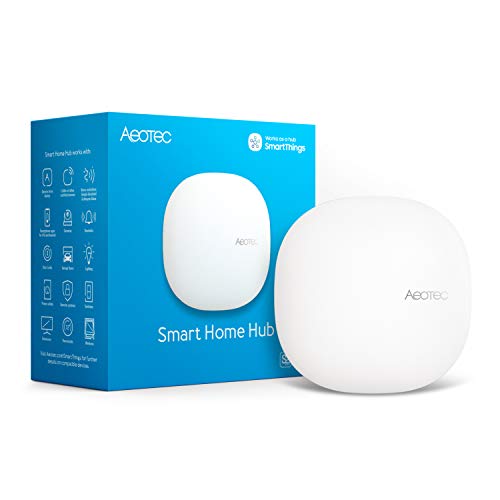
Best with Extra Features – Aeotec Smart Home Hub
The Aeotec Smart Home Hub is a flexible choice for shoppers comparing smart home hubs with local processing. It supports SmartThings automations, with many routines able to run locally for improved speed and reliability, while also connecting over Wi-Fi or Ethernet.
Best For: Homes combining Z-Wave, Zigbee, Matter, Wi-Fi, Alexa, and Google Home devices.
Pros:
- Supports Matter, Z-Wave Plus, Zigbee, Wi-Fi, and SmartThings devices.
- Many SmartThings automations can run locally.
- Offers both Wi-Fi and wired Ethernet setup.
- Works with Alexa and Google Home voice control.
Cons:
- Z-Wave Plus support is specified for the V3 model.
- Designed for use in North America.
Choose this hub when broad protocol support and a mature SmartThings automation environment matter more than a dedicated local web console.
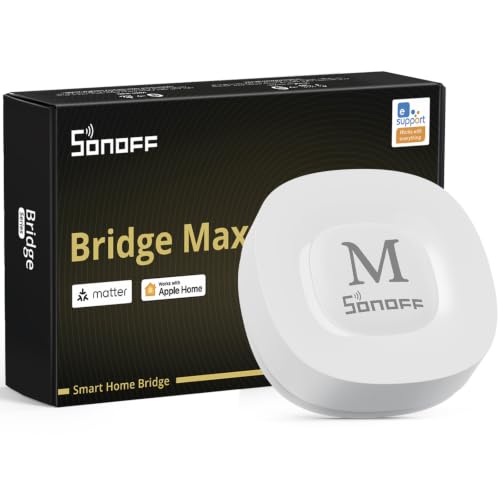
Best for Local Control – SONOFF Bridge Max
The SONOFF Bridge Max is a practical option among smart home hubs with local processing, especially for users who want LAN-based management. Its local web console works without cloud services, while the hub bridges Zigbee, BTHome, and eWeLink devices to Matter platforms.
Best For: Privacy-focused users and Home Assistant setups that need Zigbee-to-Matter bridging.
Pros:
- Provides a local web console without requiring an app or cloud service.
- Supports Zigbee devices from SONOFF and other manufacturers.
- Bridges compatible devices to Alexa, Google Home, and Apple Home.
- Supports Home Assistant through MQTT or device bridging.
Cons:
- It is a Matter Bridge, not a Matter Controller.
- It cannot add Matter devices directly.
- The built-in alarm is limited to 90 dB.
This is a strong fit for a local-first setup, but verify that your devices need bridging rather than direct Matter-controller functionality.
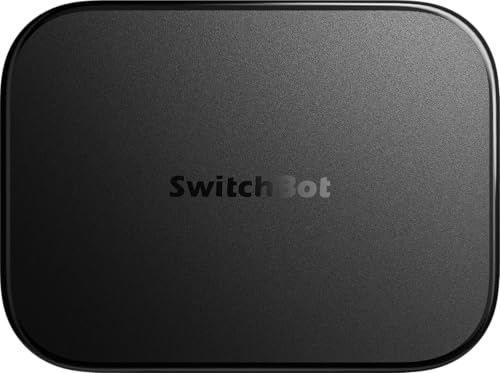
Best for Cameras – SwitchBot AI Hub
The SwitchBot AI Hub combines local camera storage with smart home control, making it a specialized option among smart home hubs with local processing. It includes a 16GB microSD card, comes with Home Assistant pre-installed, and can run faster local automations for select SwitchBot BLE devices.
Best For: SwitchBot households that want local NVR storage, camera management, and Home Assistant in one hub.
Pros:
- Stores camera event recordings locally on the included 16GB microSD card.
- Supports expansion up to a 1TB microSD card or a 16TB external hard drive.
- Includes Home Assistant and works as a Matter Bridge.
- Can manage up to eight compatible cameras.
Cons:
- AI features require an AI+ subscription and compatible cameras.
- It does not include IR control for TVs or air conditioners.
- Camera and AI functions depend on supported devices.
Consider this hub if local video storage is a priority; shoppers mainly seeking broad device control may prefer a hub with more explicitly listed radio protocols.
How We Picked the Best Smart Home Hubs with Local Processing
We focused on hubs that offer meaningful local capabilities, such as on-device automation, local device control, a local API, local camera processing, or storage that can reduce dependence on cloud services. We also considered protocol support, ecosystem compatibility, expandability, setup complexity, and the types of households each hub is designed to serve.
“Local processing” does not always mean that every feature works offline. Voice assistants, remote access, firmware updates, AI services, and some integrations may still require an internet connection. Check each product’s documentation before choosing it for a fully offline installation.
Quick Comparison
| What matters most | Best fit |
|---|---|
| Maximum customization | Home Assistant Green or Homey Pro mini |
| Advanced local automation | Hubitat Elevation C-8 Pro |
| SmartThings ecosystem | Aeotec Smart Home Hub |
| eufy camera and security devices | eufy HomeBase 3 |
| Simple local gateway functions | YoLink Local Hub or SONOFF Bridge Max |
| Camera-focused AI or storage | Tapo CentralHub or SwitchBot AI Hub |
| Xiaomi devices | Xiaomi Smart Home Hub 2 |
Key Buying Factors for Smart Home Hubs with Local Processing
Protocol and Device Compatibility
Start with the devices you already own and the products you plan to add. Zigbee and Z-Wave can support a broad range of sensors, switches, and locks, while Matter and Thread are increasingly important for newer equipment. A hub may support a protocol but still lack a compatible integration for a particular device, so verify model-level support.
Offline Behavior
Look for clear details about which automations run locally and what stops working without cloud access. Local execution is especially valuable for lighting, motion sensors, thermostats, and security routines that need quick responses.
Ease of Setup and Maintenance
Some hubs are ready for mainstream users, while others reward technical experience and regular configuration. Consider whether you want a guided app, a visual automation editor, or deep control through integrations and community add-ons.
Privacy, Storage, and Remote Access
Review where recordings, logs, and account data are stored. Local storage can improve privacy and reduce subscription costs, but it may require a suitable drive, network configuration, backups, and secure remote-access settings.
Who Should Buy Which Smart Home Hubs with Local Processing?
Choose Home Assistant Green or Homey Pro mini if you want a flexible platform with broad automation potential and are comfortable spending time on setup. Hubitat is a strong choice for users who prioritize responsive local rules and broad Z-Wave or Zigbee support without running a separate server.
Aeotec’s hub suits households already invested in SmartThings, while Xiaomi, eufy, Tapo, YoLink, and SONOFF hubs make the most sense when most of your devices come from the corresponding brand ecosystem. SwitchBot AI Hub is worth considering for SwitchBot users who want Matter bridging, camera storage, or newer AI-oriented features. Before buying, confirm regional compatibility, required subscriptions, and whether your preferred devices can operate locally rather than only through the manufacturer’s cloud.