The best laptops for programming balance processor performance, memory, storage, display quality, keyboard comfort, and dependable build quality. The right choice depends on whether you write code for school, web development, mobile apps, data work, or demanding virtual machines.
We selected 10 laptops across several budgets and performance tiers, including business-focused ThinkPads and V-series models, affordable everyday systems, and a powerful ASUS ROG option for development workloads that benefit from dedicated graphics.
Best 10 Laptops for Programming Picks for 2026
Best Professional Pick
Lenovo ThinkPad E16 Core Ultra 7

- 16-core Core Ultra 7 processor
- 32GB RAM and 1TB NVMe SSD
- Thunderbolt 4 and Windows 11 Pro
Best For: Developers and professionals running demanding multitasking workloads
Best Large-Screen Value

- Ryzen 5 6600H with 6 cores
- Upgradeable RAM and storage
- Spacious 17.3-inch FHD display
Best For: Students and developers who prefer a large coding workspace
Best Budget Starter

- Lightweight 15.6-inch design
- Wi-Fi 6 and versatile ports
- Suitable for basic coding and schoolwork
Best For: Beginner programmers and students with lightweight workloads
Best Budget Pick

- 16GB RAM and 512GB NVMe SSD
- Full HD display with broad port selection
- Suitable for beginner and lightweight coding
Best For: Students and beginner programmers
Best Business Developer Laptop

- 8-core Ryzen 7 with 16GB DDR5
- 16-inch WUXGA anti-glare IPS display
- Upgradeable memory and Windows 11 Pro
Best For: Professional, business, and education development
Best for GPU-Accelerated Development

- Core i7-14650HX and RTX 5060 GPU
- 165Hz 16:10 display with 1TB Gen 4 SSD
- Advanced cooling for demanding workloads
Best For: Game development and GPU-heavy programming
Best Balanced Pick
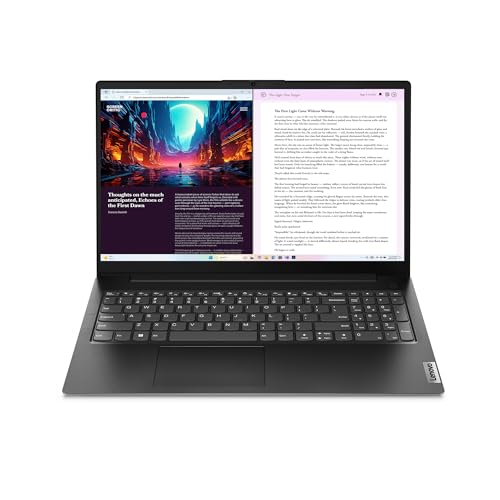
- Ryzen 5 7430U with 512GB SSD
- 15.6-inch anti-glare FHD display
- USB-C, HDMI, Ethernet, and Wi-Fi 6
Best For: Everyday coding, study, and general productivity
Best Business Configuration

- 16GB DDR5 RAM and 1TB SSD
- Windows 11 Pro with Ethernet and HDMI
- Includes numeric keypad and docking hub
Best For: Memory-conscious coding and office workflows
Best for Heavy Multitasking

- 8-core Ryzen 7 5825U processor
- 40GB RAM and 1TB NVMe SSD
- HDMI, RJ45, USB ports, and Windows 11 Pro
Best For: Large coding projects and parallel development tasks
Best Professional Pick – Lenovo ThinkPad E16 Core Ultra 7
For demanding laptops for programming use, the Lenovo ThinkPad E16 combines a powerful 16-core Intel Core Ultra 7 255H processor with generous memory and fast storage. Its 16-inch WUXGA display, Thunderbolt 4 connectivity, and Windows 11 Pro make it well suited to development, multitasking, and professional workflows.
Best For: Developers, business users, data analysts, and content creators who need strong multitasking performance.
Pros:
- Intel Core Ultra 7 255H processor with 16 cores and boost speeds up to 5.1GHz.
- 32GB DDR5 RAM and a 1TB PCIe 4.0 NVMe SSD support large projects and fast application loading.
- Thunderbolt 4, HDMI 2.1, Ethernet, and multiple USB ports simplify multi-monitor and peripheral setups.
- Windows 11 Pro, an IR camera, privacy shutter, and facial recognition add business-friendly features.
Cons:
- Integrated graphics are better suited to development and light creative work than demanding 3D workloads.
- The 16-inch design may be less convenient for frequent travel than a smaller notebook.
This is the most capable all-around option in the group for programming-heavy workloads. The combination of 32GB memory, professional connectivity, and a high-performance processor gives it useful headroom for virtual machines, containers, and large development environments.
Best Large-Screen Value – NIMO 17.3-inch Ryzen 5 Laptop
The NIMO is a practical choice among laptops for programming if you prefer a large workspace without stepping up to a dedicated gaming machine. Its Ryzen 5 6600H processor, 16GB of upgradeable DDR5 memory, and 1TB SSD provide a solid foundation for coding tools, browsers, meetings, and everyday creative work.
Best For: Students, home developers, and users who value a spacious display and upgradeable hardware.
Pros:
- 45W Ryzen 5 6600H processor offers 6 cores, 12 threads, and boost speeds up to 4.5GHz.
- 16GB DDR5 RAM can be upgraded to 64GB, while the SSD supports expansion up to 4TB.
- Large 17.3-inch anti-glare FHD display is convenient for code, split-screen work, and spreadsheets.
- Backlit keyboard, fingerprint reader, webcam shutter, and a wide selection of ports improve usability.
Cons:
- Integrated Radeon 660M graphics are intended for casual gaming and light graphics work, not demanding GPU development.
- Wi-Fi 5 is older than the wireless standard found on some newer alternatives.
- The 17.3-inch format is less portable than a typical 15- or 16-inch laptop.
With upgradeable memory and storage, this NIMO offers useful long-term flexibility for coding projects and large local files. Choose it when screen real estate matters more than maximum portability or premium business features.
Best Budget Starter – Lenovo IdeaPad Slim 3 N150
The Lenovo IdeaPad Slim 3 is an entry-level option for basic laptops for programming needs, such as learning to code, editing documents, browsing documentation, and attending online classes. Its lightweight design and full HD display are convenient, but the modest memory and storage make it better suited to smaller projects than intensive development environments.
Best For: Beginner programmers, students, web browsing, coursework, and lightweight coding tasks.
Pros:
- Lightweight 3.42-pound design is easy to carry between school, home, and the office.
- 15.6-inch anti-glare display provides a comfortable workspace for documentation and code.
- Wi-Fi 6, USB-C with DisplayPort, HDMI, USB-A ports, and an SD card reader offer useful connectivity.
- Physical webcam shutter, low-blue-light support, and MIL-STD-810H testing add practical everyday benefits.
Cons:
- 8GB RAM is not upgradeable and may limit heavier IDE, browser, container, or virtual-machine workloads.
- 128GB UFS storage leaves less room for development tools and project files.
- The Intel N150 processor is designed for essential computing rather than demanding compilation or data work.
This Lenovo makes sense as an affordable learning machine for introductory programming and general productivity. More advanced developers should look for substantially more memory and faster, larger SSD storage.
Best Touchscreen Everyday Option – HP OmniBook 3 Ryzen 5
The HP OmniBook 3 is a balanced everyday choice among laptops for programming, offering a sharp 16-inch touchscreen, a 512GB NVMe SSD, and a lightweight 3.6-pound chassis. Its Ryzen 5 7520U processor can handle coding practice, web development, documentation, and general multitasking, though the 8GB of onboard memory is a key limitation for heavier workflows.
Best For: Students, home programmers, and users who want a portable touchscreen for coding and general use.
Pros:
- 16-inch 1920×1200 IPS touchscreen provides a spacious, detailed workspace.
- 512GB PCIe NVMe SSD offers faster storage and more practical capacity than entry-level systems.
- At 3.6 pounds, it balances a large display with relatively easy portability.
- FHD HDR camera, noise reduction, Wi-Fi 6, USB-C connectivity, and fast charging support mobile work.
Cons:
- 8GB LPDDR5 memory is onboard, limiting upgrade options for demanding development setups.
- The Ryzen 5 7520U and Radeon 610M are aimed at everyday performance rather than intensive compilation or GPU workloads.
- The display resolution is listed as 1920×1200 despite the product’s 2K marketing description.
This HP is a good fit when portability, touchscreen convenience, and storage capacity matter more than maximum developer headroom. It is best for lighter coding environments, coursework, and everyday productivity.
Best Budget Pick – KAIGERR 15.6-inch N150 Laptop
If you need affordable laptops for programming basics, the KAIGERR combines 16GB of RAM, a 512GB NVMe SSD, and a Full HD screen in a relatively lightweight 15.6-inch design. Its Intel N150 processor is better suited to web development, learning environments, office work, and lighter coding workloads than demanding builds or intensive virtual machines.
Best For: Students and beginner programmers working with editors, browsers, documentation, and lightweight development tools.
Pros:
- 16GB RAM and a fast 512GB M.2 NVMe SSD support everyday multitasking.
- 15.6-inch 1920×1080 display provides useful workspace for coding.
- Three USB 3.2 ports, HDMI, USB-C data, Wi-Fi, and Bluetooth 5.0 offer flexible connectivity.
- Storage can be expanded with a TF card or an upgrade up to a 2TB SSD, according to the supplied specifications.
Cons:
- The four-core Intel N150 is aimed at lighter workloads rather than demanding compilation or virtualization.
- Integrated graphics are not intended for graphics-intensive development or gaming.
This is a practical entry-level choice for coding coursework and general development, especially when memory and storage matter more than maximum CPU performance.
Best Business Developer Laptop – Lenovo ThinkPad E16 Ryzen 7
The Lenovo ThinkPad E16 is one of the more balanced laptops for programming in this lineup, pairing an eight-core Ryzen 7 7735HS with 16GB of DDR5 memory and a 16-inch WUXGA IPS display. Windows 11 Pro, upgradeable memory, and a strong selection of business-focused features make it well suited to development work and hybrid productivity.
Best For: Developers who want a large anti-glare workspace, strong multitasking performance, and business-oriented security features.
Pros:
- Ryzen 7 7735HS offers 8 cores and 16 threads for compiling, multitasking, and development tools.
- 16GB DDR5 memory can be expanded to 64GB, according to the supplied details.
- 16-inch 1920×1200 IPS anti-glare display gives extra vertical space for code.
- Includes a 1TB PCIe NVMe SSD plus a 500GB hard drive, along with fingerprint and IR facial recognition.
Cons:
- Integrated Radeon 680M graphics are less suitable for GPU-intensive programming or creative workloads than a dedicated GPU.
- The 16-inch chassis is less compact than smaller developer laptops.
With its capable processor, upgrade path, comfortable 16:10 screen, and extensive connectivity, the ThinkPad E16 is a strong all-purpose option for professional and educational development.
Best for GPU-Accelerated Development – ASUS ROG Strix G16 RTX 5060
For programmers who also run GPU-heavy tools, game engines, or demanding creative workloads, the ASUS ROG Strix G16 delivers substantially more graphics capability than typical laptops for programming. Its Core i7-14650HX, RTX 5060 Laptop GPU, 16GB DDR5 memory, and 1TB Gen 4 SSD provide a powerful foundation, though the gaming-focused design is heavier and less battery-oriented.
Best For: Game developers, machine-learning enthusiasts using compatible GPU workflows, and programmers who also want a high-performance gaming system.
Pros:
- 16-core Intel Core i7-14650HX processor supports demanding multitasking and builds.
- Dedicated RTX 5060 GPU with 8GB graphics memory is useful for GPU-accelerated development and game engines.
- 16GB DDR5-5600 memory and a 1TB PCIe Gen 4 SSD provide responsive storage and multitasking.
- 16-inch 165Hz 16:10 display, Wi-Fi 7, and advanced vapor-chamber and tri-fan cooling support performance-focused use.
Cons:
- At 2.65 kg, it is considerably less portable than a typical productivity laptop.
- The supplied specifications list approximately two hours of battery life, so mobile unplugged work may be limited.
- Its gaming styling and Windows 11 Home may be less appropriate for conservative business environments.
This is the specialist choice for developers who need serious CPU and GPU headroom. For primarily web or office coding, its weight and gaming-oriented hardware may be more than necessary.
Best Balanced Pick – Lenovo V15 Gen 4 Ryzen 5
If you want a dependable option among laptops for programming, the Lenovo V15 Gen 4 combines an AMD Ryzen 5 7430U processor, 8GB of RAM, and a 512GB SSD in a practical 15.6-inch Full HD design. Its integrated graphics are suited to everyday development, office work, and web-based tools rather than graphics-intensive workloads.
Best For: Students and developers who want a balanced Windows laptop for coding, multitasking, and general productivity.
Pros:
- Ryzen 5 processor, 512GB SSD, and Wi-Fi 6 support
- 15.6-inch anti-glare FHD display with 300-nit brightness
- Useful port selection, including USB-C, HDMI, and Ethernet
- Privacy shutter, TPM 2.0, and durable tested construction
Cons:
- 8GB of RAM may limit heavier development environments and virtual machines
- Integrated graphics are not intended for demanding graphics workloads
The V15 Gen 4 is a sensible everyday coding machine with a clear display, solid connectivity, and useful security features. Consider a higher-memory model if your programming workflow regularly involves containers, emulators, or multiple virtual machines.
Best Business Configuration – Lenovo V15 G4 Ryzen 3
For buyers prioritizing memory and storage, this Lenovo V15 G4 is a practical choice among laptops for programming. It pairs an AMD Ryzen 3 7320U processor with 16GB of DDR5 RAM and a 1TB SSD, giving coding tools, browser tabs, and everyday applications more room to run.
Best For: Students, office users, and developers who value generous memory, storage, and Windows 11 Pro features.
Pros:
- 16GB DDR5 RAM and a 1TB SSD
- 15.6-inch 1920×1080 display with numeric keypad
- Windows 11 Pro, Ethernet, HDMI, USB-C, and two USB-A ports
- Camera privacy shutter and included docking hub
Cons:
- Ryzen 3 processor is less capable than the Ryzen 5 and Ryzen 7 options here
- Integrated graphics are best suited to programming and productivity, not intensive 3D work
The combination of 16GB memory and 1TB storage is appealing for a programming setup with many applications and project files. Its four-core processor is adequate for general coding, but demanding builds and heavier multitasking may favor a faster CPU.
Best for Heavy Multitasking – Lenovo V15 Ryzen 7
The Lenovo V-Series V15 stands out among laptops for programming with an eight-core, 16-thread AMD Ryzen 7 5825U processor, 40GB of RAM, and a 1TB PCIe NVMe SSD. That combination is well suited to developers who keep editors, browsers, local services, and other applications open simultaneously.
Best For: Multitasking developers who need substantial memory and storage for larger coding workflows.
Pros:
- Ryzen 7 5825U with 8 cores and 16 threads
- 40GB RAM and a 1TB PCIe NVMe SSD
- 15.6-inch FHD display with HDMI, RJ45, and three USB ports
- Windows 11 Pro and a numeric keypad
Cons:
- Display is limited to 60Hz and 1920×1080 resolution
- Integrated Radeon graphics are not designed for demanding graphics workloads
- Supplied specifications list mixed RAM-type details, so configuration should be verified before purchase
With its unusually large memory allocation and capable eight-core processor, this V15 is the strongest fit here for parallel development tasks and extensive multitasking. Its conventional Full HD display and integrated graphics keep it focused on productivity rather than visual development or gaming.
How We Picked These Laptops for Programming
We focused on specifications that directly affect development work: processor capability, RAM capacity, SSD storage, display usability, keyboard design, portability, connectivity, and upgrade potential. We also included different price and performance categories because a student writing basic Python code has very different needs from a developer running containers, emulators, databases, or virtual machines.
Every selection offers a practical starting point for coding, but specifications can vary by configuration. Confirm the exact processor, memory, storage, operating system, and screen details before purchasing.
Quick Comparison
| Best For | Recommended Type | What to Prioritize |
|---|---|---|
| Students and beginners | Affordable Lenovo or entry-level Windows laptop | 16GB RAM if possible, comfortable keyboard, SSD storage |
| Web and business development | Lenovo V-series or ThinkPad E16 | Reliable CPU, upgradeable memory, good connectivity |
| Professional multitasking | ThinkPad E16 with Core Ultra 7 or Ryzen 7 | Fast multicore performance, 16GB or more RAM, 1TB SSD |
| Game development and GPU work | ASUS ROG Strix G16 | Dedicated RTX graphics, strong cooling, high-refresh display |
Key Buying Factors for Laptops for Programming
Processor
Choose a modern Intel Core Ultra, Intel Core i7, or AMD Ryzen 5/7 processor for a responsive coding experience. More CPU cores help when compiling large projects, running local servers, building applications, or using several development tools simultaneously. Entry-level processors can handle basic coursework and web coding but may feel slow with heavier workloads.
RAM and Storage
16GB of RAM is the best general target for Laptops for Programming. It provides room for an editor, browser tabs, local databases, and development tools without constant slowdowns. An 8GB model can work for basic tasks, while 32GB is preferable for virtual machines, Android Studio, Docker, data science, and large projects. Choose an SSD, ideally 512GB or 1TB, for faster startup and file access.
Display, Keyboard, and Portability
A 15- or 16-inch Full HD display gives useful space for code and documentation. Higher-resolution or larger screens improve comfort, while a 16:10 aspect ratio provides extra vertical workspace. A firm, comfortable keyboard matters during long sessions; business-oriented ThinkPad models are especially attractive here. Consider weight and battery life if you regularly carry the laptop to class, work, or client sites.
Graphics and Connectivity
Integrated graphics are sufficient for most web, software, and scripting work. A dedicated GPU is worthwhile for game development, 3D tools, GPU-accelerated workloads, or gaming. USB ports, HDMI, Ethernet, Wi-Fi, and an external-monitor setup can also make a major difference in a developer workstation.
Who Should Buy Which Laptops for Programming?
Beginners and students should prioritize 16GB RAM, an SSD, and a comfortable keyboard over premium graphics. Web developers and office-based programmers will generally get the best balance from a Lenovo V-series or ThinkPad E16 system. Developers who compile frequently or run several demanding applications should choose a Ryzen 7 or Core Ultra 7 configuration with at least 16GB RAM and preferably 1TB of storage. Choose the ASUS ROG Strix G16 when dedicated graphics and sustained performance matter more than low weight or maximum battery life.