Low-frequency buildup is one of the hardest acoustic problems to fix, especially in small rooms where bass collects in corners and creates uneven playback. The best thick bass traps absorb more of this energy than thin wall panels, helping mixes, recordings, and movie soundtracks translate more consistently.
This roundup compares 10 corner-focused options in different sizes, materials, pack counts, and price ranges so you can match your room, placement plan, and acoustic goals.
Best 10 Thick Bass Traps Picks for 2026
Best Overall Coverage
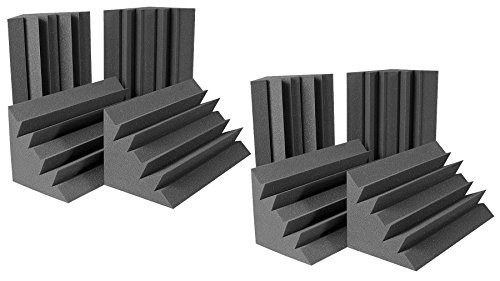
- Absorbs down to 63Hz
- Eight thick 24-inch traps
- NRC 1.50 rating
Best For: Broad corner treatment for low-frequency room control
Best Premium Build
ATS Acoustics Corner Bass Trap
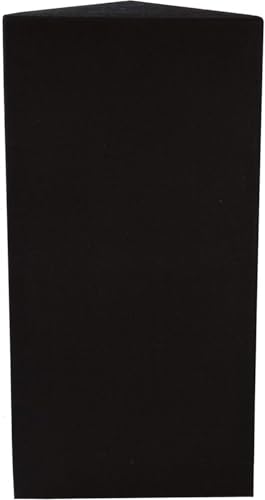
- Large 24-by-48-inch format
- Solid wood internal frame
- NRC 1.40 low-frequency treatment
Best For: Durable, framed studio-corner installation
Best Easy-Install Foam

- Four compact corner wedges
- 30 kg/m³ upgraded density
- Removable adhesive tape included
Best For: Simple treatment for home studios and theaters
Best Budget Framed Option

- Two 24-inch framed traps
- Solid wood and fabric construction
- Targets low and mid frequencies
Best For: Smaller rooms needing finished, framed corner treatment
High-Density Corner Coverage

- Eight corner pieces for extensive placement
- 12-inch-thick high-density polyurethane foam
- Fire-retardant B1-class performance noted
Best For: Studios and home theaters needing multiple thick corner traps
Super Chunk Corner Treatment
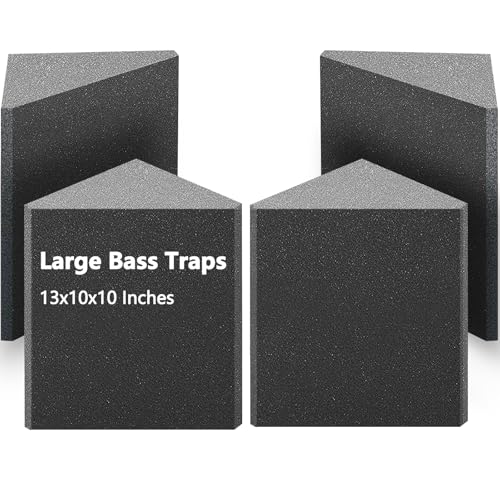
- Large 10 x 10 x 13-inch corner profile
- Designed to absorb low-frequency buildup
- Lightweight and easy to move
Best For: Portable corner treatment for studios, theaters, and home rooms
Versatile Studio Finish

- Targets low- and mid-frequency sound
- Corner or horizontal wall mounting
- Lightweight 7-inch square-edged blocks
Best For: Home studios and podcast rooms needing flexible placement
Best Freestanding Pick
TroyStudio Stackable Corner Traps

- Two stackable, freestanding corner absorbers
- Dense foam core with 360-degree felt shell
- No tools, brackets, or adhesive required
Best For: Renters and movable home-studio setups
Best Modular Foam Pack
Focusound 8-Pack Corner Bass Traps

- Eight lightweight polyurethane corner traps
- 30 kg/m³ density targets low frequencies
- Cuttable design fits varied corner spaces
Best For: Multi-corner treatment in studios and home theaters
Best High-Quantity Value
TroyStudio 12-Piece Thick Bass Foam

- Includes 12 dense 4 x 4 x 12-inch panels
- Designed to reduce bass, echo, and overlap
- Flame-retardant polyurethane foam
Best For: Broad, customizable treatment in home studios
Best Overall Coverage – Auralex LENRD Bass Traps
Auralex Acoustics LENCHA LENRD Acoustic Absorption Bass Traps, 24" x 12" x 12", 8 Pack, Charcoal
Check Price On AmazonFor shoppers comparing thick bass traps, the Auralex LENRD set offers substantial 24-by-12-by-12-inch units designed to address low-frequency buildup in room corners. Its stated absorption performance extends down to 63Hz, making it a practical choice for studios and listening spaces where bass response needs attention.
Best For: Corner-mounted low-frequency treatment in studios, theaters, and listening rooms.
Pros:
- Effective absorption down to 63Hz.
- Eight large traps provide broad treatment coverage.
- Can be mounted between walls and ceilings or horizontally on walls.
- NRC rating of 1.50.
Cons:
- The large 24-inch length requires substantial installation space.
- Designed primarily for corner or wall mounting rather than freestanding placement.
Choose this set when you want a dedicated, high-coverage solution for controlling low-end room nodes and have suitable mounting locations available.
Best Premium Build – ATS Acoustics Corner Bass Trap
ATS Acoustics Corner Bass Trap, Low Frequency Range, NRC 1.40, 24" x 48" x 13" (Black)
Check Price On AmazonThese thick bass traps combine a large 24-by-48-by-13-inch profile with a solid wood internal frame. The low-range design is intended to absorb low frequencies while reflecting higher frequencies, helping manage reverb and echo without treating the room as uniformly dead.
Best For: Professional-style studio corners where durable construction and low-frequency control are priorities.
Pros:
- NRC rating of 1.40.
- Large format provides substantial corner coverage.
- Solid wood frame helps protect edges and corners.
- Includes mounting hardware and a template.
Cons:
- At 41 pounds, installation may require more effort than lighter foam traps.
- The two-foot-by-four-foot size needs significant wall space.
- Only one black finish is listed in the supplied details.
This is a strong fit for buyers who want a substantial, framed treatment with an attractive jute exterior and straightforward mounting hardware.
Best Easy-Install Foam – Focusound Corner Bass Traps
Focusound offers four thick bass traps shaped for room corners and ceiling junctions. The updated 30 kg/m³ density foam is designed to reduce low-frequency reflections, reverb, and echo, while the included removable adhesive tape simplifies installation for home studios and theaters.
Best For: Lightweight corner treatment for podcast rooms, home studios, vocal booths, and home theaters.
Pros:
- Four corner wedges measure 16.5 by 6.3 by 12 inches.
- Updated 30 kg/m³ density targets low-frequency sound and reflections.
- Includes 30 pieces of washable, removable double-sided adhesive tape.
- Made from high-density, fireproof, non-toxic material according to the supplied notes.
Cons:
- The four-pack provides less total coverage than larger multi-unit sets.
- Adhesive installation may be less suitable for textured or unsuitable surfaces.
- The supplied notes do not provide a specific NRC rating.
This set makes sense when simple installation and compact corner placement matter more than maximum room coverage or a framed appearance.
Best Budget Framed Option – QGU Wooden Bass Traps
For a framed alternative among thick bass traps, this two-pack uses a solid wood frame, fabric covering, and fiberglass interior. The 24-inch panels are designed for trihedral room edges and aim to reduce standing waves, reverb, and flutter echo in small to medium-sized spaces.
Best For: Home studios, listening rooms, podcasts, and theaters needing framed low- and mid-frequency treatment.
Pros:
- Solid wood frame protects the edges and corners.
- Fabric-covered fiberglass construction suits home and studio environments.
- Designed to address low-frequency problems in room corners.
- Flame-retardant, recyclable, odorless, and non-toxic materials are listed.
Cons:
- Only two traps are included.
- The supplied product dimensions are listed as 1 by 1 by 1 inches, so the exact installation footprint is unclear beyond the stated 24-inch panel size.
- No specific NRC or frequency rating is provided.
This option is worth considering for buyers who prefer the finished look of wood and fabric over exposed foam and need targeted treatment for a smaller room.
High-Density Corner Coverage – 8-Pack 12-Inch Bass Traps
For shoppers seeking thick bass traps for broad corner coverage, this eight-pack uses 12-inch-thick, high-density polyurethane foam to target low-frequency buildup and standing waves. The corner format is suited to studio and home-theater treatment, but adhesive is not included and the compressed pieces need 24–48 hours to expand.
Best For: Recording studios, podcast rooms, home theaters, and other spaces needing multiple corner traps.
Pros:
- Eight-piece package supports treatment from floor to ceiling or selected ceiling corners.
- 12-inch thickness is substantial for a compact corner foam product.
- High-density foam is described as fire-retardant to the B1 class under CA117 testing.
- Designed to improve low-frequency response and reduce standing-wave effects.
Cons:
- Double-sided tape or spray adhesive must be purchased separately.
- Compressed packaging requires 24–48 hours in a ventilated place before installation.
- Coverage is listed as 512 square inches, so placement planning is important.
This is the most substantial multi-piece option here for buyers prioritizing thickness and quantity. Its installation flexibility and fire-retardant specification add practical value, provided you are prepared to supply mounting materials.
Super Chunk Corner Treatment – Large 4-Pack Bass Traps
These large thick bass traps are shaped for room corners, where low-frequency sound can accumulate. The four-pack uses lightweight acoustic foam intended to absorb low frequencies, reduce echoes and reverberation, and provide a movable treatment option for studios, theaters, or home spaces.
Best For: Buyers wanting large corner treatment that is easy to reposition between rooms or setups.
Pros:
- Corner-focused design targets areas where bass buildup is most likely.
- Listed dimensions of 10 x 10 x 13 inches provide a substantial corner profile.
- Lightweight construction makes the four pieces easy to move around.
- Intended to reduce unwanted echoes and reverberation as well as low-frequency sound.
Cons:
- The notes do not specify fire-retardant testing or a particular fire rating.
- Four pieces provide less quantity than the eight-pack alternative.
- Mounting hardware or adhesive is not identified in the supplied details.
This option balances a large corner shape with portability. It makes sense for users who want straightforward placement and movable treatment, while shoppers needing documented fire performance or more pieces may prefer another model.
Versatile Studio Finish – JBER 4-Pack Corner Bass Traps
JBER’s thick bass traps are designed for corner mounting between walls and ceilings, with an alternative horizontal wall-mounting option. Their acoustic foam targets low- and mid-frequency sound, making them a practical choice for home studios, podcast spaces, video rooms, and home cinemas.
Best For: Home-studio users who want flexible placement and a finished, square-edged appearance.
Pros:
- Designed to absorb low- and mid-frequency sound and help flatten room response.
- Can be installed in corners or mounted horizontally on walls.
- Lightweight 7-inch corner blocks are suitable for a range of rooms.
- Installation can use glue, double-sided tape, or nails.
Cons:
- The four-pack has less coverage than the eight-piece option.
- At 7 inches, these are thinner than the 12-inch corner traps listed above.
- The notes do not provide a fire-retardant rating.
This is a flexible, space-conscious choice for buyers who value easy installation and a cleaner studio look. Its lower thickness makes it less suited to shoppers seeking the deepest corner profile, but the alternate mounting options broaden its usefulness.
Best Freestanding Pick – TroyStudio Stackable Corner Traps
These thick bass traps are a flexible option for renters, home studios, and listening rooms. The two freestanding cylindrical absorbers combine a dense open-cell foam core with a felt shell, and their stackable design can extend corner coverage toward the ceiling.
Best For: Renters and creators who want movable, tool-free corner treatment with a more finished furniture-like appearance.
Pros:
- Stackable design supports floor-to-ceiling corner coverage.
- Freestanding construction needs no brackets, adhesive, or tools.
- Hybrid felt-and-foam construction is designed to absorb low frequencies while diffusing higher frequencies.
- Can also function as a plant stand or display pedestal.
Cons:
- Only two units are included, so additional coverage may require more sets.
- The inner foam arrives compressed and needs up to 48 hours to regain its shape.
- Freestanding units may occupy more floor space than wall-mounted foam.
This is the most convenient choice when permanent installation is undesirable. Its modular format and decorative design make it practical for rooms where acoustic treatment needs to remain easy to reposition.
Best Modular Foam Pack – Focusound 8-Pack Corner Bass Traps
The Focusound pack offers eight thick bass traps for treating multiple corners in a studio or home theater. Its 30 kg/m³ polyurethane construction is designed to address low-frequency buildup, echoes, and reverberation while remaining lightweight and easy to cut.
Best For: Buyers who need several lightweight foam pieces for broad corner coverage and flexible placement.
Pros:
- Eight-piece pack can treat multiple corners.
- High-density 30 kg/m³ polyurethane is designed for low-frequency absorption.
- Lightweight material can be cut to fit different spaces.
- Suitable for recording studios, vocal rooms, control rooms, and home theaters.
Cons:
- Adhesive is not included.
- Installation requires separate double-sided tape or another mounting method.
- Foam panels may provide a less finished appearance than freestanding acoustic furniture.
This pack is a practical middle ground for users who want more pieces than a two-unit freestanding set. Plan for mounting supplies separately, especially when installing the traps between walls and ceilings.
Best High-Quantity Value – TroyStudio 12-Piece Thick Bass Foam
For extensive corner treatment, this 12-piece set provides thick bass traps measuring 4 x 4 x 12 inches each. The dense polyurethane foam is designed to reduce low-pitched sound, echoes, and overlapping sounds, making it useful across recording, music, and home-theater spaces.
Best For: Home-studio owners who want a large quantity of mountable corner foam for comprehensive room treatment.
Pros:
- Includes 12 individual corner panels for broad coverage.
- Extra-thick, high-density polyurethane targets low-frequency problems.
- Panels can be cut and mounted between walls, floors, and ceilings.
- Flame-retardant, odorless, and non-toxic construction.
Cons:
- Installation accessories are sold separately.
- Mounting requires adhesive, tape, screws, or T-pins.
- Panels are not waterproof.
This set is well suited to buyers prioritizing quantity and customizable installation over freestanding convenience. It offers enough individual pieces to build out several corners, provided you budget for mounting supplies.
How We Picked the Best Thick Bass Traps
We focused on products designed specifically for corner placement and low-frequency absorption rather than general-purpose decorative foam. Our comparison considers trap thickness, overall coverage, stated acoustic performance, construction, mounting or stacking flexibility, fire-related claims where provided, and the value offered by each pack.
Because manufacturer ratings are not always measured under identical conditions, published NRC figures should be treated as useful reference points rather than perfectly apples-to-apples results. Room dimensions, corner geometry, installation gaps, and the number of treated corners can have just as much impact as the product itself.
Quick Comparison
| Best For | Look For | Typical Advantage |
|---|---|---|
| Dedicated recording studios | Large, dense corner traps | Greater low-frequency coverage |
| Small rooms and bedrooms | Compact foam or stackable designs | Easier installation and lower cost |
| Home theaters | Full-height corner treatment | More controlled bass across seating positions |
| Renters | Lightweight, removable products | Less permanent installation |
Key Buying Factors for Thick Bass Traps
Thickness and Coverage
Thicker traps generally have more material available to absorb low-frequency energy, but coverage matters too. Measure each corner from floor to ceiling and compare that space with the product’s dimensions. A smaller trap installed in all four corners may outperform a larger trap used in only one or two locations.
Material and Density
Acoustic foam is lightweight and simple to cut or install, while dense mineral-wool or fiberglass-style products typically provide stronger broadband absorption when properly covered. Check the manufacturer’s specifications, surface finish, and whether the product is intended to be mounted, stacked, or freestanding.
Placement and Installation
Prioritize the vertical corners, especially those behind speakers and near room boundaries. Leave an air gap behind wall-mounted absorbers when the design permits; this can improve absorption at lower frequencies. Confirm dimensions, mounting hardware, corner width, and clearance around doors, windows, and equipment before ordering.
Safety and Appearance
Look for clear fire-performance information if the traps will be used in a commercial or frequently occupied space. Also consider whether you want exposed foam, fabric-covered panels, wooden frames, or a stackable design that blends better with the room.
Who Should Buy Which Thick Bass Traps?
Choose large, dense corner traps if you are building a dedicated studio, mixing room, or home theater and have space for substantial treatment. Compact foam corner blocks are a practical starting point for bedrooms, podcast rooms, and other budget-conscious setups. Stackable or freestanding models suit renters and users who may need to rearrange the room, while multi-pack options are best for treating several corners at once.
No trap eliminates bass problems by itself. For the most even result, combine corner treatment with careful speaker placement, listening-position adjustments, and measurement software. Buy enough coverage to address multiple corners rather than expecting one oversized product to solve every room mode.