The best voice recorders make it easier to capture lectures, meetings, interviews, calls, and personal notes without relying on a phone. This roundup compares 10 practical options, from compact digital dictaphones to newer AI-assisted recorders that transcribe and summarize conversations.
Use the buying guide below to match recording capacity, sound quality, controls, battery life, and transcription features to the way you plan to record.
Best 10 Voice Recorders Picks for 2026
Best All-Around Recorder
EVISTR 64GB Digital Voice Recorder

- 64GB storage and up to 32 hours of recording
- 1536Kbps audio with noise reduction
- Voice activation, scheduling, and USB-C transfer
Best For: Students, teachers, writers, and professionals needing flexible long-session recording
Best AI Note Taker
Plaud Note Pro AI Voice Recorder
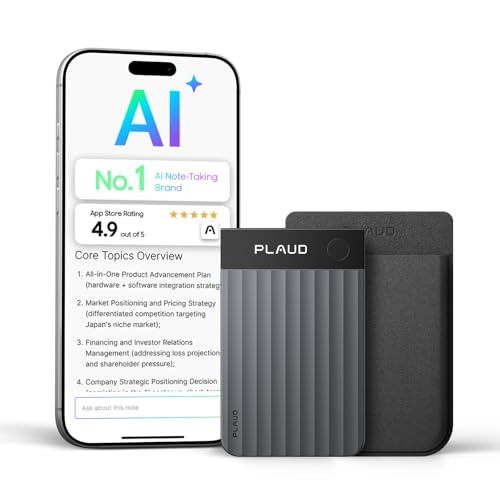
- Transcribes, summarizes, and lets you ask questions about recordings
- Directional audio and multimodal note input
- Up to 50 hours of continuous recording
Best For: Professionals managing meetings, calls, and sensitive information
Best Simple Budget Option
Sunlan 16GB Digital Voice Recorder

- Straightforward record, stop, and playback controls
- Noise reduction and 1536Kbps recording
- Voice activation and USB storage functionality
Best For: Students and casual users needing basic lecture or meeting recording
Best for AI Transcription Capacity
EVISTR 128GB AI Voice Recorder

- Transcribes in 113 languages and creates smart summaries
- 128GB storage with up to 33 hours of recording
- OTG transfer, privacy lock, and voice activation
Best For: Frequent multilingual recording and AI-assisted note organization
Best High-Capacity Pick

- Up to 9,800 hours of storage
- Up to 100 hours of recording
- AI-assisted triple noise reduction
Best For: Long lectures, meetings, interviews, and professional use
Best Feature-Rich Pick
NEXTSIGNAL 160GB Voice Recorder

- Up to 11,500 hours of storage
- 1536kbps stereo recording
- Password protection and flexible modes
Best For: Detailed recordings, private meetings, and frequent playback
Best with Extra Features
Tonfarb 136GB Digital Voice Recorder

- Up to 9,775 hours of storage
- Up to 68 hours of recording
- PCM, noise reduction, and one-click controls
Best For: Extended lectures, meetings, and interviews
Best Organized Recording Pick

- Up to 9,296 hours of storage
- Six voice-activation sensitivity levels
- Four-folder file management and bookmarks
Best For: Organized lecture, meeting, and interview recordings
Best Feature-Value Pick
Tonfarb 64GB Digital Voice Recorder

- 64GB storage for up to 4,600 hours
- 1536kbps PCM recording with noise reduction
- Scheduled recording and file segmentation
Best For: Versatile everyday recording and playback
Best All-Around Recorder – EVISTR 64GB Digital Voice Recorder
If you want versatile voice recorders for lectures, meetings, interviews, or personal notes, this EVISTR model combines high-capacity storage with straightforward controls. Its noise-reduction features, voice activation, playback tools, and USB-C file transfer make it a practical everyday option.
Best For: Students, teachers, writers, and professionals who need long recording sessions and flexible playback.
Pros:
- 64GB storage can hold up to 4,660 hours at 32Kbps.
- Records at up to 1536Kbps with dynamic and PCM noise reduction.
- Voice activation, scheduled recording, variable-speed playback, and A-B repeat add flexibility.
- Up to 32 hours of continuous recording and USB-C transfer for Windows and Mac.
Cons:
- Its many settings may take longer to learn than a basic recorder.
- Voice-activated recording depends on choosing an appropriate sensitivity level.
This is a strong general-purpose pick when storage, battery life, and control options matter more than app-based transcription. The metal body and compact design also suit regular carry.
Best AI Note Taker – Plaud Note Pro AI Voice Recorder
Among voice recorders, the Plaud Note Pro is designed for users who want recording to lead directly into transcription, summaries, and follow-up work. Its directional audio, multimodal notes, cross-device access, and AI tools make it especially suited to structured meeting workflows.
Best For: Business, legal, and medical professionals who want AI-assisted organization of meetings and calls.
Pros:
- AI features support transcription, summaries, questions, email drafts, and next-step suggestions.
- Four MEMS microphones and directional audio help capture speech clearly.
- Enhance Mode offers up to 30 hours of recording; Endurance Mode offers up to 50 hours.
- Ultra-slim aluminum design includes an AMOLED status display and Apple Find My support.
Cons:
- Transcription features are tied to the Plaud app and plan allowances.
- No headphone jack is included.
- It is more workflow-dependent than a basic standalone recorder.
The Note Pro is a premium choice for turning conversations into usable information rather than simply storing audio. Buyers should account for the included Starter Plan and potential subscription upgrades when comparing total cost.
Best Simple Budget Option – Sunlan 16GB Digital Voice Recorder
For shoppers seeking uncomplicated voice recorders, this Sunlan model focuses on essential controls: record, stop, play, and repeat. It adds voice activation, noise reduction, a built-in speaker, and USB file transfer without relying on a complex app.
Best For: Students and casual users who want an affordable recorder for lectures, interviews, and meetings.
Pros:
- Simple button-based operation is easy to use quickly.
- DSP noise reduction and 1536Kbps recording support clearer speech capture.
- Voice activation can reduce silent sections and conserve recording time.
- Includes music-player and removable USB storage functionality.
Cons:
- 16GB capacity is substantially lower than the larger recorders in this roundup.
- Battery life is listed at more than 30 hours for recording and 7 hours for playback.
- The supplied details specify WAV format rather than multiple recording formats.
This is a sensible pick when ease of use and core recording functions are the priority. Its compact 35-gram design and built-in speaker make it convenient for basic daily use.
Best for AI Transcription Capacity – EVISTR 128GB AI Voice Recorder
This EVISTR stands out among voice recorders by combining 128GB storage with AI transcription and summaries through the AI DVR Link app. It is built for users who want to record first and then organize spoken content into searchable, structured notes.
Best For: Students and professionals handling frequent lectures, meetings, interviews, or multilingual recordings.
Pros:
- AI tools support transcription in 113 languages, summaries, mind maps, speaker identification, and Ask AI insights.
- 128GB storage can hold up to 9,216 hours at 32Kbps.
- Up to 33 hours of continuous recording with a lightweight 65-gram body.
- One-touch recording, password encryption, HOLD switch, and wired OTG transfer add convenience and control.
Cons:
- AI processing requires the AI DVR Link app and a compatible phone connection.
- Wired OTG transfer is less convenient for users expecting Bluetooth connectivity.
- AI transcription quality and results may vary by language and recording conditions.
The L359 is a compelling hybrid for buyers who need both extensive local storage and app-based organization. Its privacy lock and wired transfer approach are useful for sensitive files, while the AI features extend it beyond ordinary playback.
Best High-Capacity Pick – Elasound 132GB Voice Recorder
If you need voice recorders for long lectures, meetings, interviews, or workplace notes, the Elasound stands out for its unusually large storage capacity and extended battery life. Its one-touch controls, voice activation, and AI-assisted noise reduction make it practical for frequent recording.
Best For: Professionals, students, journalists, and anyone who needs extensive storage for long recording sessions.
Pros:
- 128GB TF card storage supports up to 9,800 hours of audio at 32kbps.
- Up to 100 hours of continuous recording on a full charge.
- AI Intelligent Triple Noise Cancellation is designed to improve vocal clarity.
- Includes voice activation, USB-C transfer, a clip-on microphone, headphones, and adapters.
Cons:
- The highest stated storage capacity depends on lower-bitrate recording.
- Its larger feature set may be more than casual users need.
Choose this model when storage and endurance matter more than having the smallest possible recorder. The one-touch operation and included accessories also make it a flexible option for everyday recording.
Best Feature-Rich Pick – NEXTSIGNAL 160GB Voice Recorder
Among voice recorders, the NEXTSIGNAL combines high capacity with detailed stereo recording and flexible playback tools. It supports 1536kbps recording, multiple recording modes, password protection, and one-click operation in a compact zinc-alloy and acrylic body.
Best For: Users who want strong storage, stereo sound, privacy features, and multiple ways to organize or review recordings.
Pros:
- 160GB total storage can hold up to 11,500 hours of stereo recordings.
- 1536kbps stereo recording and dual microphones are designed for detailed sound capture.
- Offers voice control, scheduled recording, segment recording, and several preset modes.
- Password protection, bookmarking, A-B repeat, and variable-speed playback support organized review.
Cons:
- Its 68-plus-hour battery life is shorter than some very high-endurance alternatives.
- The many recording and playback options may take time to learn.
This is a strong choice if you value control and playback convenience as much as recording capacity. It is particularly appealing for confidential meetings, lectures, and users who frequently revisit saved audio.
Best Budget-Friendly Pick – HoTiyan 8GB Digital Voice Recorder
For shoppers seeking straightforward voice recorders for classes, meetings, or interviews, the HoTiyan offers essential features in a compact design. It has simple three-button controls, voice activation, stereo recording, and MP3/WAV support without the storage capacity of larger models.
Best For: Students and casual users who need an affordable, easy-to-operate recorder for shorter sessions.
Pros:
- Simple three-button operation starts, saves, and plays recordings quickly.
- Voice activation can reduce silent sections and conserve storage space.
- Supports MP3 and WAV recording, A-B repeat, variable playback speed, and password protection.
- Rechargeable battery provides up to 20 hours of continuous recording.
Cons:
- 8GB storage is substantially less than the capacity offered by the other listed models.
- Uses a Micro USB connection rather than USB-C.
- The stated recording time varies significantly with recording quality and bitrate.
The HoTiyan makes sense when ease of use and basic recording functions are the priority. Its smaller capacity and shorter battery life are best suited to routine note-taking rather than extended archival recording.
Best with Extra Features – Tonfarb 136GB Digital Voice Recorder
For shoppers comparing voice recorders, the Tonfarb A20 emphasizes long recording sessions, generous storage, and simple controls. It supports 1536 kbps PCM recording, automatic noise reduction, voice activation, and one-click recording, making it practical for lectures, meetings, interviews, and everyday notes.
Best For: Users who need extensive storage and long battery life for repeated or extended recording sessions.
Pros:
- 136GB total storage supports up to 9,775 hours of MP3 or WAV recordings.
- 1100mAh battery provides up to 68 hours of continuous recording.
- One-click recording, voice activation, noise reduction, password protection, and A-B repeat add convenience.
- USB-C transfer, a 1.44-inch screen, and a lightweight metal design improve portability.
Cons:
- The display is relatively small at 1.44 inches.
- The supplied storage figure combines 8GB of built-in memory with a complimentary 128GB TF card.
The A20 is a strong choice when capacity and endurance matter more than advanced connectivity. Its straightforward controls and protective features make it well suited to students, journalists, and professionals who frequently record on the go.
Best Organized Recording Pick – EVIDA 128GB Voice Recorder
The EVIDA V618 is one of the more feature-focused voice recorders in this roundup. It combines 1536Kbps PCM recording, adjustable voice activation, 128GB of storage, and organized four-folder file management for lectures, meetings, conversations, and interviews.
Best For: Students, teachers, business users, and writers who want flexible recording settings and structured file organization.
Pros:
- 128GB capacity stores up to 9,296 hours of recordings.
- Supports MP3 recording at 128kbps or 192kbps and WAV recording at 1536kbps.
- Six voice-activation sensitivity levels help reduce blank or quiet sections.
- Includes password protection, bookmarks, A-B repeat, auto recording, and four-folder storage.
Cons:
- Battery life is rated at up to 54 hours, shorter than the longest-lasting option here.
- The supplied details list no headphone jack.
- The microphone operation is mono rather than stereo.
Choose the EVIDA if file management and adjustable recording options are priorities. Its computer compatibility and included customer-service support also make it appealing for users who may appreciate help getting started.
Best Feature-Value Pick – Tonfarb 64GB Digital Voice Recorder
The Tonfarb A12 offers a practical balance of capacity, recording quality, and extra functions for shoppers seeking versatile voice recorders. It provides 64GB of storage, 1536kbps PCM WAV recording, automatic noise reduction, voice activation, and one-click controls in a pocket-friendly design.
Best For: Students, interviewers, travelers, and professionals who want a versatile recorder with playback and file-management tools.
Pros:
- 64GB storage holds up to 4,600 hours of recordings.
- One-click recording and saving works even when the device is powered off.
- Supports PCM WAV recording up to 1536kbps with automatic noise reduction.
- Includes scheduled recording, file segmentation, bookmarking, A-B loop playback, password protection, and MP3 playback.
Cons:
- The listed battery average is 32 hours, although continuous-use claims reach up to 48 hours under specified conditions.
- Its 64GB capacity is lower than the two higher-capacity alternatives.
- The device uses a 1.44-inch screen.
The A12 stands out for its broad feature set rather than maximum storage. It is a sensible option for users who want recording, playback, scheduling, and organization features without carrying a larger device.
How We Picked These Voice Recorders
We focused on features that matter in everyday recording: storage capacity, recording modes, playback, microphone performance, battery convenience, portability, and ease of transferring files. The selection includes straightforward digital recorders for lectures and interviews, as well as AI-enabled models designed to transcribe or summarize meetings and calls.
Capacity claims can vary by recording format and quality setting, so treat hour estimates as approximate. For important interviews or meetings, microphone placement and a quiet recording environment can matter as much as storage size.
Quick Comparison
| Best For | Features to Prioritize | Good Fit |
|---|---|---|
| Lectures and classes | Voice activation, playback, compact design | Simple digital recorders |
| Meetings and interviews | Noise reduction, clear microphones, reliable battery | Higher-capacity models with playback |
| Transcripts and summaries | AI transcription, app or cloud support | PLAUD Note Pro or AI-enabled EVISTR models |
| Frequent long recordings | Large storage, rechargeable battery, file management | 128GB–160GB recorders |
Key Buying Factors for Voice Recorders
Storage and Recording Format
More storage is useful when you record regularly or prefer not to delete files often. However, recording quality affects capacity, and unusually high hour estimates generally reflect lower-quality settings. Check whether the device supports convenient file transfer and whether recordings are saved in a common format such as MP3 or WAV.
Microphone and Noise Control
For lectures, a voice-activated recorder can reduce silent sections and simplify playback. Interviews and meetings benefit from better microphone pickup and noise reduction, but no compact recorder can eliminate every background sound. Position the device close to the speaker whenever possible.
Playback, Controls, and Privacy
Built-in playback is valuable for reviewing notes without moving files to another device. Look for simple buttons, a readable display, adjustable playback speed, and password protection if recordings contain sensitive information. A small body is convenient, but controls should still be easy to use quickly.
Battery and Transcription Features
Rechargeable USB models are convenient for regular use, while AI recorders can save time by producing searchable transcripts or summaries. Confirm whether transcription requires an app, an account, an internet connection, or a paid service before buying.
Who Should Buy Which Voice Recorders?
Students and casual users should choose a compact recorder with voice activation, playback, and enough storage for a semester or several projects. Interviewers and professionals should prioritize microphone quality, noise reduction, dependable battery life, and straightforward file transfer. Buyers who spend more time reviewing notes than recording should consider an AI model with transcription and summarization. If your priority is maximum archive space, select a high-capacity recorder—but verify its controls, battery performance, and file-management process rather than choosing on storage alone.