Choosing the right recorder can make lecture notes easier to review, quote, and organize later. The best options balance clear audio, simple controls, strong battery life, and enough storage for long class sessions.
This roundup of the best podcast recorders for lectures in 2026 focuses on practical, portable models for students, researchers, and anyone who needs reliable audio from a classroom or seminar.
Best 10 Podcast Recorders for Lectures Picks for 2026
Field-Ready Creator Recorder
Zoom H4 Essential for Lectures

- Built-in stereo mics and 2 XLR/TRS inputs
- 32-bit float audio helps avoid clipping
- Records to SD card and via USB-C
Best For: Lecture capture and flexible podcast recording
AI Note Taker
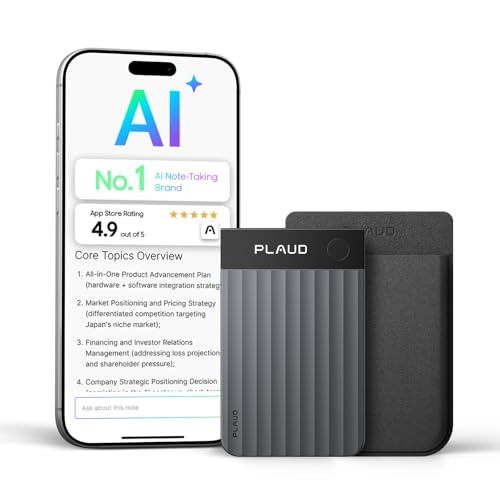
- AI transcription, summaries, and follow-up Q&A
- Directional audio with automatic mode switching
- Ultra-slim design with long battery life
Best For: Lecture recording with AI note-taking and transcription
Compact XLR Recorder

- 2 XLR/TRS combo inputs in a compact recorder
- 32-bit / 96kHz recording with waveform display
- 3.5mm input and headphone output included
Best For: Portable lecture recording with professional inputs
Budget Lecture Voice Recorder
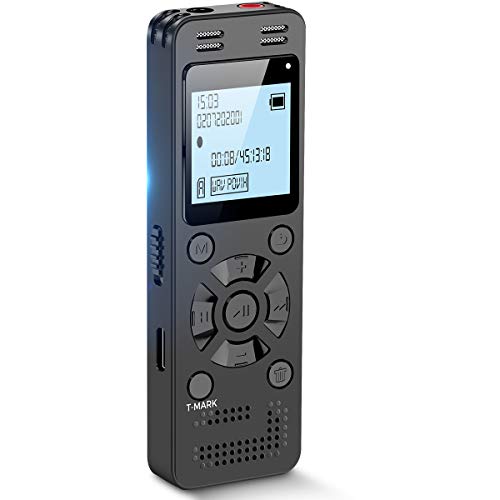
- 128GB storage with voice activation
- Playback, bookmark, and password features
- High-capacity recorder for long lecture sessions
Best For: Budget lecture recording and easy review
Portable Stereo Lecture Recorder

- X/Y stereo mics with 32-bit float recording
- USB-C mic mode for calls, livestreams, and desktop use
- Lightweight 92 g body with 3.5 mm headphone monitoring
Best For: Students and creators who need a compact recorder for lectures and interviews
High-Capacity Voice Note Recorder

- Voice activation helps capture speech while skipping silence
- 64 GB storage rated for up to 4,660 hours of recordings
- Simple 2-button controls with playback and A-B repeat
Best For: Lecture notes and interviews when simple controls and long storage matter most
Long-Run Classroom Recorder

- 136 GB total storage with included TF card support
- Up to 68 hours of battery life for long recording days
- Voice activation and noise reduction for speech-focused capture
Best For: Long lecture days and users who want lots of storage with easy operation
Compact Lecture Recorder
16GB Voice Recorder with Playback
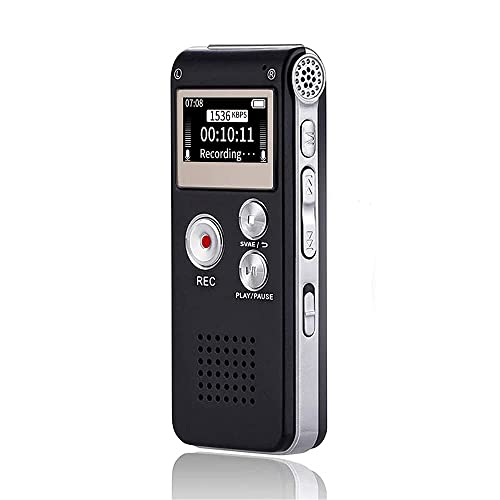
- One-button REC/STOP/PLAY operation
- Noise reduction and voice-activated recording
- 16GB storage with up to 30 hours recording
Best For: students who want a simple lecture recorder for easy review
Long-Run Lecture Recorder

- 16GB storage for extensive lecture recording
- Voice activation helps reduce silent gaps
- A-B repeat, speed control, and password protection
Best For: users who want more storage and study tools for longer lecture sessions
Field-Ready Creator Recorder – Zoom H4 Essential for Lectures
If you want podcast recorders for lectures that can handle classroom dialogue, guest speakers, and backup audio without fuss, the Zoom H4 Essential is a strong all-around choice. Its built-in stereo mics, 2 XLR/TRS inputs, and 32-bit float capture make it useful when you need clear speech and some flexibility for adding external mics or a soundboard.
Best For: Lecture capture, interview-style podcasting, and users who want a more versatile recorder with external input options.
Pros:
- Built-in stereo microphones plus two XLR/TRS inputs for flexible lecture setups
- 32-bit float recording helps reduce worry about distorted takes
- USB-C support lets you record or stream to a phone, tablet, or computer
- Records to both your device and SD card for added backup
Cons:
- Uses two AA batteries rather than a built-in rechargeable pack
- More feature-rich than a basic voice recorder, so it may feel less simple for casual users
The H4 Essential is a practical pick if your lecture recordings need room to grow beyond basic memo capture. It offers the kind of input and backup flexibility that makes sense for creators who want one device for classes, interviews, and podcasts.
AI Note Taker – Plaud Note Pro for Lectures
For podcast recorders for lectures where transcription and note capture matter as much as audio, the Plaud Note Pro adds a lot of convenience. It combines audio recording with multimodal inputs, instant key-moment marking, and AI features that can help you review lectures faster and pull out useful points afterward.
Best For: Students, professionals, and anyone who wants lecture audio plus AI transcription and summaries.
Pros:
- AI transcription and summary tools with “Ask Plaud” for follow-up questions
- Directional audio and automatic call/meeting mode switching
- Very slim, credit-card-sized design with AMOLED display
- Long battery life, with up to 30 hours in Enhance Mode and 50 hours in Endurance Mode
Cons:
- No headphone jack for direct monitoring
- Best value depends on whether you will use the included transcription minutes
This is less of a traditional recorder and more of an AI-powered study tool. If your priority is turning lectures into searchable notes and summaries, the Plaud Note Pro stands out for workflow rather than raw hardware inputs.
Compact XLR Recorder – Zoom H1 XLR for Lectures
If you need podcast recorders for lectures that stay compact but still accept proper mic connections, the Zoom H1 XLR is built for that middle ground. It records in 32-bit / 96kHz, includes two XLR/TRS combo inputs, and adds a waveform display so you can keep an eye on levels while capturing class audio or interviews.
Best For: Lectures, interviews, and small recording setups that need XLR inputs in a compact body.
Pros:
- Two XLR/TRS combo inputs for microphones and other sources
- 32-bit / 96kHz recording for detailed audio capture
- OLED waveform display makes level checking easier
- 3.5mm input and headphone output add useful monitoring options
Cons:
- Mono/stereo operation may be more than some lecture users need
- Requires two AA batteries instead of built-in charging
The H1 XLR is a smart choice when you want a small recorder that still feels serious about audio quality. It is especially appealing if your lecture setup may occasionally expand to external mics or other gear.
Budget Lecture Voice Recorder – EVIDA 128GB for Lectures
When you mainly want podcast recorders for lectures that are simple, spacious, and easy to carry, the EVIDA 128GB recorder leans into practicality. It offers voice-activated recording, long storage capacity, and playback features, making it a straightforward choice for capturing classroom sessions and reviewing them later.
Best For: Students and note-takers who want a budget-friendly lecture recorder with lots of storage.
Pros:
- 128GB of storage with claims of up to 9,296 hours of recording capacity
- Voice-activated recording with six sensitivity levels
- Supports PCM-style high-quality capture up to 1536Kbps
- Includes playback, password protection, bookmark, and folder organization features
Cons:
- Built-in recording is mono, not a multi-mic podcasting setup
- No headphone jack for direct monitoring
This recorder makes sense if lecture capture is the main job and you want a device focused on storage, voice activation, and simple file management. It is more about utility than studio-style flexibility, but that can be exactly what many students need.
Portable Stereo Lecture Recorder – Zoom H1 Essential
If you want one of the more versatile podcast recorders for lectures, the Zoom H1 Essential is built to capture clear voice audio without being locked into one use case. Its X/Y stereo mics, 32-bit float recording, and USB-C mic mode make it a practical pick for classrooms, interviews, voiceovers, and quick desk setups when you want cleaner sound than a phone or camera can provide.
Best For: Students, podcasters, and creators who need a compact recorder for lectures, interviews, and USB mic use.
Pros:
- X/Y stereo microphones with 32-bit float help capture clear audio in lectures and conversations.
- USB-C microphone mode works for livestreams, remote meetings, calls, and desktop recording.
- Compact 92 g design makes it easy to carry to class, meetings, or recordings on the go.
- Supports 3.5 mm headphone monitoring and records in WAV format.
Cons:
- Uses two AAA batteries instead of a built-in rechargeable battery.
- Battery life is listed at up to 10 hours, which is shorter than some lecture-focused voice recorders.
The H1 Essential is a strong choice if you want a flexible recorder that can handle lecture capture and still double as a USB microphone. It leans more toward creators who value cleaner stereo sound and broader usability than ultra-simple note taking.
High-Capacity Voice Note Recorder – EVISTR L357 64GB Recorder
For buyers comparing podcast recorders for lectures, the EVISTR L357 stands out as a simple voice-first option with very long storage and easy operation. It is designed for straightforward capture in classrooms, meetings, and interviews, with voice activation, noise reduction, and a portable metal build that suits everyday carry.
Best For: Lecture recording, class notes, and interview capture when you want easy controls and long storage.
Pros:
- Voice activation can record only when speech is detected, helping reduce silent gaps.
- 64 GB storage is rated for up to 4,660 hours of recordings at 32 kbps.
- Simple 2-button operation makes it easy to start and save recordings quickly.
- Includes playback features such as A-B repeat, rewind, and variable speed.
Cons:
- Built-in microphone design is more basic than external stereo mic recorders.
- Best suited to voice capture rather than more advanced content creation needs.
The EVISTR L357 is a practical pick if your priority is uncomplicated lecture recording with lots of storage and no learning curve. Its strength is convenience: easy recording, voice activation, and file handling for students and meeting notes.
Long-Run Classroom Recorder – Tonfarb A20 136GB Recorder
The Tonfarb A20 is a straightforward option if you need podcast recorders for lectures with generous storage and long battery life. It combines voice-activated recording, automatic noise reduction, and one-touch operation, making it a good fit for classroom sessions, back-to-back meetings, and other long recording days where convenience matters.
Best For: Long lecture days, classroom recording, and users who want large storage with easy one-touch controls.
Pros:
- 136 GB total capacity with included TF card support gives plenty of room for long sessions.
- Battery life is rated up to 68 hours, which is useful for extended recording schedules.
- Voice-activated recording and automatic noise reduction help focus on speech.
- One-click record and save makes it easy to capture audio quickly, even when powered off.
Cons:
- Built-in microphone design may be less flexible than a stereo mic recorder.
- USB 2.0 connection is less modern than newer USB-C-only models.
The A20 is best viewed as a dependable lecture capture tool rather than a creator-focused recorder. If you want long battery life, large storage, and simple operation, it covers the essentials well.
Compact Lecture Recorder – 16GB Voice Recorder with Playback
If you want podcast recorders for lectures that keep things simple, this 16GB digital voice recorder is built around one-button operation and easy playback. It records in WAV with noise reduction, includes voice-activated recording, and offers enough battery life and storage for long class sessions without much fuss.
Best For: Students who want a straightforward recorder for lectures, meetings, and quick review.
Pros:
- Simple REC/STOP/PLAY controls make it easy to start and review recordings.
- Noise reduction and a sensitive microphone help capture lecture speech clearly.
- Voice-activated mode can save space and reduce dead air.
- 16GB storage and up to 30 hours of continuous recording support long use.
Cons:
- Mono microphone mode may be less flexible than multi-mic setups.
- Feature set is practical, but not aimed at advanced recording workflows.
Overall, this is a sensible pick if you need a dependable lecture recorder with easy controls and long recording time. It focuses on the basics that matter most for class notes and spoken-word capture.
Value Lecture Recorder – 8GB Voice Activated Recorder
For podcast recorders for lectures on a budget, this 8GB voice recorder focuses on core classroom features like voice activation, A-B repeat, and straightforward file transfer. It also includes playback, MP3 player functionality, and enough battery life for long study sessions or multiple classes.
Best For: Budget-minded users who want lecture recording with useful playback tools.
Pros:
- Voice-activated recording helps skip silence and save space.
- A-B repeat, variable playback speed, and timestamps are useful for studying lectures.
- 8GB storage supports a large number of recordings.
- Rechargeable battery and USB transfer make daily use convenient.
Cons:
- 8GB is smaller than higher-capacity options.
- Best suited to basic recording needs rather than feature-heavy workflows.
This model stands out if you want practical lecture recorder features without overcomplicating setup. Its study-friendly playback tools make it especially helpful for reviewing class material.
Long-Run Lecture Recorder – 16GB Voice Activated Recorder
If you need podcast recorders for lectures with more room to grow, this 16GB voice recorder combines voice activation, noise reduction, and long recording time in a compact body. It supports MP3/WAV files, easy USB transfer, and playback features that make it practical for both classes and meetings.
Best For: Users who want longer storage and more recording time for lectures and meetings.
Pros:
- 16GB capacity supports a large amount of recorded lecture audio.
- Voice-activated recording helps conserve space during quiet moments.
- Noise reduction and a sensitive microphone are designed for clearer speech capture.
- A-B repeat, variable speed, and password protection add study convenience.
Cons:
- Only 20 hours of battery life, which is less than some high-end recorders.
- Best features are focused on spoken-word use rather than versatile content creation.
For lecture capture, this model offers a strong balance of storage, playback tools, and simple operation. It is a solid option when you want more headroom for long sessions and repeated review.
How We Picked These Podcast Recorders for Lectures
We prioritized models that are easy to carry, fast to start, and suitable for classroom use. For Podcast Recorders for Lectures, the most important factors are intelligible speech capture, dependable battery life, straightforward file transfer, and enough storage for multi-hour sessions.
We also favored devices with voice activation, playback, and simple USB charging or transfer, since those features make lecture review more efficient.
Quick Comparison: What Matters Most
If you want the simplest choice, look at battery life, storage capacity, and whether the recorder supports voice-activated recording. If you need better control in noisier rooms, consider a recorder with stronger microphones, better gain options, or a more rugged handheld design. Advanced models may also suit users who want more flexible audio use beyond class lectures.
Key Buying Factors for Podcast Recorders for Lectures
Audio Clarity
Speech intelligibility matters more than deep bass or music performance. A good lecture recorder should capture voices clearly from a desk, bag, or front-row seat.
Battery and Storage
Long classes and back-to-back lectures can drain weak devices quickly. Look for enough battery life to cover your longest day, plus storage that can handle repeated recordings without constant file management.
Voice Activation and Playback
Voice-activated recording can save space and reduce silent gaps. Built-in playback is also useful when you want to review notes immediately without transferring files first.
Portability and Ease of Use
Small, one-button recorders are often best for students. If you need a more versatile device, a larger handheld recorder may offer better controls and audio options at the cost of some portability.
Who Should Buy Which Podcast Recorders for Lectures?
Students who want a lightweight, budget-friendly option should focus on compact voice recorders with voice activation and USB charging. If you need stronger overall audio performance and more flexible use, a premium handheld recorder is a better fit. Professionals who also need transcription, summaries, or meeting notes may prefer an AI-enabled model. For most shoppers comparing Podcast Recorders for Lectures, the best choice is the one that matches your class length, storage needs, and how much editing you want to do later.