If you need clean voice capture, easy portability, and flexible inputs, the right recorder can make a big difference in your podcast or music workflow.
This roundup of podcast recorders for musicians focuses on practical options for solo creators, interview setups, rehearsals, and on-the-go recording, with an eye on sound quality, reliability, and ease of use.
Best 10 Podcast Recorders for Musicians Picks for 2026
Portable 4-Track Creator Pick
Zoom H5 4-Track Handheld Recorder
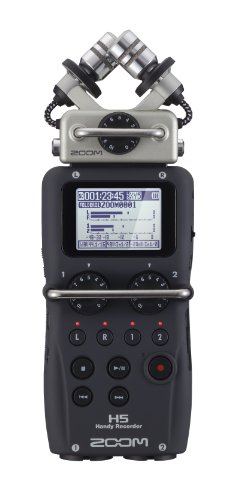
- Interchangeable input capsules for different setups
- Two XLR/TRS combo inputs with phantom power
- Four-track simultaneous recording with USB audio interface
Best For: Musicians who want a compact recorder with swappable mics and flexible inputs
Ultra-Portable Stereo Capture Pick

- Built-in X/Y stereo mics for quick recording
- USB-C microphone mode for streaming and calls
- Lightweight 92 g design for grab-and-go use
Best For: Musicians and creators who need an easy grab-and-go recorder for stereo audio and voice capture
Layering and Looping Pick

- Records up to 4 tracks with a bounce track
- 32-bit float recording helps prevent clipping
- Built-in rhythm section with 80-plus patterns
Best For: Songwriters and musicians who want a compact multitrack recorder with bounce workflows and built-in beats
All-Purpose 4-Track Pick
Zoom H4 Essential Handheld Recorder

- 4-track recorder with built-in stereo mics
- Two XLR/TRS inputs for external gear
- USB-C recording plus SD card backup
Best For: Musicians who want a versatile recorder for songs, podcasts, and live audio capture
Portable 32-Bit Field Recording
Zoom F3 Professional Field Recorder

- 32-bit float recording for clip-free capture
- Dual locking XLR inputs for secure connections
- Ultra-low-noise preamps for clean audio
Best For: Musicians and podcasters needing a compact, secure field recorder
All-in-One Handheld Multitrack
Zoom H6 Essential Handheld Recorder

- 6-track 32-bit float recording
- Four XLR/TRS inputs plus built-in X/Y mics
- USB audio interface for PC, Mac, iOS, and Android
Best For: Musicians who need a versatile handheld recorder for multi-source sessions
Studio-Ready Handheld Recorder

- Six-track 32-bit float recording
- 19.4mm mics handle up to 140 dB SPL
- Look-ahead limiters help prevent overloads
Best For: Musicians who want a studio-style handheld recorder with high headroom
Portable 32-bit Recorder

- 32-bit/96kHz recording for clear, detailed audio
- Two XLR/TRS combo inputs for flexible sources
- OLED waveform display and 3.5mm I/O add control
Best For: Musicians needing a compact XLR recorder for podcasts and everyday sessions
All-in-One Video Recorder

- 4K video with a 150b0 wide-angle lens
- X/Y mics rated to 120dB SPL for loud audio
- USB streaming to major platforms
Best For: Musicians who need a compact recorder for live video and streaming
Handheld Clip-Free Recorder
Zoom H2 Essential for Podcasting

- Three built-in mics with nine selectable patterns
- 32-bit float recording avoids gain adjustments
- USB mic mode and SD backup recording
Best For: Musicians and podcasters who want a portable built-in-mic recorder
Portable 4-Track Creator Pick – Zoom H5 4-Track Handheld Recorder
If you want podcast recorders for musicians that can also handle rehearsals, interviews, and video work, the Zoom H5 is a flexible handheld option. Its interchangeable capsule system, dual XLR/TRS inputs, and four-track recording make it a practical pick when you need more routing options than a basic stereo recorder.
Best For: Musicians who want a compact recorder with swappable mics and real input flexibility.
Pros:
- Interchangeable input capsules let you adapt the recorder to different sessions.
- Detachable XYH-5 capsule includes shock-mounted mics for reduced handling noise.
- Two XLR/TRS combo inputs with selectable phantom power and -20dB pad support external gear.
- Four-track simultaneous recording adds more room for layered setups.
Cons:
- Uses 2 AA batteries, so you’ll want spares for longer sessions.
- Records to SD/SDHC cards up to 32GB, which is less flexible than higher-capacity options.
The H5 stands out if you value expandability and direct input control over ultra-simple operation. It is a solid middle ground for musicians who need a recorder that can grow with different recording situations.
Ultra-Portable Stereo Capture Pick – Zoom H1 Essential Recorder
For podcast recorders for musicians who need something small and fast to deploy, the Zoom H1 Essential keeps the focus on simple stereo capture. It is designed for songwriting sessions, rehearsals, acoustic performances, interviews, and USB-C recording when you want clear sound without a complicated setup.
Best For: Musicians and creators who need an easy grab-and-go recorder for stereo audio and voice capture.
Pros:
- Captures clear stereo audio for music, podcasts, interviews, and voiceovers.
- Built-in X/Y stereo mics make it easy to record right out of the box.
- USB-C support lets it work as a microphone for livestreams, calls, and desktop/mobile recording.
- Compact 92 g design is easy to carry for quick sessions and field use.
Cons:
- It is a stereo recorder, so it is not aimed at multitrack workflows.
- Uses 2 AAA batteries, which may be less convenient than rechargeable power.
This is a strong choice if your priority is speed and portability rather than advanced track management. It fits musicians who want dependable capture for everyday recording without adding bulk.
Layering and Looping Pick – Zoom R4 Multi-Track Recorder
If your podcast recorders for musicians need to handle layering, bouncing, and jam-friendly workflows, the Zoom R4 is built around that style of recording. It captures up to four tracks, supports two combo inputs, and adds a built-in rhythm section to keep ideas moving.
Best For: Songwriters and musicians who want a compact multitrack recorder with bounce workflows and built-in beats.
Pros:
- Records up to 4 tracks and includes a dedicated bounce track for layering.
- 32-bit float recording helps avoid clipping without constant gain adjustments.
- Two XLR/TS combo inputs handle microphones, instruments, keyboards, and more.
- Built-in rhythms with 80-plus patterns support practice and songwriting sessions.
Cons:
- Requires 4 AA batteries for portable use.
- Its workflow is more specialized toward tracking and jamming than simple voice-only recording.
The R4 is especially useful if you like to build parts step by step and want a recorder that encourages that process. It offers a good blend of portability, multitrack tools, and creative extras for musicians.
All-Purpose 4-Track Pick – Zoom H4 Essential Handheld Recorder
Among podcast recorders for musicians, the Zoom H4 Essential is a practical all-rounder for music, interviews, and live performances. It combines built-in stereo mics, two XLR/TRS inputs, and 4-track recording, so you can handle more involved sessions without giving up handheld convenience.
Best For: Musicians who want a versatile recorder for songs, podcasts, and live audio capture.
Pros:
- 4-track recording gives you more room for music and spoken-word projects.
- Built-in stereo microphones plus two XLR/TRS inputs support flexible setups.
- 32-bit float recording helps capture quiet dialogue and loud performances more safely.
- USB-C connectivity lets you record or stream to a phone, tablet, or computer while also backing up to SD card.
Cons:
- Uses 2 AA batteries, so it is not the most power-efficient portable option.
- Some users may not need the extra track count if they only record simple stereo content.
The H4 Essential makes sense when you want one recorder that can cover multiple types of sessions. It is a balanced option for musicians who need a handheld tool that works across recording and streaming tasks.
Portable 32-Bit Field Recording – Zoom F3 Professional Field Recorder
If you’re comparing podcast recorders for musicians, the Zoom F3 is a compact choice built for situations where clean capture matters more than features. Its 32-bit float recording and dual locking XLR inputs make it a practical fit for recording performances, rehearsals, or remote sessions without constantly watching levels.
Best For: Musicians and podcasters who want a small, rugged recorder with secure XLR connections and worry-free level handling.
Pros:
- 32-bit float recording helps prevent clipped takes in unpredictable recording conditions.
- Dual locking XLR inputs keep cables secure in mobile or mounted setups.
- Ultra-low-noise preamps support clean audio when the environment isn’t controlled.
- Flexible power and USB workflows suit long recording days.
Cons:
- Only two XLR inputs, so it’s better for smaller rigs than multi-source sessions.
- Designed as a field recorder, so it is less feature-rich than larger handheld models.
The F3 is a focused tool: simple, secure, and built to capture clean audio with minimal fuss. For musicians who value reliability over extras, it makes a strong portable recording base.
All-in-One Handheld Multitrack – Zoom H6 Essential Handheld Recorder
Among podcast recorders for musicians, the Zoom H6 Essential stands out when you need more inputs and more flexibility. It combines 32-bit float recording, built-in X/Y mics, and four XLR/TRS combo inputs, making it a versatile option for tracking vocals, instruments, interviews, or live sets.
Best For: Musicians who want a handheld recorder that can handle multi-source sessions and double as a USB interface.
Pros:
- 6-track 32-bit float recording helps keep takes clean across different source levels.
- Four XLR/TRS combo inputs plus built-in X/Y mics offer flexible recording setups.
- Interchangeable capsule system adds adaptability for different scenarios.
- Works as a USB audio interface for PC, Mac, iOS, or Android.
Cons:
- Requires 4 AAA batteries, which may be less convenient than built-in rechargeable power.
- More features mean a slightly more complex workflow than simpler recorders.
The H6 Essential is the most flexible option here if you need one recorder to do a lot of jobs. It balances input count, backup recording, and interface functionality in a way that suits musicians who record in more than one context.
Studio-Ready Handheld Recorder – Zoom H6 Studio Handy Recorder
If you want podcast recorders for musicians with a more studio-minded sound and controls, the Zoom H6 Studio is built for that role. It records up to six tracks in 32-bit float, offers large 19.4mm mics, and adds look-ahead limiters to help keep recordings clean when levels get unpredictable.
Best For: Musicians who want a handheld recorder with high headroom, strong onboard mics, and studio-style control.
Pros:
- Records up to 6 tracks with 32-bit float for distortion-free capture.
- 19.4mm microphones handle up to 140 dB SPL.
- Look-ahead limiters help prevent overloads before distortion happens.
- Selectable sample rates from 44.1 to 192 kHz support detailed recording.
Cons:
- It runs on 4 AA batteries, so long sessions depend on battery management.
- Its studio-focused feature set may be more than needed for simple voice recording.
The H6 Studio is the strongest pick here if you care about headroom, limiter behavior, and higher-resolution capture. It feels designed for users who want their handheld recorder to behave like a serious production tool.
Portable 32-bit Recorder – Zoom H1 XLR for Musicians
If you want podcast recorders for musicians that keep setup simple while still delivering pro-level audio, the Zoom H1 XLR is built for exactly that kind of use. It records in 32-bit/96kHz, gives you two XLR/TRS combo inputs, and adds an OLED waveform display so you can monitor levels quickly during interviews, rehearsals, or straightforward podcast sessions.
Best For: Musicians who want a compact recorder with XLR inputs for podcasts, interviews, and everyday recording.
Pros:
- 32-bit/96kHz recording helps capture detailed audio with simple operation.
- Two XLR/TRS combo inputs support microphones, instruments, and other sources.
- OLED waveform display makes level checking easy at a glance.
- 3.5mm stereo in/out adds flexible monitoring and external connection options.
Cons:
- It uses AA batteries rather than a built-in rechargeable pack.
- Storage depends on a separate SDXC card, up to 1TB.
For musicians who want a practical recorder without a steep learning curve, this model balances flexibility and ease of use well. It is especially appealing if your podcast or recording setup needs XLR/TRS connectivity in a small handheld unit.
All-in-One Video Recorder – Zoom Q2n-4K for Live Sessions
When your podcast recorders for musicians need to cover video as well as audio, the Zoom Q2n-4K stands out as a pocket-sized option. It captures 4K video with a 150 0 wide-angle lens, includes X/Y mics rated to 120dB SPL, and offers HDR scene presets to help footage look consistent in different lighting conditions.
Best For: Musicians who want a compact recorder for concert video, rehearsal capture, and simple live streaming.
Pros:
- Records 4K video with a wide-angle lens and multiple field-of-view settings.
- X/Y microphones are rated to handle up to 120dB SPL for loud performances.
- HDR with 12 scene presets helps adapt to different lighting setups.
- USB streaming support works with YouTube, Twitch, Facebook, and more.
Cons:
- It is primarily a video recorder, so it is less focused on audio-only workflows.
- No image stabilization is listed.
This is a strong fit if you want one device for recording and streaming performances instead of a separate audio-only unit. Its built-in tripod mount and pocket-size body make it easy to place at rehearsals, gigs, or practice sessions.
Handheld Clip-Free Recorder – Zoom H2 Essential for Podcasting
If you are comparing podcast recorders for musicians and want the simplest route to clean audio, the Zoom H2 Essential is built around clip-free 32-bit float recording. With three built-in microphones, nine selectable patterns, and USB mic plus SD backup recording at the same time, it is designed for flexible use in interviews, music capture, and podcast production.
Best For: Musicians and podcasters who want a handheld recorder with built-in mics and backup recording.
Pros:
- Three built-in microphones and nine recording patterns offer broad capture options.
- 32-bit float/96kHz recording helps avoid gain-adjustment hassles.
- USB mic mode plus SD recording provides a built-in backup of each session.
- Bluetooth control and multi-unit sync add advanced workflow flexibility.
Cons:
- It uses built-in microphones rather than external XLR/TRS inputs.
- Advanced features may be more than some casual users need.
This model makes sense if you value speed, portability, and safety in your recordings. The combination of clip-free audio, long battery life, and simultaneous USB/SD operation makes it a practical all-around choice for creators who move between music and spoken-word projects.
How We Picked the Best Podcast Recorders for Musicians
We prioritized recording quality, input options, portability, power flexibility, and real-world usability. For musicians, the best picks need to handle vocals, instruments, and spoken-word content without adding unnecessary complexity.
We also considered 32-bit float recording where available, stereo and multitrack capability, onboard microphones, and whether a unit is better suited to handheld use, desk recording, or field capture.
Quick Comparison
In simple terms, choose a compact recorder if you value speed and mobility, a multitrack model if you want more control over separate sources, and a field recorder if your priority is ultra-clean audio for demanding locations. Some Podcast Recorders for Musicians also add video-friendly features, which can be useful for content creators who publish across platforms.
Key Buying Factors for Podcast Recorders for Musicians
Inputs and Track Count
Look at how many microphones or instruments you need to record at once. Combo XLR/TRS inputs are the most versatile, while simpler stereo recorders are often enough for solo shows, voice notes, and basic interviews.
Recording Format and Headroom
32-bit float recording is a major advantage if you want to reduce clipping risk and simplify gain staging. If you record loud singers, percussion, or dynamic performances, it can provide valuable protection against level mistakes.
Mic Quality and Monitoring
Built-in mics are helpful for quick setup, but they should not be the only consideration. Good headphone monitoring, clear level meters, and intuitive controls matter just as much when you are working fast.
Portability and Power
Battery life, USB power, and lightweight design are important if you move between studio, rehearsal space, and location shoots. Musicians often need gear that is easy to pack and fast to deploy.
Workflow and File Handling
Consider how the recorder handles files, overdubs, bouncing, and transfer to your computer or phone. A smooth workflow saves time, especially when you are managing both audio content and musical projects.
Who Should Buy Which Podcast Recorders for Musicians?
Solo creators and beginners should focus on simple handheld models with strong built-in mics and easy controls. If you need to capture multiple sources or record instruments alongside speech, choose a multitrack option with more inputs. For the cleanest results in demanding environments, a dedicated field recorder is often the smartest upgrade. If your work crosses into video, streaming, or social content, pick a model that fits both audio and visual production needs.