A mesh Wi-Fi system with Ethernet backhaul can deliver more consistent whole-home coverage than a wireless-only setup by using wired connections between nodes. That helps reduce wireless congestion and preserve performance in busy homes.
We compare 10 options across Wi-Fi 6, Wi-Fi 6E, and Wi-Fi 7, with attention to coverage, capacity, port speeds, expandability, and the practical needs of wired households.
Best 10 Mesh Wifi Systems with Ethernet Backhaul Picks for 2026
Best Value Wi-Fi 6 Pick
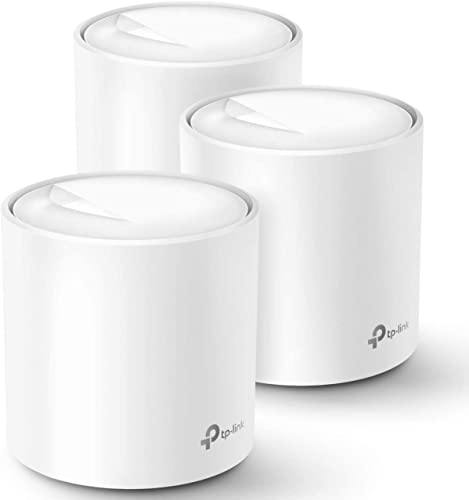
- Wi-Fi 6 mesh for up to 5,800 sq. ft.
- Supports wired backhaul with six Ethernet ports
- Connects up to 150 devices
Best For: Affordable wired-backhaul home networks
Best Premium Wi-Fi 7 Option

- Wi-Fi 7 speeds up to 11 Gbps
- Covers up to 8,000 sq. ft.
- Tri-band design with 2.5 Gbps LAN support
Best For: Large homes and demanding multi-gig networks
Best for 6 GHz Backhaul

- Wi-Fi 6E tri-band coverage up to 7,200 sq. ft.
- 6 GHz band can serve as wireless backhaul
- Nine Ethernet ports across three units
Best For: Wi-Fi 6E homes wanting flexible backhaul
Best Midrange Wi-Fi 7 System

- Wi-Fi 7 speeds up to 5 Gbps
- Covers up to 6,000 sq. ft.
- 2.5 Gbps LAN supports wired backhaul
Best For: Medium-to-large homes upgrading to Wi-Fi 7
Best Multi-Gig Performance
Deco 7 Pro BE14000 Wi-Fi 7 Mesh

- Tri-band Wi-Fi 7 with up to 8,647 Mbps on 6 GHz
- Up to 8,100 sq. ft. and 200+ devices
- 10Gbps wired backhaul and multi-gig ports
Best For: Large homes with multi-gig internet and Wi-Fi 7 devices
Best Value for Wired Backhaul
TP-Link Deco X55 AX3000 Wi-Fi 6

- Wi-Fi 6 coverage up to 4,500 sq. ft.
- Six Gigabit Ethernet ports across two units
- Supports wired Ethernet backhaul and 150 devices
Best For: Homes seeking affordable Wi-Fi 6 coverage with wired backhaul
Best Balanced Wi-Fi 7 Pick
Deco 7 BE5000 Wi-Fi 7 Mesh System

- Wi-Fi 7 speeds up to 4,324 Mbps on 5 GHz
- Up to 6,600 sq. ft. and 150+ devices
- 2.5Gbps Ethernet supports wired backhaul
Best For: Homes upgrading to Wi-Fi 7 with a 2.5Gbps wired network
Best with Extra Features
TP-Link Deco BE63 Tri-Band Mesh

- Tri-band Wi-Fi 7 for demanding homes
- Up to 5,800 sq. ft. and 200+ devices
- Four 2.5G ports plus USB 3.0 per unit
Best For: Large homes and future-ready multi-gigabit networks
Best Value Wi-Fi 7 Pick
TP-Link Deco BE25 Dual-Band Mesh

- Wi-Fi 7 with up to 5,000 Mbps-class throughput
- Up to 4,600 sq. ft. and 150+ devices
- 2.5G Ethernet supports wired backhaul
Best For: Moderately large homes wanting affordable Wi-Fi 7
Best Budget Wired-Backhaul Pick
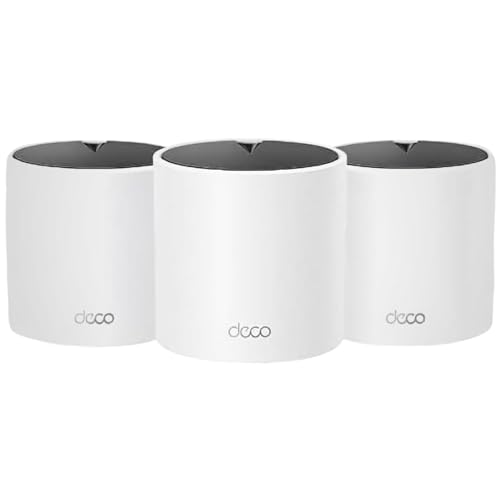
- Three-pack covers up to 5,600 sq. ft.
- Two Gigabit Ethernet ports per unit
- Wi-Fi 6 supports up to 120 devices
Best For: Large homes seeking affordable wired whole-home coverage
Best Value Wi-Fi 6 Pick – TP-Link Deco X20
The TP-Link Deco X20 is a practical choice for shoppers seeking mesh wifi systems with ethernet backhaul. This three-pack supports wired backhaul, covers up to 5,800 square feet, and is designed for internet plans up to 1 Gbps.
Best For: Homes that want affordable Wi-Fi 6 coverage, straightforward management, and the option to connect mesh nodes by Ethernet.
Pros:
- Supports wired backhaul and includes six Ethernet ports total.
- Three-unit system covers up to 5,800 square feet.
- Supports up to 150 connected devices and includes basic parental controls.
Cons:
- Dual-band design has less wireless capacity than tri-band alternatives.
- It is aimed at plans up to 1 Gbps rather than faster multi-gig service.
The Deco X20 is a sensible value option when Ethernet cabling is available and dependable whole-home Wi-Fi matters more than the latest wireless standard.
Best Premium Wi-Fi 7 Option – NETGEAR Orbi 770
The NETGEAR Orbi 770 is a high-performance choice among mesh wifi systems with ethernet backhaul. Its three-pack covers up to 8,000 square feet, supports Wi-Fi 7 speeds up to 11 Gbps, and includes Ethernet connectivity with enhanced backhaul.
Best For: Large homes and demanding households with multi-gig internet, gaming, 8K streaming, or many simultaneous connections.
Pros:
- Tri-band Wi-Fi 7 system rated for speeds up to 11 Gbps.
- Coverage reaches up to 8,000 square feet and supports up to 100 devices.
- Includes 2.5 Gbps LAN support and enhanced backhaul.
Cons:
- Advanced NETGEAR Armor security requires a separate subscription after the trial.
- Made for use in the US only.
With its broad coverage, tri-band design, and 2.5 Gbps wired connectivity, the Orbi 770 is built for buyers who want substantial performance headroom and long-term Wi-Fi 7 support.
Best for 6 GHz Backhaul – TP-Link Deco XE75
The TP-Link Deco XE75 stands out for shoppers comparing mesh wifi systems with ethernet backhaul while also wanting a dedicated 6 GHz option. This three-pack covers up to 7,200 square feet, and its 6 GHz band can serve as a backhaul by default or support compatible Wi-Fi 6E devices.
Best For: Homes with Wi-Fi 6E devices that need broad coverage, tri-band capacity, and flexible wired or wireless node connections.
Pros:
- Tri-band Wi-Fi 6E system with a dedicated 6 GHz band.
- Supports Ethernet connectivity and offers nine ports across the three units.
- Rated for up to 7,200 square feet and 200 devices.
Cons:
- Compatible devices are needed to take full advantage of the 6 GHz band.
- Gigabit Ethernet ports limit wired links to 1 Gbps.
The XE75 is a strong middle ground: Ethernet can provide a stable node connection, while the 6 GHz band adds a clean wireless backhaul or a faster lane for compatible clients.
Best Midrange Wi-Fi 7 System – NETGEAR Orbi 370
The NETGEAR Orbi 370 offers a more approachable route into Wi-Fi 7 for buyers evaluating mesh wifi systems with ethernet backhaul. The three-pack covers up to 6,000 square feet, supports enhanced backhaul, and includes 2.5 Gbps Ethernet.
Best For: Medium-to-large homes that want Wi-Fi 7, multi-gig wired connections, and coverage for up to 70 devices without stepping up to the Orbi 770.
Pros:
- Wi-Fi 7 system with speeds up to 5 Gbps.
- 2.5 Gbps LAN ports support multi-gig wired backhaul and devices.
- Covers up to 6,000 square feet and supports up to 70 devices.
Cons:
- Dual-band design offers less capacity than tri-band Wi-Fi 7 systems.
- NETGEAR Armor security requires a separate subscription after the 30-day trial.
The Orbi 370 is a balanced pick for buyers who want newer Wi-Fi 7 technology and fast Ethernet without requiring the larger coverage and higher capacity of a premium tri-band system.
Best Multi-Gig Performance – Deco 7 Pro BE14000 Wi-Fi 7 Mesh
For demanding homes with multi-gig internet, the Deco 7 Pro is a powerful choice among mesh wifi systems with ethernet backhaul. Its tri-band Wi-Fi 7 design, 10Gbps wired backhaul support, and three 10Gbps/2.5Gbps/1Gbps WAN/LAN ports are built for high-throughput streaming, gaming, and large device loads.
Best For: Large, connected homes with multi-gig service, Wi-Fi 7 devices, and wired networking already in place.
Pros:
- Tri-band Wi-Fi 7 supports up to 8,647 Mbps on 6 GHz, 4,324 Mbps on 5 GHz, and 688 Mbps on 2.4 GHz.
- Up to 8,100 square feet of coverage for more than 200 devices.
- Each unit includes 10Gbps, 2.5Gbps, and 1Gbps WAN/LAN ports plus USB 3.0.
- 10Gbps wired backhaul, AI roaming, VPN support, and app-based management.
Cons:
- Its advanced capabilities may be excessive for homes with standard broadband or mostly older devices.
- A modem is required separately.
The Deco 7 Pro stands out when wired backhaul speed and capacity matter as much as wireless coverage. It is the premium pick here, especially for households prepared to use multi-gig Ethernet and Wi-Fi 7 clients.
Best Value for Wired Backhaul – TP-Link Deco X55 AX3000 Wi-Fi 6
The Deco X55 is a practical, lower-cost option among mesh wifi systems with ethernet backhaul. This two-pack combines Wi-Fi 6 coverage with six total Gigabit Ethernet ports, making it well suited to homes that want consistent whole-home connectivity without moving to Wi-Fi 7.
Best For: Medium-to-large homes that need reliable Wi-Fi 6 coverage, wired backhaul, and straightforward setup.
Pros:
- Covers up to 4,500 square feet and supports up to 150 devices.
- Each unit has three Gigabit Ethernet ports and supports wired Ethernet backhaul.
- AI-driven mesh and the Deco app simplify roaming, setup, and network management.
- HomeShield includes no-cost basic network security, QoS, and parental controls.
Cons:
- Dual-band Wi-Fi 6 is less capable than the Wi-Fi 7 systems in this roundup.
- Gigabit Ethernet ports limit wired throughput compared with multi-gig models.
- A modem is required for most internet providers.
The X55 makes sense when dependable coverage and Ethernet backhaul are priorities but ultra-high wireless speeds are not. Its port count and accessible management features give it strong everyday value.
Best Balanced Wi-Fi 7 Pick – Deco 7 BE5000 Wi-Fi 7 Mesh System
The Deco 7 BE5000 offers a balanced way to add Wi-Fi 7 and Ethernet backhaul to a home network. Its dual-band design delivers up to 4,324 Mbps on 5 GHz and 688 Mbps on 2.4 GHz, while 2.5Gbps Ethernet helps connect Deco units with a faster, more stable wired link.
Best For: Homes wanting Wi-Fi 7 performance and 2.5Gbps wired backhaul without the higher-end tri-band feature set of the Deco 7 Pro.
Pros:
- Wi-Fi 7 BE5000 performance supports high-speed streaming and gaming.
- Up to 6,600 square feet of coverage for more than 150 devices.
- 2.5Gbps Ethernet works with wired backhaul to balance traffic between units.
- Expandable Deco platform with app management, AI roaming, and VPN server support.
Cons:
- Dual-band design has less wireless capacity than the tri-band Deco 7 Pro.
- Wired backhaul requires at least two Deco units and compatible Ethernet cabling.
- A separate modem is required.
The Deco 7 is a sensible middle ground for upgrading to Wi-Fi 7 while retaining the stability of wired backhaul. It offers broader coverage than the X55 and higher-generation wireless technology without targeting the Deco 7 Pro’s top-end specifications.
Best with Extra Features – TP-Link Deco BE63 Tri-Band Mesh
For shoppers seeking mesh wifi systems with ethernet backhaul, the TP-Link Deco BE63 is a high-capacity option built around tri-band Wi-Fi 7. Its 2-pack is rated for up to 5,800 square feet and includes multiple 2.5G ports plus a USB 3.0 port, giving wired homes room to expand.
Best For: Large homes, demanding households, and users planning a fast, future-ready wired network.
Pros:
- Wi-Fi 7 tri-band design with up to 10,000 Mbps-class throughput.
- Up to 5,800 square feet of coverage and support for more than 200 devices.
- Four 2.5G WAN/LAN ports per unit and USB 3.0 connectivity.
- AI-assisted roaming, parental controls, IoT protection, and VPN client/server support.
Cons:
- Requires a separate modem for most internet service providers.
- Its advanced Wi-Fi 7 and multi-gigabit features may exceed the needs of basic plans.
- Wired backhaul requires at least two Deco units and suitable Ethernet cabling.
The BE63 stands out when coverage, device capacity, and multi-gigabit Ethernet matter as much as wireless speed. It is the strongest fit here for a performance-focused home with Ethernet runs between nodes.
Best Value Wi-Fi 7 Pick – TP-Link Deco BE25 Dual-Band Mesh
The TP-Link Deco BE25 offers a simpler route to mesh wifi systems with ethernet backhaul. This dual-band Wi-Fi 7 system supports up to 4,600 square feet and more than 150 devices, while 2.5G Ethernet helps create a stable wired link between Deco units.
Best For: Households that want Wi-Fi 7 performance and wired backhaul without stepping up to a larger tri-band system.
Pros:
- Wi-Fi 7 speeds rated up to 4,324 Mbps on 5 GHz and 688 Mbps on 2.4 GHz.
- Coverage for up to 4,600 square feet and more than 150 devices.
- 2.5G Ethernet supports wired backhaul and multi-gigabit connections.
- Unified network name, AI roaming, app management, and basic security features.
Cons:
- Dual-band design offers less wireless flexibility than a tri-band system.
- Wired backhaul requires at least two Deco units.
- Requires a separate modem for most internet service providers.
The BE25 is a practical middle ground: it brings Wi-Fi 7 and 2.5G wired networking to a moderately large home without the more extensive port selection of the BE63. It makes the most sense when Ethernet cabling is available and coverage needs are substantial but not extreme.
Best Budget Wired-Backhaul Pick – TP-Link Deco X15 Wi-Fi 6
For a cost-conscious setup, the TP-Link Deco X15 3-pack is one of the more approachable mesh wifi systems with ethernet backhaul. Its Wi-Fi 6 dual-band hardware covers up to 5,600 square feet, and each unit has two Gigabit Ethernet ports for wired node connections.
Best For: Larger homes that need broad coverage, straightforward management, and reliable wired backhaul for everyday devices.
Pros:
- Three-unit system rated for up to 5,600 square feet.
- Two Gigabit Ethernet ports on each Deco unit for wired backhaul.
- Wi-Fi 6 supports up to 120 devices with advertised speeds of 1,201 Mbps and 300 Mbps across its bands.
- Deco app management, AI roaming, parental controls, and Alexa/Google Assistant support.
Cons:
- Gigabit Ethernet is slower than the 2.5G ports on the newer Wi-Fi 7 options.
- Dual-band Wi-Fi 6 is less capable for cutting-edge multi-gigabit use.
- Requires a separate modem for most internet service providers.
The X15 is a sensible choice when the priority is consistent whole-home coverage rather than maximum throughput. Its three nodes and built-in Gigabit ports make it especially useful for homes that already have Ethernet wiring but do not need Wi-Fi 7.
How We Picked the Best Mesh Wifi Systems with Ethernet Backhaul
We focused on systems that can support wired node connections, since Ethernet backhaul is the main reason to choose this type of setup. We also considered wireless standard, advertised coverage, included node count, Ethernet port capabilities, wired internet speeds, and suitability for different household sizes.
Specifications such as “up to” coverage and maximum wireless rates are useful for comparison, but real-world results depend on wall materials, placement, client devices, internet service, and network configuration. A system with more capacity is not automatically the best choice if your home has modest broadband or limited wiring.
Quick Comparison
- Best value for standard broadband: Wi-Fi 6 systems such as the Deco X20, Deco X55, and Deco X15 can provide reliable coverage without paying for the latest wireless features.
- Best for newer devices: Wi-Fi 7 systems offer improved efficiency and higher potential throughput, especially with compatible phones, laptops, and multi-gigabit internet.
- Best for avoiding wireless backhaul congestion: Choose a tri-band model when some nodes must connect wirelessly, or when many devices share the network.
- Best for large homes: Three-node systems with generous advertised coverage are easier to position across multiple floors or distant rooms.
Key Buying Factors for Mesh Wi-Fi Systems with Ethernet Backhaul
Ethernet Ports and Wired Topology
Check the number and speed of ports on every node, not just the main router. Gigabit ports are adequate for many connections, while 2.5Gbps, 5Gbps, or 10Gbps ports provide more headroom for multi-gigabit internet, network storage, and wired workstations. Confirm that the system supports Ethernet backhaul and decide where switches may be needed.
Wi-Fi Generation and Device Compatibility
Wi-Fi 6 remains a sensible choice for most homes. Wi-Fi 6E adds access to the 6GHz band, while Wi-Fi 7 can offer better performance with compatible clients. Older devices will still connect, but they cannot use every newer feature.
Coverage, Capacity, and Placement
Use advertised coverage as a rough guide rather than a guarantee. Nodes should be placed in open, central locations with Ethernet runs whenever possible. Avoid hiding them in cabinets or placing them at the far edge of coverage. More nodes can help, but excessive overlap may create unnecessary interference.
Internet Speed and Upgrade Plans
Match the system to your current service and likely upgrades. A high-end Wi-Fi 7 kit makes the most sense for multi-gigabit broadband, demanding local transfers, many simultaneous users, or a desire for long-term headroom.
Who Should Buy Which Mesh Wifi Systems with Ethernet Backhaul?
Choose a Wi-Fi 6 two- or three-pack if you want dependable coverage for streaming, video calls, smart-home devices, and ordinary broadband at a reasonable cost.
Choose a tri-band system if you have many active devices, need wireless links between some nodes, or want additional radio capacity for a busy household.
Choose Wi-Fi 7 if you own newer client devices, have multi-gigabit service, transfer large files locally, or expect to upgrade soon. Prioritize models with faster Ethernet ports when your wired network or internet connection can use them.
Before buying, map your Ethernet outlets, count the rooms that need coverage, and verify whether your modem, switch, and client devices support the speeds you expect. The best mesh Wi-Fi systems with Ethernet backhaul are the ones that fit both your wiring and your actual network demands.