Mesh Wi-Fi systems with 10GbE backhaul can combine broad whole-home coverage with the wired capacity needed for multi-gig internet, high-speed storage, gaming, and heavy streaming.
We compared ten leading Wi-Fi 7 and Wi-Fi 6E options, including premium kits, flexible wireless bridges, and systems designed for large homes. Use the guide below to narrow your choice by performance, ports, coverage, and value.
Best 10 Mesh Wifi Systems with 10gbe Backhaul Picks for 2026
Best Premium Pick
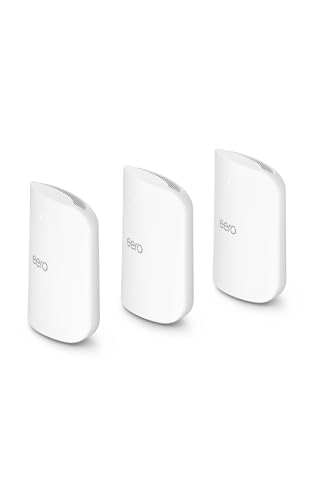
- Two 10GbE ports with multi-gigabit backhaul
- Wi-Fi 7 and up to 7,500 sq. ft. coverage
- Supports 750+ devices and smart home protocols
Best For: Large, high-demand smart homes
Best Detached-Building Link

- 10Gbps point-to-point wireless backhaul
- Five 10GbE switch ports
- Unified UniFi OS management
Best For: Detached offices and outbuildings
Best Coverage Value

- Up to 8,000 sq. ft. of coverage
- Tri-band Wi-Fi 7 with Enhanced Backhaul
- Supports up to 100 connected devices
Best For: Large homes with many devices
Best 10GbE Mesh Backbone

- 10Gbps WAN/LAN port on every unit
- Up to 8,100 sq. ft. and 200+ devices
- Tri-band Wi-Fi 7 with 10Gbps wired backhaul
Best For: 10Gbps wired mesh networks
Best for Large Homes

- Up to 9,000 sq. ft. of coverage
- 10 Gig internet port plus 2.5 Gig LAN
- WiFi 7 speeds up to 21 Gbps
Best For: Large homes needing broad coverage and fast wired networking
Best for Flexible 10G Networking

- Dual 10G WAN/LAN ports per unit
- Supports wired or wireless backhaul
- Up to 9,000 sq. ft. of coverage
Best For: Advanced homes needing flexible 10G connections and backhaul
Best for Pro-Grade Backhaul

- Dual 10G ports with SFP+ support
- Two 2.5G ports plus USB 3.0
- Simultaneous wired and wireless backhaul
Best For: Advanced networks using fiber, copper, and multiple multi-gigabit devices
Best Premium Wi-Fi 6E Coverage
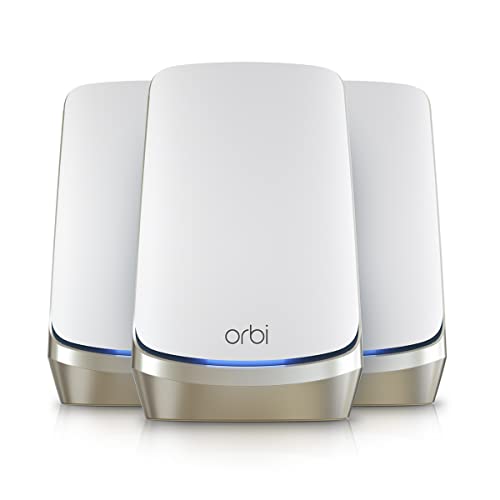
- Quad-band Wi-Fi 6E with dedicated backhaul
- Up to 9,000 sq. ft. and 200 devices
- 10 Gig internet port for multi-gig service
Best For: Large homes and demanding multi-device networks
Best Wi-Fi 7 Upgrade
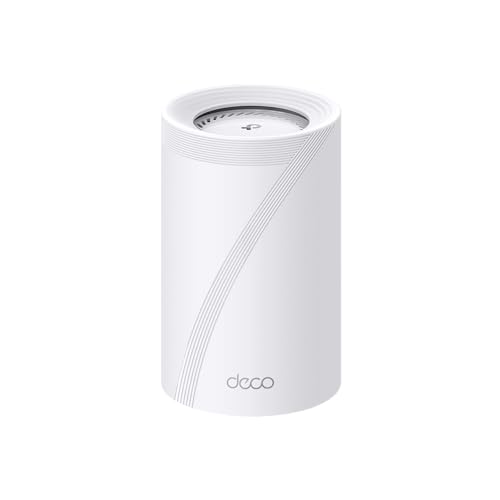
- Tri-band Wi-Fi 7 with up to 17,000 Mbps
- 10 Gbps WAN/LAN port on every unit
- 2.5G, 1G, and USB 3.0 ports included
Best For: Performance-focused homes adopting Wi-Fi 7
Best Large-Home Wi-Fi 7 Value

- Three-pack coverage up to 7,600 square feet
- Four 2.5G WAN/LAN ports per unit
- Wi-Fi 7 with security and VPN features
Best For: Large homes with many wired and wireless devices
Best Premium Pick – eero Max 7
The eero Max 7 is a premium choice among mesh wifi systems with 10gbe backhaul, pairing Wi-Fi 7 with two 10 Gigabit Ethernet ports for fast wired networking and multi-gigabit backhaul. Its broad coverage and high device capacity make it suited to demanding connected homes.
Best For: Large smart homes, high-bandwidth gaming, AR/VR, and multi-gigabit internet plans.
Pros:
- Two 10 Gigabit Ethernet ports and wired speeds up to 9.4 Gbps.
- Wi-Fi 7 supports higher capacity, lower latency, and improved efficiency.
- Up to 7,500 square feet of coverage and support for 750+ devices.
- Built-in smart home hub support for Thread, Matter, and Zigbee devices.
Cons:
- Advanced digital security requires an optional eero Plus subscription.
- Its premium capabilities may be more than smaller households need.
The eero Max 7 stands out when you want top-tier wired and wireless performance, extensive coverage, and straightforward app-based management in one system.
Best Detached-Building Link – UBB-XG + Flex-XG
This High-Speed Home Mesh Kit takes a specialized approach to mesh wifi systems with 10gbe backhaul. The UBB-XG creates a 10Gbps point-to-point wireless bridge, while the Flex-XG adds five 10GbE ports for high-speed wired devices.
Best For: Homes connecting a detached office, studio, guest house, or other separate property area.
Pros:
- 10Gbps wireless backhaul for a high-bandwidth point-to-point link.
- Flex-XG provides four 10G SFP+ ports and one 10G RJ45 port.
- Unified UniFi OS management offers centralized configuration and monitoring.
- Industrial-grade, weather-resistant construction supports year-round use.
Cons:
- This is a specialized bridge-and-switch kit rather than a conventional three-node home mesh system.
- Its 10G SFP+ ports may require compatible networking hardware or modules.
- The supplied details list a maximum upstream rate of 100 Mbps, which warrants verification before purchase.
For a property where running cable is difficult, this kit is compelling because it combines a 10Gbps wireless building link with substantial wired switching capacity. It is less suitable if you simply want an ordinary whole-home mesh setup.
Best Coverage Value – NETGEAR Orbi 770
The NETGEAR Orbi 770 is a practical option among mesh wifi systems with 10gbe backhaul for households prioritizing broad coverage and Wi-Fi 7 performance. Its tri-band design with Enhanced Backhaul is rated for up to 8,000 square feet and 100 devices.
Best For: Large homes that need wide coverage, simultaneous streaming, gaming, and video calls.
Pros:
- Tri-band Wi-Fi 7 system with Enhanced Backhaul.
- Up to 11 Gbps wireless performance and coverage up to 8,000 square feet.
- Supports up to 100 devices and works with cable or fiber ISP equipment.
- Security features, automatic firmware updates, and guided app setup are included.
Cons:
- Ready for internet plans up to 2.5 Gbps, not 10 Gbps service.
- NETGEAR Armor requires a separate subscription after its 30-day trial.
- Additional satellite coverage requires purchasing another Orbi 770 satellite.
The Orbi 770 is a strong fit when coverage and easy management matter more than a full 10GbE wired backbone. Check your plan and port requirements carefully if 10-gigabit wired backhaul is essential.
Best 10GbE Mesh Backbone – Deco 7 Pro
The Deco 7 Pro is a strong match for shoppers seeking mesh wifi systems with 10gbe backhaul, with a 10 Gbps WAN/LAN port on every unit plus 2.5 Gbps and 1 Gbps ports. Its tri-band Wi-Fi 7 platform is designed for multi-gigabit internet and wired mesh performance.
Best For: Large households with 10Gbps internet, Wi-Fi 7 devices, and a need for flexible wired connections.
Pros:
- Each unit includes 10Gbps, 2.5Gbps, and 1Gbps WAN/LAN ports.
- Supports internet plans up to 10 Gbps and a 10Gbps wired backhaul.
- Up to 8,100 square feet of coverage for more than 200 devices.
- Includes Wi-Fi 7 features such as Multi-Link Operation, Multi-RUs, and 4K-QAM.
Cons:
- Some premium security and management features are part of TP-Link HomeShield.
- Wi-Fi 7 benefits depend on compatible client devices.
- A modem is not included and must be purchased separately.
With 10GbE connectivity on every node, the Deco 7 Pro is one of the most directly aligned choices for a wired 10-gigabit mesh backbone. It also offers generous coverage and capacity for busy, multi-device households.
Best for Large Homes – Orbi 870 WiFi 7 Mesh
If you need mesh wifi systems with 10gbe backhaul for broad whole-home coverage, the NETGEAR Orbi 870 is a strong fit. This three-pack covers up to 9,000 square feet and combines WiFi 7, enhanced backhaul, a 10 Gig internet port, and 2.5 Gig LAN ports.
Best For: Large or multi-story homes that need extensive coverage, WiFi 7 performance, and fast wired connections for gaming PCs, NAS drives, or home offices.
Pros:
- Three-unit system covers up to 9,000 square feet and supports up to 150 devices.
- WiFi 7 speeds are rated up to 21 Gbps, with enhanced backhaul for simultaneous connections.
- Includes a 10 Gig internet port and 2.5 Gig LAN ports across the system.
- App-guided setup and compatibility with any internet provider’s modem.
Cons:
- NETGEAR Armor security requires a separate subscription after the trial.
- Coverage and real-world speeds vary with building materials, placement, devices, and internet service.
The Orbi 870 prioritizes coverage and straightforward management while still offering high-speed wired networking. It is especially compelling when a large home needs reliable connectivity in multiple areas and has a plan or local network capable of using multi-gigabit speeds.
Best for Flexible 10G Networking – ZenWiFi BT10 WiFi 7 Mesh
The ASUS ZenWiFi BT10 is designed for shoppers comparing mesh wifi systems with 10gbe backhaul and wanting flexibility in how the network is connected. Its three-pack supports up to 9,000 square feet, provides dual 10G WAN/LAN ports, and can use wireless or wired backhaul with automatic detection.
Best For: Homes that need two 10G Ethernet ports, flexible backhaul options, strong security features, and support for mobile tethering as a backup connection.
Pros:
- Tri-band WiFi 7 delivers rated wireless speeds up to 18 Gbps.
- Dual 10G WAN/LAN ports support flexible wired backhaul and multi-gigabit connections.
- Three-pack coverage reaches up to 9,000 square feet, with eight internal antennas per unit.
- Includes AiProtection Pro, VPN support, separate IoT SSIDs, and 4G/5G tethering.
Cons:
- The system has only two Ethernet ports per unit according to the supplied specifications.
- Actual wireless performance depends on compatible devices, placement, and network conditions.
With dual 10G ports on each unit and automatic wired or wireless backhaul configuration, the BT10 is a versatile choice for advanced home networks. Its mobile tethering and security tools also make it useful where connection continuity and network controls matter.
Best for Pro-Grade Backhaul – Deco 7 Elite BE95 WiFi 7
For buyers seeking mesh wifi systems with 10gbe backhaul and unusually flexible wired connectivity, the TP-Link Deco 7 Elite BE95 stands out. Each unit offers two 10G WAN/LAN options, including an SFP+ fiber/RJ45 combo port, plus 2.5G ports and simultaneous wireless and wired backhaul.
Best For: Enthusiasts and home offices that use fiber or copper networking, need multiple multi-gigabit ports, and want a high-capacity WiFi 7 mesh platform.
Pros:
- Two 10G WAN/LAN ports support both RJ45 and SFP+ fiber/RJ45 connections.
- Two additional 2.5G ports and a USB 3.0 port expand wired-networking options.
- Quad-band WiFi 7 supports rated combined speeds up to BE33000 and more than 200 devices.
- Can use wireless and wired backhaul simultaneously.
Cons:
- The supplied listing describes a one-pack, so additional units may be needed for whole-home mesh coverage.
- Some HomeShield features are premium services, while the included features are limited to the listed basics.
- Its advanced port and fiber options may be more than a basic home network requires.
The BE95 is the most networking-focused option here, particularly for users with fiber equipment, a multi-gigabit LAN, or demanding wired devices. Its combination of dual 10G ports, extra 2.5G connectivity, and simultaneous backhaul makes it a strong foundation for a performance-oriented setup.
Best Premium Wi-Fi 6E Coverage – Orbi RBKE963
If you want one of the most capable mesh wifi systems with 10gbe backhaul, the NETGEAR Orbi RBKE963 combines quad-band Wi-Fi 6E with a dedicated backhaul and a 10 Gig internet port. Its three-unit kit is designed for expansive homes and busy networks with up to 200 connected devices.
Best For: Large homes, high-device households, and users with internet service up to 10 Gbps who want dedicated mesh backhaul.
Pros:
- Wi-Fi 6E adds access to the 6 GHz band for compatible devices.
- Quad-band design and dedicated backhaul help maintain mesh performance.
- Coverage reaches up to 9,000 square feet and supports up to 200 devices.
- Includes a 10 Gig internet port and automatic firmware updates.
Cons:
- Wi-Fi 6E benefits require compatible client devices.
- The system may be more capacity than smaller homes need.
The RBKE963 is a strong choice when coverage, device capacity, and multi-gigabit internet support matter more than minimizing cost or hardware size. Its dedicated backhaul is particularly useful for maintaining wireless mesh links while many devices are active.
Best Wi-Fi 7 Upgrade – Deco 7 Pro BE17000
The TP-Link Deco 7 Pro is a future-focused option among mesh wifi systems with 10gbe backhaul. Each unit includes a 10 Gbps WAN/LAN port, while Wi-Fi 7 features and tri-band operation target fast streaming, gaming, and multi-gigabit home networks.
Best For: Performance-focused households that want Wi-Fi 7, 10G Ethernet, and flexible wired or wireless connectivity.
Pros:
- Wi-Fi 7 tri-band design supports advertised aggregate speeds up to 17,000 Mbps.
- Each Deco unit has a 10 Gbps WAN/LAN port for multi-gig networking.
- Includes 2.5G and 1G LAN ports plus USB 3.0 connectivity.
- Supports up to 3,300 square feet and more than 200 devices.
Cons:
- The listed coverage is lower than the larger three-unit Deco configuration.
- Backhaul requires at least two Deco units.
- Actual wireless performance varies with distance, walls, and other conditions.
Choose the Deco 7 Pro when newer Wi-Fi 7 client support and 10G Ethernet are priorities. Its varied port selection also makes it practical for connecting wired devices, although larger properties may need additional compatible Deco units.
Best Large-Home Wi-Fi 7 Value – Deco 7 Pro BE10000
For shoppers comparing mesh wifi systems with 10gbe backhaul, this three-pack Deco 7 Pro emphasizes broad coverage and wired flexibility. It pairs tri-band Wi-Fi 7 with four 2.5G WAN/LAN ports per unit and is rated to cover up to 7,600 square feet.
Best For: Large homes needing extensive mesh coverage, many wired connections, and support for more than 200 devices.
Pros:
- Three-unit system covers up to 7,600 square feet and over 200 devices.
- Tri-band Wi-Fi 7 supports advertised speeds up to 10,000 Mbps.
- Four 2.5G WAN/LAN ports per unit provide substantial wired capacity.
- Includes AI-based roaming, network protection, parental controls, and VPN support.
Cons:
- Its Ethernet ports are 2.5G rather than 10G.
- Backhaul requires at least two Deco units.
- Wireless speeds vary with conditions, distance, and obstacles.
This Deco package is a sensible fit when coverage and multiple 2.5G wired links are more important than having a 10G port on every node. The three-pack rating makes it especially attractive for larger layouts with many connected devices.
How We Picked the Best Mesh Wifi Systems with 10gbe Backhaul
We focused on systems that can make practical use of a 10Gbps-class internet connection or provide a 10GbE wired link between network devices. The shortlist considers Wi-Fi generation, band configuration, Ethernet port speeds, advertised coverage, scalability, setup features, and suitability for demanding homes.
Advertised coverage and wireless speeds are maximum estimates. Walls, interference, client hardware, placement, and wired versus wireless backhaul can significantly change real-world results. We also considered whether each system is best suited to typical home users, large properties, enthusiast networks, or specialized installations.
Quick Comparison
| What to compare | Why it matters |
|---|---|
| Wi-Fi 7 or Wi-Fi 6E | Newer standards can improve throughput, latency, and capacity with compatible devices. |
| 10GbE ports | Enables fast wired backhaul and high-speed connections to a modem, NAS, switch, or workstation. |
| Tri-band or quad-band design | Additional bands can reduce congestion and preserve performance across multiple nodes. |
| Coverage and node count | Helps match the system to your floor plan, construction, and number of dead zones. |
Key Buying Factors for Mesh Wi-Fi Systems with 10GbE Backhaul
Port Layout and Backhaul Options
Check which ports are actually 10GbE and whether every node includes them. A system may advertise multi-gig performance while offering fewer high-speed ports than expected. Wired Ethernet backhaul is usually more consistent than wireless backhaul, especially in homes with thick walls or heavy network traffic.
Wireless Capacity
Wi-Fi 7 systems are most useful when your phones, laptops, TVs, and access points also support newer features. Tri-band models can deliver strong performance for most homes, while quad-band systems may better suit many simultaneous clients, large file transfers, or premium wired and wireless networks.
Coverage, Placement, and Management
Use coverage claims as a starting point rather than a guarantee. More nodes are not always better; placing fewer nodes with clear links can outperform a crowded layout. Also review the app, parental controls, security subscriptions, guest networking, VLAN support, and firmware update policy.
Who Should Buy Which Mesh Wifi Systems with 10gbe Backhaul?
For Simple Premium Whole-Home Wi-Fi
Choose a polished consumer system with strong app controls and broad coverage if easy setup matters more than advanced network customization.
For Large Homes and High Device Counts
Prioritize Wi-Fi 7 tri-band or quad-band kits with generous coverage and multiple multi-gig ports. These are better suited to busy households, large floor plans, and simultaneous streaming or gaming.
For Enthusiasts and Wired Networks
Look for systems with multiple 10GbE ports, flexible access-point operation, and support for switches, NAS devices, and wired backhaul. A wireless bridge and multi-gig switch kit can be especially useful where running cable is difficult.
For Value-Conscious Buyers
A capable Wi-Fi 7 or Wi-Fi 6E kit may deliver better value than the fastest flagship. Match the system to your internet plan and client devices instead of paying for bandwidth your network cannot use.