The right acoustic treatment can make a home cinema sound clearer, more balanced, and less fatiguing—without requiring a full professional studio installation. These picks include thick fiberglass panels and budget-friendly acoustic foam in several sizes, colors, and pack quantities.
Use the guide below to compare coverage, installation style, thickness, and placement so you can choose panels that suit your room, speakers, and décor.
Best 10 Acoustic Panels for Home Cinema Picks for 2026
Deep-Absorption Pick

- 2.4-inch fiberglass panels target echoes and reverberation
- Self-adhesive backing simplifies wall installation
- E0-rated, odorless polyester-wrapped construction
Best For: Home theaters needing thicker, high-absorption panels
Easy-Coverage Choice

- Stated 0.95 NRC rating helps reduce echo
- Self-adhesive installation needs no tools
- Set covers a stated 23.6 square feet
Best For: Home cinemas needing broad, simple wall coverage
Budget Foam Coverage

- 24 panels cover a stated 24 square feet
- Pyramid surface supports absorption and diffusion
- Lightweight design suits walls and ceilings
Best For: Home theaters needing lightweight echo treatment
Best Fiberglass Absorption

- 2-inch fiberglass construction
- Listed NRC of 0.95
- Installation accessories included
Best For: Targeted echo and reverberation control in home cinemas
Best Easy-Install Pick
Self-Adhesive Geometric Panels

- Installs without separate glue
- 18 panels in a 12-by-12-inch format
- Decorative beveled geometric design
Best For: Quick DIY treatment for home theater walls
Best Large-Coverage Option
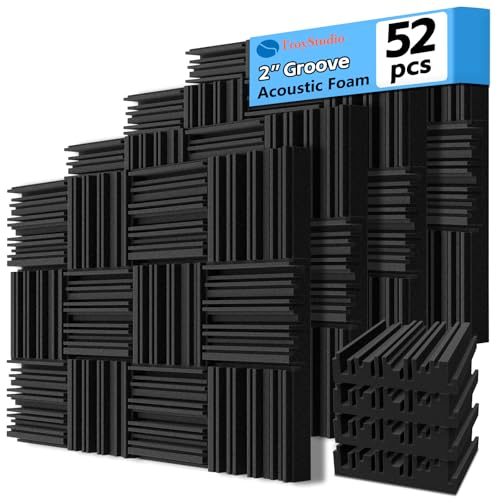
- 52 panels cover 52 square feet
- 2-inch high-density foam
- Grooved design for walls or ceilings
Best For: Broad acoustic treatment in larger home theaters
Best Budget Coverage
Peel-and-Stick Polyester Panels
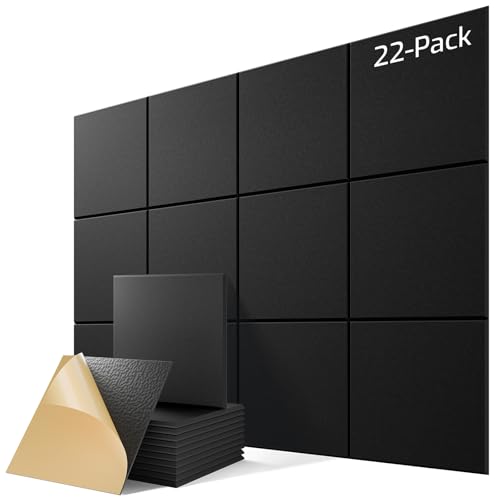
- 22 panels cover 21.27 square feet
- Tool-free self-adhesive installation
- Designed to reduce echo and reverberation
Best For: Renters and homeowners treating larger smooth wall areas
Best High-Performance Absorption

- 2-inch-thick fiberglass construction
- NRC rating up to 0.95
- 3M self-adhesive installation
Best For: Home theaters and studios prioritizing strong mid-to-high frequency absorption
Best for Flexible Tile Layouts

- 52 one-inch acoustic foam tiles
- Includes double-sided adhesive tape
- Designed for mid-to-high frequency absorption
Best For: Home cinema users creating customizable wall or ceiling layouts
Deep-Absorption Pick – Moukey Fiberglass Panels
For acoustic panels for home cinema setups, these Moukey panels prioritize thicker fiberglass construction and a clean, self-adhesive installation. Their 2.4-inch profile is designed to absorb reverberation, noise, and echoes for clearer audio.
Best For: Home theaters and other rooms where strong sound absorption and peel-and-stick installation are priorities.
Pros:
- Thicker 2.4-inch fiberglass design for enhanced sound absorption.
- Self-adhesive backing supports straightforward wall installation.
- Polyester-wrapped fiberglass construction is rated E0, safe, and odorless.
- Gray finish suits theaters, studios, offices, and gaming rooms.
Cons:
- The four-panel pack provides limited coverage for larger rooms.
- Additional construction adhesive may be needed for more secure installation.
Choose these when absorption performance matters more than broad coverage. For a larger home cinema, plan the layout and quantity carefully before ordering.
Easy-Coverage Choice – Waves Acoustical Wall Panel
These Waves acoustical panels are a practical option for acoustic panels for home cinema rooms when simple coverage and low-effort installation are important. The self-adhesive polyester panels are designed to reduce echo while covering a stated 23.6 square feet per set.
Best For: Living rooms and home cinemas that need broad, customizable wall coverage with peel-and-stick installation.
Pros:
- High stated 0.95 NRC rating for reducing echo and improving clarity.
- Self-adhesive backing requires no nails, screws, or separate adhesive.
- Washable surface can be wiped with a soft, damp cloth.
- Flame-retardant polyester fiber is suitable for homes with children and pets.
Cons:
- At 0.4 inches thick, these are thinner than the fiberglass alternatives listed here.
- The beige color may not suit every theater décor.
This is a convenient coverage-focused choice, especially when you want a clean installation without tools. Its thinner profile may be less appealing if maximum panel depth is your main consideration.
Removable Fiberglass Pick – 4-Pack Acoustic Panels
For acoustic panels for home cinema installations where a more secure yet removable mounting method is useful, this four-pack combines 2-inch fiberglass panels with templates and nails. The panels are intended to absorb reverberation, noise, and echoes in theaters and other media spaces.
Best For: Home video rooms and theaters where stable wall or ceiling mounting is preferred over peel-and-stick installation.
Pros:
- Two-inch fiberglass construction is designed for strong sound absorption.
- Metal templates and nails support stable wall or ceiling mounting.
- Removable design offers more flexibility than permanent installation.
- Off-white fabric can blend with light-colored rooms.
Cons:
- Mounting requires nails and more installation work than adhesive-backed panels.
- Four panels may not provide enough coverage for a large home cinema.
This option makes sense when you want panels that can be removed later while staying firmly mounted during use. Measure your room first, since the included four-panel quantity is best suited to targeted treatment.
Budget Foam Coverage – Pyramid Acoustic Foam
This 24-pack offers a foam-based approach to acoustic panels for home cinema rooms, with pyramid surfaces intended to absorb and diffuse sound. The panels provide a stated 24 square feet of coverage and are designed for echo control rather than blocking outside noise.
Best For: Home theaters, gaming rooms, and studios that need lightweight, decorative echo treatment across a defined area.
Pros:
- Twenty-four 2-inch panels provide 24 square feet of stated coverage.
- Pyramid design increases surface area for sound diffusion and absorption.
- Lightweight panels can be installed on walls or ceilings.
- Flame-retardant polyurethane foam is designed for acoustic use.
Cons:
- Construction adhesive or nano double-sided tape is required but not included.
- These panels are not intended for full soundproofing or external-noise isolation.
- Foam construction may offer a different look and feel from fabric-wrapped fiberglass panels.
Consider this pack for affordable, lightweight echo control and a more visible pyramid texture. It is best used to balance room acoustics, not to soundproof the cinema from neighboring spaces.
Best Fiberglass Absorption – 2-Inch Charcoal Grey Panels
For acoustic panels for home cinema setups, these thick fiberglass panels emphasize strong absorption in a compact four-panel pack. Their 2-inch construction and charcoal-grey fabric finish suit rooms where reducing reverberation and echo is a priority.
Best For: Home cinemas, studios, gaming rooms, and other spaces needing substantial reverberation control.
Pros:
- 2-inch thickness with a listed NRC of 0.95 for strong sound absorption.
- High-density white fiberglass core with an E0 environmental rating.
- Fabric-wrapped charcoal-grey finish works in cinema and entertainment spaces.
- Installation accessories are included.
Cons:
- The four-panel pack provides less stated coverage than the larger multipacks in this roundup.
- Fiberglass panels may require more careful installation than lightweight foam tiles.
Choose these when absorption performance and a more substantial panel construction matter more than covering a very large wall area. They are a particularly strong fit for targeted reflection or echo control in a home cinema.
Best Easy-Install Pick – Self-Adhesive Geometric Panels
These self-adhesive acoustic panels for home cinema walls are designed for quick installation without separate glue or tools. The beveled, multi-line surface can also create decorative pinwheel or multi-ring patterns while helping absorb echo and unwanted reflections.
Best For: DIY home theaters, offices, game rooms, and renters or users who want a straightforward wall treatment.
Pros:
- Self-adhesive backing installs on walls, doors, windows, and ceilings without additional glue.
- 18-piece pack of 12-by-12-inch panels offers flexible layout options.
- Beveled geometric design adds decorative appeal to the wall.
- Made from 100% polyester fiber and described as B1 flame retardant.
Cons:
- At 0.4 inches thick, these are considerably thinner than the fiberglass and 2-inch foam options.
- The supplied notes describe sound absorption and noise reduction, not complete soundproofing.
This is the convenient choice for a quick visual and acoustic refresh. Its thin, self-adhesive format favors easy application and design flexibility over the deeper absorption potential of thicker panels.
Best Large-Coverage Option – 2-Inch Groove Foam Panels
For buyers covering a larger room, these acoustic panels for home cinema use provide 52 square feet of 2-inch foam treatment. The open-cell polyurethane and grooved 3D structure are intended to reduce reverb, echo, standing waves, and reflections across walls or ceilings.
Best For: Larger home theaters, gaming rooms, studios, streaming spaces, and rooms needing broad wall or ceiling coverage.
Pros:
- 52-panel pack covers 52 square feet.
- Two-inch high-density polyurethane foam supports broadband absorption.
- Groove structure adds texture while contributing to acoustic treatment.
- Panels are flexible and easy to cut for customized installation.
Cons:
- Double-sided tape and other installation supplies are sold separately.
- Listed NRC of 0.8 is lower than the stated ratings of the two other products.
- Black foam may be less visually subtle in some home cinema interiors.
This option stands out when coverage is the priority. It combines substantial thickness with a generous pack size, though buyers should budget for separate adhesive and note that it is intended for sound absorption rather than full sound isolation.
Best Budget Coverage – Peel-and-Stick Polyester Panels
If you need acoustic panels for home cinema use without a complicated installation, this 22-pack offers broad wall coverage and a simple peel-and-stick setup. The 0.4-inch polyester panels are designed to absorb sound, reduce echo, and improve speech intelligibility in a media room or other shared space.
Best For: Renters and homeowners who want an easy DIY treatment for echo reduction across larger wall areas.
Pros:
- Includes 22 panels covering 21.27 square feet.
- Self-adhesive backing installs on smooth walls, ceilings, doors, and windows without tools.
- Polyester construction is intended to absorb sound without shedding or degrading.
- Available in various colors to coordinate with room decor.
Cons:
- At 0.4 inches thick, these panels may offer less absorption than thicker options.
- The supplied details do not include a specific NRC rating.
- The manufacturer does not provide a warranty.
This is a practical choice when coverage, appearance, and fast installation matter most. For a more noticeable treatment effect, the manufacturer recommends covering roughly 20–30% of the wall surface.
Best High-Performance Absorption – Thick Fiberglass Panels
For acoustic panels for home cinema rooms where stronger absorption is a priority, these 2-inch fiberglass boards are a substantial option. Their listed NRC of up to 0.95 is intended to absorb mid-to-high frequency noise, reduce reverberation, and help create a quieter listening environment.
Best For: Home theaters, studios, and meeting rooms that need thick panels for focused mid- and high-frequency control.
Pros:
- Two-inch thickness and an NRC rating of up to 0.95 support high-efficiency absorption.
- Four large rectangular panels measure approximately 23.62 by 11.81 inches each.
- 3M self-adhesive backing enables tool-free installation.
- Fiberglass liner is described as odor-free and compliant with green E0 standards.
Cons:
- The four-panel set provides less overall piece count and coverage flexibility than larger tile packs.
- Each panel weighs about 10 pounds according to the supplied details, so placement should be planned carefully.
- The camel color may not suit every theater design.
These panels stand out when absorption performance and thickness take precedence over decorative variety. They are especially suited to rooms where controlling echo and reverberation is more important than covering a large area with small tiles.
Best for Flexible Tile Layouts – Black and Blue Wedge Foam
These 52-piece wedge foam tiles are a flexible way to add acoustic panels for home cinema use, particularly when you want to treat multiple wall or ceiling areas. The one-inch foam is designed to absorb mid-to-high frequencies and reduce echoes, while the black-and-blue pattern adds a studio-inspired visual style.
Best For: Home cinema owners who want many small tiles for customizable layouts and basic echo control.
Pros:
- 52 tiles provide plenty of pieces for flexible placement patterns.
- Designed for walls or ceilings in home cinemas, studios, offices, and conference rooms.
- Includes double-sided adhesive tape for installation.
- Wedge profile is intended to help absorb mid- to high-frequency reflections.
Cons:
- The one-inch thickness may provide less absorption than the two-inch fiberglass alternative.
- The supplied details do not state total coverage or an NRC rating.
- Adhesive tape installation may require more individual placement work than larger panels.
This pack makes sense when you value quantity and layout flexibility over maximum panel thickness. Its intended use is echo and mid-to-high frequency control rather than comprehensive sound isolation.
How We Picked the Best Acoustic Panels for Home Cinema
We focused on panel types commonly used to control reflections in media rooms: fiberglass boards for stronger broadband absorption and acoustic foam for affordable treatment of high-frequency echo. We also considered thickness, panel dimensions, pack size, installation method, appearance, and likely coverage per package.
Because product names often use terms such as “soundproof” loosely, these panels should be viewed primarily as sound absorbers. They can reduce reflections and reverberation inside a room, but they will not fully block sound traveling through walls, ceilings, floors, doors, or windows.
Quick Comparison
| Panel type | Best suited to | Main advantage | Watch for |
|---|---|---|---|
| Thick fiberglass | Dedicated home cinemas and mixed-use rooms | Broadband absorption and deeper control | Higher cost and more noticeable wall presence |
| Acoustic foam | Echo reduction on a budget | Lightweight, affordable, and easy to arrange | Usually less effective at lower frequencies |
| Large rectangular panels | First-reflection points and side walls | Efficient coverage with fewer seams | May require more careful mounting |
| Small tiles | Flexible layouts and partial treatment | Easy to space around décor or equipment | More pieces to install |
Key Buying Factors for Acoustic Panels for Home Cinema
Thickness and Material
Thickness matters because thicker, denser panels generally absorb a wider range of frequencies. Fiberglass panels around 2 inches thick are a strong starting point for reflections and some midrange control. One-inch foam tiles can help tame brightness and slap echo, but they are not a substitute for bass traps.
Coverage and Placement
Calculate wall coverage before buying. Prioritize the first-reflection points on the side walls, the wall behind the seating position, and—when practical—the ceiling between the speakers and listeners. Leave some wall area untreated to avoid an overly dead room, and keep panels clear of vents, outlets, and equipment.
Installation and Finish
Self-adhesive products are convenient but can damage paint or drywall and may be difficult to reposition. Removable mounting hardware or a simple frame can be preferable for rented rooms. Compare colors, edge finish, and panel profile with your room before committing to a large pack.
Safety and Room Balance
Check the manufacturer’s material and fire-rating information, especially for foam installed near electronics or lighting. For better low-frequency performance, combine wall panels with bass traps and use measurement software or familiar reference tracks to refine placement.
Who Should Buy Which Acoustic Panels for Home Cinema?
Choose thick fiberglass panels if dialogue clarity, broad reflection control, and a more polished home-cinema treatment are your priorities. They are especially suitable for dedicated rooms or larger spaces.
Choose acoustic foam packs if you want an inexpensive way to reduce obvious echo, improve a gaming or movie room, or experiment with treatment before investing more. Larger multipacks provide flexibility, while pyramid and wedge profiles mainly offer visual and placement options rather than radically different performance.
Choose a mixed approach if your room has both sharp reflections and uneven bass. Use fiberglass panels at early-reflection points, foam where appropriate for lighter echo control, and dedicated bass treatment in corners. Always base the final quantity on room measurements and the coverage you actually need.