Building a quieter, better-sounding theater takes more than adding speakers and a subwoofer. The right combination of mass-loaded barriers, acoustic wall panels, and vibration-damping floor mats can reduce sound transfer while making dialogue and effects easier to hear.
These 10 options cover common theater needs, from underlayment and barrier rolls to removable wall treatments and interlocking floor pads. Use the guide below to match the material, coverage, and installation style to your room.
Best 10 Soundproofing Mats for Home Theaters Picks for 2026
Heavy-Duty Barrier
VEVOR Mass-Loaded Soundproofing Mat

- 200-mil, three-layer construction
- 36 sq. ft. cut-to-fit roll
- Self-adhesive backing
Best For: DIY noise-barrier projects needing flexible coverage
Echo Control Pick
54-Pack Acoustic Foam Wall Panels

- 54 one-inch foam panels
- Wedge-cut design reduces reverberation
- Adhesive pads included
Best For: Broad, lightweight echo treatment on smooth surfaces
Easy-Install Fiber Panels
Self-Adhesive Acoustic Wall Panels
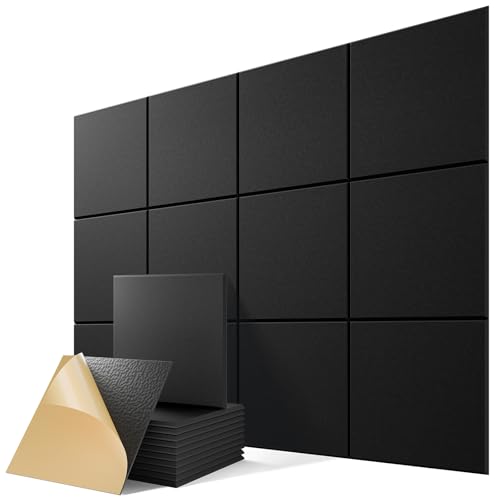
- 12 high-density polyester fiber panels
- Peel-and-stick installation
- Helps reduce echo and reverberation
Best For: Quick, targeted wall treatment on smooth surfaces
Best Natural Underlayment
TroyStudio Cork Soundproofing Roll

- 40.5 sq. ft. of 3mm natural cork coverage
- Dampens footsteps, chair movement, and impact noise
- Installs under many common flooring types
Best For: Floor-impact noise reduction beneath home-theater flooring
Best for Wall Echo Control

- 48 one-inch panels cover 48 sq. ft.
- Reduces echoes, flutter, and standing waves
- Mounts on walls, doors, or ceilings
Best For: Managing reverberation in home theaters and listening rooms
Best Modular Floor Pads
Interlocking Felt Acoustic Mats

- 20 puzzle pieces cover up to 17 sq. ft.
- Dampens vibration and absorbs floor shock
- Easy to assemble, remove, and expand
Best For: Targeted cushioning beneath theater equipment or seating
Best for Large Wall Coverage

- Large 48-by-24-inch format
- Two-inch high-density polyester foam
- Adhesive sold separately
Best For: Studios, offices, and large wall areas
Best Floor-Mounted Option
Interlocking Acoustic Floor Mats

- 16 interlocking felt tiles
- Stated NRC of 0.87
- Includes removable mounting tape
Best For: Floors, speakers, instruments, and vibration-prone equipment
Best for Compact Wall Treatment
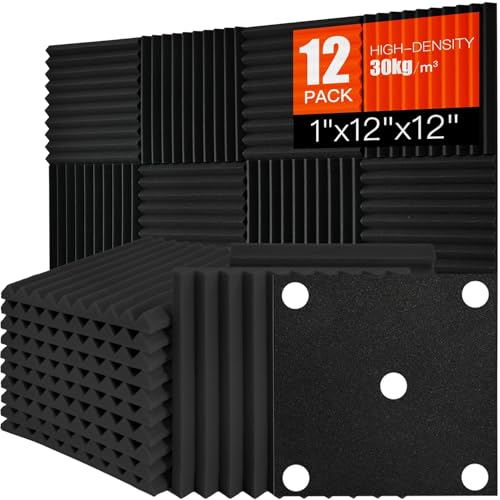
- 12 one-inch polyurethane foam panels
- 12 square feet of coverage
- Nano tape included; expands in 24–48 hours
Best For: Small theaters, gaming rooms, offices, and streaming spaces
Heavy-Duty Barrier – VEVOR Mass-Loaded Soundproofing Mat
For soundproofing mats for home theaters, this VEVOR roll is a dense barrier-style option that can be cut to fit customized projects. Its 200-mil, three-layer construction combines aluminum foil, high-density foam, and adhesive backing for added insulation and noise control.
Best For: DIY projects requiring a flexible, cut-to-size noise barrier.
Pros:
- 36 square feet of material in one roll
- Three-layer construction with heat-resistant foil, foam, and adhesive backing
- Self-adhesive installation requires no additional adhesive
- Waterproof, fire-resistant, and odorless according to the supplied specifications
Cons:
- Designed and recommended primarily for vehicle noise reduction
- A rolling tool is not included
- Roll-style material may require careful cutting and placement
This is the most substantial barrier-style choice in the group, but home theater buyers should plan the installation carefully because the product information focuses on automotive applications rather than wall or room treatment.
Echo Control Pick – 54-Pack Acoustic Foam Wall Panels
These lightweight foam panels are a practical option for soundproofing mats for home theaters when the main goal is reducing echoes and reverberation. The wedge-cut surface can be arranged across walls or ceilings to support clearer room acoustics.
Best For: Home theaters and media rooms that need broad, lightweight echo treatment.
Pros:
- 54 panels provide substantial room-treatment coverage
- Wedge-cut surface helps dampen echoes and reverberations
- Included adhesive pads enable tool-free installation
- High-density polyurethane foam is designed for durability
Cons:
- Adhesive pads work best only on clean, dry, smooth surfaces
- One-inch foam panels are intended for absorption rather than heavy structural isolation
- Uneven, dusty, damp, or peeling surfaces may require another mounting method
With its large pack size and flexible layout, this is a convenient acoustic-treatment choice for improving clarity and reducing room reflections, provided the mounting surface is suitable for the included adhesive.
Floor Vibration Pick – Interlocking Felt Sound Absorbing Mats
These interlocking felt mats extend soundproofing mats for home theaters to the floor, where they can help reduce vibration from subwoofers, furniture, or other equipment. Their puzzle design creates a non-slip surface that can be trimmed for corners and stored flat when needed.
Best For: Home theaters with floor-borne vibration, subwoofers, or equipment that needs a stable base.
Pros:
- High-density 0.4-inch felt helps absorb impacts and vibration
- Interlocking design helps keep equipment and mats in place
- Can be trimmed with a utility knife for custom fitting
- Non-toxic, odorless, and stain-resistant according to the supplied notes
Cons:
- Floor mats do not provide wall or ceiling acoustic treatment
- The 20-piece set may require additional coverage for larger rooms
- Double-sided strips are included, but hard-floor installation may still need careful preparation
This is a useful complementary layer rather than a complete theater treatment system. It makes the most sense when floor vibration, sliding equipment, or impact noise is a bigger concern than wall reflections.
Easy-Install Fiber Panels – Self-Adhesive Acoustic Wall Panels
For convenient soundproofing mats for home theaters, these self-adhesive polyester fiber panels offer a simple wall-treatment approach. They are designed to absorb noise, reduce echo and reverberation, and improve speech clarity without requiring tools for installation on smooth surfaces.
Best For: Smaller media rooms, home offices, and theater walls needing quick echo control.
Pros:
- Peel-and-stick backing supports quick DIY installation
- High-density polyester fiber absorbs sound and reduces reverberation
- Suitable for walls, ceilings, doors, and windows with smooth surfaces
- Recommended coverage is 20–30% of wall surface for acoustic treatment
Cons:
- Only 12 panels are included, so larger theaters may need multiple packs
- Adhesive installation is intended for smooth surfaces
- These panels target absorption and echo control rather than complete sound isolation
This is the most straightforward wall-panel option for renters or DIY users. Its compact pack and peel-and-stick design make it easy to add targeted treatment, though broader rooms may require more coverage.
Best Natural Underlayment – TroyStudio Cork Soundproofing Roll
If you need soundproofing mats for home theaters beneath a finished floor, the TroyStudio cork roll is a practical impact-noise option. Its 3mm natural cork construction covers 40.5 square feet and can be installed under several flooring types.
Best For: Home theaters and rooms where footstep, chair movement, or dropped-object noise travels through the floor.
Pros:
- Natural, high-density cork provides vibration and impact-noise dampening.
- Suitable beneath laminate, engineered wood, tile, vinyl, LVT, SPC, and other flooring.
- Lightweight roll can be cut with a utility knife and installed by loose-lay or glue-down methods.
- Helps bridge minor subfloor imperfections and provides thermal insulation.
Cons:
- Requires a vapor barrier over concrete subfloors.
- Not recommended for high-moisture areas such as basements and bathrooms.
- Its primary focus is floor-impact noise, not wall echo control.
This is a strong choice when your theater project includes new flooring and you want a sustainable decoupling layer. Measure the area carefully and account for the required vapor barrier on concrete.
Best for Wall Echo Control – 48-Pack Acoustic Foam Panels
For home theaters that sound lively or echo-prone, these 1-inch foam panels are a flexible addition to a sound-treatment plan. The 48-piece set covers 48 square feet and is designed to absorb sound on walls, doors, or ceilings rather than block noise through a structure.
Best For: Reducing reverberation, flutter echo, and unwanted background sound in home theaters, game rooms, or listening spaces.
Pros:
- 48 panels provide 48 square feet of sound-absorption coverage.
- High-density foam helps reduce echoes and standing waves.
- Can be attached to walls, doors, ceilings, and other surfaces.
- Flame-retardant construction and a slim 1-inch profile suit many personal studio spaces.
Cons:
- Absorbs reverberation but does not function as a structural soundproofing barrier.
- May have a noticeable smell initially and should be aired for 24 hours after opening.
- Coverage is limited to 48 square feet.
Choose these panels when your priority is clearer audio inside the theater rather than stopping noise transmission between rooms. Strategic placement can help manage reflections while preserving wall and ceiling space.
Best Modular Floor Pads – Interlocking Felt Acoustic Mats
These interlocking felt mats offer a convenient temporary or targeted option among soundproofing mats for home theaters. The 20-piece puzzle set covers up to 17 square feet and adds cushioning beneath equipment, seating, or activity areas.
Best For: Small theater zones, equipment areas, drum or piano spaces, and floors needing added cushioning and vibration dampening.
Pros:
- High-density felt helps absorb shock, reduce reverb, and dampen vibration.
- Interlocking pieces assemble and disassemble quickly without a permanent installation.
- Non-slip design helps protect hard floors from scratches, knocks, and spills.
- Additional sets can be combined to expand coverage.
Cons:
- One 20-piece set covers a maximum of about 17 square feet.
- More suitable for localized cushioning than whole-room floor treatment.
- Additional double-sided tape may be needed for stronger slip resistance.
This modular design works well when you want removable protection under chairs, speakers, instruments, or other high-use areas. For full-room coverage, plan on purchasing multiple sets and fitting the puzzle pieces around the layout.
Best for Large Wall Coverage – 48-Inch Soundproof Foam Panel
If you need broad wall coverage from a single piece, this 48-by-24-inch high-density polyester foam panel is a practical option among soundproofing mats for home theaters. Its 2-inch thickness is intended to absorb sound and reduce distracting reflections, though installation requires separately purchased adhesive or double-sided tape.
Best For: Home studios, offices, and larger wall areas where a single oversized acoustic panel is convenient.
Pros:
- Large 48-by-24-inch panel provides 48 square feet of stated coverage.
- Two-inch-thick, high-density construction is designed for sound absorption.
- Quick-recovery design and lightweight 0.3 kg construction can simplify handling.
Cons:
- Only one panel is included; product images may make it appear like two pieces.
- Adhesive or mounting tape is not included.
- Notes emphasize sound absorption and acoustic improvement rather than complete structural sound isolation.
This panel makes the most sense when you want to cover a substantial wall area quickly and already have a preferred mounting method. For a full home-theater treatment, plan on purchasing enough panels to address the room’s broader acoustic needs.
Best Floor-Mounted Option – Interlocking Acoustic Floor Mats
For floors, equipment areas, and vibration-prone setups, these interlocking felt tiles offer a different approach to soundproofing mats for home theaters. The 16-piece set uses 0.4-inch high-density polyester felt to absorb room sound while helping damp vibrations beneath instruments, speakers, furniture, or exercise equipment.
Best For: Home theaters with hardwood floors, speaker areas, music rooms, home gyms, and other spaces needing floor protection and vibration damping.
Pros:
- Sixteen interlocking 11-by-11-inch tiles create a flat, wrinkle-free surface.
- Stated NRC of 0.87 and average absorption coefficient of 0.78 support sound absorption.
- Includes 36 pieces of removable double-sided tape and can be cut with a knife.
- Non-slip, impact-resistant felt can help protect floors and improve underfoot comfort.
Cons:
- Each tile is only 0.4 inches thick, so coverage is more modular than a thick floor underlayment.
- The set covers a limited area and may require multiple packs for a larger theater.
- Designed primarily for absorption and vibration damping, not complete room sound isolation.
These mats are a strong fit when the floor is part of your acoustic plan. Their interlocking layout, cuttable felt, and included tape make them easier to adapt around furniture and equipment than a single fixed-size mat.
Best for Compact Wall Treatment – 12-Pack Acoustic Foam Panels
This 12-pack is a compact wall-treatment choice among soundproofing mats for home theaters, media rooms, and entertainment spaces. The one-inch polyurethane foam panels cover 12 square feet total and are designed to reduce echo and manage reflections rather than provide structural soundproofing.
Best For: Small home theaters, gaming rooms, streaming areas, offices, bedrooms, and other spaces where targeted wall treatment is needed.
Pros:
- Wedge-shaped panels are designed to absorb reflections and reduce reverberation.
- Provides 12 square feet of coverage in a manageable 12-panel pack.
- Suitable for walls, doors, or ceilings in home theaters, media rooms, and creative spaces.
- Lightweight installation can use construction adhesive or included nano double-sided tape.
Cons:
- One-inch thickness and 12-square-foot coverage may be insufficient for a large room.
- Panels arrive vacuum packed and require 24–48 hours to fully expand.
- These panels improve room acoustics but are not a substitute for structural sound isolation.
Choose this pack for focused acoustic improvements around a listening position, screen wall, desk, or recording setup. For more even treatment in a larger theater, expect to combine multiple packs and plan placement carefully.
How We Picked These Soundproofing Mats for Home Theaters
We selected products across the main categories used in home theater sound control: mass-loaded barriers for adding weight, acoustic foam and polyester panels for reducing reflections, and floor mats or underlayment for limiting vibration. We also considered coverage, thickness, installation method, removability, and suitability for floors or walls.
Because no single product completely soundproofs a room, this roundup emphasizes realistic use cases. Wall panels generally absorb mid- and high-frequency reflections; dense barriers and underlayment are more useful for adding mass or separating surfaces; and floor mats help reduce mechanical vibration from subwoofers, chairs, drums, or other equipment.
Quick Comparison
| Product type | Best use | Installation | Key limitation |
|---|---|---|---|
| Mass-loaded barrier roll | Adding mass to walls, ceilings, or assemblies | Cut and secure in place | Heavy and usually requires an enclosed assembly |
| Acoustic foam or fiber panels | Reducing echo and reflections | Adhesive or mounting hardware | Does not block much sound passing through walls |
| Interlocking floor mats | Vibration and impact reduction | Loose-lay, puzzle-style installation | Limited wall or airborne-noise control |
| Cork underlayment | Floor isolation beneath a finished surface | Installed under flooring | Requires more involved flooring work |
Key Buying Factors for Soundproofing Mats for Home Theaters
Choose Absorption Versus Sound Blocking
First identify the problem. If the room sounds harsh or boomy, acoustic foam or polyester panels can absorb reflections and improve clarity. If noise is escaping through a wall, ceiling, or floor, look for a dense barrier or a properly designed layered assembly. Lightweight foam alone is not a substitute for mass, airtight construction, or resilient mounting.
Match the Product to the Surface
Floor mats and cork underlayment belong beneath seating, equipment, rugs, or finished flooring. Wall panels are intended for reflection control and should be positioned at first-reflection points, behind the screen area when appropriate, or on side and rear walls. A mass-loaded roll may need to be covered with drywall or another finish layer rather than left exposed.
Check Thickness, Density, and Coverage
Thicker is not automatically better. Compare the actual square footage, panel thickness, density, roll dimensions, and number of pieces. Small interlocking mats are convenient for targeted isolation, while larger rolls and panel packs can provide more consistent coverage. Also measure around outlets, doors, vents, baseboards, and corners before ordering.
Consider Installation and Removal
Self-adhesive panels install quickly but may damage paint or leave residue. Loose-lay mats are easier to reposition, while underlayment usually requires removing or installing flooring. For rentals, choose removable mounting methods and avoid permanent adhesive unless the surface is suitable.
Who Should Buy Which Soundproofing Mats for Home Theaters?
- For reducing wall reflections and echo: Choose acoustic foam or polyester wall panels and place them at major reflection points.
- For subwoofer and equipment vibration: Choose dense interlocking floor mats, especially beneath subwoofers, risers, racks, or seating.
- For a floor renovation: Choose cork underlayment or another purpose-built underfloor isolation layer installed beneath the finished surface.
- For sound traveling through a shared wall: Consider a mass-loaded barrier as part of a sealed, layered wall system; professional installation may be worthwhile.
- For renters or temporary setups: Favor loose-lay mats and removable wall treatments over permanent construction materials.
The best setup often combines approaches: use absorption to control the room’s acoustics, vibration mats where equipment contacts the floor, and added mass only where the building assembly needs stronger sound transmission control.