The best soundproofing mat can make a noticeable difference in road noise, panel vibration, heat transfer, and room acoustics—but the right material depends on where you plan to install it.
We compared automotive butyl mats, closed-cell foam, mass loaded vinyl, and acoustic wall panels across thickness, coverage, installation style, and intended use to help you choose confidently.
Best 10 Soundproofing Mat Picks for 2026
Best DIY Automotive Pick
KILMAT 80 Mil Sound Deadening Mat

- 80 mil butyl-and-foil construction
- Self-adhesive and easy to cut
- Installation indicator helps confirm proper rolling
Best For: DIY automotive sound and vibration dampening
Best for Large Room Coverage
Geynnple 2-Inch Soundproof Foam Panel

- Covers 48 square feet
- Two-inch high-density polyester foam
- Adhesive must be purchased separately
Best For: Studios, offices, and broad acoustic absorption
Best Full-Vehicle Value
36 Sq. Ft. 80 Mil Butyl Sound Deadening Mat

- 36 square feet across 33 pieces
- Three-layer foil, butyl, and adhesive design
- Waterproof with a -50°F to 300°F range
Best For: Large-scale automotive sound-deadening projects
Heat-Blocking Foam Pick

- Reduces road noise and radiant heat
- Strong adhesive for DIY installation
- 6 sq. ft. of flexible foam coverage
Best For: Targeted vehicle insulation and noise reduction
Large-Coverage Butyl Pick
- Covers large vehicle panels efficiently
- Butyl-aluminum composite dampens vibration
- Self-adhesive, waterproof, and temperature-resistant
Best For: Extensive vehicle sound-deadening installations
Compact Starter Pick

- Ten self-adhesive sheets for targeted work
- Butyl rubber helps damp vibrations
- Reflective foil adds thermal insulation
Best For: Small vehicle panels and beginner DIY projects
Lightweight Heat Barrier
- 4 mm waterproof closed-cell PE foam
- 36 sq. ft. roll coverage
- Blocks radiant heat transfer
Best For: Lightweight vehicle sound and heat insulation
Compact Fiberglass Panel
uxcell 394mil Sound Deadening Mat

- 10 mm aluminum-foil foam
- About 6–6.67 sq. ft. coverage
- Self-adhesive, heatproof fiberglass surface
Best For: Targeted automotive heat and noise protection
Heavy-Duty Vibration Control

- Butyl automotive damping material
- 36 sq. ft. coverage
- Peel-and-place installation
Best For: Broad-coverage car vibration and sound dampening
Best DIY Automotive Pick – KILMAT 80 Mil Sound Deadening Mat
If you need a manageable soundproofing mat for a vehicle project, this 80 mil KILMAT option offers butyl-and-foil construction in convenient sheets. Its self-adhesive backing and installation indicator make it approachable for DIY door, trunk, or interior sound-deadening work.
Best For: DIY automotive sound and vibration dampening where easy cutting and installation matter.
Pros:
- 80 mil butyl and foil construction helps absorb vibrations and insulate against noise.
- Self-adhesive backing simplifies installation.
- Embossed foil indicator shows when the material has been properly rolled smooth.
- 10 square feet of coverage comes in handy-sized sheets.
Cons:
- Its 10-square-foot coverage is smaller than larger vehicle kits.
- Designed primarily for automotive sound deadening rather than broad structural soundproofing.
KILMAT is a practical choice for targeted vehicle upgrades, especially if you want a thicker mat with a straightforward installation process and a built-in way to check adhesion.
Best for Large Room Coverage – Geynnple 2-Inch Soundproof Foam Panel
This large-format soundproofing mat-style foam panel covers 48 square feet with a single 48-by-24-inch piece. Its high-density polyester construction is intended to absorb sound and improve room acoustics in studios, offices, and other spaces where echo and distractions are concerns.
Best For: Home studios, podcast rooms, offices, and other spaces needing broad acoustic absorption.
Pros:
- Large 48-square-foot coverage from one panel.
- Two-inch thickness and high-density construction support sound absorption.
- Suitable for recording, podcasting, workspace, and general acoustic improvement.
- Quick-recovery foam is designed to regain its shape.
Cons:
- Adhesive or double-sided tape is not included.
- Each order contains one piece, despite images that may show a split display.
- Foam is intended for absorption and acoustic enhancement, not a complete structural sound barrier.
The Geynnple panel makes sense when coverage and room acoustics are priorities, but plan for your own mounting supplies and verify that one large panel suits your installation layout.
Best Full-Vehicle Value – 36 Sq. Ft. 80 Mil Butyl Sound Deadening Mat
For larger automotive projects, this 80 mil soundproofing mat provides 36 square feet of butyl material in 33 pieces. The three-layer design combines reinforced aluminum foil, a butyl core, and a high-tack adhesive backing for reducing road, engine, wind, and vibration noise.
Best For: Covering doors, trunks, and larger areas of most vehicles with one kit.
Pros:
- 36 square feet of coverage suits more extensive vehicle installations.
- Three-layer construction includes foil, butyl rubber, and adhesive backing.
- Waterproof and wear-resistant design is rated for a -50°F to 300°F working range.
- Peel-and-stick installation requires cleaning, cutting, peeling, and pressing.
Cons:
- The larger kit may be more material than needed for a small targeted repair.
- Although marketed as requiring no roller, firmly pressing the material remains important for bonding.
This kit is a strong fit for owners planning a comprehensive vehicle treatment. Its generous coverage reduces the need to combine multiple smaller packs, while the 80 mil thickness balances noise reduction with added material weight.
Best Structural Sound Barrier – TroyStudio 1 lb. MLV Soundproofing Sheet
This TroyStudio mass loaded vinyl sheet is a dense soundproofing mat for walls, ceilings, floors, doors, vehicles, and other structures. Its 1 lb-per-square-foot density, flexible rubber-and-polymer construction, and fabric backing are designed to add mass, control vibration, and block sound while using relatively little space.
Best For: Structural sound control in walls, ceilings, floors, doors, studios, home theaters, HVAC systems, and vehicles.
Pros:
- 1 lb-per-square-foot mass helps block sound according to mass-law principles.
- Flexible 1-by-8-foot sheet is cuttable with a utility knife.
- Nonwoven backing supports even application of construction adhesive.
- Waterproof and flame-retardant B1 construction suits indoor or outdoor applications.
Cons:
- One sheet covers 8 square feet, so larger projects may require multiple rolls or sheets.
- Installation requires adhesive, nails, or screws, plus careful sealing of seams and joints.
- At 8 pounds per sheet, it is substantially heavier than foam-based acoustic products.
Choose this MLV barrier when blocking sound through a structure is more important than lightweight installation. Proper attachment and sealed seams are essential to achieving the intended performance.
Heat-Blocking Foam Pick – 4mm Closed-Cell Car Mat
If you need a flexible soundproofing mat for targeted vehicle areas, this 157-mil, 4mm closed-cell foam offers a practical way to reduce road noise and add thermal insulation. Its adhesive backing and easy-to-trim format suit DIY installation in doors, floors, hoods, trunks, and firewalls.
Best For: DIY users insulating smaller vehicle sections where heat resistance, flexibility, and easy trimming matter.
Pros:
- 4mm closed-cell foam helps reduce vibration, road noise, and radiant heat.
- Strong, heat-resistant adhesive is designed to stay in place in warm conditions.
- Flexible material can be cut and fitted around complex contours.
- Useful for cars, trucks, and RVs, with 6 square feet of coverage.
Cons:
- Six square feet may be limited for full-vehicle projects.
- Foam construction may be better suited to targeted insulation than broad panel damping.
This is a good soundproofing mat choice when you want combined heat insulation and noise reduction in a compact, easy-to-install format. Measure your intended areas first to confirm the coverage is sufficient.
Large-Coverage Butyl Pick – 36 Sq. Ft. Sound Deadener
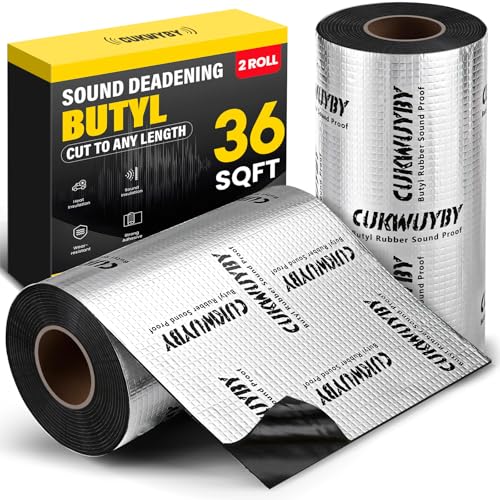
For larger vehicle projects, this butyl soundproofing mat comes in a 36-square-foot roll designed to cover doors, floors, roofs, trunks, and wheel arches. The self-adhesive butyl-and-aluminum construction targets vibration, road noise, and heat while simplifying broad DIY installation.
Best For: Full or extensive vehicle sound-deadening projects that need generous roll coverage.
Pros:
- 36 square feet provides coverage for most vehicle needs.
- Butyl and aluminum composite construction helps damp vibration and block noise.
- Roll format supports efficient installation across large panels.
- Waterproof, temperature-resistant, and odor-free according to the supplied product details.
Cons:
- The large roll may be more material than needed for a small repair or single panel.
- Installation still requires measuring, cutting, and properly preparing surfaces.
This is the most practical option here for broad coverage and extensive cabin upgrades. Choose it when project size and vibration damping are higher priorities than a compact package.
Compact Starter Pick – Amazon Basics 10-Pack Mat
This Amazon Basics soundproofing mat is a convenient starter option for smaller vehicle projects. The 10 self-adhesive butyl-rubber sheets include reflective aluminum foil for thermal insulation and can be cut for installation on cabin floors, trunks, and other interior areas.
Best For: Small repairs, targeted panel treatment, and first-time DIY installations needing pre-cut sheets.
Pros:
- Ten sheets provide a total coverage area of 1,450 square inches.
- Self-adhesive backing supports straightforward placement.
- Butyl rubber compound helps reduce vehicle and road vibrations.
- Reflective aluminum foil adds thermal insulation.
Cons:
- Coverage is substantially less than a large roll, limiting full-vehicle applications.
- Sheet format may require more seams and measuring than a continuous roll.
Choose this soundproofing mat when you want manageable sheets for a focused installation rather than a full cabin treatment. It offers a simple way to test targeted vibration and noise reduction before taking on a larger project.
Lightweight Heat Barrier – Siless Liner 157
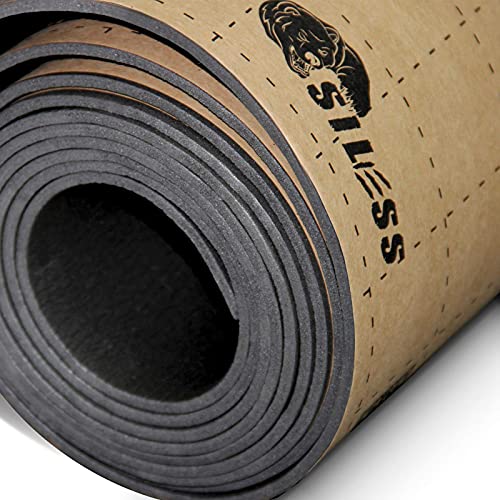
Siless Liner 157 is a practical soundproofing mat for car doors, floors, roofs, trunks, and firewalls when you also want thermal insulation. Its 4 mm closed-cell polyethylene foam is self-adhesive, waterproof, lightweight, and flexible for straightforward installation.
Best For: Vehicle owners seeking broad-coverage sound and heat insulation in a lightweight, moisture-resistant foam mat.
Pros:
- 36 square feet of coverage from one roll.
- Closed-cell foam is waterproof, odor-free, and does not absorb moisture.
- Designed to block radiant heat transfer and help manage engine, exhaust, summer, and winter temperatures.
- Self-adhesive backing makes installation possible with or without a roller.
Cons:
- Its 4 mm foam construction is primarily an insulation and thermal-barrier solution rather than a dedicated heavy vibration-damping mat.
- Maximum operating temperature is listed as 215°F.
Choose this soundproofing mat when easy handling, waterproofing, and heat control matter as much as noise reduction. The generous roll coverage suits larger vehicle projects.
Compact Fiberglass Panel – uxcell 394mil Sound Deadening Mat
The uxcell 394mil mat is a compact soundproofing mat for automotive heat and noise protection. Its fiberglass surface, aluminum-foil foam construction, and self-adhesive backing are suited to targeted insulation work where you need to cover a smaller area.
Best For: Small automotive insulation jobs requiring a thick, self-adhesive panel with heat-reflective construction.
Pros:
- Thick 394 mil, or 10 mm, aluminum-foil foam construction.
- Self-adhesive panel is sized at approximately 40 by 24 inches.
- Fiberglass surface is described as heatproof and helps with heat insulation.
- Intended to reduce transmitted sunlight, engine, and exhaust-pipe heat.
Cons:
- Coverage is limited to about 6 to 6.67 square feet, so larger projects may require multiple panels.
- The supplied details do not specify a full-roll format or installation accessories.
This soundproofing mat makes sense for localized automotive applications rather than whole-vehicle coverage. Its substantial thickness and heat-focused design are useful where thermal protection is a priority.
Heavy-Duty Vibration Control – Siless VIBRO 80 mil
Siless VIBRO 80 mil is a butyl soundproofing mat designed specifically for automotive sound dampening and vibration control. The peel-and-place format lets you trim sections, apply them to the vehicle, and hand-roll them for adhesion without spray-on coatings or separate adhesives.
Best For: Car enthusiasts and DIY installers who want broad-coverage butyl vibration damping with a simple installation process.
Pros:
- 36 square feet of coverage for larger vehicle soundproofing projects.
- Butyl construction is formulated for automotive sound damping.
- Peel-and-place application avoids messy spray-on paints and adhesives.
- Installation instructions are included.
Cons:
- A roller is not included, though hand-rolling is recommended for good adhesion.
- At 80 mil, it is thinner than the 394 mil uxcell panel in this selection.
For a dedicated car soundproofing mat, VIBRO is the most focused option here. Its large coverage area and butyl composition favor vibration damping, while the adhesive-backed format keeps installation approachable.
How We Picked the Best Soundproofing Mats
We focused on the factors that matter most during installation and daily use: material type, thickness, coverage, vibration-control performance, heat resistance, adhesive design, and value per square foot. The selection includes mats intended for vehicle doors, floors, trunks, hoods, and panels, along with options better suited to walls or broader sound-barrier applications.
Because “soundproofing” products work in different ways, we separated vibration-damping mats from sound-absorbing foam and mass-loaded vinyl. Butyl mats help reduce resonance in metal panels, while foam primarily manages reflected sound and MLV adds mass to block airborne noise.
Quick Comparison
| Type | Best For | Main Strength | Installation Note |
|---|---|---|---|
| Butyl automotive mat | Doors, floors, trunks, panels | Vibration and road-noise reduction | Apply to clean, firmly rolled surfaces |
| Closed-cell foam | Heat and secondary acoustic insulation | Lightweight cushioning | Often works best over a damping layer |
| Mass loaded vinyl | Airborne sound barriers | High mass per square foot | Needs secure support and sealed gaps |
| Acoustic foam panel | Room echo and reflections | Sound absorption | Does not block outside noise by itself |
Key Buying Factors for a Soundproofing Mat
Material and Intended Use
For car panels, choose a butyl-based mat designed for vibration damping. Closed-cell foam can complement it by reducing heat and preventing trim or panels from rubbing. For rooms, consider mass loaded vinyl when blocking airborne noise is the priority, or acoustic foam when the main problem is echo inside the space.
Thickness and Coverage
Thicker material can provide stronger damping or blocking, but it also adds weight and may be harder to shape around curves. Measure each surface before buying, then allow extra material for trimming and overlap. Small packs are convenient for targeted repairs; larger rolls are usually more economical for full-vehicle projects.
Adhesive, Fit, and Installation
Self-adhesive products simplify installation, but surfaces must be clean, dry, and free of oil or loose coatings. Use a roller to press out air pockets and ensure consistent contact. Avoid covering drainage holes, moving mechanisms, wiring access, or service points.
Heat Resistance and Safety
Vehicle interiors can become extremely hot, especially near floors, roofs, and trunks. Check the manufacturer’s temperature guidance and use products intended for automotive environments where applicable. Wear gloves when cutting material and follow all installation instructions.
Who Should Buy Which Soundproofing Mat?
Choose a thin butyl mat for doors, smaller panels, and targeted vibration control. Choose a thicker automotive mat when covering floors, trunks, wheel wells, or areas with persistent panel resonance. Add closed-cell foam when you also want heat insulation or a cushioning layer beneath trim.
Choose mass loaded vinyl for a heavier sound barrier in a vehicle, studio, office, or home partition, provided the structure can support its weight. Choose acoustic foam panels for reducing room reflections and improving speech or recording clarity—not for fully blocking neighboring noise.