Small audio systems benefit from cleaner cable management, faster setup, and fewer loose connections. The right snake cable can combine several channels into one manageable run without adding unnecessary bulk.
This roundup covers 10 XLR, TRS, and DB25-based options in practical lengths and channel counts, helping you match cable format, connectivity, and routing needs to your setup.
Best 10 Audio Snake Cables for Small Setups Picks for 2026
Rugged 8-Channel Pick

- Eight numbered, color-coded XLR channels
- Shielded 22-gauge copper conductors
- Suitable for studio, stage, or installation use
Best For: Compact XLR-based live-sound and studio setups
Modular Studio Choice

- Eight fully shielded audio channels
- Five-foot modular DB25 core
- Supports breakout use without soldering
Best For: Compact studio systems using DB25 connections
Compact TRS Option

- Four shielded TRS channels
- Color- and number-marked connectors
- Copper core for signal transmission
Best For: Small indoor rigs using quarter-inch TRS connections
Long-Reach XLR Value

- Eight male-to-female XLR channels
- 25-foot reach for flexible layouts
- Color-coded connectors and multilayer shielding
Best For: Extended XLR runs in small stages, studios, or karaoke setups
Compact TRS Routing

- Eight balanced mono or unbalanced stereo lines
- Color-coded conductors with foil shielding
- Compact 3-foot male-to-male TRS design
Best For: Short 1/4-inch patch-bay, recorder, or mixer connections
Simple XLR Expansion

- Four-channel male-to-female XLR connectivity
- Shielding helps minimize interference
- Color-coded channels in a compact length
Best For: Small mixer, studio, and stage XLR setups
Long-Run TRS Routing
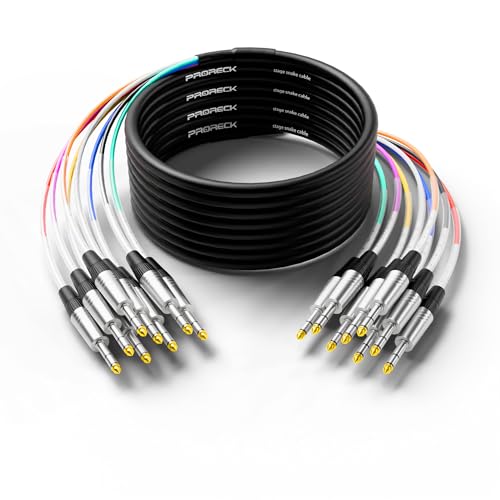
- Eight shielded TRS-to-TRS channels
- 25-foot length for separated equipment
- Numbered and color-marked connectors
Best For: Longer studio or live-sound TRS runs
Color-Coded Compact Pick

- Combines eight balanced XLR lines in one cable
- Color-coded lines help prevent channel mix-ups
- Shielded construction supports clean transmission
Best For: Small recording, streaming, and event setups
Flexible Send-and-Return Pick
Seismic Audio 8x4 25-Foot XLR Snake

- Includes eight sends and four returns
- 25-foot length allows flexible placement
- Individually shielded, heavy-duty conductors
Best For: Small live rigs needing dedicated return channels
Higher-Channel Expansion Pick
Seismic Audio 16x4 25-Foot XLR Snake

- Provides 16 sends and four returns
- 25-foot reach supports flexible routing
- Designed for indoor and outdoor audio use
Best For: Growing rigs that need extensive channel capacity
Rugged 8-Channel Pick – Seismic Audio 10ft XLR Snake
For small setups that need several balanced connections in one bundle, this 10-foot Seismic Audio snake is a practical option among audio snake cables for small setups. Its eight numbered, color-coded XLR channels help simplify routing in studios, on stages, or in permanent installations.
Best For: Small live-sound rigs, studio wiring, and installations using multiple XLR connections.
Pros:
- Eight 10-foot XLR channels in one cable assembly
- Numbered channels and multiple colors make identification easier
- Shielded, twisted 22-gauge copper conductors help reduce hum and buzz
- Flexible rubber jackets and balanced XLR connections suit stage and studio use
Cons:
- Female-to-female connectors may require additional cables depending on the equipment
- Ten feet may be limiting for larger stage layouts
This is a straightforward, road-ready snake for users who want organized XLR routing without managing eight separate cables. The compact length is especially appropriate when source and destination equipment stay relatively close together.
Modular Studio Choice – D'Addario DB25 Snake Core
When a small setup needs flexible studio wiring rather than a fixed breakout arrangement, the five-foot D’Addario DB25 core is worth considering among audio snake cables for small setups. It carries eight fully shielded audio channels and supports individual or breakout use without soldering or adapters.
Best For: Studio patching and compact systems built around DB25 connectivity.
Pros:
- Eight fully shielded audio channels in a five-foot cable
- Modular design allows custom connection configurations
- Can be used for individual or breakout applications
- Designed to configure connections without soldering or adapters
Cons:
- DB25 connectivity is less immediately universal than standard XLR or TRS connectors
- Five feet may not suit equipment positioned farther apart
This cable is best viewed as a configurable studio wiring component rather than a general-purpose stage snake. It makes the most sense when your interface, patchbay, or other equipment already uses DB25 connections.
Compact TRS Option – PRORECK 4-Channel 6ft Snake
For a compact rig built around quarter-inch connections, the PRORECK four-channel, six-foot snake offers a tidy alternative to running multiple individual leads. Its shielded TRS channels, copper core, and matching color and number markings make it a practical choice among audio snake cables for small setups.
Best For: Small studio, mixer, amplifier, instrument, and live-sound setups using standard TRS connections.
Pros:
- Combines four TRS audio channels into one six-foot cable
- Shielding is designed to help reduce EMI and RFI interference
- Color and number markings support faster, more accurate connections
- Standard-sized TRS connectors provide broad equipment compatibility
Cons:
- Four channels provide less expansion than an eight-channel snake
- Six feet may be short for spread-out stage layouts
- Specified for indoor use
This PRORECK model is a sensible fit when four balanced TRS paths are enough and you want a cleaner cable run. Its shorter length favors desktop, rack, and nearby-equipment arrangements over larger venues.
Long-Reach XLR Value – 8-Channel 25ft XLR Snake
If your small setup needs more reach without handling eight separate microphone cables, this 25-foot XLR snake is a useful option among audio snake cables for small setups. It supports up to eight balanced mono connections, while its multicolor connectors and multilayer shielding help with identification and signal management.
Best For: Small stages, karaoke systems, studios, and live-sound layouts requiring extended XLR runs.
Pros:
- Eight male-to-female XLR channels in a single 25-foot cable
- Eight connector colors make channels easy to match and trace
- Multilayer shielding is designed to resist RF and EMI interference
- Heavy-duty zinc alloy connector shells and self-locking connectors support stable connections
Cons:
- Twenty-five feet can be excessive for very compact desktop arrangements
- At 24 gauge, the conductors are lighter than some alternatives in this roundup
This is the strongest choice here when reach and channel count matter more than minimum cable length. Its male-to-female layout is convenient for connecting microphones or other XLR sources to mixers, amplifiers, or speakers.
Compact TRS Routing – 3-Foot 8-Channel TRS Snake
For small setups using 1/4-inch connections, the Monoprice 8-channel snake provides eight short, color-coded lines in a compact 3-foot length. Its male-to-male TRS connectors support balanced mono or unbalanced stereo routing between compatible audio equipment.
Best For: Short patch-bay, recorder, mixer, or instrument connections where 1/4-inch TRS plugs are required.
Pros:
- Eight balanced mono or unbalanced stereo lines
- Color-coded wires simplify channel identification
- 26AWG conductors with aluminum foil shielding
- Lifetime warranty and Monoprice quality-control standards
Cons:
- Only 3 feet long, limiting placement flexibility
- Uses 1/4-inch TRS connectors rather than XLR
This is a practical choice among audio snake cables for small setups when you need several short 1/4-inch connections without excess cable length.
Simple XLR Expansion – 3-Foot 4-Channel XLR Snake
The Cable Matters 4-channel XLR snake is a compact option for small mixer, studio, or stage setups that use XLR connections. Its 3-foot male-to-female layout keeps multiple microphone-style connections organized while shielding helps minimize interference.
Best For: Compact XLR routing between compatible mixers and audio equipment in indoor or outdoor setups.
Pros:
- Four-channel connectivity in a short 3-foot length
- Male-to-female XLR connectors
- Shielding designed to reduce interference and signal loss
- Color-coded channels support faster identification
Cons:
- Four channels provide less expansion than an 8-channel snake
- 3-foot length may not suit equipment placed farther apart
For buyers seeking audio snake cables for small setups with XLR gear, this model emphasizes straightforward organization, compact routing, and flexible placement in a manageable cable length.
Long-Run TRS Routing – 25-Foot 8-Channel TRS Snake
The PRORECK PR-TRS-8 provides eight shielded TRS-to-TRS channels across a 25-foot length, making it useful when small setups still require equipment separation. Numbered and color-marked connectors help keep multi-channel routing organized for studio recording or live sound.
Best For: Small-to-medium TRS setups that need longer runs between mixers, amplifiers, speakers, or instruments.
Pros:
- Eight channels transmit multiple audio signals simultaneously
- 25-foot length supports more flexible equipment placement
- Shielding helps block EMI and RFI
- Numbered and color-marked connectors simplify setup
Cons:
- 25 feet may be excessive for very compact desktop routing
- TRS-to-TRS connectors are not suitable for XLR-only equipment
Among audio snake cables for small setups, this is the better fit when the priority is reach and organized eight-channel TRS routing rather than the smallest cable footprint.
Color-Coded Compact Pick – 8-Channel 10-Foot XLR Snake
For small recording, streaming, or event setups, this 8-channel snake consolidates eight balanced XLR connections into one 10-foot cable. Its color-coded lines are practical when you need to identify channels quickly while keeping a compact setup organized.
Best For: Small recording spaces, live-streaming studios, conference amplification, and short stage runs.
Pros:
- Carries eight independent balanced audio circuits in one cable.
- Color-coded outer jackets and connector rings simplify channel matching.
- High-density shielding and oxygen-free copper conductors are designed for clean, low-loss transmission.
- Standard zinc-alloy, nickel-plated XLR connectors are built for repeated plugging and unplugging.
Cons:
- The 10-foot length may be limiting for larger stages or more spread-out installations.
- It provides eight channels, with no return channels specified.
This is a straightforward choice when your priority is reducing cable clutter without adding much length. The color identification is especially useful for smaller setups where fast, error-free patching matters.
Flexible Send-and-Return Pick – Seismic Audio 8×4 25-Foot XLR Snake
Seismic Audio SACB-8x4x25 8-Channel XLR Low Profile Circuit Board Snake Cable, 25-Feet
Check Price On AmazonThe Seismic Audio SACB-8x4x25 is a practical option for small setups that need both outgoing and returning XLR connections. It offers eight male sends and four female returns over a 25-foot cable, giving you more routing flexibility than a basic one-direction snake.
Best For: Compact live rigs, speaker connections, and indoor or outdoor audio setups needing dedicated returns.
Pros:
- Provides eight XLR male sends and four XLR female returns.
- Twenty-five feet of cable supports more flexible equipment placement.
- Individually shielded conductors and heavy-duty construction are suited to audio use.
- Circuit board technology is included in the cable design.
Cons:
- At 7 pounds, it is less lightweight than a short basic snake.
- The 25-foot length may be more cable than necessary for very close-together components.
Choose this model when return paths matter as much as sends. Its 8×4 layout offers useful flexibility, although the longer, heavier construction is best justified by a setup that needs the extra reach.
Higher-Channel Expansion Pick – Seismic Audio 16×4 25-Foot XLR Snake
Seismic Audio SACB-16x4x25 16-Channel XLR Low Profile Circuit Board Snake Cable, 25-Feet
Check Price On AmazonFor a small setup that may grow into a more channel-heavy rig, the Seismic Audio SACB-16x4x25 combines 16 XLR sends with four XLR returns in a 25-foot snake. It is a substantial cable, but the expanded channel count can simplify routing when multiple microphones or sources are in use.
Best For: Expanding live or installed audio systems that need many sends and several return connections.
Pros:
- Offers 16 XLR male sends and four XLR female returns.
- Twenty-five feet provides useful reach between stage and equipment.
- Circuit board technology is built into the snake design.
- Suitable for indoor and outdoor audio use according to the supplied details.
Cons:
- The 12-pound weight makes it the least portable option in this group.
- Sixteen channels may be unnecessary for a very minimal small setup.
- The supplied notes do not specify individual shielding for this model.
This is the capacity-focused choice rather than the most compact one. It makes sense if you want room for additional sources and returns, but its weight and channel count should be matched to the demands of your setup.
How We Picked the Best Audio Snake Cables for Small Setups
We focused on snakes that suit compact recording rigs, rehearsal spaces, podcast rooms, small venues, and portable PA systems. The selection includes four- and eight-channel models, plus higher-capacity options for users who expect their system to grow. We also considered connector type, cable length, shielding, channel identification, construction style, and how easily each snake fits into a tidy signal path.
Because “snake cable” can describe several formats, this list includes XLR male-to-female cables, TRS snakes, and a DB25 core. These are not interchangeable, so your mixer, interface, stage box, or patch bay should determine the best match.
Quick Comparison
- Best for compact XLR runs: A 3- or 10-foot four/eight-channel XLR snake keeps nearby equipment organized.
- Best for longer routing: A 25-foot snake provides useful distance between a stage, source rack, and mixer.
- Best for line-level TRS connections: TRS snakes are useful with compatible balanced outputs, patch bays, and studio hardware.
- Best for expandable systems: A 16-channel model offers more capacity, but may be excessive for a simple setup.
- Best for modular recording workflows: A DB25 core can connect multiple balanced channels through compatible studio hardware.
Key Buying Factors for Audio Snake Cables for Small Setups
Connector Type and Signal Path
Check every device before buying. XLR snakes are common for microphones and balanced stage connections. TRS models are intended for compatible 1/4-inch balanced or line-level connections, while DB25 cables require matching DB25-equipped interfaces, patch bays, or converters. A connector that physically fits may still be electrically unsuitable.
Channel Count
Choose enough channels for current sources, then allow modest room for expansion. Four channels can be ideal for a small recording or rehearsal setup; eight channels offer more flexibility for microphones, monitor feeds, and outboard equipment. Sixteen channels make sense when you are building around a larger stage box or expect to add several inputs soon.
Length and Routing
Measure the real path, including turns and slack at both ends. Three- to 10-foot cables work well between nearby rack or desktop components. A 25-foot snake is better for stage-to-mixer runs, but extra length can create coils and clutter if your equipment is close together.
Identification and Durability
Color-coded connectors or clearly labeled channels speed up setup and troubleshooting. Look for strain relief, a protected fanout, flexible outer sleeving, and connectors that feel secure. Shielding is particularly important when cables run near power adapters, lighting equipment, or other potential noise sources.
Who Should Buy Which Audio Snake Cables for Small Setups?
Home-studio users should prioritize a short XLR or TRS snake that matches their interface and patching layout. Small live rigs will generally benefit from an eight-channel XLR model with clear channel markings and enough length to separate performers from the mixer. Portable or rehearsal setups should favor manageable lengths and flexible construction over unused channel capacity. Studio owners using patch bays should consider a DB25 or TRS option only after confirming the wiring standard and device compatibility. If expansion is likely, choose extra channels—but avoid paying for a 16-channel snake when a compact four- or eight-channel cable will keep your current system simpler.