Video editing demands storage that can handle large footage libraries, sustained transfers, and reliable access to active project files. The right RAID enclosure can add capacity and performance without locking you into a single storage setup.
We’ve selected 10 RAID enclosures for video editing across Thunderbolt, USB-C, multi-bay, and diskless designs, so you can match your workflow, computer, drive collection, and budget.
Best 10 Raid Enclosure for Video Editing Picks for 2026
Best Thunderbolt RAID Enclosure

- Four SATA bays for 2.5-inch or 3.5-inch drives
- Up to 1,527MB/s sustained performance
- RAID 0/1/4/5/10 and JBOD support
Best For: Custom Thunderbolt editing arrays
Best Budget USB RAID Enclosure

- Two SATA bays with tool-free installation
- USB 3.2 Gen 2 up to 10Gbps
- Hardware RAID 0, 1, JBOD, and Single
Best For: Compact two-drive editing storage
Best High-Capacity RAID Array
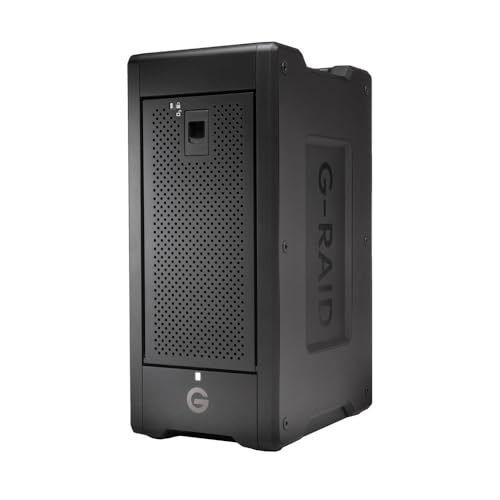
- 160TB with eight removable 20TB drives
- Up to 2,000MB/s write speed over Thunderbolt 3
- RAID 5 preconfigured with multiple RAID options
Best For: Professional 4K, 8K, and VR production
Best USB-C Four-Bay Enclosure
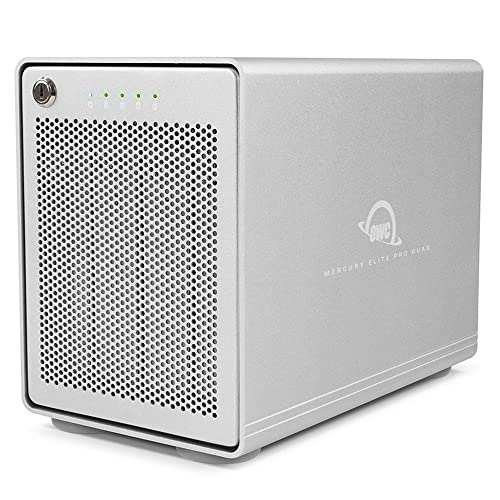
- Four universal 2.5-inch and 3.5-inch SATA bays
- USB-C 10Gbps connectivity
- Up to 947MB/s with software RAID support
Best For: Flexible Mac or Windows USB-C editing setups
Best High-Capacity RAID Enclosure

- Hardware RAID with eight operating modes
- Supports five SATA HDDs or SSDs
- 150W power supply and active cooling
Best For: Large video libraries, studio backups, and desktop editing workflows
Best 20Gbps RAID Enclosure
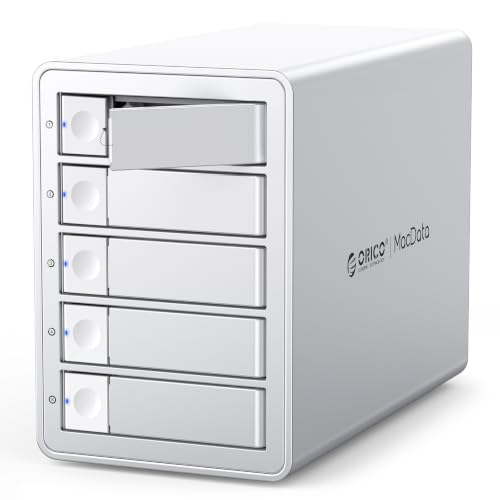
- Up to 20Gbps USB 3.2 Gen 2x2 interface
- Supports up to 130TB across five bays
- Hot-swappable design with six RAID modes
Best For: Professional editing systems and large, transfer-heavy media libraries
High-Capacity Choice
Yottamaster PS500RC3 5-Bay RAID Enclosure

- Five bays support up to 110TB of SATA storage.
- Multiple RAID modes include RAID 5, RAID 10, JBOD, and CLONE.
- USB-C connectivity and temperature-controlled cooling.
Best For: Editors managing large media libraries and backup workloads
Fast Two-Drive Pick
CENMATE 2-Bay 10Gbps RAID Enclosure

- USB 3.2 Gen 2 delivers speeds up to 10Gbps.
- Supports RAID 0, RAID 1, Normal, and JBOD.
- Works with 2.5-inch and 3.5-inch SATA drives.
Best For: Editors seeking fast, compact two-drive storage
Flexible Four-Bay Option

- Four bays provide up to 80TB of SATA storage.
- Eight modes include RAID 5, RAID 10, CLONE, and LARGE.
- USB 3.0 and eSATA connections are included.
Best For: Users needing four-drive capacity and broad RAID flexibility
Best Thunderbolt RAID Enclosure – OWC ThunderBay 4
For editors who need a flexible raid enclosure for video editing, the OWC ThunderBay 4 combines four SATA bays with Thunderbolt 3 connectivity and sustained performance up to 1,527MB/s. It accepts both 2.5-inch and 3.5-inch drives without adapters and supports several RAID layouts.
Best For: Mac or Windows Thunderbolt users building a customizable multi-drive editing workspace.
Pros:
- Four drive bays support 2.5-inch and 3.5-inch SATA drives.
- Supports RAID 0, 1, 4, 5, 10, and JBOD configurations.
- Includes SoftRAID Premium with a three-year subscription.
- Two Thunderbolt 3 ports support high-speed workflows and expansion.
Cons:
- Diskless, so the drives must be purchased separately.
- Requires a compatible Thunderbolt-equipped computer.
- SoftRAID is included as a subscription rather than a perpetual license.
The ThunderBay 4 is a strong all-around choice when editing performance, drive flexibility, and configurable redundancy matter more than a ready-to-use package.
Best Budget USB RAID Enclosure – TerraMaster D2-320
The TerraMaster D2-320 is a practical two-bay raid enclosure for video editing when you want hardware RAID without investing in a larger array. Its USB 3.2 Gen 2 connection reaches up to 10Gbps, while RAID 0 with SSDs can deliver read speeds up to 1,075MB/s.
Best For: Editors needing a compact, diskless two-drive enclosure for desktop storage, project files, or mirrored backups.
Pros:
- Supports RAID 0, RAID 1, JBOD, and Single modes.
- Accepts two 2.5-inch or 3.5-inch SATA HDDs or SSDs.
- Tool-free trays simplify drive installation and removal.
- Temperature-controlled fan helps manage drive heat and noise.
Cons:
- Only two drive bays are available.
- It is direct-attached storage, not a NAS.
- Diskless configuration requires separate drives.
Choose the D2-320 for a straightforward editing setup with hardware RAID, especially if a two-drive mirror or fast SSD scratch array meets your capacity needs.
Best High-Capacity RAID Array – SanDisk G-RAID Shuttle 8
For large productions, the SanDisk Professional G-RAID Shuttle 8 is a high-capacity raid enclosure for video editing with eight removable 20TB Ultrastar hard drives and 160TB of configured storage. Thunderbolt 3 supports read speeds up to 1,900MB/s and write speeds up to 2,000MB/s for demanding multi-stream workflows.
Best For: Studios and mobile production teams handling large 4K, 8K, VR, or mission-critical footage libraries.
Pros:
- Provides 160TB of included storage across eight removable drives.
- Preconfigured RAID 5 balances capacity and protection.
- Supports RAID 0, 1, 5, 6, 10, 50, 60, and JBOD.
- Dual Thunderbolt 3 ports enable daisy-chaining and up to 85W USB-C power delivery.
Cons:
- Its 32-pound chassis is less convenient than smaller enclosures.
- High capacity and enterprise-class hardware make it a premium investment.
- The supplied configuration is designed around a Mac platform.
This is the most capable option in the group for capacity-intensive editing, but its size and price make it better suited to professional studios than casual desktop use.
Best USB-C Four-Bay Enclosure – OWC Mercury Elite Pro Quad
The OWC Mercury Elite Pro Quad is a versatile USB-C raid enclosure for video editing that provides four universal SATA bays and performance up to 947MB/s. It works with USB-C or Thunderbolt 3-equipped Mac and Windows computers, making it a flexible diskless foundation for a custom array.
Best For: Editors who want four-drive capacity and software RAID support through a broadly compatible USB-C connection.
Pros:
- Four bays accept both 2.5-inch and 3.5-inch SATA drives.
- USB 3.2 connectivity reaches up to 10Gbps.
- Compatible with USB-C and Thunderbolt 3-equipped Mac or Windows systems.
- Supports software RAID configurations.
Cons:
- Drives are not included.
- SoftRAID is not included.
- Performance is lower than the Thunderbolt 3 OWC ThunderBay 4 in the supplied specifications.
The Mercury Elite Pro Quad makes sense when you need four bays and USB-C convenience, but budget separately for RAID software and the drives you plan to install.
Best High-Capacity RAID Enclosure – ORICO 5-Bay 110TB DAS
If you need a raid enclosure for video editing with substantial capacity and flexible disk configurations, this five-bay ORICO DAS is built for desktop workflows. It supports RAID 0, 1, 3, 5, 10, JBOD, Clone, and Clear modes, with room for up to five 2.5-inch or 3.5-inch SATA drives and a stated maximum capacity of 110TB.
Best For: Editors, studios, and media-library users who prioritize high capacity, hardware RAID flexibility, and stable multi-drive operation.
Pros:
- Hardware RAID supports RAID 0, 1, 3, 5, 10, JBOD, Clone, and Clear modes.
- Accepts five 2.5-inch or 3.5-inch SATA HDDs or SSDs, up to 110TB total.
- Built-in 150W power supply and 80mm cooling fan support sustained multi-drive use.
- Works with Windows, Mac, and Linux through USB 3.0.
Cons:
- USB 3.0 is slower than the 10Gbps and 20Gbps interfaces offered by newer enclosures.
- The enclosure uses a desktop-oriented design rather than a compact portable format.
This ORICO is a practical choice when capacity and RAID selection matter more than maximum interface speed. Its cooling and integrated power supply also make it suitable for long editing or backup sessions.
Best Portable Flash RAID Enclosure – ORICO 4-Bay 2.5-Inch All-Flash
For a raid enclosure for video editing that emphasizes portability and flash-based storage, this four-bay ORICO model uses 2.5-inch SSDs or HDDs rather than 3.5-inch drives. Its USB 3.2 Gen 2 interface, RAID options, card slots, and compact all-solid-state design suit mobile production workflows.
Best For: Video editors and photographers who work from laptops or on location and want portable multi-drive storage with card-import features.
Pros:
- Supports RAID 0, 1, 3, 5, 10, JBOD, and Clear modes.
- Accepts four 2.5-inch drives, with up to 40TB stated total capacity.
- Includes two USB 3.2 10Gbps ports plus SD and TF 3.0 card slots.
- Compact, lightweight design is suited to backpacks and camera bags.
Cons:
- Does not support 3.5-inch drives.
- Its per-drive capacity is limited to 8TB according to the supplied specifications.
- Actual performance depends on the installed drives and connection interface.
This is the most mobile option in the group, especially for SSD-based editing and field backups. Choose it when portability and card connectivity are more important than maximum desktop capacity.
Best 20Gbps RAID Enclosure – ORICO 5-Bay USB 3.2 Gen 2×2
This raid enclosure for video editing targets users moving large projects across a fast USB connection. The five-bay ORICO enclosure supports USB 3.2 Gen 2×2 at up to 20Gbps, six RAID modes, hot-swapping, and up to 130TB using 3.5-inch SATA hard drives.
Best For: Professional editors, production teams, and data-heavy users with a USB4 or compatible USB 3.2 Gen 2×2 system.
Pros:
- USB 3.2 Gen 2×2 provides up to 20Gbps interface bandwidth; USB4 can reach the full stated rate.
- Supports RAID 0, 1, 5, 10, JBOD, and Normal modes.
- Holds five 3.5-inch SATA drives with up to 130TB total capacity.
- Includes hot-swapping, a 150W power supply, and a low-noise 45dB fan.
Cons:
- Thunderbolt connections are limited to around 10Gbps according to the supplied notes.
- Changing RAID modes erases drive contents, so backups are required before reconfiguration.
- It is designed primarily for desktop and professional data-management use.
This enclosure offers the strongest interface-speed and capacity combination here, provided the host computer supports the required connection. It is a compelling fit for large footage libraries and demanding transfer-heavy workflows.
High-Capacity Choice – Yottamaster PS500RC3 5-Bay RAID Enclosure
If you need a raid enclosure for video editing with room for a growing media library, the Yottamaster PS500RC3 offers five drive bays and support for up to 110TB. Its USB-C connection, flexible RAID modes, and active cooling make it suited to demanding desktop or on-location storage setups.
Best For: Video editors, photographers, and businesses managing large media libraries or backup workloads.
Pros:
- Supports five 2.5-inch or 3.5-inch SATA HDDs/SSDs, with up to 110TB total capacity.
- Offers RAID 0/1/3/5/10, JBOD, and CLONE modes for different workflow and redundancy needs.
- Aluminum construction and an intelligent 80mm temperature-controlled fan support cooling with lower noise.
- USB 3.1 Type-C provides transfer rates up to 5Gbps and works with Windows, Mac, and Linux.
Cons:
- The 5Gbps interface is slower than newer 10Gbps USB enclosures.
- Total drive power consumption must remain within the stated 78W limit; high-power drives may need additional power.
- New drives may require formatting and partitioning before they are recognized.
The PS500RC3 is the most expandable option here, particularly for editors who need multiple drives and broad RAID flexibility. Just account for its USB 3.1 speed and power requirements when planning a high-performance editing system.
Fast Two-Drive Pick – CENMATE 2-Bay 10Gbps RAID Enclosure
For a compact raid enclosure for video editing, the CENMATE 2-bay model combines USB 3.2 Gen 2 connectivity with a 10Gbps transfer rate. It accepts either 2.5-inch or 3.5-inch SATA drives and includes four operating modes for straightforward desktop storage.
Best For: Editors who want fast external storage in a smaller two-drive setup.
Pros:
- USB 3.2 Gen 2 supports transfer rates up to 10Gbps.
- Supports RAID 0, RAID 1, Normal, and JBOD modes.
- Accepts 2.5-inch and 3.5-inch SATA HDDs or SSDs, with up to 20TB per drive.
- Includes both USB-A and USB-C connectivity, plus a tool-free drive enclosure design.
Cons:
- Only two drive bays are available, limiting capacity and expansion compared with larger enclosures.
- The built-in fan is rated around 40–50 decibels and may be noticeable in quiet editing spaces.
- Mac systems do not have RAID software support according to the supplied notes.
This CENMATE is a practical choice when connection speed matters more than bay count. RAID 0 can favor performance, while RAID 1 provides mirrored storage, but users should follow the reset procedure carefully because changing RAID configurations can cause data loss.
Flexible Four-Bay Option – CENMATE 4-Bay RAID Enclosure
The CENMATE 4-bay enclosure is a flexible raid enclosure for video editing when you need more drives than a two-bay unit can provide. It supports up to 80TB, eight RAID modes, and both USB and eSATA connections, though its eSATA behavior depends on the host computer’s RAID support.
Best For: Editors and small businesses needing four-drive capacity and several hardware RAID configurations.
Pros:
- Four bays support 2.5-inch and 3.5-inch SATA HDDs or SSDs, up to 80TB total.
- Provides RAID 0/1/3/5/10, CLONE, LARGE, and NORMAL modes.
- Includes USB-A/C 3.0 and eSATA connectivity, with a 12V power adapter.
- Aluminum construction and dual fans help manage heat during operation.
Cons:
- USB 3.0 transfer speeds are listed up to 5Gbps, below the 10Gbps option in the two-bay model.
- Fans are rated around 40–50 decibels and may be too loud for noise-sensitive users.
- Hot-swapping is not supported, and eSATA requires a host port with RAID functionality to access multiple bays.
This enclosure balances capacity and RAID variety, making it useful for editors who want a four-drive desktop array without moving to a network-attached system. Its connection limitations and required mode-switching procedure deserve attention before setup.
How We Picked the Best Raid Enclosure for Video Editing
We compared these enclosures by interface speed, bay count, supported drive formats, RAID flexibility, cooling, software support, and overall suitability for editing workflows. We also considered whether each model is sold diskless or with preinstalled drives, since that significantly affects cost, setup time, and upgrade options.
A fast connection alone does not guarantee strong editing performance. The installed HDDs or SSDs, selected RAID level, computer ports, file system, and footage format all affect real-world results. Models with Thunderbolt are especially well suited to high-bitrate work on compatible Macs and PCs, while USB enclosures can offer better value and broader compatibility.
Quick Comparison
- Best overall flexibility: OWC ThunderBay 4, with four bays, Thunderbolt connectivity, and SoftRAID support.
- Best for a ready-made high-capacity system: SanDisk Professional G-RAID Shuttle 8-Bay, which arrives populated with substantial storage.
- Best compact two-bay option: TERRAMASTER D2-320 for users who want a simpler diskless setup.
- Best USB-C value: OWC Mercury Elite Pro Quad for expandable desktop storage without Thunderbolt.
- Best for maximum bay count on a budget: the five-bay ORICO and Yottamaster enclosures, provided their USB performance meets your workflow.
Key Buying Factors for a Raid Enclosure for Video Editing
Interface and Sustained Speed
Check the actual port on your computer, not just the enclosure’s advertised maximum. Thunderbolt 3 or 4 is generally preferable for demanding multicamera, 4K, and 8K timelines. USB 3.2 can be effective for proxy media, backups, and many single-stream editing tasks, but theoretical bandwidth is shared across drives and devices.
Drive Bays and RAID Level
Two bays keep a system compact and affordable, while four or five bays provide more capacity, better redundancy options, and greater flexibility. RAID 0 prioritizes speed but offers no protection from drive failure. RAID 1 mirrors data for redundancy, while RAID 5 or RAID 6 can balance capacity and protection when supported by the enclosure or software.
HDD Versus SSD Support
Large HDDs are economical for media libraries and completed projects. SSDs provide faster access, lower noise, and better responsiveness for active editing, but cost more per terabyte. Confirm whether the enclosure supports 2.5-inch drives, 3.5-inch drives, or both.
Cooling, Noise, and Workflow Fit
Fans help protect drives during long transfers and renders, although they may be audible in a recording studio. Also check whether RAID management is hardware-based or software-based, whether monitoring tools are included, and how easily drives can be replaced or migrated.
Who Should Buy Which Raid Enclosure for Video Editing?
Choose a Thunderbolt model such as the OWC ThunderBay 4 or G-RAID Shuttle if you edit directly from external storage and need high sustained throughput. Choose a two-bay enclosure if you are building a mirrored project drive or want a smaller desktop footprint. A four- or five-bay USB enclosure makes more sense for large media archives, backups, and mixed-purpose storage, especially when your computer lacks Thunderbolt.
Diskless models are best for buyers who already own compatible SATA drives or want to select matched disks themselves. Preconfigured systems cost more upfront but simplify installation and provide a known capacity immediately. Whatever you choose, keep a separate backup of irreplaceable footage: RAID improves availability, but it is not a complete backup strategy.