Portable capture cards make it easy to stream gameplay, record video, or connect cameras with minimal setup. The right model can save time, reduce lag, and keep your workflow flexible across consoles, laptops, and travel rigs.
In this roundup, we focus on portable capture cards that balance image quality, passthrough, latency, and compatibility so you can choose a setup that fits your platform and budget.
Best 10 Portable Capture Cards Picks for 2026
Ultra-Compact Pick
Elgato Game Capture Neo Black Portable USB Capture Card

- Smartphone-sized portable design
- 4K60 HDR passthrough
- 1080p60 capture for consoles
Best For: Travel-friendly console streaming and recording
High-Refresh Choice
Elgato 4K S Capture Card for PS5, Xbox Series X/S, Switch 2

- 4K60 capture with HDR10 support
- 1440p120 or 1080p240 passthrough
- USB-C with analog audio input
Best For: High-refresh console streaming with premium passthrough
Budget Flexible Pick
UGREEN 2K@30Hz 1080P 60FPS Video Capture Card
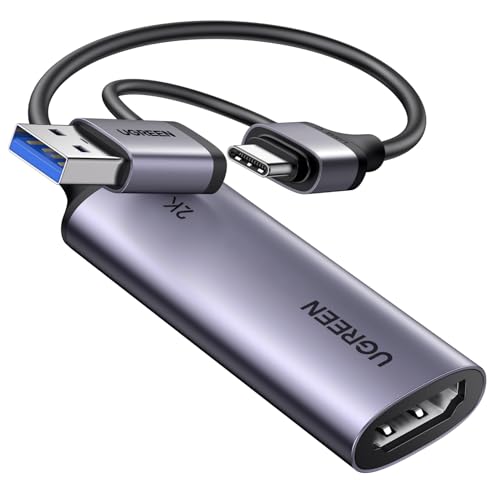
- 4K input with 2K or 1080p output
- USB-A and USB-C support
- Driver-free on major platforms
Best For: Portable multi-device streaming on a budget
Easy Streamer Pick
AVerMedia StreamLine MINI+ GC311G2

- Plug-and-play with no drivers
- 4K60 HDR passthrough
- 1080p60 recording with low latency
Best For: Beginners who want simple portable streaming
Ultra-Stable 4K Loop-Out Pick
XIIXMASK USB 3.0 HDMI Capture Card

- 4K 60Hz input with 1080p60 / 2K30 capture
- Mic-in support for voice commentary
- USB 3.0, aluminum alloy, wide device compatibility
Best For: Streamers and gamers needing pass-through plus mic commentary
Compact Plug-and-Play Traveler
VIXLW 4K USB3.0 HDMI Capture Card

- Plug-and-play with USB 3.0 or Type-C
- Compact and lightweight for travel use
- 4K input with 1080p60 / 2K30 capture
Best For: Travel-friendly streaming and basic recording setups
Budget-Friendly Low-Latency Choice
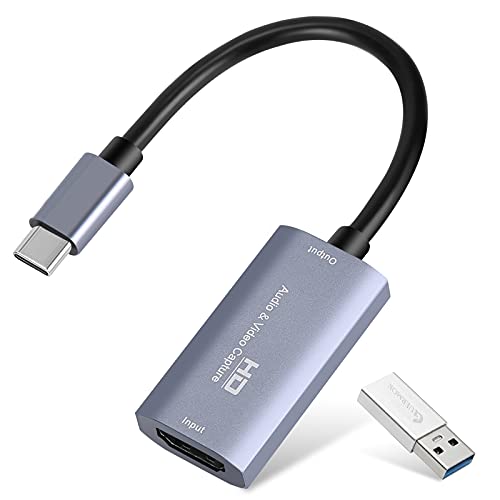
- 4K@30 input with 1080p60 / 2K30 capture
- Plug-and-play, no external power needed
- Compact aluminum body with wide compatibility
Best For: Portable capture on a budget for streaming and teaching
Budget-Friendly USB 2.0 Capture
AXHDCAP 4K HDMI to USB Capture Card

- USB 2.0 plug-and-play setup
- HDMI input up to 4K 30Hz
- Outputs capture at 1080p 30Hz
Best For: Basic streaming, teaching, and simple portable recording
Portable USB 3.0 Streamer Pick
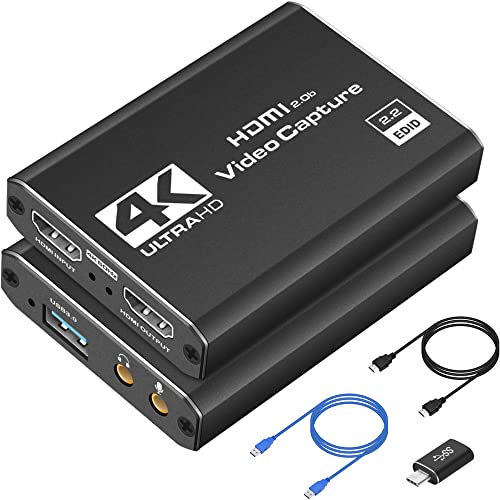
- 1080p 60FPS capture over USB 3.0
- Lightweight and easy to travel with
- Works with PS5, Switch, Xbox, and cameras
Best For: Creators who need a compact, travel-friendly capture card
Low-Latency Game Capture with Mic

- USB 3.0 capture with low latency
- HDMI loop-out for real-time play
- Mic-in support for commentary
Best For: Gamers who want simple capture with live commentary support
Ultra-Compact Pick – Elgato Game Capture Neo Black Portable USB Capture Card
If you want one of the most portable capture cards for simple console streaming and recording, the Elgato Game Capture Neo keeps the setup small without cutting core features. It supports 4K60 HDR passthrough and records in 1080p60, so you can play at high quality while capturing clean Full HD footage on a PC, Mac, iPad, or other compatible device.
Best For: Streamers and console players who want a tiny, plug-and-play USB capture card for travel-friendly setups.
Pros:
- Small, smartphone-sized design for easy portability
- 4K60 HDR passthrough lets you keep your console resolution high
- 1080p60 capture is suitable for streaming and recording
- Works with PlayStation, Xbox, Switch, PC, Mac, iPad, and more
Cons:
- Recording output is limited to 1080p rather than 4K
- Focused on straightforward use rather than advanced feature depth
Overall, this is a strong pick if you value compact size, low-friction setup, and broad device compatibility over maximum capture resolution. It fits neatly into a portable streaming kit while still covering the basics well.
High-Refresh Choice – Elgato 4K S Capture Card for PS5, Xbox Series X/S, Switch 2
Among portable capture cards, the Elgato 4K S is built for players who want high-end passthrough and flexible capture modes. It offers 4K60 capture, supports 1440p120 or 1080p240 passthrough, and includes HDR10 support with tone mapping on Windows, making it a strong fit for modern consoles and fast-refresh gaming.
Best For: Gamers who want premium passthrough and high-frame-rate capture support in a compact USB-C card.
Pros:
- 4K60 capture for detailed recordings
- Supports 1440p120 or 1080p240 passthrough
- HDR10 support with tone mapping on Windows
- Analog audio input for chat or commentary capture
Cons:
- Requires newer operating systems and hardware for best compatibility
- More feature-rich than a basic plug-and-play budget model
This is a well-rounded choice if you want a portable capture card that doesn’t compromise on refresh-rate support or HDR features. It’s especially appealing for users building a modern console setup around PS5 or Xbox Series hardware.
Budget Flexible Pick – UGREEN 2K@30Hz 1080P 60FPS Video Capture Card
If you need one of the more flexible portable capture cards for mixed-device use, this UGREEN model covers a wide range of setups at a practical price point. It supports 4K@30Hz input, 2K@30Hz output, and 1080p60 backward compatibility, with low-latency USB 3.0 performance for streaming or recording from consoles, PCs, phones, and tablets.
Best For: Budget-minded users who want broad device compatibility and portable use across gaming and content workflows.
Pros:
- Supports 4K input, 2K output, and 1080p60 fallback
- USB-A and USB-C interfaces improve compatibility
- Driver-free operation across Windows, Mac, Linux, and more
- Aluminum alloy housing helps with heat dissipation
Cons:
- Only supports unidirectional HDMI input to USB output
- iPadOS requires version 17 or later for USB-C use
This is a practical all-rounder if you want a compact capture card that can move between multiple devices without much setup hassle. Its combination of broad compatibility and decent resolution support makes it easy to recommend for everyday streaming tasks.
Easy Streamer Pick – AVerMedia StreamLine MINI+ GC311G2
The AVerMedia StreamLine MINI+ is aimed at users who want a portable capture card that is quick to set up and capable of smooth gameplay capture. It supports 4K60 HDR passthrough, records in 1080p60, and works with Windows, Mac, and iPadOS devices, making it a strong fit for straightforward streaming workflows.
Best For: Beginners and casual streamers who want a simple plug-and-play portable capture card with solid passthrough.
Pros:
- Plug-and-play setup with no drivers needed
- 4K60 HDR passthrough with ultra-low latency
- 1080p60 recording for smooth streaming
- Works with OBS and AVerMedia Streaming Center
Cons:
- Capture resolution is limited to 1080p60
- Requires newer OS versions for full compatibility
For users who prioritize ease of use over advanced customization, this AVerMedia card is a sensible choice. It keeps the setup simple while still supporting modern passthrough and a range of streaming apps and platforms.
Ultra-Stable 4K Loop-Out Pick – XIIXMASK USB 3.0 HDMI Capture Card
If you want portable capture cards that handle streaming, recording, and pass-through without much fuss, this XIIXMASK model is built around a practical 4K loop-out setup and 1080p60 capture. Its USB 3.0 connection, aluminum alloy body, and mic-in support make it a solid pick for creators who need a compact capture device for consoles, cameras, meetings, and live gameplay.
Best For: Streamers and gamers who want 4K pass-through with 1080p60 capture plus mic commentary support.
Pros:
- Supports 4K 60Hz HDMI input and loop-out, with up to 1080p60 or 2K30 capture.
- Includes mic-in support for adding voice commentary during live streams or recordings.
- USB 3.0 design and aluminum alloy housing are aimed at stable, low-latency use.
- Works with a wide range of devices and software, including OBS, Zoom, Windows, Mac, Linux, and Android.
Cons:
- Notes mention restarting OBS after audio setup or sound may not output correctly.
- Party chat recording is not supported through the mic-in feature.
- Capture output is listed at 1080p60 / 2K30 rather than full 4K recording.
Overall, this is a straightforward option for buyers who care more about reliable capture and pass-through than advanced extras. It fits well for mixed use across gaming, meetings, and simple creator setups.
Compact Plug-and-Play Traveler – VIXLW 4K USB3.0 HDMI Capture Card
Among portable capture cards, this VIXLW unit is geared toward quick setup and easy transport, with plug-and-play operation over USB 3.0 or Type-C. It supports 4K HDMI input and 1080p60 capture, making it a practical choice for creators who need a lightweight recorder for streaming, gameplay, or meetings without carrying extra hardware.
Best For: Users who want a compact, no-driver capture card for travel, streaming, and simple recording.
Pros:
- Plug-and-play design requires no driver or external power.
- Supports up to 4K@30Hz HDMI input and records at 1080p60 or 2K@30Hz.
- Compact, lightweight build is convenient for outdoor streaming and mobile setups.
- Compatible with OBS, Zoom, VLC, Twitch Studio, Windows, macOS, Linux, and Android.
Cons:
- Recording resolution is capped at 2K30 or 1080p60, not full 4K capture.
- The notes advise checking device output and tablet OTG settings before use.
- Best results depend on a proper HDMI source and enough processing power for 1080p capture.
This is a sensible pick if portability and convenience matter more than premium features. It keeps the setup simple while covering the basics needed for streaming and recording on the go.
Budget-Friendly Low-Latency Choice – Guermok Video Capture Card
If you are comparing portable capture cards for everyday streaming or recording, this Guermok model focuses on simple operation, low latency, and broad compatibility. It offers USB 3.0 capture with 4K@30Hz input and up to 1080p60 output, and its compact aluminum alloy build makes it easy to carry for on-the-go use.
Best For: Buyers who want an easy-to-carry capture card for streaming, recording, and online teaching.
Pros:
- USB 3.0 capture supports up to 4K@30Hz input and 1080p60 or 2K30 output.
- Plug-and-play operation needs no extra drivers or external power supply.
- Small, lightweight body is made for portable use and emergency carry.
- Compatible with OBS, Zoom, VLC, Windows, macOS, Linux, Android, and many consoles and cameras.
Cons:
- It is for capture use only and is not intended for direct screen casting to a monitor or TV.
- Users may need to restart OBS after audio setup to get sound output.
- Adapters can affect USB recognition, so setup may take a little troubleshooting.
For shoppers who want a compact, practical capture device rather than a feature-heavy one, this model covers the essentials well. Its main strength is easy portability paired with dependable basic streaming support.
Budget-Friendly USB 2.0 Capture – AXHDCAP 4K HDMI to USB Capture Card
If you want a practical option among portable capture cards for streaming, teaching, or simple recording, this USB 2.0 HDMI capture device keeps setup straightforward. It accepts HDMI input up to 4K 30Hz and outputs up to 1080p 30Hz, with plug-and-play operation and broad software support for common creator and conferencing workflows.
Best For: Budget-minded users who need a simple, portable capture solution for webcams, cameras, lessons, and everyday live streaming.
Pros:
- Plug-and-play design with no driver or external power needed
- Supports HDMI input up to 4K 30Hz with 1080p capture output
- Works with Windows, MacOS, and Linux
- Low-latency preview for real-time monitoring
Cons:
- USB 2.0 connection limits capture performance compared with USB 3.0 models
- Output tops out at 1080p 30Hz, not 1080p 60FPS
- Not intended to add HDMI output to a laptop or PC
Overall, this is a simple capture card for users who prioritize convenience and compatibility over higher-end specs. It fits best when you need an easy, portable tool for basic recording and live broadcasting rather than advanced gameplay capture.
Portable USB 3.0 Streamer Pick – Dcyfol 4K HDMI Capture Card
For creators shopping portable capture cards that are easy to move between setups, this USB 3.0 model focuses on quick setup and smooth 1080p 60FPS capture. It supports 4K HDMI input, works with OBS-style streaming software, and includes loop-out for real-time viewing while you record or stream.
Best For: Streamers and gamers who want a lightweight USB 3.0 capture card for travel, events, or changing setups.
Pros:
- Captures at 1080p 60FPS with 4K HDMI input support
- Plug-and-play operation with no drivers needed
- Compatible with PS5, Xbox Series X, Switch, PC, DSLR cameras, and more
- Compact, lightweight design that is easy to carry
Cons:
- Requires a USB 3.0 port
- Capture resolution is 1080p even though it accepts 4K input
- Best results depend on compatible recording software and system setup
This is a strong choice if portability matters and you want a straightforward capture card for gaming or recording on the go. The mix of USB 3.0 speed, broad device compatibility, and portable size makes it well suited to creator setups that change often.
Low-Latency Game Capture with Mic – Rybozen 4K HDMI Capture Card
If you are comparing portable capture cards for gaming and commentary, this USB 3.0 model offers a straightforward path to 1080p capture with low-latency passthrough. It supports a wide range of HDMI devices, works with Windows and Mac OS, and adds mic-in support for live commentary during play sessions.
Best For: Gamers and streamers who want low-lag capture plus a microphone input for commentary.
Pros:
- USB 3.0 capture with low-latency performance
- HDMI loop-out for no-delay gameplay monitoring
- Mic-in support for adding commentary
- Compatible with Windows and Mac OS
Cons:
- Capture output is up to 1080p rather than 4K
- Mic input only accepts 3.5mm TRS standard microphone headsets
- Windows-focused minimum system requirements are listed in the notes
For users who want a portable capture solution with commentary features, this model is especially practical. It combines pass-through monitoring, broad HDMI device support, and simple plug-and-play operation for streaming or recording sessions.
How We Picked These Portable Capture Cards
We focused on the features that matter most in Portable Capture Cards: supported resolution and frame rate, passthrough quality, latency, connection type, and device compatibility. We also looked for models that are easy to carry, simple to install, and practical for both casual streaming and regular content creation.
Quick Comparison
In general, higher-end models are the better fit for creators who want 4K input, HDR passthrough, or more reliable performance with modern consoles. Budget options are usually best for 1080p streaming, basic recording, or occasional use. If you mainly stream from a console, prioritize passthrough and low latency. If you record from cameras or older devices, focus on clean USB connectivity and broad software support.
Key Buying Factors for Portable Capture Cards
Resolution and Frame Rate
Match the card to your content needs. For most streamers, 1080p60 is the sweet spot. If you want sharper source capture or plan to use a newer console setup, look for 4K input support and strong passthrough, even if your stream is still delivered at 1080p.
Passthrough and Latency
Good passthrough lets you play on a monitor or TV without noticeable delay. Low latency matters if you need responsive gameplay, fast-paced action, or accurate monitoring while recording.
Connection and Power
Most Portable Capture Cards use USB 3.0 or USB-C for better bandwidth and stability. Check whether the included cable and connector match your laptop or desktop ports, and make sure your system can supply enough power.
Compatibility and Software
Make sure the card works with your console, PC, Mac, or camera setup. Some Portable Capture Cards are plug-and-play, while others perform best with specific apps or drivers. If you use OBS, Streamlabs, or similar software, confirm compatibility before buying.
Audio Support
If you need game audio, mic input, or camera audio passthrough, verify how the card handles audio capture. This is especially important for creators who want a cleaner all-in-one recording setup.
Who Should Buy Which Portable Capture Cards?
Choose a premium 4K model if you want the most flexibility for modern consoles and future-proofing. Pick a midrange 1080p60 card if you stream regularly and want dependable performance without overspending. Go with a simple budget capture card if you only need occasional recording, secondary gameplay capture, or a lightweight travel-friendly option.
For most buyers, the best Portable Capture Cards are the ones that match your source device, your target stream quality, and your editing workflow—not just the highest specs on the box.