The right optical cable can make a DAC setup easier to install and more reliable, whether you are connecting a TV, game console, Blu-ray player, or streaming device.
We compared 10 optical audio cables for DAC applications across connector compatibility, cable length, build quality, flexibility, and value to help you choose confidently.
Best 10 Optical Audio Cables for Dac Picks for 2026
Everyday Value Pick
Amazon Basics 6-Foot Toslink Cable

- 6-foot optical cable for common setups
- Flexible PVC jacket with gold-plated connectors
- Removable caps protect connectors in storage
Best For: Straightforward TV, sound bar, and audio-system connections
Compact Cable Choice
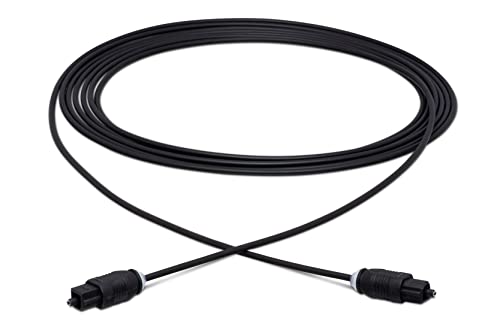
- Short 3-foot Toslink-to-Toslink design
- Supports ADAT and S/PDIF formats
- Limited lifetime warranty included
Best For: Nearby DAC and digital-audio components
Long-Run Durability Pick
iVANKY 10-Foot Braided Optical Cable

- 10-foot length for flexible equipment placement
- Braided jacket rated for over 16,000 bends
- CL3-rated and compatible with DACs
Best For: Longer home-theater and in-wall cable runs
Integrated Conversion Solution
Neoteck 192kHz Optical-to-RCA DAC

- Converts optical S/PDIF to analog RCA
- Supports up to 192kHz/24-bit audio
- Requires 5V/1A power and PCM output
Best For: TV and console setups needing analog RCA output
Best Long-Reach Pick
KabelDirekt 10ft TOSLINK Optical Cable

- 10-foot length for flexible installations
- Works with DACs, soundbars, and S/PDIF gear
- Includes gold-plated connectors and 36-month warranty
Best For: Long optical runs in home-theater and stereo systems
Best Value Twin Pack
Conwork 3ft TOSLINK Cable 2-Pack

- Includes two lightweight 3-foot cables
- Slim 4.0mm design fits compact setups
- Supports PCM and 5.1/7.1 digital audio
Best For: Short DAC and home-theater connections
Best Optical-to-Analog Solution
eSynic 192kHz Optical to RCA Converter

- Converts optical PCM audio to stereo RCA
- Supports up to 192kHz/24-bit PCM
- Includes a 7-foot cable and aluminum housing
Best For: Connecting optical TVs or consoles to RCA amplifiers
Mini-TOSLINK Flexibility
AudioQuest Pearl Optical Mini Cable

- Mini-TOSLINK to full-size TOSLINK design
- Works with DACs and home-theater devices
- PVC jacket for added protection
Best For: Connecting a mini-TOSLINK source to a DAC or other full-size optical input
Long-Run Reliability
Monoprice 6-Foot Toslink Cable

- Six-foot length for flexible placement
- Full-size TOSLINK connectors on both ends
- Polished tips and molded strain relief
Best For: Longer connections between standard optical ports on DAC and audio equipment
Compact Value Pick
Monoprice 3-Foot Toslink Cable

- Three-foot length for nearby components
- Full-size TOSLINK connectors at both ends
- Includes strain relief and lifetime warranty
Best For: Short, tidy connections between a DAC and nearby optical audio equipment
Everyday Value Pick – Amazon Basics 6-Foot Toslink Cable
For shoppers comparing optical audio cables for DAC setups and home entertainment, this 6-foot Amazon Basics Toslink cable offers a straightforward connection between compatible digital audio devices. Its flexible PVC jacket, gold-plated connectors, and removable protective caps suit typical indoor installations.
Best For: Sound bars, TVs, game consoles, Blu-ray players, and audio systems that use standard Toslink connections.
Pros:
- 6-foot length works well for common component layouts.
- Gold-plated connectors and buffer tubing support reliable signal transfer.
- Lightweight, flexible PVC construction is easy to route.
- Removable caps help protect the connectors during storage.
Cons:
- Protective caps must be removed before use.
- It is a standard cable without specialized installation features.
This is a practical, low-complexity choice when you need a dependable Toslink cable at a useful everyday length. Confirm that your DAC or other equipment has compatible optical ports before ordering.
Compact Cable Choice – Hosa OPT-103 3-Foot Toslink
If your DAC sits close to the source, the Hosa OPT-103 is a compact option among optical audio cables for DAC connections. This 3-foot Toslink-to-Toslink fiber-optic cable is designed for digital audio components and supports ADAT and S/PDIF formats, including Dolby Digital and DTS surround.
Best For: Short connections between nearby DACs, CD/DVD players, and home-theater components.
Pros:
- Short 3-foot length helps reduce excess cable around closely placed equipment.
- Compatible with Toslink, ADAT, and S/PDIF applications.
- Supports Dolby Digital and DTS surround formats.
- Includes a limited lifetime warranty.
Cons:
- Three feet may be too short for separated components.
- The supplied listing contains inconsistent connector and connectivity details, so verify your device ports before purchase.
The Hosa is best suited to tidy, nearby component layouts rather than long runs. Its format compatibility makes it relevant for DAC and digital-audio use, while the compact length keeps routing simple.
Long-Run Durability Pick – iVANKY 10-Foot Braided Optical Cable
For larger entertainment systems, this iVANKY model stands out among optical audio cables for DAC use with its 10-foot reach and braided construction. It uses a Toray fiber core, 24K gold-plated connectors, removable caps, and a CL3-rated design intended to provide more installation flexibility.
Best For: Longer connections between DACs, TVs, receivers, sound bars, game consoles, and home-theater equipment.
Pros:
- 10-foot length accommodates more flexible component placement.
- Compatible with standard Toslink optical ports and DACs.
- Nylon braided jacket is rated to withstand over 16,000 bends.
- CL3 rating supports in-wall installation applications.
Cons:
- Extra length may be unnecessary for compact setups.
- Optical connectors still require careful alignment and compatible ports.
This is the most feature-rich cable in the group for users who need reach and added physical durability. Its construction and CL3 rating are useful for demanding routing, while broad device compatibility keeps it versatile.
Integrated Conversion Solution – Neoteck 192kHz Optical-to-RCA DAC
Unlike a passive optical lead, this Neoteck unit combines a 7-foot optical connection with a digital-to-analog converter and built-in RCA output. It is a useful alternative when your source provides optical audio but your amplifier or powered speakers accept analog RCA inputs.
Best For: Converting optical audio from TVs, set-top boxes, disc players, or game consoles into analog RCA sound.
Pros:
- Converts optical S/PDIF input to analog RCA output.
- Supports up to 192kHz/24-bit audio and multiple sampling rates.
- Built-in amplifier chipset is designed for a clear, stronger RCA output.
- Compact plug-and-play design includes a built-in RCA cable.
Cons:
- Supports uncompressed two-channel PCM, not 5.1-channel audio.
- A 5V/1A power adapter is required but is not included.
- Source devices may need to be set to PCM for compatibility.
This product is not simply an optical cable for connecting to another DAC; it is an optical-to-RCA conversion solution. Choose it when you need analog output, and plan for USB power and PCM audio settings during setup.
Best Long-Reach Pick – KabelDirekt 10ft TOSLINK Optical Cable
If you need optical audio cables for DAC setups, this 10-foot KabelDirekt model is a straightforward choice for connecting a TV, console, player, or streaming box to a D/A converter, amplifier, soundbar, or stereo system. Its fiber-optic construction avoids electrical interference, while the extra length suits larger home-theater layouts.
Best For: Long-distance TOSLINK connections to DACs, amplifiers, soundbars, and home-theater equipment.
Pros:
- 10-foot length provides useful installation flexibility.
- Compatible with TOSLINK, OPT, and S/PDIF equipment, including D/A converters.
- Fiber-optic design is immune to electrical interference.
- Includes 24K gold-plated connectors and a 36-month manufacturer warranty.
Cons:
- Only supports devices with TOSLINK optical ports.
- The longer cable may be unnecessary for compact setups.
Choose this KabelDirekt cable when reach, broad device compatibility, and a reassuring warranty matter more than getting the shortest possible interconnect.
Best Value Twin Pack – Conwork 3ft TOSLINK Cable 2-Pack
For a compact DAC or stereo setup, the Conwork two-pack offers two 3-foot optical audio cables for DAC connections and other S/PDIF equipment. The slim 4.0mm design is lightweight and flexible, making it practical when you want a short cable or a spare without adding much bulk.
Best For: Short, tidy connections between optical sources, DACs, receivers, soundbars, and home-theater components.
Pros:
- Two cables provide a convenient spare or second connection.
- 3-foot length and slim 4.0mm outer diameter suit compact setups.
- Supports uncompressed PCM and compressed 5.1/7.1 digital surround sound.
- 360-degree grip treads and molded strain reliefs aid handling and durability.
Cons:
- Three-foot cables may be too short for widely spaced components.
- Designed for indoor use according to the supplied details.
This Conwork pack is a sensible pick when you need short optical leads for a DAC desk or media setup and value having two cables in the package.
Best Optical-to-Analog Solution – eSynic 192kHz Optical to RCA Converter
Unlike a basic optical cable, this eSynic unit combines a 7-foot cable with a DAC converter that changes optical audio into left/right RCA output. It is aimed at connecting newer TVs, Blu-ray players, or gaming consoles to an older amplifier or stereo system, provided the source is set to PCM.
Best For: Converting PCM optical output from TVs and consoles into analog RCA input for stereo amplifiers.
Pros:
- 192kHz/24-bit DAC chip supports high-resolution PCM conversion.
- Includes a 7-foot cable for flexible home-theater placement.
- Aluminum housing and gold-plated RCA ports provide a durable build.
- Designed for plug-and-play optical-to-RCA conversion with status indication.
Cons:
- Supports PCM 2.0 only and is not compatible with Dolby or DTS formats.
- Conversion is optical to RCA only, not bidirectional.
- Requires a 5V/1A USB power adapter, which is not included.
This is the better fit when your DAC requirement is really an optical-to-analog bridge for RCA equipment. Confirm PCM output compatibility and plan for the required USB power before buying.
Mini-TOSLINK Flexibility – AudioQuest Pearl Optical Mini Cable
For optical audio cables for dac setups that use a mini-TOSLINK input, the AudioQuest Pearl provides a direct mini-TOSLINK-to-standard TOSLINK connection. Its PVC jacket and indoor-focused design suit compact digital-audio installations involving DACs, televisions, receivers, and sound bars.
Best For: Connecting a DAC or other full-size TOSLINK device to a source with a 3.5mm mini-TOSLINK output.
Pros:
- Combines a 3.5mm mini-TOSLINK connector with a full-size TOSLINK connector.
- Compatible with DACs, AV receivers, televisions, consoles, and sound bars.
- PVC jacket helps protect the cable from dust, moisture, and breakage.
Cons:
- The mini-TOSLINK-to-TOSLINK layout is less suitable for devices with two full-size TOSLINK ports.
- At 1.5 meters, it may be short for widely separated components.
This is a specialized choice rather than a universal optical cable. Confirm that one device has a mini-TOSLINK port before buying; for compatible sources, it offers a straightforward DAC connection.
Long-Run Reliability – Monoprice 6-Foot Toslink Cable
For optical audio cables for dac installations that need extra reach, this six-foot Monoprice S/PDIF cable uses full-size male TOSLINK connectors at both ends. Its molded strain relief, polished fiber tips, and protective tip covers make it practical for home theater, computer, gaming, and other compatible digital-audio connections.
Best For: Connecting two full-size TOSLINK devices when a six-foot cable helps accommodate component placement.
Pros:
- Six-foot length provides useful flexibility for separated components.
- Full-size male TOSLINK connectors fit standard optical ports.
- Includes molded strain relief, precision-polished fiber tips, and tip protectors.
- Gold-plated ferrule is designed to resist corrosion.
Cons:
- It does not provide a mini-TOSLINK connector.
- The longer length may be unnecessary for closely positioned DAC equipment.
Choose this model when both devices have standard optical ports and cable slack is useful. Its connector protection and six-foot reach make it a sensible general-purpose option for a DAC or home-theater setup.
Compact Value Pick – Monoprice 3-Foot Toslink Cable
This three-foot Monoprice cable is a practical pick among optical audio cables for dac systems where the components sit close together. It has full-size male TOSLINK connectors, a 5.0 mm outer diameter, molded strain relief, and a gold-plated ferrule for standard digital-audio connections.
Best For: Short connections between nearby DACs, televisions, computers, receivers, and other devices with full-size optical ports.
Pros:
- Three-foot length helps keep nearby components tidy.
- Full-size male TOSLINK connectors are fitted at both ends.
- Molded connector heads and strain-relief boots help reduce stress.
- Lifetime warranty is listed in the supplied specifications.
Cons:
- Three feet may not reach between widely spaced components.
- It is not designed for mini-TOSLINK connections.
For a compact DAC stack or short run between digital-audio devices, this cable keeps the connection simple without adding excess length. Verify that both components use full-size TOSLINK ports before ordering.
How We Picked the Best Optical Audio Cables for Dac
We focused on cables and cable-equipped converters that support TOSLINK or S/PDIF optical connections, since these are the formats most commonly used with external DACs and digital-to-analog converter boxes. The selection includes short cables for compact systems, longer options for wall-mounted TVs or separated components, two-packs for backups, and models paired with optical-to-RCA conversion hardware.
Our comparison emphasizes practical installation details: connector fit, cable flexibility, strain relief, shielding from physical damage, stated digital-audio compatibility, and the reputation of the manufacturer. Optical cables transmit light rather than electrical signals, so build quality and secure connections matter more than premium-sounding marketing claims.
Quick Comparison
| Best For | Recommended Type | What to Prioritize |
|---|---|---|
| Compact DAC setup | 3-foot optical cable | Short routing and low cable slack |
| TV or soundbar across a room | 6- to 10-foot cable | Reach, flexibility, and connector protection |
| Backup or multiple devices | Two-pack | Value and matching spare cable |
| Analog amplifier connection | Optical-to-RCA converter kit | DAC compatibility, power, and output format |
| Portable or mini-TOSLINK equipment | Mini-TOSLINK cable | Correct 3.5mm optical connector |
Key Buying Factors for Optical Audio Cables for Dac
Connector and Format Compatibility
Most home-audio connections use standard male TOSLINK plugs. Confirm that both the source and DAC have optical ports, and check whether either device uses mini-TOSLINK. A standard optical cable will not replace a mini-TOSLINK cable without the correct adapter.
Length and Routing
Choose the shortest length that reaches comfortably without sharp bends. Three-foot cables suit nearby components, while 6- to 10-foot models are more practical for TVs, consoles, and soundbars positioned farther from the DAC. Avoid tightly coiling excess cable or bending it at the connector.
Build Quality
Look for snugly molded plugs, protective caps, flexible jackets, and adequate strain relief. Braided or thicker jackets can be useful in busy entertainment centers, but a lightweight cable may be easier to route behind furniture.
DAC and Output Requirements
A cable only carries the digital signal; it does not convert audio. If your amplifier accepts RCA or analog 3.5mm input but lacks an optical input, choose an optical-to-RCA converter kit instead. Check supported sample rates and whether the converter requires USB or wall power.
Who Should Buy Which Optical Audio Cables for Dac?
Buy a basic 3-foot or 6-foot TOSLINK cable if your source and DAC sit close together. Choose a flexible 10-foot model for a wall-mounted television, soundbar, or console arrangement that requires more reach. A two-pack is a sensible choice for households with several digital-audio devices or anyone who wants a spare.
Choose an optical-to-RCA kit when you need to connect an optical source to powered speakers, an older stereo receiver, or another analog-only component. For equipment with a 3.5mm optical port, select the mini-TOSLINK option specifically. In every case, verify the ports on both devices before ordering and remove the protective caps before inserting the cable.