OLED televisions remain the go-to choice for shoppers who want deep blacks, precise contrast, and a truly cinematic picture. In 2026, the category is stronger than ever, with smarter processing, brighter panels, and better gaming support across major brands.
Whether you want a premium large-screen centerpiece, a compact living-room display, or an option that balances picture quality with price, this roundup highlights the best OLED televisions for different needs and budgets.
Best 10 Oled Televisions Picks for 2026
Editor’s Pick

- Self-lit OLED pixels with deep blacks
- Brightness Booster for brighter rooms
- Strong gaming tools with HDMI 2.1 and VRR
Best For: All-around premium viewing and gaming
Gaming Champion
Hisense 65" U7 Mini-LED Fire TV

- Native 165Hz for fast motion
- Up to 3000 nits peak brightness
- Anti-reflection screen for bright rooms
Best For: Bright-room gaming and high-HDR performance
Big Screen Upgrade

- 77-inch OLED with deep blacks
- 144Hz gaming with 0.1ms response
- Dolby Vision, Dolby Atmos, and FILMMAKER MODE
Best For: Large-room movie nights and gaming
Value Bright-Room Alternative
Hisense 65" U7 Mini-LED Google TV

- Native 165Hz for smooth action
- Up to 3000 nits peak brightness
- Google TV with Dolby Vision IQ
Best For: Bright-room gaming and streaming
Best for Easy Setup
Samsung 65-inch S90F OLED for bright, fast action

- NQ4 AI Gen3 processor with 128 neural networks
- Motion Xcelerator 144Hz and VRR up to 4K 144Hz
- HDR-like SDR conversion and Dolby Atmos audio
Best For: 4K gaming, sports, and streaming in a large living room
Compact Premium
Sony 48-inch A90K OLED with PS5-friendly gaming

- Cognitive Processor XR with XR OLED Contrast Pro
- HDMI 2.1 features: 4K/120, VRR, and ALLM
- Acoustic Surface Audio+ plus Dolby Atmos support
Best For: Compact home theater setups and PlayStation 5 gaming
Gaming Powerhouse
LG 65-inch C6 OLED with 165Hz and AI upscaling
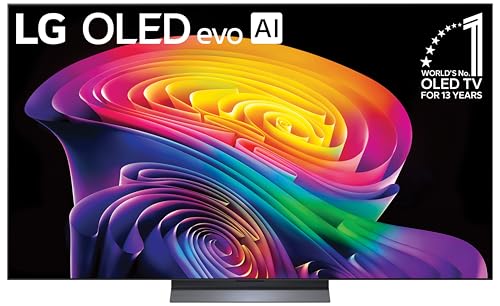
- Brightness Booster and a11 AI Processor Gen3
- 165Hz gaming with 0.1ms response time
- Dolby Vision, Dolby Atmos, and Filmmaker Mode
Best For: Competitive gaming and premium movie watching on a 65-inch screen
Compact premium OLED pick

- 48-inch OLED with pure blacks and contrast
- Triluminos Pro for wider, natural-looking color
- HDMI 2.1 gaming plus Google TV with Gemini
Best For: smaller rooms, streaming, and gaming
Large all-around OLED choice

- 65-inch OLED with perfect black and color
- A8 AI Processor 4K Gen3 with auto picture tuning
- 0.1ms response time and up to 120Hz gaming
Best For: movies, gaming, and smart streaming
Bright big-screen alternative
75-Inch TCL QM6K Bright Google TV

- 75-inch QD-Mini LED with strong brightness
- 144Hz native refresh rate for sports and gaming
- Halo Control System reduces blooming and boosts detail
Best For: bright rooms, sports, and gaming
Editor’s Pick – LG 65-Inch OLED evo AI 4K C5
If you’re shopping oled televisions and want a balanced premium pick, the LG C5 is built around OLED’s core strengths: perfect blacks, strong contrast, and a refined 4K picture. It also adds Brightness Booster support and a Bright Room Ready design, so it’s aimed at buyers who want an OLED that still holds up in everyday living spaces.
Best For: Buyers who want a premium all-around OLED for movies, streaming, gaming, and brighter rooms.
Pros:
- Self-lit OLED pixels deliver deep blacks and strong contrast.
- Brightness Booster and Bright Room Ready support improve performance in well-lit spaces.
- Alpha 9 AI Processor Gen8 and AI Super Upscaling help refine picture quality.
- Gaming features include 0.1ms response time, up to 144Hz, VRR, G-Sync, FreeSync Premium, and four HDMI 2.1 ports.
Cons:
- Premium feature set may be more than casual viewers need.
- 120Hz panel spec may be a better fit for film and streaming than native 165Hz gaming displays.
Overall, this LG OLED television is a strong choice if you want a modern, do-everything screen with impressive picture processing and serious gaming support.
Gaming Champion – Hisense 65" U7 Mini-LED Fire TV
For shoppers comparing oled televisions against bright-room alternatives, this Hisense U7 stands out with Mini-LED backlighting, high peak brightness, and a native 165Hz refresh rate. It’s not OLED, but it targets the same premium viewing space with strong contrast, anti-reflection help, and a gaming-first feature set.
Best For: Gamers and bright-room viewers who want very high refresh rates and strong HDR punch.
Pros:
- Native 165Hz refresh rate supports fast motion for gaming and sports.
- Up to 3000 local dimming zones and 3000 nits peak brightness help HDR scenes stand out.
- Anti-reflection and glare-free screen treatment improves visibility in bright rooms.
- Game Booster 330 and VRR support are built for responsive play.
Cons:
- Mini-LED and Hi-QLED technology are different from true OLED self-lit pixels.
- Fire TV interface may not be ideal for buyers who prefer other smart platforms.
This is a strong pick if your priority is brightness, fast gaming, and room-friendly visibility rather than an OLED panel specifically.
Big Screen Upgrade – LG 77-Inch OLED evo AI 4K C5
If you want a larger option in oled televisions, this 77-inch LG C5 delivers the same OLED fundamentals in a bigger home-theater canvas. It combines self-lit pixels, Brightness Booster support, and LG’s Alpha 9 AI Processor Gen8 to keep movies, sports, and streaming looking polished across the larger screen size.
Best For: Buyers who want a large-format OLED for movies, streaming, and console gaming.
Pros:
- 77-inch OLED panel with deep blacks and high contrast.
- Brightness Booster and Bright Room Ready design help in varied lighting.
- 0.1ms response time, up to 144Hz, and four HDMI 2.1 inputs support gaming.
- Dolby Vision, Dolby Atmos, and FILMMAKER MODE suit movie watching.
Cons:
- Large size requires more wall or stand space.
- May be more TV than smaller rooms or casual viewers need.
This model makes sense when you want the same OLED performance as a 65-inch set but with a bigger, more immersive picture.
Value Bright-Room Alternative – Hisense 65" U7 Mini-LED Google TV
In a roundup of oled televisions, this Hisense model is a compelling non-OLED alternative for buyers who care most about brightness and fast motion. Its Mini-LED Pro backlight, Quantum Dot color, and anti-reflection screen are designed to deliver a vivid picture in rooms where an OLED might not always be the first pick.
Best For: Shoppers who want a bright, high-refresh TV for gaming and sports without moving to OLED.
Pros:
- Native 165Hz refresh rate supports smooth gaming and sports.
- Up to 3000 local dimming zones and 3000 nits peak brightness boost HDR impact.
- Anti-reflection and glare-free design helps maintain clarity in bright rooms.
- Google TV platform and Dolby Vision IQ add convenience and picture tuning.
Cons:
- It uses Mini-LED/Quantum Dot technology, not OLED self-lit pixels.
- Speaker output is solid, but serious home-theater users may still want external audio.
This is a smart pick if you want OLED-like premium features in a very bright, gaming-friendly package without committing to an OLED panel.
Best for Easy Setup – Samsung 65-inch S90F OLED for bright, fast action
If you want one of the more advanced oled televisions for mixed use, the Samsung 65-Inch Class OLED S90F is built around fast processing, strong upscaling, and gaming-ready motion. Its NQ4 AI Gen3 processor uses 128 neural networks to sharpen lower-resolution content to 4K and help boost brightness and contrast scene by scene.
Best For: Buyers who want a high-end 65-inch OLED for streaming, sports, and 4K/144Hz gaming.
Pros:
- 4K AI upscaling powered by 128 neural networks
- Motion Xcelerator 144Hz with VRR support up to 4K 144Hz
- HDR-like SDR conversion for more vibrant everyday viewing
- Built-in Dolby Atmos and 2.1-channel audio
Cons:
- Only 40 watts of listed speaker output
- Glossy screen finish may reflect room light
- Large 65-inch size needs adequate space
Overall, this S90F stands out if you prioritize speed, smart processing, and gaming performance in an OLED TV. It is especially appealing for households that stream a lot, watch live sports, and want smoother motion without giving up 4K picture quality.
Compact Premium – Sony 48-inch A90K OLED with PS5-friendly gaming
For shoppers comparing oled televisions in a smaller size, the Sony 48-inch A90K focuses on picture quality, premium processing, and strong console gaming support. Its Cognitive Processor XR is designed to deliver deep blacks, high peak brightness, and natural color, while XR OLED Contrast Pro and XR Triluminos Pro add realism and color depth.
Best For: Buyers who want a premium 48-inch OLED for movies and PlayStation 5 gaming.
Pros:
- Cognitive Processor XR for detailed contrast and natural color
- HDMI 2.1 gaming features including 4K/120, VRR, and ALLM
- Low input lag listed as 8.5ms for PS5 play
- Acoustic Surface Audio+ with Dolby Atmos support
Cons:
- Smaller 48-inch screen may not suit larger rooms
- 120Hz refresh rate is lower than some gaming-focused OLEDs
- Only 25 watts of speaker output is listed
This is a strong pick if you want a compact OLED with Sony’s picture processing and a clear gaming advantage for PlayStation 5 owners. It trades sheer screen size for a more space-friendly footprint and polished all-around performance.
Gaming Powerhouse – LG 65-inch C6 OLED with 165Hz and AI upscaling
If your shortlist of oled televisions includes a model built for both movies and competitive gaming, the LG 65-Inch Class OLED evo AI C6 Series has a lot to offer. It pairs Brightness Booster and self-lit pixels with the a11 AI Processor Gen3, plus AI Super Upscaling 4K for cleaner-looking content across streaming and live TV.
Best For: Gamers and movie fans who want a bright 65-inch OLED with advanced motion and 165Hz support.
Pros:
- Brightness Booster with over 8.3 million self-lit pixels
- 165Hz refresh rate, 0.1ms response time, G-Sync, and FreeSync Premium
- Dolby Vision, Dolby Atmos, and Filmmaker Mode support
- webOS 2026 with LG Channels and voice features
Cons:
- Listed 120Hz panel spec may be confusing beside the 165Hz gaming mode claim
- Glossy screen finish can show reflections
- 65-inch size may be too large for tight spaces
The C6 is a strong all-rounder if you want a gaming-first OLED that still takes picture quality seriously. Its mix of brightness tools, high refresh support, and premium HDR/audio features makes it a versatile pick for a main entertainment room.
Compact premium OLED pick – 48-Inch Sony OLED With Gemini
If you want a compact option in the oled televisions category without giving up premium picture quality, this 48-inch Sony BRAVIA 6 is built to deliver. Its self-lit OLED panel, Triluminos Pro color, and ambient light sensing make it a strong fit for smaller rooms where contrast and color accuracy matter most.
Best For: Buyers who want a smaller OLED with strong contrast, smart Google TV features, and gaming-ready HDMI 2.1 support.
Pros:
- Over 8 million self-lit pixels for pure blacks and strong contrast
- Triluminos Pro expands color with over a billion accurate shades
- Google TV with Gemini adds natural voice help and broad streaming access
- HDMI 2.1 features include 4K/120, VRR, ALLM, and SBTM for gaming
Cons:
- 48-inch screen size may be too small for larger home theater setups
- Premium OLED features likely put it at a higher price than basic TVs
- Best suited to viewers who want a smaller, more focused display
This Sony stands out if you want OLED contrast in a size that fits apartments, bedrooms, or secondary living spaces. It blends cinematic features with flexible setup options, making it an easy fit for both movie nights and everyday streaming.
Large all-around OLED choice – 65-Inch LG OLED AI 2026 Model
This 65-inch LG is a strong fit if you want one of the more versatile oled televisions for movies, gaming, and everyday streaming. It combines self-lit pixels, AI picture processing, and OLED care features, so it aims to balance premium image quality with long-term panel support.
Best For: Buyers who want a large OLED with advanced AI processing, strong gaming specs, and a polished smart TV platform.
Pros:
- Over 8.3 million self-lit pixels for perfect black and color
- A8 AI Processor 4K Gen3 automatically improves picture and sound
- Gaming-friendly specs include 0.1ms response time, 120Hz, VRR, G-SYNC, and FreeSync Premium
- WebOS includes Google Gemini plus LG Channels and broad streaming support
Cons:
- Large 65-inch size may be more than some rooms can comfortably handle
- Advanced feature set may be more than casual viewers need
- OLED panel care features are helpful, but buyers still need to maintain the screen properly
Overall, this LG is built for shoppers who want a big, feature-rich OLED with strong picture tuning and gaming flexibility. It looks especially appealing if you want a modern smart TV that can handle both premium entertainment and competitive play.
Bright big-screen alternative – 75-Inch TCL QM6K Bright Google TV
If you’re comparing oled televisions with brighter alternatives, this 75-inch TCL QM6K is aimed at buyers who want premium-style contrast, high brightness, and a big-screen experience. Its QD-Mini LED design, Halo Control System, and 144Hz native refresh rate make it a practical pick for sports, gaming, and streaming in well-lit rooms.
Best For: Shoppers who want a large, bright TV with strong motion handling and gaming-focused features.
Pros:
- QD-Mini LED and QLED tech deliver high brightness and bold color
- Halo Control System helps reduce blooming and improve shadow detail
- 144Hz native refresh rate supports smooth sports and fast action
- Google TV, Dolby Atmos, and Onkyo 2.1 audio add everyday convenience
Cons:
- It is not an OLED panel, so black-level behavior differs from true OLED sets
- 75-inch size requires plenty of space and careful placement
- Its strengths are tuned more toward brightness than reference-style cinema accuracy
This TCL makes sense if your priority is a huge, bright screen with fast motion and modern smart features. It is a compelling alternative when you want strong contrast and gaming performance without moving into a true OLED price bracket.
How We Picked the Best Oled Televisions
We focused on the features that matter most in real-world use: picture quality, panel brightness, motion handling, gaming support, smart TV platform quality, and overall value. For Oled Televisions, we also prioritized reliable HDR performance, strong upscaling for streaming and cable, and a good mix of screen sizes for different rooms.
Quick Comparison
Size, brightness, and gaming features tend to separate these models more than resolution, since most premium sets already deliver 4K. Smaller Oled Televisions are often ideal for bedrooms, desks, or apartments, while 65-inch and 77-inch models are better suited to main living rooms and home theater setups. If you game, look closely at refresh rate, VRR support, and input lag. If you mainly stream movies and shows, focus more on contrast, processing, and HDR tone mapping.
Key Buying Factors for Oled Televisions
Screen Size and Viewing Distance
A 48-inch model can be a smart fit for tighter spaces, but a 65-inch or 77-inch panel usually delivers the most immersive experience. Match the size to your room rather than chasing the largest screen available.
Brightness and HDR Performance
Oled Televisions excel at contrast, but brightness still matters in sunny rooms. Look for newer panels and strong HDR support if you watch a lot of daytime TV or want more impact from high dynamic range content.
Gaming Features
Many buyers now want a TV that doubles as a gaming display. Native high refresh rates, VRR, and HDMI 2.1 support can make a major difference for console and PC gaming.
Processing and Upscaling
Good processors help lower-resolution content look cleaner and keep motion smoother. This is especially important if you still watch broadcast TV, sports, or older streaming content.
Who Should Buy Which Oled Televisions?
Choose a 65-inch OLED if you want the best all-around size for most homes. Go 77-inch if you want a true theater-style setup. Pick a 48-inch OLED if space is limited or you want a premium gaming or bedroom TV. If your priorities lean more toward brightness, gaming refresh rate, or price, a high-end Mini-LED alternative may be worth considering alongside Oled Televisions.
For most shoppers, the best choice comes down to room size, content habits, and how much you value perfect black levels versus peak brightness and gaming extras.