The best flexible XLR cables make setup easier without sacrificing balanced signal quality. Whether you are connecting a microphone, mixer, speaker, or stage box, the right cable should coil neatly, resist handling noise, and hold up to repeated use.
This roundup compares 10 options across common lengths, connector styles, pack sizes, shielding designs, and use cases so you can choose a dependable cable for studio, stage, or home audio work.
Best 10 Flexible Xlr Cables Picks for 2026
Reinforced Studio Pick
AA AUDIO ACCESSORY 10ft XLR Cable

- Kevlar-reinforced jacket for heavy use
- Neutrik REAN connectors
- Dual shielding for reduced interference
Best For: Studios, creators, and small stages needing a durable 10-foot cable
Long-Reach Classic

- 25-foot reach for flexible placement
- Hi-flex microphone cable design
- Chrome XLR connectors for low-impedance use
Best For: Performers and venues needing a dependable long cable
Extended Pair Value
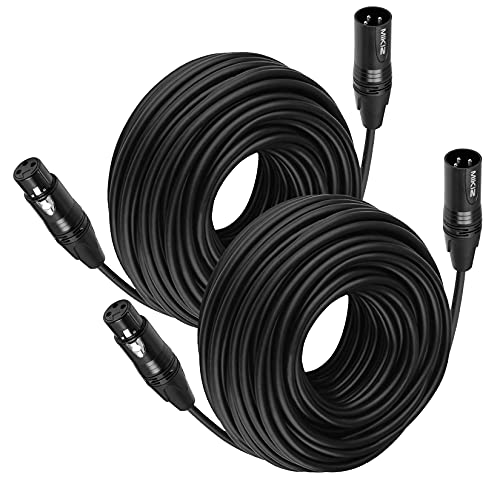
- Two 50-foot cables
- Dual foil and braided-copper shielding
- 22 AWG tinned oxygen-free copper conductors
Best For: Large stages, DJ booths, and multi-microphone setups
Flexible Twin Pack

- Two 25-foot cables
- Double shielding for cleaner signal paths
- Flexible, abrasion-resistant PVC jacket
Best For: Home audio, small stages, and two-device setups
Compact Studio Pair
Cable Matters 3ft XLR Cable 2-Pack

- Two 3-foot male-to-female cables
- 21 AWG OFC conductors
- Copper braided shielding and metal connectors
Best For: Short studio and recording connections
Long-Run Workhorse
25ft Nylon-Braided XLR Cable 2-Pack

- Two 25-foot XLR cables
- Double shielding for noise protection
- Flexible, tangle-resistant nylon braid
Best For: Stage and long-distance microphone connections
Everyday Value Pick
Amazon Basics 6ft XLR Microphone Cable

- Six-foot male-to-female cable
- All-copper conductors with spiral shielding
- Flexible 6.0mm PVC jacket
Best For: PA systems, speakers, and studio connections
Best Right-Angle Pick
Cable Matters 2-Pack XLR Cable

- 90-degree connector for tight spaces
- OFC conductors with braided shielding
- Two 6-foot cables included
Best For: Crowded audio and stage setups
Best Extension Cable
CableCreation Balanced XLR Extension

- 6-foot male-to-female extension
- Double shielding against interference
- Self-locking connectors and nickel-plated pins
Best For: Extending compatible microphone and audio connections
Best Multi-Cable Value
6-Pack 10ft Color-Coded XLR Cables

- Six 10-foot male-to-female cables
- Color-coded connectors simplify tracking
- OFC conductors with dual shielding
Best For: Bands, studios, and larger stage setups
Reinforced Studio Pick – AA AUDIO ACCESSORY 10ft XLR Cable
If you need flexible XLR cables for a microphone, mixer, or stage setup, this 10-foot AA AUDIO ACCESSORY cable emphasizes durability, shielding, and easy handling. Its Kevlar-reinforced jacket and dual-shielded construction are suited to regular studio or performance use.
Best For: Home studios, small stages, creators, and musicians who need a durable 10-foot balanced microphone cable.
Pros:
- Kevlar reinforcement is designed to resist wear, tugging, and fraying.
- Neutrik REAN connectors provide a firm male-to-female connection.
- Aluminum and over-95% OFC braided shielding help reduce hum, static, and interference.
- Lifetime warranty and a 10-foot length add practical value.
Cons:
- The 10-foot length may be limiting for larger venues or long cable runs.
- Its feature set may be more than needed for simple, occasional setups.
This is a strong choice when flexibility needs to come with extra protection against daily handling. The reinforced build and extensive shielding make it especially appealing for active studio, DJ, and live-performance environments.
Long-Reach Classic – Shure C25J 25ft Hi-Flex Cable
The Shure C25J is a straightforward option for shoppers seeking flexible XLR cables with extra reach. Its 25-foot hi-flex design is intended for connecting low-impedance microphones to audio equipment in indoor or outdoor setups.
Best For: Performers, venues, and recording setups that need a longer low-impedance microphone connection.
Pros:
- 25-foot length supports flexible microphone and equipment placement.
- Hi-flex construction is designed for easier handling.
- Chrome XLR connectors suit low-impedance microphone operation.
- Backed by a two-year limited warranty.
Cons:
- It is sold as a single cable.
- The supplied notes provide fewer construction details than some competing options.
Choose the C25J when you want a long, uncomplicated cable from an established audio brand. It is a practical fit for low-impedance microphone connections where reach and flexible handling matter more than extra shielding features.
Extended Pair Value – MIKIZ 50ft XLR Cables, 2-Pack
For larger setups, these flexible XLR cables provide two 50-foot runs, giving you substantial reach for a stage, studio, or DJ booth. The 22 AWG conductors, tinned oxygen-free copper, and dual shielding are designed to support balanced signal transmission over longer distances.
Best For: Stage shows, DJ booths, studios, and buyers who need two long microphone cables.
Pros:
- Two 50-foot cables offer 100 feet of total cable length.
- Aluminum foil and braided copper shielding help resist EMI and RFI.
- 22 AWG tinned oxygen-free copper conductors support signal transmission and oxidation resistance.
- Screw-type silver-plated connectors are designed for secure locking and service access.
Cons:
- 50-foot cables can be excessive for compact home setups.
- Long cables require more careful storage and cable management.
- The supplied notes specify a two-year warranty rather than a lifetime warranty.
This two-pack makes sense when coverage and quantity are priorities. It is particularly useful for spreading microphones across a larger room or stage, though smaller systems may be better served by shorter cables.
Flexible Twin Pack – AuxLink 25ft XLR Cable Set
This AuxLink pair is a practical choice if you want flexible XLR cables for microphones, mixers, speakers, or stage equipment. Each 25-foot cable uses oxygen-free copper conductors, double shielding, and a flexible PVC jacket for everyday indoor or outdoor use.
Best For: Home theaters, KTV and club stages, small live setups, and buyers who need two medium-long cables.
Pros:
- Two 25-foot cables provide useful reach for multiple connections.
- Foil and inner copper spiral shielding are designed to reduce noise and interference.
- Self-locking connectors with silver-plated copper pins support a stable connection.
- High-elastic PVC is described as abrasion-, oil-, and dirt-resistant.
Cons:
- The 24 AWG conductors are lighter gauge than the 22 AWG option in this roundup.
- A 25-foot cable may still be too long for compact desktop setups.
- The listed two-year after-sale service is shorter than a lifetime warranty.
AuxLink balances reach, flexibility, and quantity in a useful two-cable package. Its self-locking connectors and double shielding make it a sensible everyday option for home and small-stage audio systems.
Compact Studio Pair – Cable Matters 3ft XLR Cable 2-Pack
For short connections in a studio, stage, or recording setup, these flexible XLR cables offer a practical two-pack with balanced signal transmission. Their 3-foot length helps keep nearby equipment tidy without leaving excessive cable to manage.
Best For: Studio microphones, mixing boards, preamps, and other nearby 3-pin XLR equipment.
Pros:
- Two male-to-female XLR cables provide a spare or matching second cable.
- 21 AWG oxygen-free copper conductors and balanced construction support clear audio.
- Copper braided shielding, metal connectors, and molded strain relief help reduce noise and improve durability.
Cons:
- The 3-foot length is best suited to short connections rather than wide stage layouts.
- Only 3-pin XLR equipment is supported.
This is a sensible flexible XLR cable option when you need dependable short runs and the convenience of a two-pack. Choose a longer cable for microphones positioned farther from a mixer or preamp.
Long-Run Workhorse – 25ft Nylon-Braided XLR Cable 2-Pack
When a microphone needs to reach a mixer, patch bay, or stage position, these flexible XLR cables provide 25 feet of working length per cable. The nylon braid is designed for repeated handling, while double shielding targets unwanted noise on longer runs.
Best For: Stage sound, KTV, home theater, recording setups, and other installations requiring long 3-pin XLR connections.
Pros:
- Two 25-foot male-to-female cables offer useful reach plus a spare.
- 24 AWG oxygen-free copper conductors with foil and copper-braided shielding help limit interference.
- Nylon braiding, metal connectors, molded strain relief, and tin-plated pins support regular use.
- Available in multiple lengths from 6 inches through 100 feet.
Cons:
- At 25 feet, the cables may be more than needed for compact setups.
- The supplied notes specify compatibility with 3-pin XLR equipment only.
This two-pack is the strongest fit here for extended cable runs and active setups where flexibility and wear resistance matter. Its longer length improves placement options but can require more cable management.
Everyday Value Pick – Amazon Basics 6ft XLR Microphone Cable
For everyday PA and recording connections, this flexible XLR cable provides a straightforward 6-foot run with all-copper conductors and spiral shielding. Its moderate length works well when equipment is close but not directly adjacent.
Best For: XLR-compatible PA systems, speakers, studio recording, and live sound setups.
Pros:
- Six-foot length suits many standard microphone and speaker connections.
- All-copper conductors and inner copper spiral shielding help reduce noise interference.
- Zinc alloy 3-pin connectors and a protective metal housing add durability.
- Flexible 6.0mm PVC jacket supports easier handling and routing.
Cons:
- Only one cable is included.
- The PVC jacket and 6-foot length may be less suitable for demanding long-run stage layouts.
This is a practical single-cable choice for buyers who need a conventional 6-foot connection without extra length. It balances flexibility, basic shielding, and durable connector construction for indoor studio or live-sound use.
Best Right-Angle Pick – Cable Matters 2-Pack XLR Cable
For flexible XLR cables that fit neatly into crowded setups, this Cable Matters 6-foot pair combines a right-angle connector with balanced, shielded construction. The two-pack is suited to microphones, mixers, harmonizers, speakers, and compatible stage-lighting equipment.
Best For: Tight spaces, home or professional audio setups, and buyers who need two short XLR cables.
Pros:
- 90-degree connector helps reduce cable strain in confined spaces.
- OFC conductors and copper braided shielding support balanced, low-noise audio.
- Heavy-duty metal connectors, molded strain relief, and grip treads improve everyday usability.
Cons:
- The 6-foot length may be limiting for larger stages or rooms.
- Right-angle connectors may not suit every equipment layout.
This is a practical choice when connector orientation matters as much as cable flexibility. Its two-cable package adds value for compact recording, mixing, and stage setups.
Best Extension Cable – CableCreation Balanced XLR Extension
This CableCreation model is a useful option among flexible XLR cables when you need to extend a compatible microphone or audio connection. Its male-to-female, 6-foot design uses double shielding and locking connectors for dependable everyday use.
Best For: Extending microphones, speakers, mixers, patch bays, preamps, and other equipment with 3-pin XLR connections.
Pros:
- Male-to-female format works as a straightforward XLR extension.
- Foil and metal braided shielding help limit external interference.
- Self-locking connectors help prevent accidental disconnection.
- Nickel-plated pins resist corrosion and oxidation.
Cons:
- Only one 6-foot cable is included.
- PVC outer material may be less premium than specialized touring jackets.
Choose this cable when secure connections and interference control are priorities. The included two-year warranty and lifetime customer service add reassurance for routine use.
Best Multi-Cable Value – 6-Pack 10ft Color-Coded XLR Cables
For larger setups needing flexible XLR cables in several runs, this six-pack provides 10-foot male-to-female leads with color-coded connector boots. The cables are designed for 3-pin XLR equipment, including microphones, mixers, speakers, sound cards, and stage lights.
Best For: Bands, studios, event setups, and stage rigs that benefit from multiple long cables and quick color identification.
Pros:
- Six 10-foot cables provide useful reach for larger installations.
- Six connector colors make cable tracking easier during setup and teardown.
- 22AWG OFC conductors and dual shielding support high-fidelity, low-noise transmission.
- Flexible PVC is designed to withstand repeated bending.
Cons:
- A six-pack may be more than needed for a small personal setup.
- At 10 feet, these cables require more storage space than shorter leads.
This pack is the strongest fit for buyers building a multi-connection rig. Its combination of quantity, reach, color coding, and flexible PVC helps simplify busy audio or lighting setups.
How We Picked the Best Flexible Xlr Cables
We focused on practical features that matter in everyday audio setups: cable flexibility, connector fit, shielding, conductor quality, length options, strain relief, durability, and overall value. The selection includes single cables and multipacks, short patch cables and long stage-ready options, plus standard and right-angle connectors.
Balanced XLR cables can help reject electrical interference when used with compatible equipment, but construction quality still affects reliability. We gave preference to products with clearly stated connector types, durable jackets or braiding, and designs suited to repeated plugging, coiling, and transport.
Quick Comparison
- For studio and vocal microphones: Choose a 10- to 25-foot cable with conventional straight XLR connectors and effective shielding.
- For stages and long runs: Consider 25- or 50-foot cables, or multipacks that simplify several microphone connections.
- For compact setups: Three- to 10-foot cables reduce excess slack around interfaces, mixers, and desktop stands.
- For crowded rear panels: Right-angle XLR cables can reduce connector strain and help equipment sit closer to a wall or rack.
- For multiple microphones: Two-packs and six-packs offer better value when building a rehearsal, podcast, or PA kit.
Key Buying Factors for Flexible Xlr Cables
Length and Cable Management
Buy enough length to route the cable safely, but avoid excessive slack that creates trip hazards and tangles. Short cables work well between nearby rack or desktop components; longer cables are more useful on stages and in larger rooms.
Flexibility and Jacket Design
A flexible jacket is easier to coil and less likely to fight your cable management. Braided coverings may add abrasion resistance, while conventional rubber or PVC jackets can be lighter and easier to handle. Avoid sharply bending any cable at the connector.
Connectors and Compatibility
Most microphone connections use a three-pin male-to-female XLR cable. Check the equipment before buying, especially if you need an extension cable, a right-angle connector, or a less common pin configuration. Balanced XLR wiring is not automatically interchangeable with every specialized audio connection.
Shielding and Signal Quality
Dual shielding, dense braided shielding, and all-copper conductors can help support low-noise performance. Keep XLR cables away from power cables where possible, and remember that a good cable cannot correct noise caused by faulty equipment or poor grounding.
Who Should Buy Which Flexible Xlr Cables?
Home recordists and podcasters should prioritize manageable 6- to 10-foot cables, reliable straight connectors, and low-noise shielding. Live performers and sound crews will benefit from longer lengths, durable jackets, and multipacks for consistent stage setups. Installers and fixed-position users may prefer right-angle designs when space behind equipment is limited. If you are building a complete microphone kit, compare pack sizes and lengths rather than choosing solely by the lowest per-cable price.