If you need a reliable way to capture demos, band rehearsals, and full song ideas, the right multitrack recorder can speed up your workflow fast.
This 2026 roundup focuses on practical multitrack recorders for musicians, with options for portable songwriting, home recording, and small-studio production.
Best 10 Multitrack Recorders for Musicians Picks for 2026
Portable 4-Track Loop Builder

- Up to 4 tracks with bounce workflow
- 32-bit float recording reduces gain hassle
- Built-in rhythms and battery power
Best For: Songwriters layering ideas on the go
All-in-One Pocket Recorder
Roland BR-80 Portable Digital Recorder
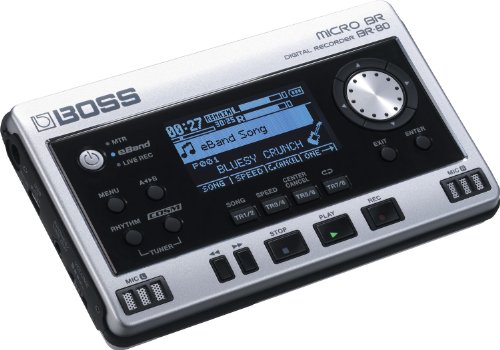
- Three modes: MTR, eBand, and Live Recorder
- Built-in stereo mic and effects
- USB interface with 64 V-Tracks
Best For: Musicians wanting practice and recording in one device
Tabletop Studio Workhorse
Zoom R24 Multi-Track Tabletop Recorder

- 8 XLR combo inputs for larger sessions
- Up to 24 tracks with WAV recording
- Built-in stereo mics and USB interface
Best For: Bands and home studios needing more inputs
Compact Live Mix Recorder

- Captures 12 tracks at 24-bit/96kHz
- Four headphone outs with three mixes
- Records to SD card and computer
Best For: Live bands and rehearsals needing flexible monitoring
Large-Format Home Studio Workhorse
Tascam DP-24SD 24-Track Portastudio

- 24-track recording for layered songs and band demos
- Eight XLR inputs for multi-mic tracking
- Built-in effects, mastering, and color screen
Best For: Home studio users who want a full-featured standalone recorder
Portable Idea Builder

- Up to 8 tracks with touchscreen editing
- Two XLR/TRS inputs with phantom power and Hi-Z
- Built-in drum loops, synths, USB-C interface
Best For: Portable songwriting and quick tracking sessions
Pocket Songwriting Recorder
Tascam DP-006 6-Track Pocketstudio

- Up to 6 tracks for basic demos and sketches
- Built-in omni mics for instant recording
- Battery-powered, compact, and USB-capable
Best For: Solo writers who want a tiny battery-powered recorder
Portable DAW-Style Multitrack
Zoom R20 Tabletop Recorder for Musicians
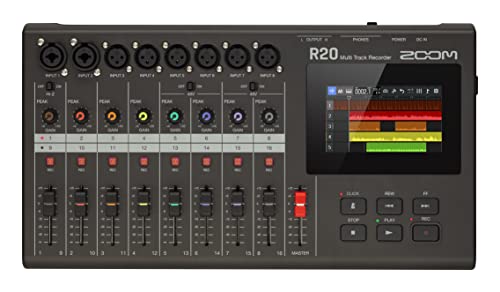
- Records up to 16 tracks, with 8 simultaneous inputs
- Touchscreen lets you edit and mix directly on the device
- Includes EQ, compression, drum patterns, and onboard synth
Best For: musicians who want hands-on recording and editing without a computer
Battery-Powered Songwriting Recorder

- Battery-powered with built-in mics for grab-and-go recording
- Records in WAV format and includes USB connectivity
- Compact 8-track design suits songwriting and demos
Best For: songwriters who want a lightweight portable recorder for quick ideas and demos
Studio-to-Stage Recording Console
Tascam Model 24 Multitrack Mixer

- Records up to 24 tracks directly to SD card
- 16 mic preamps plus stereo line inputs for bigger setups
- Also functions as a USB audio interface for PC or Mac
Best For: bands and home studios needing a hands-on mixer with multitrack recording
Portable 4-Track Loop Builder – Zoom R4 Multi-Track Recorder
If you want multitrack recorders for musicians that make quick sketching and layering simple, the Zoom R4 is built around fast capture and easy overdubbing. It records up to 4 tracks, lets you bounce to a dedicated track, and uses 32-bit float recording so you can plug in and focus on the performance instead of gain staging.
Best For: Songwriters and musicians who want a compact, battery-powered recorder for layering ideas, vocals, and instruments.
Pros:
- Up to 4 tracks with record, layer, bounce, and repeat workflow
- 32-bit float recording with no gain adjustments needed
- Two XLR/TRS combo inputs handle mics, instruments, and keyboards
- Built-in rhythm patterns help keep practice and writing sessions moving
Cons:
- Limited to 2 combo inputs at a time
- More of a compact idea recorder than a large-format studio unit
The R4 is a practical choice if you want an easy, no-fuss recorder for capturing parts on the fly and building arrangements layer by layer.
All-in-One Pocket Recorder – Roland BR-80 Portable Digital Recorder
The Roland BR-80 is a flexible pick in multitrack recorders for musicians who want recording, practice, and playback tools in one portable unit. It offers three modes—MTR, eBand, and Live Recorder—plus built-in stereo mics, onboard effects, and USB audio interface support for a versatile workflow.
Best For: Players who want a portable recorder for songwriting, phrase training, and quick live capture.
Pros:
- Three modes cover multitrack recording, practice, and live capture
- Built-in stereo condenser microphone enables instant recording
- 64 V-Tracks and eight simultaneous playback tracks for eBand use
- USB audio interface function with built-in effects
Cons:
- Records to SD/SDHC cards only, up to 32 GB
- Older design with a 90-day warranty
If you want a compact recorder with a lot of built-in flexibility, the BR-80 stands out for musicians who split time between writing, practice, and basic capture.
Tabletop Studio Workhorse – Zoom R24 Multi-Track Tabletop Recorder
For musicians who need more inputs and more room to build arrangements, the Zoom R24 is a strong option among multitrack recorders for musicians. It offers 8 XLR combo inputs, up to 24 tracks, built-in stereo condenser mics, and USB audio interface support for recording, overdubs, and post-production work.
Best For: Bands and home-studio users who need multiple inputs and expanded track count.
Pros:
- 8 XLR combo inputs for larger recording setups
- Up to 24 tracks with 16-bit/24-bit WAV recording
- Built-in stereo condenser mics for quick capture
- Can connect two R24 units via USB for 16 tracks of simultaneous recording
Cons:
- More tabletop-focused than ultra-portable units
- Limited to SD/SDHC cards up to 32 GB
The R24 makes sense if your sessions need more input flexibility and track capacity than a small portable recorder can provide.
Compact Live Mix Recorder – Zoom LiveTrak L-8
The Zoom LiveTrak L-8 is aimed at musicians who want a compact mixer/recorder that can handle rehearsals, live sets, and sessions. It captures 12 tracks simultaneously to SD card at 24-bit/96kHz, records to both SD and computer at once, and adds four headphone outputs with three independent monitor mixes.
Best For: Bands, rehearsals, and performers who need a portable mixer with multitrack recording and monitoring.
Pros:
- Records 12 tracks simultaneously at 24-bit/96kHz
- Six preamps with a -121dBu noise floor
- Four headphone outputs and three custom monitor mixes
- Can record to SD card and computer at the same time
Cons:
- Only 8 channels, so larger setups may need more routing
- Less of a dedicated handheld recorder and more of a mixer/recorder hybrid
If you need a portable recording hub with serious monitoring options, the L-8 is well suited to live use and collaborative sessions.
Large-Format Home Studio Workhorse – Tascam DP-24SD 24-Track Portastudio
If you want multitrack recorders for musicians that can handle full arrangements without a computer, the Tascam DP-24SD is built for that job. It gives you 24-track recording, eight XLR inputs, onboard effects, mastering tools, and a color screen for hands-on session work.
Best For: Songwriters and home recordists who want an all-in-one desktop studio with lots of track count and mic inputs.
Pros:
- 24-track recording gives plenty of room for layered songs and full band demos.
- Eight XLR inputs make it easy to record multiple microphones at once.
- Built-in effects and mastering tools support a more complete production workflow.
- Color screen and USB 2.0 support add convenience for session management and file transfer.
Cons:
- At 13.7 pounds, it is not a grab-and-go recorder.
- Its larger footprint is better suited to a desk or studio table than mobile use.
For musicians who prioritize track count and input flexibility over portability, this is a practical standalone recorder. It fits especially well in a home studio where you want to capture, edit, and finish songs in one box.
Portable Idea Builder – Zoom R12 Portable Recorder
The Zoom R12 is a strong pick if you want multitrack recorders for musicians that are easy to move and quick to use. It records up to 8 tracks, includes two XLR/TRS inputs with phantom power, and adds a touchscreen plus onboard editing tools for working without a computer.
Best For: Musicians who want a compact battery-powered recorder for sketching songs, tracking parts, and basic editing anywhere.
Pros:
- Records up to 8 tracks with DAW-style editing tools.
- Two XLR/TRS combo inputs include 48V phantom power and Hi-Z on input 1.
- Built-in drum loops and 18 FM synth instruments support fast song ideas.
- USB-C audio interface and DAW control mode add studio flexibility.
Cons:
- Only two inputs are available for capturing sources at once.
- Battery life is limited to up to 5 hours on four AA batteries.
As a portable writing and tracking tool, the R12 balances hands-on control with useful built-in sounds. It is a smart choice if you care more about speed, portability, and idea capture than large simultaneous input counts.
Pocket Songwriting Recorder – Tascam DP-006 6-Track Pocketstudio
For musicians who want a simple entry point into multitrack recorders for musicians, the Tascam DP-006 keeps things compact and straightforward. It offers up to six-track recording, built-in omni-directional condenser microphones, and battery-powered operation for easy songwriting on the move.
Best For: Solo writers and demo makers who want an ultra-portable recorder with built-in mics.
Pros:
- Compact pocket studio design makes it easy to carry anywhere.
- Built-in mics let you start recording without extra gear.
- Up to six tracks with two simultaneous recording tracks support basic demo work.
- Runs on four AA batteries and includes USB connectivity for computer transfer.
Cons:
- Limited to six tracks, which is smaller than larger desktop recorders.
- Built-in microphones may not suit every recording situation.
- 2.5 mm headphone jack is less common than standard full-size outputs.
If portability and simplicity matter most, the DP-006 is an easy way to capture song ideas and basic performances. It is best viewed as a lightweight sketchpad rather than a full production center.
Portable DAW-Style Multitrack – Zoom R20 Tabletop Recorder for Musicians
If you want multitrack recorders for musicians that feel closer to a compact DAW than a traditional field recorder, the Zoom R20 is built for that workflow. It lets you record, edit, and mix directly on the device with a touchscreen, while offering up to 16 tracks total and 8 simultaneous inputs for demos, songwriting, and full project tracking.
Best For: Musicians who want hands-on recording, editing, and mixing without relying on a computer.
Pros:
- Records up to 16 tracks total, with 8 tracks available simultaneously
- Six XLR inputs plus two XLR/TRS combo inputs support flexible mic and instrument setups
- Touchscreen workflow makes dragging, dropping, swiping, and pinching tracks straightforward
- Built-in EQ, compression, rhythm patterns, and onboard synth help you build and polish songs
Cons:
- Maximum sample rate is listed at 44.1 kHz
- Designed around onboard workflow, so it may not suit users who prefer a traditional mixer layout
The R20 stands out if you want a compact recorder that covers capture, editing, and basic production in one box. It is especially practical for musicians who sketch ideas quickly and want built-in tools to keep the process moving.
Battery-Powered Songwriting Recorder – TASCAM DP-008EX Pocketstudio
For musicians who want a simple, portable option among multitrack recorders for musicians, the TASCAM DP-008EX focuses on quick songwriting and sketching ideas. It is battery operated, includes built-in mics, and records in WAV format, making it a practical grab-and-go recorder for demos and rough song captures.
Best For: Songwriters and players who want a lightweight, battery-powered recorder for quick ideas and demos.
Pros:
- Battery operation makes it easy to use away from the studio
- Built-in microphones help you start recording without extra gear
- Compact size and 3.5 mm headphone jack support simple private monitoring
- Includes USB connectivity and comes with an SD card, USB cable, and batteries
Cons:
- Only 8 tracks, so it is less expansive than larger multitrack recorders
- 2 GB memory storage is modest compared with bigger project recorders
- Screen size is only 2 inches, which may feel basic for detailed editing
The DP-008EX is a straightforward choice if your priority is portability over deep production features. It is best suited to fast songwriting sessions, rehearsals, and simple home capture where convenience matters most.
Studio-to-Stage Recording Console – Tascam Model 24 Multitrack Mixer
If you need multitrack recorders for musicians that can double as a live mixer, the Tascam Model 24 is built for both studio and stage use. It records up to 24 tracks directly to SD card, includes 16 high-grade mic preamps, and also works as a USB audio interface for computer-based sessions.
Best For: Bands and home studios that want a hands-on mixer with serious multitrack recording capacity.
Pros:
- Captures up to 24 tracks simultaneously at 24-bit/48 kHz
- 16 TASCAM mic preamps and multiple stereo line inputs support larger setups
- Built-in analog-style controls keep EQ and auxiliary adjustments on the surface
- Can connect to a PC or Mac as a USB audio interface for DAW use
Cons:
- Larger and more console-like than a compact tabletop recorder
- Not as portable as smaller song-writing units
- Best suited to users who have enough space for a full mixer layout
The Model 24 makes sense if you want one unit that can handle live mixing, multitrack capture, and interface duties. It is a strong fit for musicians who prefer physical controls and need more channels than entry-level recorders provide.
How We Picked the Best Multitrack Recorders for Musicians
We prioritized recording quality, track count, input flexibility, portability, power options, and ease of use. For Multitrack Recorders for Musicians, the best choice depends less on raw specs and more on how well the unit fits your writing, rehearsing, and recording setup.
We also looked for models that make overdubbing, bounce workflows, and simple session management practical for real musicians, not just studio engineers.
Quick Comparison: What to Expect
Smaller pocket recorders are best for capturing ideas on the go, while tabletop units usually give you more inputs, more tracks, and better control for arranging songs. Mixer-recorder hybrids are the strongest choice when you want to track a band, rehearse live, or run basic live sound and recording from one device.
If you need fast sketching, choose portability. If you need band tracking, choose input count and track capacity. If you want an all-in-one workflow, choose a mixer-recorder with USB audio interface support.
Key Buying Factors for Multitrack Recorders for Musicians
Track Count and Input Count
Track count tells you how many parts you can build in a project, but input count determines how many sources you can record at once. Solo writers may be fine with fewer inputs, while bands should look for at least four to eight usable inputs.
Power, Portability, and Workflow
Battery operation matters for rehearsals, remote sessions, and mobile songwriting. If you mainly work at a desk, a tabletop recorder with larger controls and a screen may be more comfortable than a pocket unit.
Sound Quality and Recording Features
Features like 32-bit float recording, built-in microphones, effects, drum patterns, and USB interface mode can simplify setup and reduce the chance of clipping or extra gear purchases. For many musicians, convenience is just as valuable as resolution.
Monitoring and Mixing Control
Good meters, faders, and headphone monitoring help you make better decisions while tracking. If you plan to finish songs on the device, look for stronger mix tools and mastering features.
Who Should Buy Which Multitrack Recorders for Musicians?
Choose a pocket recorder if you want a lightweight songwriting tool for riffs, lyrics, and simple demos. Choose a tabletop multitracker if you want more tracks, more editing room, and a better home-studio experience. Choose a mixer-recorder if you record rehearsals, small bands, or live performances and want one unit to handle both recording and basic mixing.
For most musicians, the best fit is the recorder that matches your most common session, not the one with the longest spec sheet. Match your inputs, portability needs, and workflow first, then choose the feature set that removes friction from making music.