Choosing the right recorder can make sessions faster, cleaner, and far less frustrating. The best multitrack recorders balance track count, input options, portability, and ease of use.
Whether you are tracking band rehearsals, podcast episodes, or songwriting demos, this roundup focuses on models that offer practical features for real-world recording.
Best 10 Multitrack Recorders Picks for 2026
Portable Studio Multitrack Recorder
Tascam DP-24SD 24-Track Portastudio

- 24 tracks with 8 XLR inputs
- Onboard effects and mastering tools
- Color screen for easier control
Best For: home studio musicians needing a standalone recorder
Battery-Powered Live Mixer Recorder
Zoom LiveTrak L-8 Portable Mixer/Recorder

- Records 12 tracks at 24-bit/96kHz
- Four headphone outputs with 3 mixes
- Battery power plus SD and USB recording
Best For: podcasters and small bands needing portable multitrack recording
Portable Practice Multitrack Recorder
Roland BR-80 Pocket Studio Recorder
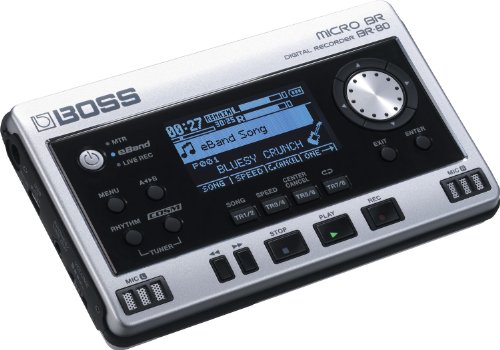
- Three modes for recording and practice
- Built-in stereo mic for instant capture
- USB interface plus SD/SDHC recording
Best For: solo musicians who want a compact recorder for practice and ideas
Podcast Multitrack Recorder
Zoom PodTrak P4 4-Input Podcast Recorder

- 4 XLR inputs with phantom power
- Automatic Mix-Minus for remote calls
- 4 headphone outputs with individual control
Best For: podcasters needing a compact multitrack recorder for interviews
Portable Songwriting Studio
Boss BR-600 Digital Multitrack Recorder

- 8 playback tracks with 64 V-Tracks
- Built-in mics, battery power, and CF storage
- Guitar, vocal FX, and drum machine included
Best For: Songwriters and mobile musicians who want an all-in-one recorder
Live Band Capture Hub
Zoom LiveTrak L-12 Mixer/Recorder

- 14-track recording at 24-bit/96kHz
- Five separate monitor mixes with headphone outputs
- USB audio interface for DAWs and streaming
Best For: Bands and podcasters needing multitrack recording with built-in monitoring
Ultra-Portable Sketch Recorder
Tascam DP-006 6-Track Pocketstudio

- Up to six tracks with stereo master track
- Two built-in microphones for instant recording
- Battery powered and compact for mobile use
Best For: Solo songwriters and anyone needing a simple portable demo recorder
Studio-Style Desktop Workhorse
Zoom R20 Tabletop Recorder for Musicians
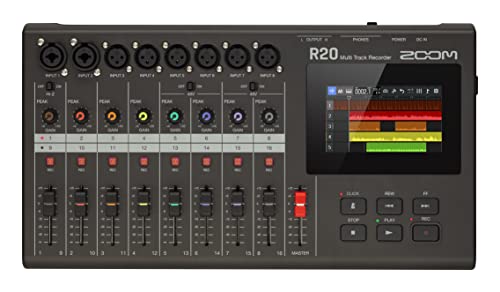
- Records up to 16 tracks, with 8 simultaneous inputs
- Touchscreen DAW-style editing and mixing on the unit
- 6 XLR inputs, 2 combo inputs, built-in effects and rhythms
Best For: Musicians who want a tabletop recorder for full project tracking and mixing
Portable Song Sketch Pad
Zoom R12 Portable Recorder with Touchscreen

- Records up to 8 tracks with two combo inputs
- Runs up to 5 hours on four AA batteries
- Includes drum loops, FM synths, USB-C interface control
Best For: Mobile musicians who need a lightweight recorder for demos and quick production
Ultra-Portable Layering Tool
Zoom R4 32-Bit Float Multitrack Recorder

- 32-bit float recording helps avoid clipping
- Record, layer, and bounce up to 4 tracks
- Functions as a USB interface and battery-powered recorder
Best For: Solo creators who want a tiny recorder for ideas, overdubs, and quick mixes
Portable Studio Multitrack Recorder – Tascam DP-24SD 24-Track Portastudio
If you want a straightforward way to build full songs at home, the Tascam DP-24SD is a practical choice in multitrack recorders. It offers 24 tracks, 8 XLR inputs, onboard effects, and mastering tools in a standalone unit, so you can record, mix, and finish without relying on a computer.
Best For: Musicians who want a desktop-style multitrack recorder for full band or project-studio work.
Pros:
- 24-track recording gives plenty of room for layered sessions
- 8 XLR inputs support microphones and other studio sources
- Onboard effects and mastering help you move from tracking to a finished mix
- Color screen makes navigation and session control easier
Cons:
- Large, 13.7-pound design is not built for grab-and-go use
- Standalone workflow may feel less flexible than a computer-based setup
- Uses a 3.5-inch screen, which is functional but not expansive
The DP-24SD suits users who want a dedicated recording workstation with enough inputs and tracks for serious home production. Its focus is on all-in-one recording and finishing rather than portability.
Battery-Powered Live Mixer Recorder – Zoom LiveTrak L-8 Portable Mixer/Recorder
The Zoom LiveTrak L-8 is a flexible pick in multitrack recorders for bands, podcasts, and live sessions. It records 12 tracks simultaneously at 24-bit/96kHz, runs on battery power, and gives you 4 headphone outputs plus 3 custom monitor mixes for group recording.
Best For: Podcasters and small bands that need a portable recorder/mixer with multiple monitor mixes.
Pros:
- Records 12 tracks simultaneously at 24-bit/96kHz
- Four headphone outputs and three independent monitor mixes
- Battery-powered design is useful for mobile sessions
- Can record to SD card and computer at the same time
Cons:
- Eight channels may feel limited for larger live setups
- 3.5-hour battery life may require planning for longer sessions
- Compact size trades away some hands-on space compared with larger mixers
For creators who need a compact, portable recorder with real multitrack flexibility, the L-8 stands out. It is especially appealing when you want one device for both mixing and recording.
Portable Practice Multitrack Recorder – Roland BR-80 Pocket Studio Recorder
The Roland BR-80 is a compact option among multitrack recorders if you want recording, practice, and playback features in one pocket-sized unit. It includes MTR, eBand, and Live Recorder modes, records to SD/SDHC cards, and adds a built-in stereo condenser mic for quick capture.
Best For: Solo players and portable practice setups that need recording plus built-in backing tools.
Pros:
- Three modes cover multitrack recording, practice, and live capture
- Built-in stereo condenser mic is ready for instant recording
- 64 V-Tracks and eight simultaneous playback tracks support layered ideas
- USB audio interface function adds computer recording flexibility
Cons:
- Eight simultaneous playback tracks are less expansive than larger studio recorders
- 2-inch screen is small for detailed navigation
- 12-hour battery life is useful, but not unlimited for long sessions
The BR-80 makes sense when portability and convenience matter more than a large control surface. It is a versatile tool for writing, practicing, and recording on the go.
Podcast Multitrack Recorder – Zoom PodTrak P4 4-Input Podcast Recorder
The Zoom PodTrak P4 is built for podcast-style multitrack recorders workflows, especially when you need multiple mic inputs and remote interview tools. It offers 4 XLR mic inputs with phantom power, 4 headphone outputs, sound pads, and simultaneous multi-track recording for all inputs.
Best For: Podcasters and interview teams who want a compact recorder with easy remote-call support.
Pros:
- Four XLR mic inputs with phantom power support multi-host shows
- Four headphone outputs with individual volume control
- Automatic Mix-Minus helps with phone and remote interviews
- Can work as a 2-in/2-out USB audio interface
Cons:
- Battery life is limited to up to 3.5 hours on AA batteries
- Designed more for speech and podcasting than broader music-production use
- Small 2-inch screen leaves little room for detailed on-device editing
If your priority is recording conversations cleanly and managing guests easily, the P4 is a focused solution. It emphasizes practical podcast features over general-purpose studio extras.
Portable Songwriting Studio – Boss BR-600 Digital Multitrack Recorder
The Boss BR-600 is a practical pick among multitrack recorders if you want a compact unit that can handle writing, sketching, and basic production without tying you to a desk. It records with up to 8 simultaneous playback tracks, stores audio on CompactFlash, and includes a 128MB card, so it is set up for mobile work right out of the box.
Best For: Songwriters and players who want a battery-powered multitrack recorder with built-in mics and onboard creative tools.
Pros:
- 8 simultaneous playback tracks and 64 V-Tracks for layered editing
- Built-in stereo microphone and battery power for recording anywhere
- Guitar, effects, vocal FX, and pitch corrector add useful built-in processing
- Built-in drum machine with velocity-sensitive pads supports writing and demos
Cons:
- Uses CompactFlash media, which may be less convenient than newer storage formats
- Included card is 128MB, so recording space is limited compared with larger-capacity options
- Designed for portable use, so it is less feature-rich than larger studio-focused units
The BR-600 is best viewed as a self-contained idea catcher and demo recorder. If you want a portable multitrack recorder with built-in instruments and vocal tools, it covers a lot of songwriting ground in one box.
Live Band Capture Hub – Zoom LiveTrak L-12 Mixer/Recorder
The Zoom LiveTrak L-12 stands out in multitrack recorders for people who need to capture a full band or podcast setup while also managing monitoring and USB output. It records up to 14 tracks simultaneously at 24-bit/96kHz to an SD card and offers five separate monitor mixes, making it a strong fit for sessions where everyone needs their own cue mix.
Best For: Bands, rehearsal spaces, and podcasters who need multitrack recording plus flexible monitoring and USB connectivity.
Pros:
- Records up to 14 tracks simultaneously at 24-bit/96kHz
- Five independent monitor mixes with dedicated headphone outputs
- 16 onboard effects and preamps rated at -128dBu EIN with up to +60dB gain
- USB connectivity works for DAW recording and live streaming, with iOS class-compliant mode
Cons:
- Larger and heavier than pocket-style multitrack recorders
- Battery power is useful, but the unit is still more of a tabletop mixer/recorder than a grab-and-go pocket device
- Best suited to multi-input setups, so it may be more than solo users need
If you want a recorder that doubles as a live mixer, the L-12 gives you a lot of practical control in one unit. It is especially appealing when monitoring, streaming, and multitrack capture all need to happen at once.
Ultra-Portable Sketch Recorder – Tascam DP-006 6-Track Pocketstudio
The Tascam DP-006 is a straightforward option in multitrack recorders if your priority is portability and fast songwriting capture. It offers up to six tracks, two built-in omni-directional condenser microphones, and battery operation, so it is easy to use for quick demos and mobile recording sessions.
Best For: Songwriters who want a lightweight, battery-powered recorder for simple demos and idea capture.
Pros:
- Up to six tracks with six-track simultaneous playback
- Two built-in condenser microphones make it easy to start recording immediately
- Battery operation and compact size support truly portable use
- USB connectivity lets you move recordings to a computer
Cons:
- Records at CD quality rather than higher-resolution formats
- Only two tracks can be recorded simultaneously
- Small 2-inch screen and pocket format favor simplicity over deep workflow control
The DP-006 is a no-frills recorder that keeps the focus on capturing songs quickly. For solo writing, rehearsal notes, and casual demos, it offers the essentials in a very compact package.
Studio-Style Desktop Workhorse – Zoom R20 Tabletop Recorder for Musicians
If you want multitrack recorders that feel closer to a compact DAW than a simple field unit, the Zoom R20 is built for hands-on music production. It lets you record, edit, and mix directly on the device with a touchscreen workflow, plus enough inputs and tracks to handle full song ideas without a computer.
Best For: Musicians who want a tabletop recorder for full project tracking, editing, and mixing in one unit.
Pros:
- Records up to 16 tracks, with 8 simultaneous inputs for larger sessions.
- Includes 6 XLR inputs and 2 XLR/TRS combo inputs for flexible mic and instrument hookup.
- Touchscreen editing makes arranging, dragging, and mixing tracks straightforward.
- Built-in effects, 150 rhythm patterns, and an onboard synth help you build complete songs.
Cons:
- Not the smallest or lightest option for true grab-and-go recording.
- Maximum sample rate is listed at 44.1 kHz.
The R20 is a strong choice if you want one of the more capable multitrack recorders for writing, demoing, and producing at the same desk. Its appeal is the combination of track count, onboard editing, and built-in creative tools.
Portable Song Sketch Pad – Zoom R12 Portable Recorder with Touchscreen
The Zoom R12 is a practical pick if you want multitrack recorders that stay portable without giving up core recording tools. It captures up to 8 tracks, offers touchscreen editing, and adds a built-in rhythm section, so you can sketch, layer, and mix ideas anywhere.
Best For: Mobile musicians who need a lightweight recorder for song ideas, demos, and quick production.
Pros:
- Records up to 8 tracks with two XLR/TRS combo inputs.
- Battery power lasts up to 5 hours on four AA batteries for mobile sessions.
- Includes 150 drum loops and 18 FM synth sounds for instant inspiration.
- USB-C interface and DAW control surface support computer-based workflows too.
Cons:
- Only two inputs, so it is better for smaller setups than full band tracking.
- Track count is lower than larger tabletop recorders.
The R12 is a well-rounded option if portability matters more than raw channel count. It gives you enough features to build songs on the go while still connecting cleanly to a computer when you need a fuller production setup.
Ultra-Portable Layering Tool – Zoom R4 32-Bit Float Multitrack Recorder
If your priority is a compact multitrack recorder that keeps recording simple, the Zoom R4 is designed around layering, bouncing, and moving fast. It captures up to 4 tracks, uses 32-bit float recording to avoid clipping, and adds a bounce workflow that frees up tracks as your project grows.
Best For: Solo creators and musicians who want a tiny, easy-to-carry recorder for ideas, overdubs, and quick mixes.
Pros:
- 32-bit float recording helps avoid clipping without gain adjustments.
- Record, layer, and bounce workflow supports building songs track by track.
- Two XLR/TS combo inputs handle microphones, instruments, and keyboards.
- Works as a 2-in/2-out USB audio interface and runs on batteries or USB-C.
Cons:
- Only up to 4 tracks, so it is less suited to larger arrangements.
- Limited built-in track count compared with larger multitrack recorders.
The R4 stands out when you want speed, portability, and simple layering more than a high channel count. It is especially appealing for recording ideas quickly and keeping sessions uncluttered.
How We Picked These Multitrack Recorders
We prioritized recorder models that cover the most common buyer needs: enough inputs for live sources, straightforward transport controls, dependable onboard storage or media support, and useful mixing or editing tools. We also looked for options that suit different workflows, from compact solo recorders to larger tabletop and studio-style units.
Because Multitrack Recorders are used for very different jobs, we favored a mix of track counts, power options, and connectivity so readers can compare portable and desktop-friendly choices without wading through spec sheets that do not match their use case.
Quick Comparison: Which Type Fits Your Setup?
For band rehearsal and live demo capture, look at larger units with more inputs and fuller mixing controls. For podcasts and interviews, prioritize multiple XLR mic inputs, headphone outputs, and easy phone or USB integration. For songwriting or location recording, smaller battery-powered models are often the better fit because they are quick to deploy and easier to carry.
Best for Larger Sessions
If you need several simultaneous mic inputs and a more traditional recorder layout, choose a model built for multi-source recording and basic mixing.
Best for Portable Recording
If your sessions happen away from a desk, a compact battery-powered recorder with simple track arm controls will usually be the most practical option.
Key Buying Factors for Multitrack Recorders
Input count: Match the number of inputs to how many sources you record at once. More inputs help with drums, ensembles, and multi-person podcasts.
Track handling: Check how many tracks can be recorded, played back, and bounced. Some Multitrack Recorders offer generous track counts but a simpler user interface, while others focus on speed and portability.
Power and portability: Battery operation, compact size, and built-in microphones matter for mobile users. Desktop models may offer better ergonomics for longer sessions.
Monitoring and routing: Multiple headphone outputs, dedicated level controls, and simple routing are especially important for interviews and live group recording.
Editing and effects: Built-in effects, drum patterns, and basic mastering tools can reduce the need for extra gear, but they should not replace solid recording fundamentals.
Who Should Buy Which Multitrack Recorders?
Home musicians should lean toward models with enough inputs for their usual setup and easy overdub workflow. Podcasters and interviewers should choose recorders with flexible mic inputs, monitoring, and phone or USB support. Songwriters and field recordists often get the most value from compact units that are quick to power on and capture ideas immediately.
If you want one recorder that can handle multiple roles, focus on a middle-ground model with good input flexibility and straightforward controls. That approach usually delivers the best balance of convenience, sound quality, and long-term usefulness.