The best hard drive enclosures make it easy to reuse internal SATA drives, recover data, expand storage, or move files between computers without installing a drive inside your system.
Our 2026 roundup includes compact 2.5-inch cases, versatile 2.5/3.5-inch enclosures, docking stations, and multi-bay models for more demanding storage setups.
Best 10 Hard Drive Enclosures Picks for 2026
Best All-Around Choice
UGREEN 2.5/3.5-Inch SATA Enclosure
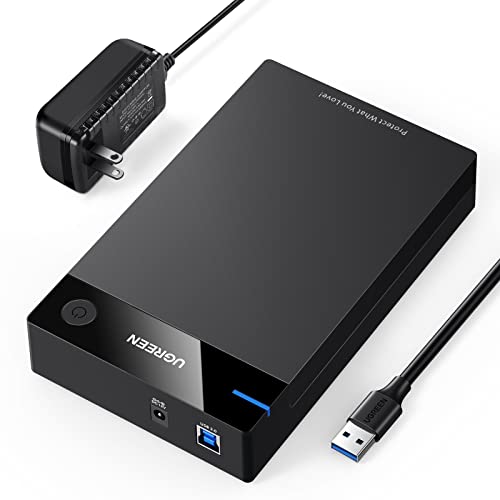
- Supports 2.5-inch and 3.5-inch SATA drives up to 20TB
- USB 3.0 with UASP and included 12V power adapter
- Tool-free design with shock protection and ventilation
Best For: Flexible home storage, transfers, and console expansion
Best for Quick Drive Swaps
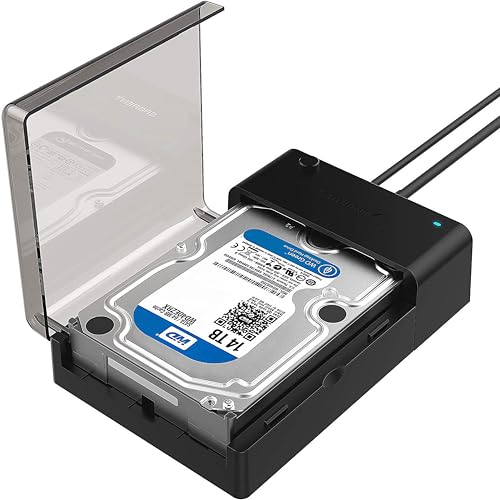
- Tool-free lay-flat bay for 2.5-inch and 3.5-inch SATA drives
- Hot-swappable design with LED power and activity indicator
- Includes required 12V adapter for 3.5-inch drives
Best For: Frequent testing, cloning, and rotating bare SATA drives
Best for Cooling Features
CLAVOOP 3.5-Inch SATA Enclosure

- Large ventilation openings and non-slip feet
- Shock-proof interior and LED activity indicator
- Supports SATA drives up to 20TB with UASP
Best For: Stable desktop use with ventilation and drive protection
Best Compact Option
SABRENT 2.5-Inch Tool-Free Enclosure
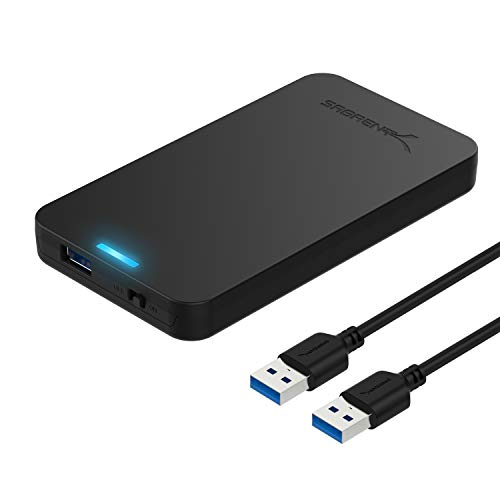
- Lightweight 2.5-inch enclosure weighs about 2 ounces
- Tool-free installation with plug-and-play operation
- USB 3.0 and UASP support for SATA HDDs and SSDs
Best For: Portable laptop-drive and SSD storage
Best Multi-Drive Storage Hub

- Supports four 2.5-inch or 3.5-inch SATA drives
- Up to 80TB total capacity with USB 3.0 and eSATA
- Built-in cooling fan; no RAID or NAS
Best For: Desktop users managing multiple SATA drives
Best Compact Tool-Free Pick
BENFEI 2.5-Inch SATA Enclosure

- Tool-free enclosure for one 2.5-inch SATA drive
- USB Type-C/Type-A design with UASP support
- Supports 7mm/9.5mm drives up to 6TB
Best For: Portable transfers and reusing laptop drives
Best Simple 2.5/3.5-Inch Option
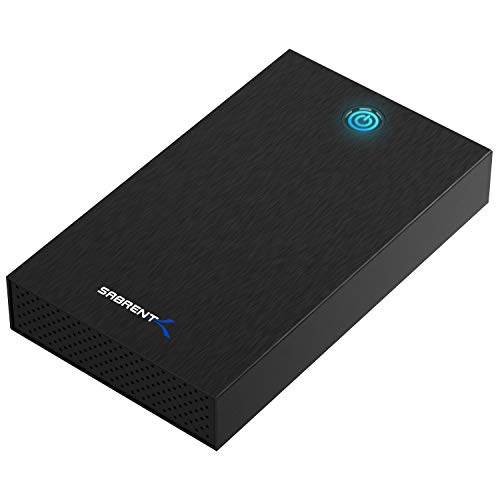
- Fits one 2.5-inch or 3.5-inch SATA drive
- Tool-free setup with UASP and USB 3.0
- Includes 12V power adapter; USB-A host connection
Best For: Quickly swapping single SATA drives
Best Single-Drive Pick
RSHTECH 3.5-Inch USB-C Enclosure

- Supports 2.5-inch and 3.5-inch SATA drives up to 24TB
- Includes USB-A/USB-C cable and UASP support
- Ventilated aluminum housing with flat or upright placement
Best For: Single-drive users who want USB-C and USB-A flexibility
Best Two-Bay Value
CENMATE 2-Bay USB 3.0 Enclosure

- Holds two 2.5-inch or 3.5-inch SATA drives
- Tool-free installation and hot-swappable drive support
- Built-in fan and USB-A/USB-C 3.0 connectivity
Best For: Desktop users needing two flexible, independently accessible drive bays
Best High-Capacity Expansion
CENMATE 4-Bay USB 3.0 Enclosure
- Four bays support 2.5-inch and 3.5-inch SATA drives
- Listed capacity reaches 80TB across four drives
- Includes cooling fan, 12V adapter, and USB-A/USB-C 3.0
Best For: Desktop storage expansion with multiple independently accessible SATA drives
Best All-Around Choice – UGREEN 2.5/3.5-Inch SATA Enclosure
If you need versatile hard drive enclosures for both 2.5-inch and 3.5-inch SATA drives, the UGREEN enclosure is a practical option. It supports drives up to 20TB, includes a 12V power adapter for stable operation, and uses USB 3.0 with UASP for faster transfers.
Best For: Users who want one enclosure for desktop and laptop SATA HDDs or SSDs, including additional storage for compatible game consoles.
Pros:
- Supports 2.5-inch and 3.5-inch SATA I/II/III drives up to 20TB.
- USB 3.0 and UASP provide up to 5Gbps interface speeds.
- Includes a 12V/2A power adapter and USB cable.
- Tool-free installation with shock protection and ventilation openings.
Cons:
- Requires an external power adapter for stable operation with 3.5-inch drives.
- Uses a USB 3.0 Type-A-to-B cable rather than a USB-C connection.
Its broad drive support, included power supply, and compatibility with Windows, macOS, Linux, and several consoles make this a flexible pick for everyday storage expansion and drive transfers.
Best for Quick Drive Swaps – SABRENT SATA Docking Station
Among hard drive enclosures, the SABRENT EC-DFLT stands out as a lay-flat docking station designed for convenient drive changes. It accepts bare 2.5-inch and 3.5-inch SATA drives without tools and supports hot-swapping, making it useful for testing or rotating multiple drives.
Best For: Users who frequently swap bare SATA HDDs or SSDs and want a simple desktop docking station.
Pros:
- Tool-free bay supports 2.5-inch and 3.5-inch SATA I/II/III drives.
- Hot-swappable design avoids rebooting for drive changes.
- Includes a 12V/2A adapter required for 3.5-inch drives.
- Works with Windows, macOS, and Linux without additional drivers.
Cons:
- Supports SATA drives only; it does not accept IDE/PATA, M.2, NVMe, or SAS drives.
- The included host cable uses USB Type-A, so USB-C-only computers need an adapter.
- S.M.A.R.T. diagnostics do not pass through the USB bridge.
This is a convenient choice for hands-on drive management, but confirm your drive connector and computer ports before ordering. Its open docking format favors accessibility over a fully enclosed protective case.
Best for Cooling Features – CLAVOOP 3.5-Inch SATA Enclosure
The CLAVOOP is one of the more feature-focused hard drive enclosures for 3.5-inch SATA storage. Its lay-flat design combines large ventilation openings, non-slip feet, shock-absorbing interior sponges, and an auto-sleep function for a stable desktop setup.
Best For: Users who prioritize ventilation, physical stability, and status monitoring when connecting a 3.5-inch SATA drive.
Pros:
- Supports 2.5-inch and 3.5-inch SATA HDDs and SSDs up to 20TB.
- Ventilation openings and four non-slip pads support cooler, steadier operation.
- Includes shock-proof sponges and an LED activity indicator.
- Plug-and-play setup includes a USB 3.0 cable and 12V/2A adapter.
Cons:
- Does not support IDE, mSATA, or M.2 drives.
- Its 3.5-inch-focused desktop format is less portable than a compact 2.5-inch case.
- Listed operating-system support includes older platforms, so buyers should verify current-device compatibility.
With its cooling-oriented layout and protective interior, the CLAVOOP is a sensible desktop enclosure for sustained use. Its SATA-only design means connector compatibility should be checked before purchase.
Best Compact Option – SABRENT 2.5-Inch Tool-Free Enclosure
For a portable 2.5-inch drive, the SABRENT EC-UASP offers a straightforward tool-free way to turn a SATA HDD or SSD into external storage. It supports USB 3.0 transfer rates up to 5Gbps, while remaining backward compatible with USB 2.0 and USB 1.1.
Best For: Laptop-drive upgrades, SSD storage, and users who want a lightweight 2.5-inch SATA enclosure.
Pros:
- Compact 2.5-inch design weighs about 2 ounces.
- Tool-free, plug-and-play installation with no drivers required.
- Supports UASP and USB 3.0 speeds up to 5Gbps.
- Compatible with standard 2.5-inch SATA and SATA II drives, including SSDs.
Cons:
- Limited to 2.5-inch SATA drives and cannot house 3.5-inch models.
- Its plastic enclosure provides fewer listed protective features than some larger desktop models.
- USB-C connectivity is not listed.
This enclosure is a good fit when portability matters more than broad form-factor support. It is especially practical for repurposing a notebook drive or adding a compact external SSD, provided the drive uses a compatible SATA connection.
Best Multi-Drive Storage Hub – CENMATE 4-Bay SATA Enclosure
For shoppers comparing hard drive enclosures, the CENMATE 4-Bay is designed for consolidating several 2.5-inch or 3.5-inch SATA drives in one desktop unit. It supports up to 80TB total, offers USB-A/USB-C 3.0 and eSATA connectivity, and includes active cooling, but it is not a RAID or NAS system.
Best For: Individuals or businesses that need access to multiple SATA drives from a Windows, Mac, or Linux computer.
Pros:
- Holds up to four 2.5-inch or 3.5-inch SATA HDDs or SSDs, with up to 20TB per bay.
- USB 3.0 supports transfer rates up to 5Gbps and includes both USB-A and USB-C connectivity.
- Aluminum construction, built-in fan, and included 12V power adapter support sustained desktop use.
- Plug-and-play compatibility with Windows 7+, Mac 9.1+, and Linux.
Cons:
- It does not provide RAID or NAS functionality.
- The fan produces approximately 40–50 decibels of noise.
- eSATA access to multiple bays requires a computer eSATA port with RAID support, and hot-swapping is not supported.
The CENMATE is a practical choice when capacity and multiple-drive access matter more than network storage or silent operation. Check your computer’s eSATA capabilities if you plan to use that connection.
Best Compact Tool-Free Pick – BENFEI 2.5-Inch SATA Enclosure
Among compact hard drive enclosures, the BENFEI model is a straightforward option for one 2.5-inch SATA HDD or SSD. Its tool-free design, integrated Type-C/Type-A connection, and UASP support make it suited to quick file transfers and drive reuse.
Best For: Laptop, PC, PS4, or mobile-device users who need a portable enclosure for a 2.5-inch SATA drive.
Pros:
- Tool-free installation requires sliding the cover open, connecting the drive, and closing the enclosure.
- Supports USB transfer rates up to 5Gbps with UASP for faster performance than traditional USB 3.0.
- Type-C/Type-A plug design offers flexible connection options and supports hot-swapping.
- Works with 7mm or 9.5mm 2.5-inch SATA drives up to 6TB and includes an 18-month warranty.
Cons:
- Supports only one 2.5-inch drive and is not designed for 3.5-inch disks.
- Its listed capacity limit is 6TB.
- The enclosure is optimized for SATA drives and does not support M.2 formats.
The BENFEI is a lightweight, uncomplicated choice for turning a spare 2.5-inch SATA drive into external storage. Its single-drive design keeps it portable, but users needing desktop-size drives or multiple bays should look elsewhere.
Best Simple 2.5/3.5-Inch Option – SABRENT USB 3.0 Enclosure
The SABRENT EC-KSL3 is one of the more versatile single-drive hard drive enclosures, accepting both 2.5-inch and 3.5-inch SATA HDDs and SSDs. It combines tool-free installation with UASP, an aluminum shell, and a powered USB-A connection for desktop drives.
Best For: Users who want to swap compatible 2.5-inch and 3.5-inch SATA drives without installing tools or drivers.
Pros:
- Accepts both 2.5-inch and 3.5-inch SATA HDDs and SSDs.
- Tool-free slide-and-click setup enables quick drive changes.
- USB 3.0 with UASP offers up to 5Gbps theoretical transfer speed, with an included 12V/2A power adapter.
- Supports Windows 10/11, macOS, and Linux, with an LED for power and activity status.
Cons:
- Uses USB-A, so computers with only USB-C ports require an adapter that is not included.
- It is not bus-powered; a wall outlet is required for the included power adapter.
- It supports SATA only, and S.M.A.R.T. diagnostics are unavailable through the USB bridge.
The SABRENT offers broad physical compatibility in a single-drive enclosure, making it useful for rotating spare internal drives. Confirm that your 3.5-inch drive has suitable dimensions, especially with some higher-capacity models.
Best Single-Drive Pick – RSHTECH 3.5-Inch USB-C Enclosure
For straightforward access to one internal drive, this RSHTECH option is one of the more flexible hard drive enclosures. It supports 2.5-inch and 3.5-inch SATA HDDs or SSDs, connects through USB-A or USB-C, and accommodates drives up to 24TB.
Best For: Users who need a single-drive enclosure with broad host compatibility and a space-saving upright or flat setup.
Pros:
- Supports 2.5-inch and 3.5-inch SATA drives up to 24TB.
- Includes a detachable 3.3-foot USB-A/USB-C cable for flexible connectivity.
- Aluminum housing, ventilation, sleep mode, and a removable vertical stand help with everyday operation.
- Supports UASP and transfer rates up to 5Gbps through its USB connection.
Cons:
- Holds only one drive at a time.
- It is designed for SATA drives rather than other drive interfaces.
The RSHTECH enclosure is a practical choice when you want a compact single-drive solution without giving up USB-C convenience. Its power controls, activity indicators, and stand add useful touches for routine backups and drive access.
Best Two-Bay Value – CENMATE 2-Bay USB 3.0 Enclosure
This CENMATE model gives you two drive bays in a desktop-style enclosure, making it a useful step up from single-drive hard drive enclosures. It accepts 2.5-inch and 3.5-inch SATA HDDs or SSDs, supports up to 20TB per drive, and connects over USB-A or USB-C 3.0.
Best For: Users who want two-drive capacity, tool-free swapping, and a DAS setup without RAID or NAS features.
Pros:
- Two bays support 2.5-inch or 3.5-inch SATA drives, up to 40TB total based on the listed capacity.
- Tool-free trays and hot-swapping simplify drive installation and replacement.
- Built-in fan and aluminum construction help manage heat.
- Offers USB 3.0 speeds up to 5Gbps and supports daisy chaining up to three devices.
Cons:
- Fan noise is listed at approximately 40–50 decibels.
- This is a DAS enclosure with no RAID or NAS functionality.
Choose this CENMATE enclosure when two accessible drives are more useful than a single high-capacity bay. The tool-free design and hot-swap support are particularly convenient, while the cooling fan may be a trade-off in quiet workspaces.
Best High-Capacity Expansion – CENMATE 4-Bay USB 3.0 Enclosure
For expanding a workstation with several internal drives, this four-bay CENMATE is a high-capacity option among hard drive enclosures. It supports 2.5-inch and 3.5-inch SATA HDDs or SSDs, with up to 20TB per drive and a listed total capacity of 80TB.
Best For: Users who need four accessible SATA drive bays for desktop storage expansion through a single USB connection.
Pros:
- Four bays support 2.5-inch and 3.5-inch SATA HDDs or SSDs.
- Provides up to 80TB of listed total capacity, with 20TB supported per drive.
- Aluminum construction and a built-in fan help address heat during extended use.
- Includes USB-A/USB-C 3.0 connectivity and a 12V power adapter for stable power delivery.
Cons:
- Fan noise is approximately 40–50 decibels.
- It is a DAS enclosure and does not provide RAID or NAS functionality.
- The larger four-bay design takes more desk space than single- or two-bay options.
The four-bay CENMATE makes the most sense when your priority is adding several SATA drives without buying multiple separate enclosures. Its dedicated power adapter and cooling fan suit a desktop storage setup, though the size and fan noise are worth considering.
How We Picked These Hard Drive Enclosures
We focused on compatibility, connection options, installation convenience, cooling, and everyday practicality. The selection includes enclosures for both 2.5-inch and 3.5-inch SATA HDDs and SSDs, along with dedicated 2.5-inch cases and open docking stations. We also considered tool-free installation, USB 3.0 performance, USB-C support, eSATA connectivity, hot-swapping, and the added cooling required by multi-drive designs.
Because enclosure specifications can vary by revision, confirm the seller’s current details before ordering. In particular, check supported drive thickness, maximum capacity, included cables, power requirements, and whether your computer supports the advertised interface speed.
Quick Comparison
| Best For | Recommended Type | What to Look For |
|---|---|---|
| Portable 2.5-inch SSD or HDD | Tool-free 2.5-inch enclosure | USB 3.0, USB-C compatibility, slim design |
| Mixed drive sizes | 2.5/3.5-inch enclosure | Built-in power supply for 3.5-inch drives |
| Frequent drive access | Docking station | Open insertion, stable base, easy removal |
| Several drives | Two- or four-bay enclosure | Cooling fan, independent bays, hot-swap support |
| Older external interfaces | USB and eSATA enclosure | Host-device compatibility and included cables |
Key Buying Factors for Hard Drive Enclosures
Drive Size and Interface
Most consumer models support SATA drives, but physical size still matters. A 2.5-inch enclosure is designed for laptop HDDs and SATA SSDs, while a 3.5-inch HDD generally needs a larger enclosure and an external power adapter. Some universal models accept both sizes, offering greater flexibility when you reuse different drives.
Connection Speed and Compatibility
USB 3.0 is suitable for routine backups and file transfers, while USB-C may improve convenience and connector compatibility. USB-C does not automatically mean USB 3.2 or faster performance, so check the actual data-rate specification. eSATA can be useful with compatible older desktops, but it is less universal than USB.
Power, Cooling, and Noise
Bus-powered 2.5-inch enclosures are convenient for laptops and portable use. Full-size 3.5-inch drives usually require external power. Multi-bay Hard Drive Enclosures should have effective airflow or a cooling fan, especially when several drives operate at once. Consider fan noise if the enclosure will sit on a desk or in a quiet workspace.
Installation and Protection
Tool-free designs simplify drive swaps, but a secure fit is still important. Look for stable construction, protective materials, clear activity indicators, and reliable ventilation. A dock is convenient for occasional access, whereas a closed case offers better physical protection for a drive that stays connected.
Who Should Buy Which Hard Drive Enclosures?
Choose a compact 2.5-inch tool-free enclosure if you are converting a laptop drive into portable storage or using a SATA SSD for backups. Select a universal 2.5/3.5-inch enclosure when you want one solution for multiple drive formats. A docking station is better for technicians, enthusiasts, and anyone who frequently swaps bare drives for testing or data recovery.
For larger archives or multiple active drives, a two- or four-bay enclosure offers better organization and expansion potential. Prioritize cooling, power delivery, and hot-swap support in that category. Finally, verify whether you need USB-A, USB-C, eSATA, or more than one connection type before buying; the right enclosure should match both the drive and the host computer.