The best desktop laser engravers make it easier to personalize wood, acrylic, leather, glass, metal, and other materials from a compact workspace. The right model depends on more than laser power: enclosure design, camera alignment, software, work area, and material compatibility can matter just as much.
We compared 10 leading machines across diode, infrared, enclosed, and dual-laser designs to help you choose a capable engraver for home projects, prototyping, gifts, or small-business production.
Best 10 Desktop Laser Engravers Picks for 2026
Best High-Power Pick

- 40W laser with up to 600mm/s engraving speed
- Large 23.93-by-15.16-inch work area
- Enclosed design with rotary and safety features
Best For: Large projects, batch work, and curved-item engraving
Best Midrange Hobbyist Option

- 10W laser with a 300-by-300mm work area
- Supports LightBurn, LaserGRBL, and TF-card control
- Handles wood, acrylic, leather, dark glass, and coated metal
Best For: Craft projects, small signs, and flexible offline engraving
Best for Metal Marking
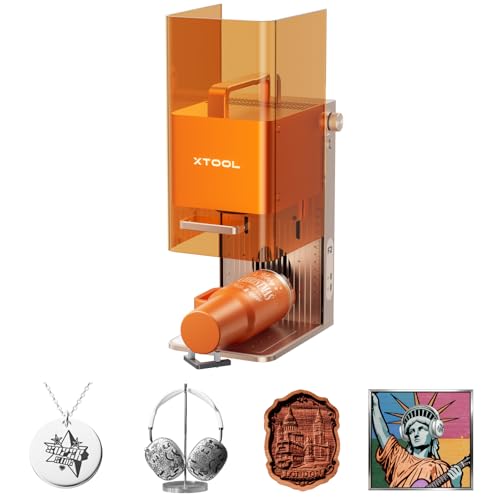
- 15W diode and 5W IR dual-laser system
- 50MP camera for precise material alignment
- Up to 6000mm/s speed for small-batch work
Best For: Metal marking, on-site personalization, and batch production
Best Value Desktop Laser Engraver

- 5.5W laser with air-assist support
- 300 x 300 mm work area
- Wi-Fi, LightBurn, and LaserGRBL compatible
Best For: Makers and small businesses wanting an adaptable open-frame engraver
Best Enclosed Desktop Laser Engraver
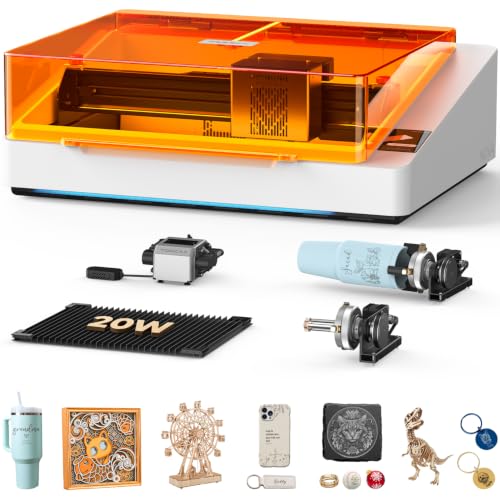
- 20W laser with 600 mm/s speed
- 5MP AI camera and auto positioning
- Class 1 enclosure with multiple safety features
Best For: Indoor crafting, classrooms, and customized gifts or tumblers
Best for Home Crafters

- Enclosed Class 1 design for home use
- Dual cameras for precise placement
- Optional modules expand printing and engraving
Best For: DIY makers creating gifts, décor, and personalized craft projects
Power & Precision Pick

- Large 15.7-by-16.3-inch work area
- Supports 200+ materials
- LightBurn, LaserGRBL, and offline control
Best For: Larger wood, acrylic, leather, and mixed-material projects
Beginner-Friendly Compact Pick

- Compact A4 workspace
- App, AI, and offline control
- 15,000 mm/min speed with one-touch focus
Best For: Beginners, home crafters, and small-business projects
Enclosed AI Workflow Pick

- Built-in AI camera and autofocus
- Enclosed Class 1 design
- Interchangeable Falcon laser platform
Best For: Guided engraving in homes, classrooms, studios, and makerspaces
Best High-Power Pick – xTool S1 40W Rotary Bundle
For shoppers comparing desktop laser engravers for large, demanding projects, the xTool S1 stands out with a 40W laser, a spacious 23.93-by-15.16-inch bed, and speeds up to 600mm/s. Its rotary bundle, autofocus, and enclosed Class 1 design add versatility and convenience for both home workshops and small businesses.
Best For: Large wood projects, batch engraving, curved items, and users who want an enclosed, beginner-friendly machine.
Pros:
- 40W power can cut up to 18mm cherry wood in a single pass.
- Large work area supports signs, dog tags, and other sizable projects.
- Rotary features, autofocus, AI-assisted software, and AutoPassthrough expand its capabilities.
- Enclosed Class 1 design includes flame sensors, lid-open protection, and an emergency stop.
Cons:
- At 86.8 pounds, it is substantially less portable than compact desktop models.
- The larger feature set and rotary bundle may be more than casual users need.
The xTool S1 is a strong productivity-focused choice among desktop laser engravers. Choose it when cutting power, workspace, safety features, and production capacity matter more than portability.
Best Midrange Hobbyist Option – Twotrees TTS-10 Pro
The Twotrees TTS-10 Pro is a practical option for buyers seeking desktop laser engravers with a manageable 300-by-300mm work area and 10W optical power. It supports common maker materials, popular software, and offline operation from a TF card, making it suitable for hands-on hobby and small-business use.
Best For: Coasters, jewelry, keychains, phone cases, small signs, and users who want flexible online or offline control.
Pros:
- 10W blue diode laser supports engraving on wood, bamboo, acrylic, leather, dark glass, and coated metal.
- 300-by-300mm work area fits many small craft and personalization projects.
- Works with LightBurn and LaserGRBL and supports TF-card offline engraving.
- Includes assembly tools, a TF card, card reader, manual, warranty, and stated certifications.
Cons:
- Bare stainless steel and uncoated metal require marking spray or other preparation.
- The work area is not intended for projects larger than about 12 inches.
- Unlike an enclosed machine, the supplied notes do not describe a protective enclosure.
The TTS-10 Pro balances useful power, a practical work area, and broad software compatibility. It is a sensible desktop laser engraver for makers who are comfortable managing material preparation and workspace safety.
Best Compact Beginner Pick – ACMER S1 6W Laser Engraver
Among compact desktop laser engravers, the ACMER S1 emphasizes easy setup and portability. It arrives 99% preassembled, weighs 4.2 pounds, and combines AI-assisted design tools with support for LightBurn and LaserGRBL, making it approachable for beginners working on smaller projects.
Best For: Home users, beginners, portable crafting, and detailed projects that fit its 130-by-130mm work area.
Pros:
- 99% preassembled design requires only about one minute of laser-head installation.
- Compact 2kg-class aluminum-alloy construction is easy to carry and store.
- AI tools can turn text prompts or photos into engraving designs.
- Supports macOS, Windows, Linux, LightBurn, LaserGRBL, and several common file formats.
Cons:
- The 130-by-130mm work area limits it to relatively small pieces.
- Its 6W laser is less powerful than the 10W and 40W machines in this roundup.
- The Class 4 specification means users must follow appropriate laser-safety practices.
The ACMER S1 is best viewed as an accessible, space-saving desktop laser engraver rather than a high-volume cutter. Its quick setup and software options make it appealing for learning, personalization, and compact home projects.
Best for Metal Marking – xTool F2 Dual-Laser Engraver
The xTool F2 is a specialized choice among desktop laser engravers, pairing a 15W diode laser with a 5W infrared laser. Its built-in 50MP camera, enclosed design, and claimed speeds up to 6000mm/s make it particularly suited to precise personalization, metal color marking, and small-batch work.
Best For: Metal marking, small products, on-site customization, and businesses handling repeat or batch orders.
Pros:
- Dual lasers cover more than 300 materials, including metal marking and thicker-material cutting.
- 50MP camera provides workspace visualization and up to 0.1mm alignment accuracy on small pieces.
- Claimed speeds up to 6000mm/s support rapid card engraving and batch processing with accessories.
- Fully enclosed, assembled design includes a built-in fan and optional purifier for indoor workflows.
Cons:
- The base machine is Class 4, so laser-safety requirements remain important.
- Slide Extension, purifier, and other accessories may be needed for expanded production workflows.
- Its 300-by-300mm material range claim does not specify a single large bed size in the supplied details.
The xTool F2 is a strong fit when speed, camera-guided placement, and metal capability are priorities. It is especially compelling for personalization businesses and mobile sellers who need a relatively portable enclosed machine.
Best Value Desktop Laser Engraver – Twotrees TTS-55 Pro
The Twotrees TTS-55 Pro is a compact desktop laser engraver for makers who want a 300 x 300 mm work area, wireless control, and useful cutting power without moving to a larger machine. Its 5.5W laser is suited to detailed engraving and projects involving wood, acrylic, leather, paper, and some metals.
Best For: Hobbyists, makers, and small businesses working on signs, gifts, and small material-cutting projects.
Pros:
- 5.5W laser with air-assist nozzle support for cleaner, deeper cuts.
- Fine 0.08 x 0.46 mm spot and up to 0.1 mm engraving accuracy.
- Supports LaserGRBL, LightBurn, Wi-Fi, TF-card offline use, and speeds up to 30,000 mm/min.
Cons:
- Its 300 x 300 mm work area is smaller than that of many enclosed machines.
- Air-assist hardware is supported, but the notes do not indicate that a complete air-assist system is included.
- As an open-style engraver, it may require more attention to workspace safety and ventilation.
Choose the TTS-55 Pro if you value flexibility, software compatibility, and a relatively compact footprint. It is a practical desktop laser engraver for hands-on users who are comfortable setting up and managing their own workspace.
Best Enclosed Desktop Laser Engraver – TOOCAA NOVA 20W
The TOOCAA NOVA 20W is a fully enclosed desktop laser engraver designed to simplify positioning, material setup, and indoor use. Its 5MP AI camera, automatic focusing, material recognition, and 600 mm/s speed make it a strong option for users who want a guided workflow for both flat and cylindrical projects.
Best For: Beginners, classrooms, home studios, and small businesses creating gifts, signs, tumblers, and other personalized products.
Pros:
- Built-in 5MP AI camera enables live preview and drag-and-drop positioning.
- Fully enclosed Class 1 design includes flame detection, emergency stop, lid-open stop, tilt protection, and child lock.
- Supports automatic focus, AI material recognition, 1,000-plus templates, and a 360° rotary kit for cylindrical items.
Cons:
- At 33.3 pounds, it is less portable than compact open-frame engravers.
- The rotary kit is an added feature rather than a stated indication that every accessory is included.
- Its larger package footprint may require dedicated desktop space.
The NOVA 20W stands out when convenience and enclosure safety matter as much as laser power. Its camera-led workflow and broad material support can reduce setup friction, especially for users producing customized items regularly.
Best for Home Crafters – xTool M2 10W
The xTool M2 10W is an enclosed desktop laser engraver aimed at home crafters and DIY makers who want guided placement and an approachable software experience. Its dual cameras, Class 1 design, and optional upgrade path make it useful for engraving and cutting materials such as wood, leather, felt, fabric, paper, and cardstock.
Best For: Home crafting, personalized gifts, décor projects, and creators planning to expand into printing or specialized metal and plastic engraving.
Pros:
- Dual cameras provide real-time workspace preview and a “Place & Go” workflow.
- Fully enclosed Class 1 design includes real-time safety monitoring.
- xTool Studio offers templates and an integrated AI image generator, while optional modules add color printing or 3W IR engraving.
Cons:
- The CMYK inkjet module, 3W IR laser, and RA3 Lite Rotary are sold separately.
- The included laser is 10W, so buyers seeking stronger cutting performance may prefer a higher-power model.
- At 36.2 pounds, it is better suited to a permanent workspace than frequent transport.
The M2 is a good fit for creators who prioritize an enclosed, guided experience and may want to add capabilities over time. Remember to budget separately for optional modules if color printing, rotary work, or finer metal and plastic engraving is part of your plan.
Power & Precision Pick – Creality Falcon 10W
The Creality Falcon 10W is a strong option for shoppers comparing desktop laser engravers for larger wood, acrylic, leather, and mixed-material projects. Its 15.7-by-16.3-inch workspace, 10,000 mm/min speed, and 0.06-by-0.06 mm compressed laser spot support detailed work while leaving room for sizable designs.
Best For: Makers who want a relatively large work area, broad material compatibility, and offline or computer-based operation.
Pros:
- Effective 72W machine power and 10W laser output can cut up to 12mm wood and 5mm black acrylic in one pass, according to the supplied specifications.
- Large 15.7-by-16.3-inch workspace and speeds up to 10,000 mm/min suit signs, décor, and batch projects.
- Supports more than 200 materials, including wood, leather, fabrics, acrylic, and metals.
- Works with LightBurn and LaserGRBL, with SD-card offline operation and an acrylic UV filter.
Cons:
- The open-style desktop format may require more attention to workspace safety than a fully enclosed machine.
- It is a larger choice for shoppers focused mainly on compact, small-format projects.
Choose the Falcon 10W when cutting capacity and workspace are more important than the smallest possible footprint. Its software compatibility and wide material range also give it room to support varied creative projects.
Beginner-Friendly Compact Pick – K15 Pro 10W
The K15 Pro is a practical choice among desktop laser engravers for beginners, home crafters, and small businesses that need an A4-sized workspace without a bulky machine. It combines a claimed 10W output, wireless app control, free software, offline operation, and a quick three-minute assembly process.
Best For: Beginners and small-business users making coasters, tags, gifts, jewelry blanks, and other compact projects.
Pros:
- Near-A4 11.8-by-7.9-inch work area fits many everyday projects while remaining compact enough to slide under a desk.
- Free CutLabX software supports computers, tablets, and phones, with AI design tools and wireless control.
- Verified 10.36–10.58W output, dual-fan cooling, 15,000 mm/min speed, and one-touch focus support efficient work.
- Includes starter materials, safety glasses, and tools; it also offers a one-year warranty and lifetime technical support.
Cons:
- The A4 workspace is less suitable for oversized signs or large-format pieces.
- The optional IR laser head and other accessories add cost if you want to expand beyond the included diode setup.
The K15 Pro stands out for approachable setup and flexible control options. It is especially appealing if you want a compact machine for repeatable craft projects and may later add accessories or an IR head.
Enclosed AI Workflow Pick – Creality Falcon A1C 10W
The Creality Falcon A1C is designed for shoppers who want desktop laser engravers with guided setup and an enclosed format. Its built-in AI camera, automatic focusing, interchangeable laser platform, and Class 1 safety certification make it a streamlined option for personalized gifts, décor, and routine engraving tasks.
Best For: Home users, classrooms, studios, and makerspaces that value enclosed operation, camera-assisted placement, and simple AI-supported design.
Pros:
- AI tools can convert photos, remove backgrounds, fill layouts, and recommend settings.
- Built-in HD camera supports automatic design positioning with up to 0.1mm positioning accuracy, while autofocus simplifies setup.
- Fully enclosed Class 1 design is intended for homes, classrooms, studios, and makerspaces.
- Interchangeable platform supports 5W, 10W, and 1.2W Falcon modules, with compatible rotary and smoke-purifier accessories.
Cons:
- The 5.9-by-5.9-by-5.8-inch work area is notably smaller than the workspace on the standard Falcon 10W.
- Only one laser module is included; additional modules and accessories require separate purchases.
The Falcon A1C is a good fit when convenience, enclosure, and guided positioning matter more than maximum work area. Its modular platform also offers a path to adapt the machine as your projects change.
How We Picked the Best Desktop Laser Engravers
We evaluated these machines by comparing their advertised laser technology, working area, maximum speed, enclosure and safety features, camera or alignment systems, supported materials, software workflow, and overall versatility. We also considered whether each model is better suited to occasional DIY use, detailed personalization, small-batch production, or more advanced material work.
Specifications can vary by configuration and regional package, so confirm the included laser module, enclosure, air-assist equipment, rotary compatibility, and software support before ordering.
Quick Comparison
| Best For | What to Prioritize | Models to Consider |
|---|---|---|
| Large wood projects | Work area, diode power, air assist | xTool S1, TOOCAA NOVA 20W |
| Metal marking | IR laser or compatible marking setup | xTool F2, K15 Pro |
| Enclosed home use | Class 1 enclosure, filtration, camera | xTool M2, Creality Falcon A1C |
| Budget-friendly engraving | Usable power, accuracy, software support | Twotrees TTS-10 Pro, ACMER S1 |
| Small-business production | Speed, repeatability, positioning tools | xTool F2, xTool S1, Creality Falcon A1C |
Key Buying Factors for Desktop Laser Engravers
Laser Type and Power
Diode lasers are versatile for wood, leather, paper, and many opaque materials, while higher-power modules cut thicker stock more efficiently. Infrared lasers are designed for marking certain metals and plastics, and dual-laser systems can broaden the range of projects without requiring two separate machines. Advertised wattage is not the only performance measure; optics, focus control, speed, and air assist also affect results.
Work Area and Project Size
Measure the items you actually plan to make. A larger bed helps with signs, panels, and batch work, while a compact machine may be easier to place and use. Check whether the manufacturer offers pass-through operation or rotary attachments for tumblers and cylindrical objects.
Safety, Enclosure, and Ventilation
A fully enclosed Class 1 design is generally easier to manage in a home, studio, or shared workspace. Open-frame machines require a more deliberate safety setup, including protective eyewear, fire monitoring, ventilation, and adequate clearance. Regardless of enclosure type, laser engraving should never be left unattended, and fumes must be vented appropriately for the material.
Alignment, Software, and Workflow
Built-in cameras, autofocus, live previews, and automatic positioning can reduce setup time and material waste. Confirm compatibility with your preferred design software and operating system, and look for features such as repeat positioning, offline operation, Wi-Fi, or USB connectivity if they fit your workflow.
Who Should Buy Which Desktop Laser Engravers?
Choose a high-power diode model if you primarily cut and engrave wood, leather, acrylic, or similar craft materials and want a larger working area. Choose an enclosed camera-equipped machine if convenience, repeatable placement, and home-workspace safety are priorities. Choose a dual-laser or infrared model if marking metal, coated items, or unusual materials is central to your projects. Choose a simpler 10W-class engraver if you are learning the process, have a limited budget, or mostly create smaller personalized items.
Before buying, price the complete setup rather than the machine alone. Factor in an enclosure or filtration system, air assist, rotary accessories, replacement lenses, ventilation, software, and suitable materials. That total cost will give you a more realistic comparison of Desktop Laser Engravers for your intended use.