Recording a lecture can be useful when you need to revisit complex explanations, fill in missed notes, or study at your own pace. The best cassette recorders for lectures keep the controls simple while offering practical features such as built-in microphones, speakers, headphone jacks, and external audio inputs.
This roundup compares 10 portable cassette players and recorders suited to classroom, study, interview, and general voice-recording use. Pay close attention to microphone placement, power options, playback controls, and whether you want basic tape recording or USB conversion.
Best 10 Cassette Recorders for Lectures Picks for 2026
Best Digital Conversion Pick

- Records to cassette or USB
- Converts tapes to WAV on USB
- Includes built-in and lavalier microphones
Best For: Lecture recording with digital tape preservation
Best Simple Lecture Recorder
Panasonic RQ2102 Cassette Recorder

- One-touch recording
- Built-in high-sensitivity microphone
- Portable design with carrying handle
Best For: Basic mono lecture and class recording
Best Hands-Free Option
Coby CVR42BK Cassette Recorder
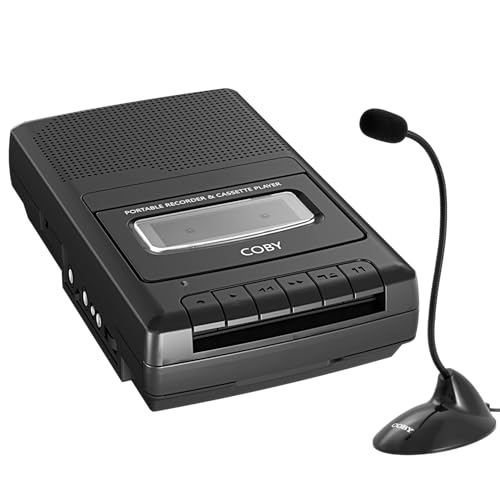
- Includes detachable standing microphone
- Works with batteries or AC power
- Large controls and built-in speaker
Best For: Tabletop classroom and lecture recording
Best Adjustable Recording Setup
PROSCAN PRC124AMZ Cassette Recorder

- Standing and external microphone options
- Automatic level control
- AC/DC operation with headphone and AUX jacks
Best For: Flexible analog lecture and conference recording
Most Versatile Solar Option
QFX RETRO-38BT Shoebox Recorder
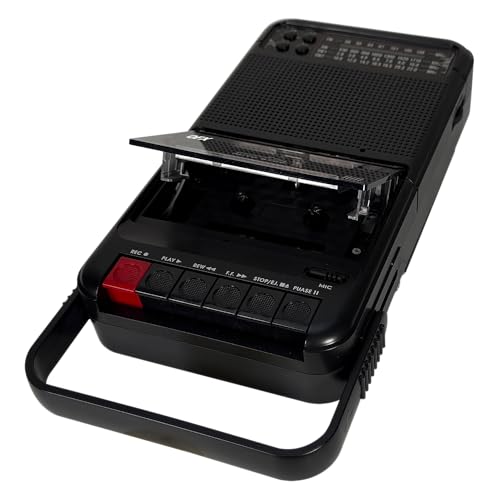
- Records from microphone, Bluetooth, USB, line-in, or radio
- Solar, AC, and rechargeable battery power
- Includes cassette, MP3, speaker, and radio functions
Best For: Portable multi-source recording and playback
Best One-Touch Controls
JENSEN MCR-100 Cassette Recorder

- One-touch recording for quick lecture capture
- Automatic level control supports consistent volume
- Built-in and external microphone connections
Best For: Simple classroom and voice-note recording
Best Simple Budget Design

- Built-in microphone for lectures and voice notes
- Simple controls with clear labels
- Battery or AC operation with headphone and aux support
Best For: Straightforward everyday lecture recording
Most Connected Pick
QFX RETRO-39BT Cassette Recorder

- Records USB audio to cassette
- Supports mic, Bluetooth, FM, line-in, and USB recording
- AC or four-C-battery operation
Best For: Lecture recording with flexible audio-source options
Simple Voice-Recording Pick

- Built-in and external microphone recording
- Aux input records from compatible devices
- Includes AC adapter, mic, and aux cable
Best For: Simple voice notes, interviews, and classroom recording
Digital Backup Pick
USB Tape Recorder and Converter

- Converts tapes to WAV on a USB drive
- Records external audio to cassette or USB
- Includes speaker, microphones, and headphone jack
Best For: Lecture recording plus cassette-to-digital archiving
Best Digital Conversion Pick – Portable Cassette Recorder
For shoppers comparing cassette recorders for lectures, this portable voijump model stands out for its built-in and lavalier microphone options. It can record to cassette or USB, and it can convert tapes to WAV files on a USB drive without requiring a computer or additional software.
Best For: Students, interviewers, and anyone who wants lecture recording plus cassette-to-digital conversion.
Pros:
- Records to cassette or USB through its built-in or external microphone.
- Converts cassette content to WAV files on a USB flash drive.
- Includes a headphone jack, retractable handle, and one-touch recording.
- Supports both tape playback and USB playback.
Cons:
- Its USB recording and conversion features may be more than needed for simple tape recording.
- The notes do not specify included batteries or an AC adapter.
This is the most versatile choice in the group if you want to preserve lectures or older recordings digitally. Choose it over a basic recorder when USB WAV conversion is a priority.
Best Simple Lecture Recorder – Panasonic RQ2102 Cassette Recorder
The Panasonic RQ2102 is a straightforward option for shoppers seeking cassette recorders for lectures without extra conversion features. Its one-touch recording, built-in high-sensitivity condenser microphone, carrying handle, and 3-inch speaker keep operation simple and portable.
Best For: Users who want a compact, uncomplicated recorder for spoken lectures, classes, or notes.
Pros:
- One-touch recording simplifies starting a lecture recording.
- Built-in high-sensitivity condenser microphone is designed for voice capture.
- Portable design includes a carrying handle and headphone jack.
- Uses a 3-inch dynamic speaker for monophonic playback.
Cons:
- Records and plays back in mono rather than stereo.
- Four C batteries are required and are not included.
- It does not list USB recording or digital tape conversion.
This Panasonic is a sensible pick when ease of use matters more than modern connectivity. Its mono format and lack of USB conversion make it best suited to basic spoken-word recording.
Best Hands-Free Option – Coby CVR42BK Cassette Recorder
The Coby CVR42BK is a practical choice among cassette recorders for lectures because it includes a detachable standing microphone for hands-free tabletop recording. Large controls, a built-in speaker, headphone output, and both battery and AC power make it convenient for classrooms, offices, or home use.
Best For: Students, teachers, seniors, and users who prefer a standing microphone and large, easy-use controls.
Pros:
- Detachable tabletop microphone supports hands-free recording.
- Runs on four C batteries or the included AC adapter.
- Offers a built-in speaker, headphone jack, and AUX input.
- Large Play, Stop, Record, Rewind, and Fast Forward buttons are easy to operate.
Cons:
- Its 1.8-pound weight is less convenient for carrying than lighter models.
- Recordings are identified as mono and stereo modes, but the notes do not specify recording quality.
- It does not list USB recording or tape-to-digital conversion.
The included standing microphone is the main reason to choose this model for lectures. It is especially useful when the recorder will stay on a desk or podium rather than being held.
Best Adjustable Recording Setup – PROSCAN PRC124AMZ Cassette Recorder
PROSCAN Cassette Player & Recorder with Microphone, Headphone Jack, Aux in, Black
Check Price On AmazonThe PROSCAN PRC124AMZ combines a standing microphone with an external microphone jack, giving lecture-recording users more setup flexibility. One-touch recording, automatic level control, a carry handle, headphone output, AUX input, and AC/DC operation round out its practical feature set.
Best For: Users who want flexible microphone connections for lectures, interviews, classes, or conferences.
Pros:
- Includes a free-standing microphone and an external microphone jack.
- Automatic level control is designed to help produce clear recordings.
- One-touch recording makes starting classes or conferences quick.
- Supports headphones, AUX input, fast-forward, rewind, and AC/DC operation.
Cons:
- At about 1.74 pounds, it is not the lightest portable option.
- The supplied details do not mention USB recording or digital conversion.
- The recording format is analog rather than digital.
This PROSCAN model is a good fit when microphone flexibility and automatic level control are more important than digital features. Its carry handle helps with transport, while AC/DC operation suits both stationary and mobile use.
Most Versatile Solar Option – QFX RETRO-38BT Shoebox Recorder
The QFX RETRO-38BT is one of the more versatile cassette recorders for lectures, combining a built-in microphone with Bluetooth, USB, line-in, and AM/FM/SW radio recording. Its rechargeable design also makes it practical when you need to move between classrooms or recording locations.
Best For: Users who want a portable cassette recorder with multiple audio sources and rechargeable power.
Pros:
- Records to cassette through the built-in microphone, Bluetooth, USB, line input, or radio.
- Solar and AC charging, plus two pre-installed rechargeable batteries.
- Built-in 4-watt speaker, headphone-compatible line output, and retractable handle.
- Supports cassette playback, MP3 playback, and four-band AM/FM/SW radio.
Cons:
- Its larger feature set may be more than needed for simple lecture recording.
- The notes do not specify recording duration or microphone pickup range.
The RETRO-38BT stands out when flexibility matters more than a minimalist design. Choose it if you want cassette recording plus modern playback and charging options in one portable unit.
Best One-Touch Controls – JENSEN MCR-100 Cassette Recorder
The JENSEN MCR-100 is a straightforward choice among cassette recorders for lectures, with one-touch recording, a built-in condenser microphone, and automatic level control. Its compact shoebox design and retractable handle suit classroom use or recording on the move.
Best For: Students and users who prioritize simple controls and consistent voice recording.
Pros:
- One-touch recording simplifies capturing lectures, notes, or music.
- Automatic level control helps maintain consistent recording volume.
- Built-in microphone, headphone jack, and external microphone jack support flexible use.
- Auxiliary input allows connection to smartphones, tablets, or other audio sources.
Cons:
- It is powered by a 120V AC adapter, and the supplied notes do not identify battery operation.
- The device records in mono through its built-in microphone.
- Its listed warranty is limited to 90 days.
The MCR-100 is a practical pick for users who want uncomplicated cassette recording rather than extensive features. Automatic level control and one-touch operation are especially useful for lecture-focused recording.
Best Simple Budget Design – Coby CVR-22 Cassette Recorder
The Coby CVR-22 keeps cassette recording uncomplicated, making it a sensible option for shoppers comparing cassette recorders for lectures. Its built-in microphone, clearly labeled buttons, and battery-or-AC operation cover the essentials without adding unnecessary complexity.
Best For: Users who want an easy-to-operate recorder for lectures, voice notes, or interviews.
Pros:
- Built-in microphone records lectures and voice notes without extra equipment.
- Simple buttons and clear labels make operation accessible.
- Runs on four C batteries or AC power for flexible placement.
- Includes a headphone jack, aux input, and support for external speakers.
Cons:
- The listed digital recording time is 90 minutes.
- Four C batteries are required for portable use.
- It lacks the Bluetooth, USB, and radio-recording features found on more versatile models.
The CVR-22 is best when ease of use and basic recording are the priorities. It offers the core functions needed for lecture capture while remaining suitable for desk or portable operation.
Most Connected Pick – QFX RETRO-39BT Cassette Recorder
For shoppers comparing cassette recorders for lectures, the QFX RETRO-39BT stands out for its broad input options. It can record from its built-in microphone, Bluetooth, FM radio, line-in, or USB, while its portable handle and AC-or-battery operation support use in different locations.
Best For: Lecture recording when USB, Bluetooth, or line-in flexibility is useful.
Pros:
- Records USB audio directly to cassette.
- Supports recording from a microphone, Bluetooth, FM radio, or line-in to USB.
- Includes a built-in 3.5-inch speaker, headphone jack, and external mic support.
- Runs from AC power or four C batteries.
Cons:
- Four C batteries are not included.
- Its many features may be more than needed for simple voice recording.
This is a versatile choice for users who want a cassette recorder that also handles modern digital sources. Its connectivity makes it especially adaptable, though a simpler model may be preferable if you only need basic microphone recording.
Simple Voice-Recording Pick – Deluxe Products DP-CASR-101
For straightforward cassette recorders for lectures, the Deluxe Products DP-CASR-101 focuses on accessible controls and essential recording inputs. It includes a built-in condenser microphone, an external microphone, and an auxiliary cable for recording from compatible phones, tablets, or laptops.
Best For: Users who want an easy-to-operate recorder for voice notes, interviews, or classroom use.
Pros:
- Records voice through the built-in or included external microphone.
- Records audio from a compatible device through the auxiliary input.
- Includes an AC adapter, external microphone, and aux-in cable.
- Large playback buttons and a carrying handle support simple portable use.
Cons:
- Four C batteries are not included.
- Auxiliary recording requires a source device with a headphone-out jack.
- It does not list USB recording or tape conversion.
The DP-CASR-101 is a practical fit when ease of use matters more than advanced digital features. The included accessories reduce setup costs, while the lack of USB functionality makes it less suitable for shoppers seeking digital backups.
Digital Backup Pick – USB Tape Recorder and Converter
Among cassette recorders for lectures, this USB tape recorder is the strongest option for preserving recordings digitally. It can record external audio to cassette or USB and convert cassette content to WAV files on a USB flash drive without requiring a computer or additional software.
Best For: Lecture recording and cassette archiving when WAV conversion is important.
Pros:
- Converts cassette recordings to WAV files on a USB flash drive.
- Records external audio to either cassette or USB.
- Includes a built-in microphone and dedicated microphone support.
- Offers a built-in 3W speaker, 3.5mm headphone jack, and retractable handle.
Cons:
- Four 1.5V C batteries are not included.
- The AC adapter is sold separately; the included cable connects USB to DC power.
- USB recording requires a USB flash drive.
This model makes the most sense for users who want both physical cassette recording and convenient digital preservation. Its WAV conversion is a meaningful advantage for organizing lecture recordings, though the separate power-adapter requirement should be considered.
How We Picked the Best Cassette Recorders for Lectures
We focused on portable cassette recorders that can handle spoken-word recording without unnecessary complexity. The selection includes compact models with built-in microphones, one-touch or straightforward recording controls, built-in speakers for quick playback, and headphone outputs for more private listening. We also considered power flexibility, including battery and AC operation, because lecture halls, libraries, and study spaces do not always offer convenient outlets.
Several picks add useful extras such as auxiliary input, rechargeable power, solar charging, Bluetooth-style connectivity, or USB tape conversion. These features are not essential for every student, but they can make a recorder more versatile for digitizing older tapes or connecting another audio source.
Quick Comparison
| Best For | Features to Prioritize |
|---|---|
| Basic lecture recording | Built-in microphone, simple record control, reliable battery operation |
| Quiet review | Headphone jack and adjustable playback volume |
| Playback in a group | Built-in speaker with clear voice output |
| Connecting another source | Auxiliary input or microphone input |
| Archiving old tapes | USB conversion and WAV export support |
| Extended portability | Rechargeable battery, AC option, or efficient battery use |
Key Buying Factors for Cassette Recorders for Lectures
Microphone Performance and Placement
A built-in microphone is convenient, but recording quality depends heavily on distance and room noise. For a large classroom, sit reasonably close to the lecturer and keep the recorder unobstructed. A model with an external microphone input can offer more flexibility when the built-in microphone is not enough.
Power and Portability
Battery-powered recorders are easiest to carry between classes, while AC compatibility is useful for long sessions at home. Rechargeable or solar-assisted designs may reduce the need to replace batteries, but check charging time and expected runtime before relying on them for all-day recording.
Playback and Monitoring
A built-in speaker makes quick checks easy, while a headphone jack is preferable in libraries or shared rooms. Look for accessible volume, rewind, fast-forward, and stop controls so you can review a section without struggling with tiny switches.
Connectivity and Recording Format
Auxiliary input can broaden the recorder’s uses, while USB conversion is valuable if you want to move cassette content to a computer or USB drive. Confirm what the product actually supports: some models play or record only through standard cassette media, while others can convert tape audio to digital files.
Who Should Buy Which Cassette Recorders for Lectures?
Choose a straightforward portable cassette recorder if you mainly need dependable voice recording and occasional playback. Students who study in quiet spaces should prioritize a headphone jack, while users reviewing recordings with classmates may prefer a stronger built-in speaker. Pick a model with AC power for frequent long sessions, or a rechargeable option for regular travel. If you also have a collection of older tapes, a USB-capable tape converter may provide more long-term value than a basic lecture recorder.
Before recording in class, check your school’s or lecturer’s policy and obtain permission when required. No cassette recorder can compensate for excessive distance or background noise, so placement remains one of the most important factors in getting usable lecture audio.