The best cassette recorders for interviews make it easy to capture conversations without relying on complicated menus or distracting smartphone notifications. For this roundup, we selected portable models with practical recording controls, built-in microphones, speaker playback, and useful power options.
Whether you are recording oral histories, classroom discussions, field notes, or casual interviews, the right recorder should be simple to operate, easy to monitor, and dependable enough for your recording routine.
Best 10 Cassette Recorders for Interviews Picks for 2026
Best One-Touch Option
JENSEN MCR-100 Cassette Recorder

- One-touch recording with automatic level control
- Built-in mic plus external mic and auxiliary input
- Portable shoebox design with retractable handle
Best For: Simple interview and voice-note recording
Best Lightweight Choice
PROSCAN Portable Cassette Recorder

- One-touch recording for interviews and conferences
- Free-standing mic with automatic level control
- Carry handle and AC/DC operation
Best For: Portable everyday interview recording
Best Connectivity
QFX RETRO-39BT Cassette Recorder

- USB-to-cassette and cassette-to-USB recording
- Bluetooth, line-in/out, and external mic support
- AC or four C-battery operation with carry handle
Best For: Hybrid analog-digital interview workflows
Best Simple Design

- Built-in mic for interviews and voice notes
- Simple buttons and clear labels
- Battery or AC operation with headphone and aux support
Best For: Beginners and straightforward voice recording
Most Versatile
Retro Bluetooth Cassette Boombox Recorder

- Records to cassette or USB
- Built-in microphone and radio
- AC or four-C battery operation
Best For: Multi-purpose recording, playback, and cassette-to-USB use
Best Interview Setup
Coby Cassette Tape Recorder with Standing Mic
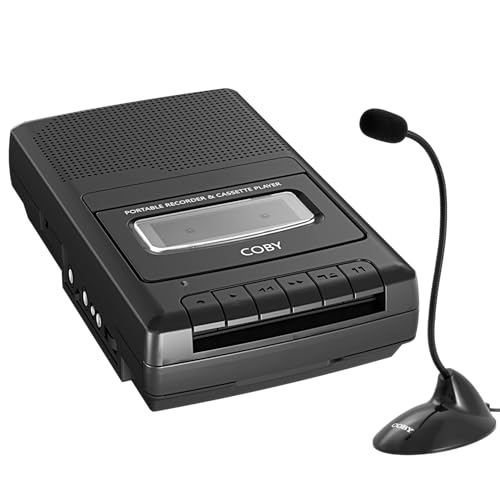
- Includes detachable standing microphone
- Simple large-button controls
- AC or four-C battery power
Best For: Tabletop interviews, meetings, lectures, and classrooms
Best Compact Option
Mersoco AM/FM Cassette Voice Recorder
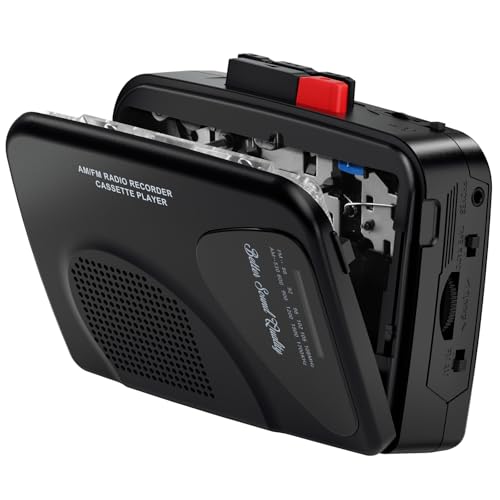
- Compact battery-powered design
- Voice activation recording
- Includes headphones and USB-to-DC cable
Best For: Portable voice notes, lectures, seminars, and casual interviews
Best with Extra Features
TOMASHI Portable Cassette Recorder

- Compact, lightweight design
- Built-in microphone and speaker
- Automatic stop for tape protection
Best For: Portable voice notes and casual interviews
Best Digital-Conversion Option
USB Cassette Recorder and Tape Converter

- Converts tapes to WAV on USB
- Records to cassette or USB
- Includes built-in and dedicated microphones
Best For: Interviews requiring digital backups
Best Ready-to-Use Kit
Deluxe Products Portable Cassette Recorder

- Includes external microphone
- AC adapter and aux cable included
- Large buttons and carrying handle
Best For: Straightforward cassette interviews and playback
Best One-Touch Option – JENSEN MCR-100 Cassette Recorder
For shoppers comparing cassette recorders for interviews, the JENSEN MCR-100 is a straightforward portable option with one-touch recording, a built-in condenser microphone, and automatic level control. Its retractable handle and AC adapter support use in classrooms, offices, or other recording locations.
Best For: Interviewers who want simple operation and automatic recording-level adjustment.
Pros:
- One-touch recording simplifies capturing interviews, lectures, and notes.
- Built-in microphone and automatic level control support consistent recordings.
- Includes a headphone jack, external microphone jack, and auxiliary input.
- Retractable handle makes the shoebox-style unit easier to carry.
Cons:
- Mono microphone operation is less suitable for stereo recording.
- Its listed 90-day warranty is relatively limited.
The MCR-100 focuses on accessible analog recording rather than extensive controls. It is a practical pick when ease of use, portability, and flexible input options matter most.
Best Lightweight Choice – PROSCAN Portable Cassette Recorder
PROSCAN Cassette Player & Recorder with Microphone, Headphone Jack, Aux in, Black
Check Price On AmazonThe PROSCAN PRC124AMZ is a practical choice among cassette recorders for interviews, combining one-touch recording with a free-standing microphone and automatic level control. Its carry handle and AC/DC operation make it useful for recording classes, conferences, and interviews in different settings.
Best For: Users who want a portable recorder with a separate microphone and simple controls.
Pros:
- One-touch recording is designed for interviews, classes, and conferences.
- Includes a free-standing microphone and an external microphone jack.
- Automatic level control helps support consistent recording volume.
- Offers headphone, auxiliary, fast-forward, and rewind functions.
Cons:
- Its listed 1.74-pound weight is heavier than some compact recorders.
- The plastic construction may feel basic for frequent field use.
With its dedicated microphone and flexible power options, the PROSCAN emphasizes convenience over advanced recording features. It fits buyers seeking a familiar, uncomplicated cassette recorder.
Best Connectivity – QFX RETRO-39BT Cassette Recorder
For buyers who need more than basic voice capture, the QFX RETRO-39BT stands out among cassette recorders for interviews with USB, Bluetooth, line-in, and external microphone support. It can record from a microphone or other connected sources and runs from AC power or four C batteries.
Best For: Interviewers who value broad connectivity and the ability to move audio between USB and cassette.
Pros:
- Supports recording from USB to cassette and from cassette or microphone to USB.
- Includes external mic support, line-in/out, Bluetooth playback, and a headphone jack.
- Built-in speaker, FM radio, and MP3 playback add listening flexibility.
- Swivel handle and battery operation support portable use.
Cons:
- Its many functions may be more than needed for simple interviews.
- Four C batteries are required for battery-powered operation and are not included.
The RETRO-39BT is the most versatile option in this group, especially for users working with both analog tapes and digital files. Choose it when connectivity is more important than a minimal design.
Best Simple Design – Coby CVR-22 Cassette Recorder
The Coby CVR-22 keeps cassette recording uncomplicated, making it a sensible option for shoppers seeking cassette recorders for interviews, voice notes, or lectures. Its built-in microphone, clearly labeled controls, headphone jack, and battery-or-AC operation support easy use at home or away from a desk.
Best For: Beginners, seniors, and anyone who prioritizes basic controls and flexible power.
Pros:
- Built-in microphone supports recording interviews and voice notes without extra equipment.
- Simple buttons and clear labels make operation accessible.
- Runs on AC power or four C batteries for flexible placement.
- Includes headphone and auxiliary connectivity for different listening setups.
Cons:
- It does not list the broader USB or Bluetooth connectivity offered by the QFX model.
- Its built-in microphone is intended for straightforward mono recording.
The CVR-22 is a no-frills cassette player and recorder for users who do not need digital transfer features. Its accessible layout and dual power options make it well suited to routine interview and note-taking tasks.
Most Versatile – Retro Bluetooth Cassette Boombox Recorder
For shoppers comparing cassette recorders for interviews, this WISCENT model stands out as a flexible home or portable option. It includes a built-in microphone, USB recording, cassette recording, AM/FM radio, Bluetooth playback, and both AC and battery power.
Best For: Buyers who want an all-in-one cassette recorder for interviews, radio, music playback, and USB archiving.
Pros:
- Offers five recording methods, including microphone-to-tape, microphone-to-USB, and tape-to-USB.
- Supports Bluetooth, USB, cassette, AM/FM radio, and 3.5mm audio connections.
- Can run from an AC cord or four C batteries for portable use.
- Includes two speakers and a 3.5mm headphone jack.
Cons:
- Four C batteries are required for portable operation and are not included.
- Its larger boombox-style feature set may be more than needed for simple voice recording.
This is the strongest choice when interview recording is only one part of your intended use. Its multiple recording paths and USB conversion features add useful flexibility, while the built-in microphone keeps the setup straightforward.
Best Interview Setup – Coby Cassette Tape Recorder with Standing Mic
The Coby CVR42BK is a practical pick among cassette recorders for interviews because it includes a detachable standing microphone for hands-free tabletop recording. Its large controls, built-in speaker, headphone jack, and dual AC/battery operation make it suited to straightforward recording at home, school, or work.
Best For: Interviews, meetings, lectures, classrooms, and users who prefer a simple tabletop microphone setup.
Pros:
- Includes a detachable standing microphone designed for hands-free recording.
- Large Play, Stop, Record, Rewind, and Fast Forward buttons are easy to operate.
- Offers a built-in speaker, 3.5mm headphone jack, and aux input.
- Runs on four C batteries or the included AC adapter.
Cons:
- The recording format is listed as WAV, but the product is primarily a cassette recorder with a mono/stereo microphone specification.
- Four C batteries are not included.
- Its 1.8-pound body is less compact than a basic pocket-style recorder.
For interview-focused use, the included standing microphone is the main advantage. The Coby favors accessible controls and a stable tabletop arrangement over an ultra-compact design, making it a sensible choice for repeated sit-down recordings.
Best Compact Option – Mersoco AM/FM Cassette Voice Recorder
If portability is the priority, the Mersoco T201BUS is a compact option among cassette recorders for interviews. It records external sound or AM/FM broadcasts to cassette, includes voice activation, and comes with 3.5mm headphones plus a USB-to-DC power cable.
Best For: Portable voice notes, lectures, seminars, and casual interviews where a small battery-powered recorder is useful.
Pros:
- Lightweight compact design with play, record, fast-forward, and rewind controls.
- Voice activation can help capture external sounds without continuous manual recording.
- Supports recording from external sound sources or AM/FM broadcasts to cassette.
- Includes 3.5mm headphones and a USB-to-DC cable.
Cons:
- It uses two AA batteries, which are not included despite the listing’s battery requirement.
- The 3.5mm earphone connection is intended for listening; the supplied notes do not specify an external microphone input.
- A 5V adapter is needed for USB-to-DC operation and is not included.
This model makes the most sense for buyers who value a small, uncomplicated recorder with radio functionality. For interviews requiring a dedicated external microphone, its supplied specifications are less reassuring than the Coby’s standing-microphone setup.
Best with Extra Features – TOMASHI Portable Cassette Recorder
If you need cassette recorders for interviews that are easy to carry, the TOMASHI is a compact option with a built-in microphone, speaker, and simple record controls. Its small size suits quick voice notes, language practice, and informal interviews, though users should plan around its battery or USB power requirements.
Best For: Portable voice recording, casual interviews, language learners, and simple tape playback.
Pros:
- Compact 4.57-by-3.54-inch design is easy to handle and transport.
- Built-in microphone supports recording without extra equipment.
- Includes a built-in speaker and 3.5mm headphone jack for flexible listening.
- Automatic stop helps reduce cassette and mechanism wear when a tape ends.
Cons:
- Two AA batteries and USB power supply are not included.
- Its single built-in speaker and compact design are better suited to basic recording than advanced audio work.
The TOMASHI is a straightforward choice when portability and uncomplicated controls matter most. It is best for users who want a lightweight cassette recorder for occasional interviews rather than extensive connectivity or digital conversion.
Best Digital-Conversion Option – USB Cassette Recorder and Tape Converter
For cassette recorders for interviews with a digital backup workflow, this portable model combines cassette recording with USB recording and WAV conversion. It includes an integrated microphone plus a dedicated microphone, making it useful for lectures, dictation, and interviews when preserving audio files matters.
Best For: Interview recording, lectures, dictation, and converting cassette audio to WAV files without a computer.
Pros:
- Converts cassette content directly to WAV files on a USB flash drive.
- Can record external audio to either a blank cassette or USB drive.
- Includes a built-in 3W speaker, integrated microphone, and dedicated microphone.
- Offers a retractable handle, 3.5mm headphone jack, and cassette/USB mode switch.
Cons:
- Four C batteries and the AC adapter are not included.
- At about 2 pounds, it is less lightweight than compact personal cassette players.
- For better recording results, the sound source needs to be placed close to the microphone.
This is the most versatile option of the three for users who want both physical cassette recording and convenient digital archiving. Its larger body and power requirements trade some portability for more recording and conversion functions.
Best Ready-to-Use Kit – Deluxe Products Portable Cassette Recorder
The Deluxe Products portable recorder is a practical pick among cassette recorders for interviews because it includes an external microphone, AC adapter, and aux-in cable. Its large playback buttons and built-in speaker keep operation simple, while the microphone can record voices directly to cassette.
Best For: Simple interview recording, family-history conversations, cassette playback, and recording audio from compatible devices.
Pros:
- Includes an external microphone for voice recording.
- Built-in condenser microphone provides an additional recording option.
- Includes an AC adapter and aux-in cable in the package.
- Carrying handle and large buttons support portable, straightforward use.
Cons:
- Four batteries are not included for portable operation.
- Aux recording requires a source device with a headphone-out jack.
- Its recording is cassette-based, with no stated USB or digital conversion feature.
Choose this model if you value included accessories and simple physical controls. The external microphone makes it more interview-ready out of the box, while the aux input adds flexibility for recording compatible phones, laptops, or tablets to cassette.
How We Picked the Best Cassette Recorders for Interviews
We focused on features that matter during real interviews rather than appearance alone. Each model was evaluated by its recording method, microphone availability, playback options, portability, power flexibility, and ease of use. Models with built-in microphones earned attention because they can be used immediately, while headphone outputs and speaker playback help with checking recordings afterward.
We also considered whether a recorder supports auxiliary input, USB conversion, radio playback, Bluetooth, or multiple power sources. These extras are not essential for every buyer, but they can make a recorder more useful for archiving, classroom work, or mixed analog-and-digital workflows.
Quick Comparison
| Feature | Why It Matters |
|---|---|
| Built-in microphone | Allows quick recording without carrying a separate microphone. |
| Headphone jack | Lets you monitor or review audio privately. |
| Auxiliary input | Supports recording from compatible external audio sources. |
| Battery and AC power | Provides more flexibility for field and desk use. |
| USB conversion | Can help digitize cassette recordings for computer storage. |
Key Buying Factors for Cassette Recorders for Interviews
Recording and Microphone Design
A built-in microphone is convenient for short interviews and spontaneous notes, but microphone placement and room acoustics still affect clarity. For important conversations, choose a model that allows an external source through an auxiliary input, or position the recorder close to the speaker in a quiet space.
Monitoring and Playback
A headphone jack is especially useful when you need to confirm that a tape is recording. Built-in speakers are convenient for quick playback, although headphones generally provide better privacy and make softer speech easier to assess.
Power and Portability
Battery operation is valuable for field interviews, while AC or USB power is convenient for extended sessions at a desk. Check the stated battery type, expected runtime, size, handle design, and whether controls can be operated easily while holding the recorder.
Extra Connectivity
Bluetooth, radio, USB recording, and tape-to-digital conversion can broaden a device’s usefulness, but they may add complexity. Prioritize the features you will actually use, especially if the main goal is straightforward voice recording.
Who Should Buy Which Cassette Recorders for Interviews?
Choose a compact recorder with a built-in microphone if you need something for quick interviews, oral-history projects, or note-taking. A model with a headphone jack is better for researchers and students who want to verify recordings immediately. Buyers who record at a desk or connect other audio equipment should look for auxiliary input and dependable AC power.
If preserving older tapes is part of your goal, a USB-capable tape converter may be worth the extra cost. For general household use, a boombox-style model with radio, Bluetooth, or larger controls can provide more versatility. Regardless of the design, test the tape, batteries, microphone, and recording level before an important interview, and keep a second recording method available when the conversation cannot be repeated.