Choosing a professional 3D printer is about more than raw speed. For serious work, you want dependable output, consistent dimensional accuracy, and a machine that fits your materials, throughput, and post-processing workflow.
Below, we’ve grouped 10 strong options for studios, engineering teams, and production-minded makers looking for the best balance of performance, enclosure quality, multi-material capability, and day-to-day reliability.
Best 10 3d Printers for Professionals Picks for 2026
High-Speed Enclosed Pick
Original Prusa CORE One+ CoreXY Printer

- Fast CoreXY motion for precise, high-quality output
- Active-heated enclosure supports PLA through Nylon
- Fully assembled with long-term support and calibration
Best For: Professionals wanting a reliable enclosed printer for daily prototyping
Ultra-Large Industrial Build
QIDI Max4 Combo Large-Format 3D Printer
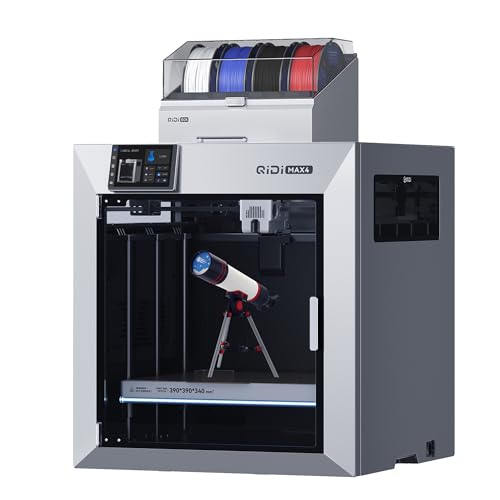
- Huge 390×390×340 mm build area for oversized parts
- 65°C chamber supports engineering and abrasive materials
- AI camera helps catch failures and pause prints early
Best For: Users printing large industrial parts and high-temp prototypes
Multi-Material Pro Pick
Original Prusa XL 5-Toolhead Printer

- Five toolheads print up to five materials or colors
- Large-format CoreXY platform for advanced prototypes
- Segmented heated bed helps reduce warping on big jobs
Best For: Professional users needing multi-material flexibility and large-format output
Independent-Extruder Production Pick
FLASHFORGE Creator 5 Pro Multi-Extruder Printer

- Four independent extruders for clean multi-color switching
- 65°C chamber and HEPA13 filtration support controlled use
- 600mm/s speed with auto leveling for fast workflows
Best For: Users needing enclosed, high-speed multi-material printing
Industrial Large-Format CoreXY

- 11.8 × 11.8 × 12.99 in build volume
- Actively heated 60°C enclosed chamber
- Rigid CoreXY frame for high-speed precision
Best For: Large professional parts, prototypes, and advanced materials
Multi-Material Toolhead System

- Four toolheads with 5-second tool changes
- Up to 5X less waste than purge-based systems
- 500 mm/s CoreXY printing with 270 mm cube build volume
Best For: Multi-color, multi-material, and high-throughput printing
Reliable Production Desktop

- High-speed FDM with input shaping
- Professional-grade reliability for day-to-day use
- Open-source, upgradeable platform with support
Best For: Reliable prototyping and production in a compact desktop format
Industrial Multi-Material Powerhouse
FLASHFORGE Creator 5 Pro 4-Toolhead 3D Printer

- 4 independent toolheads with low-waste FlashSwap changer
- 65°C heated chamber for ABS, PC, and PA
- CoreXY motion reaches up to 600mm/s
Best For: Professional teams needing multi-material, low-waste production printing
Fast All-Round Workflow
Bambu Lab P2S Combo 3D Printer

- Prints up to 600 mm/s with active flow compensation
- 15-minute setup with AI failure detection and auto calibration
- AMS 2 Pro adds multi-color printing and 65°C drying
Best For: Professional users who want quick setup and smart multi-color printing
Large-Format Multi-Color Flagship
Creality K2 Plus Combo 3D Printer

- Large 350 x 350 x 350 mm build volume for bigger jobs
- Up to 16-color printing with automatic filament handling
- 60°C chamber and 350°C nozzle for engineering materials
Best For: Professionals needing large-format, multi-color printing with strong material support
High-Speed Enclosed Pick – Original Prusa CORE One+ CoreXY Printer
If you need one of the more balanced 3d printers for professionals, the Original Prusa CORE One+ is built for fast, accurate output in a fully enclosed package. Its CoreXY motion system, active-heated chamber, and rigid steel frame make it a practical choice for dependable prototyping and production-style work across a wide material range.
Best For: Professionals who want a reliable enclosed CoreXY printer for everyday prototyping and functional parts.
Pros:
- CoreXY motion supports fast, precise printing with strong surface quality and dimensional accuracy.
- Fully enclosed, actively heated chamber helps reduce warping and improve adhesion for PLA, PETG, ASA, PC, and Nylon.
- Automatic top vent and Easy Flex Loading simplify material handling and day-to-day use.
- Fully assembled, calibrated, and backed by lifetime technical assistance and 24/7 support.
Cons:
- Build volume is smaller than some larger-format industrial options.
- Best suited to users who value reliability and workflow consistency over maximum size.
The CORE One+ stands out as a strong all-rounder for professional shops that need dependable output without a complicated setup. It combines enclosure control, speed, and support in a package that feels optimized for regular work rather than occasional hobby use.
Ultra-Large Industrial Build – QIDI Max4 Combo Large-Format 3D Printer
For professionals who need volume first, the QIDI Max4 Combo is a standout option among 3d printers for professionals. Its 390×390×340 mm build area, 65°C heated chamber, and high-speed motion system are aimed at large industrial parts, custom prototypes, and high-temperature materials that benefit from a controlled print environment.
Best For: Teams and makers who need an ultra-large-format printer for big parts, engineering materials, and monitored production runs.
Pros:
- Very large 390×390×340 mm build volume handles oversized parts in one piece.
- Closed-loop motors, lead screw design, and high-speed specs support precise, stable printing.
- 65°C heated chamber and hardened nozzle expand support for ABS-CF, PC, and PPS-CF.
- AI camera monitoring can detect failures early and pause the job to save time and material.
Cons:
- The Polar Cooler is not included and must be purchased separately.
- At 120 pounds, it is a heavy machine that will need a proper installation space.
The Max4 Combo is best viewed as a production-oriented tool for large-format work rather than a general-purpose desktop printer. If your workflow demands size, temperature control, and material breadth, it brings a lot of capability to the table.
Multi-Material Pro Pick – Original Prusa XL 5-Toolhead Printer
The Original Prusa XL is designed for advanced workflows where material changes and color combinations matter, making it a strong candidate in 3d printers for professionals. With five toolheads, a large-format CoreXY platform, and segmented heated bed zones, it is aimed at functional prototypes and full-color models that need efficient, repeatable results.
Best For: Professional users who need multi-material flexibility and large-format prototyping with strong ecosystem support.
Pros:
- Five-tool system supports up to five materials or colors in one job.
- Large 14.17 × 14.17 × 14.17 inch build volume suits bigger prototypes and models.
- Segmented heated bed helps improve efficiency and reduce warping on large prints.
- Includes Prusa software integration, print profiles, and lifetime technical assistance.
Cons:
- Toolhead-based system adds complexity compared with single-nozzle printers.
- Some fragile parts are packed separately and require quick installation during setup.
This is a strong fit for shops that regularly need multi-color or multi-material output without sacrificing build size. The XL is less about simplicity and more about giving professional users a flexible platform that can handle demanding projects.
Independent-Extruder Production Pick – FLASHFORGE Creator 5 Pro Multi-Extruder Printer
The FLASHFORGE Creator 5 Pro is built for professional workflows that need speed, enclosure control, and true multi-color output, making it a compelling option in 3d printers for professionals. Its 65°C active heated chamber, HEPA13 filtration, and four independent extruders are aimed at cleaner operation and efficient material switching in office, lab, or workshop settings.
Best For: Users who want an enclosed, high-speed printer with independent extruders for multi-color or multi-material jobs.
Pros:
- Four independent extruders avoid cross-contamination and eliminate purge-heavy color changes.
- 65°C heated chamber supports stable printing with ABS, ASA, PC, and Nylon.
- HEPA13 filtration and sealed enclosure help keep the work area cleaner.
- 600mm/s speed, auto leveling, and toolhead calibration support fast production workflows.
Cons:
- Build volume is smaller than some large-format professional printers.
- Multi-extruder systems can be more involved to manage than single-toolhead machines.
For teams that want efficient multi-material capability without sacrificing enclosure control, the Creator 5 Pro brings a very practical feature set. It is especially attractive if cleaner operation and fast tool changes matter in your environment.
Industrial Large-Format CoreXY – Original Prusa CORE One L
If you need one of the more capable 3d printers for professionals, the Original Prusa CORE One L is built around volume, enclosure control, and speed. Its large build space, heated chamber, and rigid CoreXY frame make it a strong fit for advanced materials and bigger parts that need dependable results.
Best For: Printing full-scale functional parts, large prototypes, and engineering-grade models in a controlled enclosure.
Pros:
- Large 11.8 × 11.8 × 12.99 in build volume handles oversized prints without splitting parts.
- Actively heated 60°C chamber helps improve adhesion and reduce warping with ASA, ABS, PC, and Nylon.
- Rigid CoreXY steel exoskeleton supports high-speed printing and consistent dimensional accuracy.
- Minimal-calibration setup and automated sensors make it quick to get printing.
Cons:
- Large enclosed machine takes up significant bench space.
- Primarily geared toward advanced materials and larger jobs, which may be more than casual users need.
- Heavier design can make placement less convenient than compact desktop printers.
For shops and creators who want large-format output with a stable thermal environment, this model is positioned as a serious production-ready option. The offline-first design and support resources add long-term practicality for professional use.
Multi-Material Toolhead System – Snapmaker U1
The Snapmaker U1 stands out among 3d printers for professionals who want faster multi-color and multi-material output without the waste of repeated filament purges. Its four-toolhead system, fast tool changes, and CoreXY motion are aimed at users producing detailed prototypes, functional parts, or finished models with more complexity.
Best For: Multi-color prototypes, mixed-material parts, and teams that want faster production with less waste.
Pros:
- Four independent toolheads enable true multi-color and multi-material printing.
- 5-second tool changes greatly reduce downtime compared with traditional filament swapping.
- Up to 5X less waste and faster multi-color printing can lower operating costs.
- Automatic calibration and AI-powered monitoring simplify setup and printing.
Cons:
- Multi-toolhead system adds complexity versus a basic single-extruder printer.
- Best results depend on managing multiple materials and toolheads effectively.
- Large feature set may be more than needed for simple one-material jobs.
For workflows that benefit from color changes, support materials, or mixed material construction, the U1 is a productivity-focused choice. It blends speed, automation, and flexibility in a way that suits workshops and professional creators.
Reliable Production Desktop – Original Prusa MK4S
The Original Prusa MK4S is a practical pick for buyers comparing 3d printers for professionals who value dependable day-to-day output over flashy extras. With high-speed FDM performance, input shaping, and a fully assembled design, it fits well in workshops and studios that need consistent prototyping and production runs.
Best For: Reliable desktop production, functional prototypes, and professional users who want a proven all-around printer.
Pros:
- High-speed FDM printing with input shaping helps reduce ringing and vibrations.
- Professional-grade reliability is suited to workshops, studios, and production environments.
- Open-source platform offers firmware updates and hardware upgrade paths.
- Fully assembled and includes a spool of Prusament PLA to start immediately.
Cons:
- Smaller 9.84 x 8.3 x 8.6 in build size limits larger projects.
- Lacks the large-format volume of bigger professional printers.
- Single-color, standard desktop format may be less flexible than multi-tool systems.
For teams that want a straightforward printer with a strong reliability record, the MK4S focuses on output quality and workflow stability. It is a sensible option when repeatable results matter more than maximum build volume or advanced multi-material features.
Industrial Multi-Material Powerhouse – FLASHFORGE Creator 5 Pro 4-Toolhead 3D Printer
For buyers comparing 3d printers for professionals, the FLASHFORGE Creator 5 Pro stands out as a production-minded option built around speed, material flexibility, and low waste. Its 4 independent toolheads and 7-second FlashSwap changer help cut purge waste, while the enclosed 65°C heated chamber supports advanced filaments like ABS, PC, and PA for demanding parts.
Best For: Professional teams that want multi-material printing, stronger engineering plastics, and lower material waste.
Pros:
- 4 toolheads with FlashSwap reduce purge waste and speed up multi-color work.
- 65°C active heated chamber supports ABS, PC, and PA.
- CoreXY system, linear rails, and 1.5GT belts are built for up to 600mm/s printing.
- Dual HEPA 13 and activated carbon filtration helps keep the workspace safer.
Cons:
- Industrial feature set is more complex than a basic desktop printer.
- Large, enclosed design may take more dedicated workspace.
- Focused on advanced use cases rather than casual hobby printing.
This is the kind of machine that makes sense when uptime, material efficiency, and print consistency matter more than simplicity. If your workflow depends on advanced materials and multi-color production, it offers a very compelling package.
Fast All-Round Workflow – Bambu Lab P2S Combo 3D Printer
If you’re shopping 3d printers for professionals and want a fast setup with a streamlined workflow, the Bambu Lab P2S Combo is a strong contender. It aims to reduce setup friction with automatic calibration and quick-swap nozzles, while the included AMS 2 Pro adds multi-color and multi-material capability plus filament drying at up to 65°C.
Best For: Users who want a fast-start professional printer with multi-color convenience and smart automation.
Pros:
- Up to 600 mm/s printing with Active Flowrate Compensation for cleaner output.
- Quick 15-minute setup and AI failure detection simplify operation.
- AMS 2 Pro supports multi-color/multi-material printing and 65°C filament drying.
- Adaptive Airflow helps balance cooling, heat retention, and chamber conditions.
Cons:
- Multi-color printing requires the Combo version, not the printer alone.
- Best for streamlined workflows rather than heavy industrial enclosure needs.
- More automated than hands-on, which may not suit users wanting deep manual control.
The P2S Combo is appealing when speed, simplicity, and reliable automation matter more than a heavily customized setup. It offers a practical middle ground for professional users who want to print quickly and manage multi-material jobs with less hassle.
Large-Format Multi-Color Flagship – Creality K2 Plus Combo 3D Printer
For 3d printers for professionals that need size as well as capability, the Creality K2 Plus Combo brings a large build volume, multi-color printing, and serious material support. Its 16-color CFS system, 60°C chamber, and 350°C high-temp nozzle make it suited to bigger parts and engineering filaments, while dual AI cameras and sensor-rich automation help monitor prints more closely.
Best For: Teams that need large-format printing with multi-color output and engineering-material support.
Pros:
- Large 350 x 350 x 350 mm build volume handles big parts or batch jobs.
- CFS supports up to 16 colors with automatic filament selection and relay.
- 60°C chamber and 350°C nozzle support ASA, PPA, and other demanding filaments.
- Dual AI cameras and 18 smart sensors add monitoring and automation.
Cons:
- Large-format design can be more demanding on workspace and setup.
- Feature-rich automation may be more than casual users need.
- Heavier machine at 70.4 pounds is less portable than compact printers.
The K2 Plus Combo is a strong choice when you need a serious production-capable printer that can handle both scale and color complexity. It leans into advanced materials and automated oversight, making it a good fit for demanding professional workflows.
How We Picked These 3d Printers for Professionals
We focused on the factors that matter most in real professional use: print consistency, enclosure design, build volume, multi-material options, automation features, and overall workflow efficiency. We also favored machines that can handle repeatable production without constant tuning.
Quick Comparison
Some of these 3d Printers for Professionals are built for compact, high-speed enclosed printing, while others prioritize larger build volumes or advanced tool-changing systems. If you need fast prototyping, look closely at speed, auto-leveling, and chamber control. If you need end-use parts or complex assemblies, toolheads, waste reduction, and material flexibility may matter more than peak speed.
Key Buying Factors for 3d Printers for Professionals
Build Volume
Larger build areas are useful for jigs, fixtures, functional prototypes, and fewer split-part assemblies. If your parts are consistently big, prioritize capacity over headline speed.
Material and Chamber Control
Enclosed printers with heated chambers are better suited to engineering-grade materials and more stable results on demanding prints. This is especially important for teams working with warp-prone filaments.
Tool Changing and Multi-Material Support
Multi-tool systems can improve productivity when you need color changes, soluble supports, or mixed-material workflows. They can also reduce manual intervention, but they may add complexity and cost.
Reliability and Automation
Features like auto-leveling, camera monitoring, filament detection, and robust calibration routines save time in busy environments. For professional use, these conveniences often matter more than marginal speed gains.
Noise, Filtration, and Workspace Fit
If the printer will live in an office or studio, consider filtration, enclosure safety, and acoustic performance. A machine that fits your workspace will be used more often and with fewer interruptions.
Who Should Buy Which 3d Printers for Professionals?
Choose compact enclosed models if you want a dependable all-rounder for prototypes and small-batch parts. Pick large-format or tool-changing systems if your work depends on bigger builds, multi-color output, or reduced post-processing. If you need a straightforward desktop machine, a simpler high-speed model may be the best value. For teams comparing 3d Printers for Professionals, the right choice usually comes down to whether you value size, material control, or workflow automation most.