A USB hub with Ethernet can add wired networking and much-needed ports to a modern laptop without requiring a full desktop dock. The right model can also connect displays, storage, keyboards, mice, and other accessories through one compact device.
These 10 options cover straightforward USB-A hubs, versatile USB-C multiport adapters, and higher-capacity docks with features such as Gigabit Ethernet, 4K HDMI, and fast data transfer. Use the guide below to narrow the choices by compatibility, port layout, speed, and everyday workflow.
Best 10 USB Hub with Ethernet Picks for 2026
Best Plug-and-Play Value
ABLEWE 4-in-1 USB 3.0 Ethernet Hub
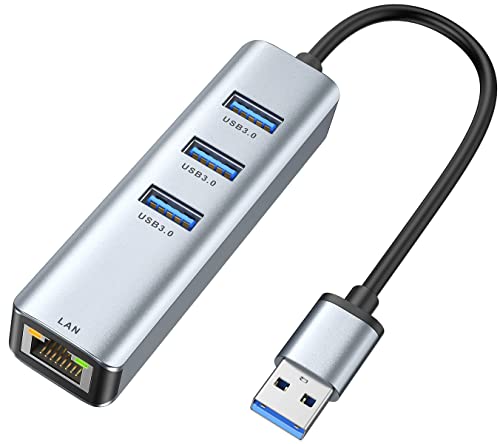
- Three USB 3.0 ports plus Gigabit Ethernet
- 5Gbps USB transfer speed
- Compact aluminum design with 24-month warranty
Best For: USB 3.0 laptops needing wired networking and extra USB ports
Best Full-Featured USB-C Dock
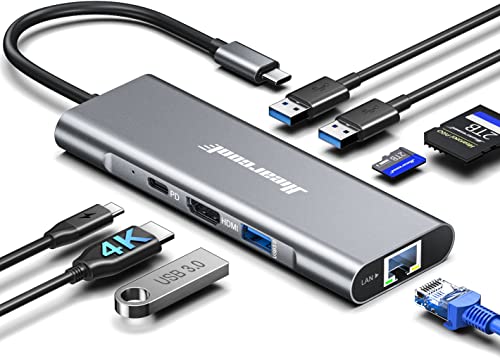
- 1Gbps Ethernet and 4K@60Hz HDMI
- 100W PD pass-through charging
- USB-A, SD, and TF card expansion
Best For: USB-C laptops used with displays, peripherals, and memory cards
Best Established USB-A Option

- Gigabit Ethernet with three USB 3.0 ports
- Backward-compatible with USB 2.0 and 1.1
- Two-year warranty and 24/7 support
Best For: USB-A laptops and desktops needing simple wired networking
Best Port Capacity
ABFCRTTW 7-in-1 USB-C Ethernet Hub

- Four USB-A and two USB-C data ports
- Gigabit Ethernet and 5Gbps USB speeds
- 30cm cable for convenient desk placement
Best For: USB-C setups with many wired peripherals and no display needs
Best Compact Ethernet Expansion
UGREEN 5-in-1 USB Hub with Ethernet
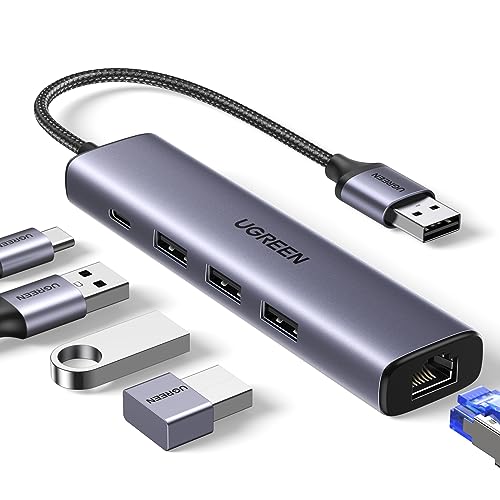
- Gigabit Ethernet up to 1000Mbps
- Three USB 3.0 ports up to 5Gbps
- USB-C input supports high-power peripherals
Best For: Compact wired networking and USB-A expansion
Best for Home Office Displays
Anker 6-in-1 USB-C Hub with Ethernet

- Gigabit Ethernet and 4K HDMI output
- 65W pass-through charging support
- Adds USB-C and two USB data ports
Best For: USB-C home-office setups with an external display
Best Full-Featured Mac Hub
UGREEN Revodok Pro 9-in-1 Ethernet Hub

- Nine ports with gigabit Ethernet and card readers
- 4K HDMI output at 60Hz
- Up to 85W pass-through charging and 10Gbps data
Best For: MacBook workstations needing broad connectivity
Best Budget Pick
Amazon Basics USB 3.0 Hub with Gigabit Ethernet
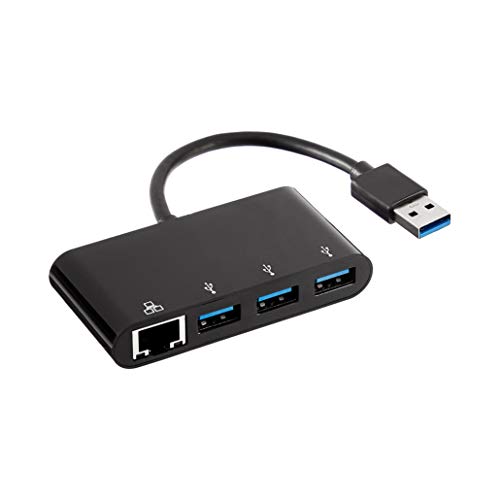
- Three USB 3.0 ports plus Gigabit Ethernet
- Compact, lightweight design for travel
- Supports up to 5Gbps USB transmission
Best For: Basic wired networking and USB-A expansion
Best for Mixed USB Ports
UGREEN 5-in-1 USB Hub with Ethernet

- USB-C and USB-A ports in one hub
- 10Gbps USB 3.2 data transfer
- Gigabit Ethernet plus peripheral power input
Best For: Mixed USB peripherals and USB-A host devices
Best Full-Desk Dock
P9R 10-in-1 USB-C Hub with Ethernet

- Adds Ethernet, 4K HDMI, card readers, and USB ports
- 100W PD charging support
- Angled aluminum design for desk setups
Best For: USB-C workstations needing display and peripheral expansion
Best Plug-and-Play Value – ABLEWE 4-in-1 USB 3.0 Ethernet Hub
If you need a straightforward usb hub with ethernet, the ABLEWE combines three USB 3.0 ports with a Gigabit RJ45 connection. It supports simultaneous use, up to 5Gbps USB transfers, and wired network speeds from 10/100/1000Mbps.
Best For: Laptop users who need extra USB-A ports and a wired Gigabit connection in one compact adapter.
Pros:
- Three USB 3.0 ports and Gigabit Ethernet can operate simultaneously.
- Supports USB data transfers up to 5Gbps.
- Plug-and-play design with broad Windows, Mac, Linux, and Chrome OS compatibility.
- Compact aluminum housing and a 24-month warranty.
Cons:
- Uses a USB 3.0 connection rather than USB-C.
- USB ports are intended for data and peripheral expansion, not display output or charging.
This is a practical choice when your laptop has USB 3.0 but lacks Ethernet and you want a few additional ports without carrying a larger dock.
Best Full-Featured USB-C Dock – Hiearcool 8-in-1 USB-C Hub
The Hiearcool is a versatile usb hub with ethernet for USB-C laptops, combining 1Gbps wired networking with 4K@60Hz HDMI, USB-A expansion, card readers, and USB-C pass-through charging. Its aluminum body is suited to office, home, and travel setups.
Best For: USB-C laptop users who want networking, an external display, charging, and media-card access from one hub.
Pros:
- Includes 1Gbps Ethernet and 4K@60Hz HDMI output.
- Offers three USB-A 3.0 ports, SD and TF card readers, and USB-C connectivity.
- Supports up to 100W USB-C Power Delivery pass-through charging.
- Works with many MacBook, Windows, Chrome OS, Linux, Android, and compatible USB-C devices.
Cons:
- Its feature set may be more than needed if you only want Ethernet and USB ports.
- Requires a USB-C host device with compatible display and charging support for those functions.
Choose this model when your setup extends beyond wired internet. It is especially useful for presentations, remote work, external displays, and transferring files from SD or microSD cards.
Best Established USB-A Option – TP-Link UE330 Ethernet Hub
The TP-Link UE330 is a compact usb hub with ethernet that adds a Gigabit RJ45 port and three USB 3.0 ports through USB-A. It is designed for stable wired connectivity and supports backward compatibility with USB 2.0 and USB 1.1 devices.
Best For: Users who prefer a compact USB-A adapter from a well-known networking brand.
Pros:
- Adds one Gigabit Ethernet port and three USB 3.0 ports.
- Supports data rates up to 1000Mbps for Ethernet and faster USB 3.0 transfers than USB 2.0.
- Backward-compatible with USB 2.0 and USB 1.1 devices.
- Includes a two-year warranty and 24/7 technical support.
Cons:
- Uses USB-A, so USB-C-only devices may require an adapter.
- Does not provide video output or pass-through laptop charging.
The UE330 keeps the design focused on the essentials. It is a sensible travel adapter for compatible laptops and desktops that need Ethernet plus a few additional USB connections.
Best Port Capacity – ABFCRTTW 7-in-1 USB-C Ethernet Hub
For users who need many peripheral connections, this usb hub with ethernet provides four USB-A data ports, two USB-C data ports, and Gigabit RJ45 networking. Its 30cm cable makes the hub easier to position on a desk, while six data ports support speeds up to 5Gbps.
Best For: Desk setups that connect several keyboards, mice, flash drives, and other USB peripherals to one USB-C host.
Pros:
- Provides four USB-A and two USB-C data ports.
- Supports 10/100/1000Mbps Ethernet and USB transfers up to 5Gbps.
- Long 30cm cable improves reach and placement flexibility.
- Plug-and-play operation with an aluminum enclosure.
Cons:
- The USB-C ports do not support video output or Power Delivery charging.
- Optional power may improve stability, but the power adapter and cable are not included.
- Provides data expansion rather than display or charging features.
This hub is a strong fit when port quantity matters most. Its limitations are clear, so it works best as a peripheral and Ethernet expander rather than a complete USB-C docking station.
Best Compact Ethernet Expansion – UGREEN 5-in-1 USB Hub with Ethernet
If you need a practical USB hub with ethernet, this UGREEN adapter adds a gigabit wired connection alongside three USB 3.0 ports. It is a useful choice for laptops and desktops that need both reliable networking and room for peripherals.
Best For: Users who want gigabit Ethernet and fast USB-A expansion in a compact hub.
Pros:
- Gigabit Ethernet supports speeds up to 1000Mbps.
- Three USB 3.0 ports offer data transfer rates up to 5Gbps.
- Plug-and-play support is available on Windows 11/10/8.1, macOS, and Chrome OS.
- USB-C power input can help power high-demand peripherals such as hard drives.
Cons:
- The USB-C power port does not charge the host laptop.
- Windows XP/7/8, Vista, and Linux require driver installation.
- It does not include video output or card readers.
Choose this model when wired networking and USB-A connectivity matter more than display or memory-card support. Its aluminum design, compact size, and 24-month warranty add practical appeal for everyday use.
Best for Home Office Displays – Anker 6-in-1 USB-C Hub with Ethernet
Anker’s 6-in-1 model is a versatile USB hub with ethernet for USB-C laptops and tablets. It combines gigabit networking with HDMI, USB data ports, and pass-through charging for a streamlined desk setup.
Best For: Home-office users who need Ethernet, an external 4K display, and laptop charging from one USB-C hub.
Pros:
- Includes Ethernet, HDMI, USB-C data, and two USB data ports.
- HDMI supports resolutions up to 4K at 30Hz.
- Power Delivery input supports up to 65W pass-through charging with a compatible wall charger.
- Aluminum construction and an 18-month warranty provide practical durability support.
Cons:
- The HDMI output is limited to 4K at 30Hz.
- A wall charger is needed for pass-through charging.
- It has fewer total ports than the 9-in-1 UGREEN option.
This hub suits a clean workstation where wired internet, a second screen, and charging are more valuable than card-reader or higher-refresh display features. Its mix of ports keeps the setup simple without requiring a separate Ethernet adapter.
Best Full-Featured Mac Hub – UGREEN Revodok Pro 9-in-1 Ethernet Hub
For users seeking a feature-rich USB hub with ethernet, the UGREEN Revodok Pro adds nine connections through one USB-C port. It combines gigabit networking with 4K HDMI at 60Hz, card readers, USB data ports, and high-wattage pass-through charging.
Best For: MacBook users who need wired Ethernet, high-refresh 4K video, card readers, and multiple peripheral connections.
Pros:
- Offers nine ports, including gigabit Ethernet, HDMI, SD/TF readers, and USB-A/C data ports.
- HDMI supports 4K at 60Hz for smoother external-display use.
- Supports up to 85W pass-through charging from a 100W PD input.
- USB data transfers can reach up to 10Gbps.
Cons:
- The USB-C port is for charging only and does not support data or video output.
- The supplied operating-system details list macOS 14 Sonoma and macOS compatibility.
- The larger port selection may be unnecessary for users who only need Ethernet and USB.
This is the strongest fit for a Mac-centered workstation or creative setup that benefits from card access, fast file transfers, and 4K/60Hz display output. Check your device and macOS requirements before buying, especially if you need broad cross-platform compatibility.
Best Budget Pick – Amazon Basics USB 3.0 Hub with Gigabit Ethernet
If you need a straightforward usb hub with ethernet for a laptop or desktop, this Amazon Basics model combines three USB 3.0 ports with a Gigabit RJ45 connection. Its compact plastic housing is practical for travel or a small desk.
Best For: Users who want an affordable, compact hub for wired networking and a few USB-A accessories.
Pros:
- Three USB 3.0 ports support up to 5Gbps transmission and are backward compatible with USB 2.0.
- Gigabit Ethernet supports 10/100/1000Mbps bandwidth.
- Plug-and-play design works with supported Windows and Mac operating systems.
- Slim, lightweight case is easy to carry.
Cons:
- Provides only USB-A ports, with no USB-C connectivity.
- Actual network speeds can vary with the cable, router, and computer hardware.
- Operating-system support is limited on older Windows and Mac versions.
This is a sensible choice when the essentials matter more than extra ports. It delivers wired networking and useful USB expansion without taking much space, though users with USB-C peripherals will need a different hub.
Best for Mixed USB Ports – UGREEN 5-in-1 USB Hub with Ethernet
The UGREEN 5-in-1 is a versatile usb hub with ethernet for USB-A host devices that need both wired networking and a mix of modern and legacy ports. It combines Gigabit Ethernet with USB-C and USB-A connections in an aluminum enclosure.
Best For: Laptop and desktop users who connect several USB peripherals and want faster USB 3.2 data transfers.
Pros:
- Includes two USB-C 3.2 ports, one USB-A 3.2 port, and one USB-A 2.0 port.
- USB 3.2 ports support data transfer speeds up to 10Gbps.
- Gigabit Ethernet provides a wired network connection.
- Extra USB-C power input can help power high-demand peripherals such as hard drives.
Cons:
- The power input is for peripherals and cannot charge the host laptop.
- Windows XP, Windows 7, Vista, and Linux require driver installation.
- It is designed primarily for USB-A host devices rather than USB-C hosts.
Choose this model if port variety and fast peripheral transfers are priorities. Its extra power input adds flexibility for demanding accessories, while plug-and-play operation is available on newer Windows and macOS systems.
Best Full-Desk Dock – P9R 10-in-1 USB-C Hub with Ethernet
For a laptop workstation, the P9R is a feature-rich usb hub with ethernet that adds wired networking, HDMI, card readers, USB ports, and power delivery. Its angled aluminum design is intended to keep frequently used connections accessible.
Best For: USB-C laptop, tablet, and mobile-device users building a desk setup with display output, storage cards, peripherals, and charging.
Pros:
- Ten-in-one layout includes 1Gbps Ethernet, 4K HDMI at 30Hz, SD/TF slots, and five USB data ports.
- 100W PD input supports charging while the hub is in use.
- USB 3.0 ports provide up to 5Gbps data transfer speeds.
- Aluminum body, angled port layout, and braided cable support organized desk use.
Cons:
- HDMI output is limited to 4K at 30Hz.
- USB-C host compatibility is required, so it is not intended for standard USB-A-only devices.
- High-speed charging performance depends on using a suitable original or 65W-plus power adapter.
This is the most complete option of the three for a USB-C workstation. It costs more in complexity than a basic hub, but the combination of Ethernet, display output, card readers, charging, and USB expansion can replace several separate adapters.
How We Picked the Best USB Hub with Ethernet
We focused on hubs that combine wired Ethernet with practical expansion for laptops and desktops. The selection includes USB-A and USB-C designs, models with Gigabit networking, and multiport hubs that add video output or several USB connections. We also considered compatibility claims, plug-and-play convenience, port variety, portability, and whether the feature set suits a specific type of user.
Because port arrangements differ substantially, the best choice depends less on the largest advertised number of ports and more on how well the hub matches your computer and accessories.
Quick Comparison
- Basic wired networking: Choose a compact USB-to-Ethernet adapter when you mainly need a stable network connection.
- More USB-A ports: Three- and four-port hubs are useful for older peripherals, flash drives, keyboards, and mice.
- USB-C laptop expansion: USB-C hubs can add Ethernet, USB ports, HDMI, and sometimes card readers through one connection.
- Desk or travel flexibility: Smaller hubs are easier to carry, while 9-in-1 and 10-in-1 models offer broader workstation connectivity.
Key Buying Factors for a USB Hub with Ethernet
Connector and Compatibility
Check whether your computer has USB-A, USB-C, or both. A USB-C hub may require a compatible data-capable USB-C port rather than a charging-only connection. Confirm operating-system support as well, especially for older Windows versions, macOS, or specialized devices.
Ethernet Speed
Gigabit Ethernet is the most useful target for fast home broadband, office networks, large downloads, and dependable video calls. A 10/100 adapter can work for basic browsing, but it may limit faster internet plans and local file transfers.
USB Data Speed and Port Type
USB 3.0 or faster ports are preferable for external drives and high-volume transfers. Count both the number and type of ports: USB-A is common for older accessories, while USB-C is increasingly useful for newer storage and peripherals. Do not assume every USB-C port supports video, charging, or the same transfer rate.
Display, Power, and Heat
If you want HDMI, verify the supported resolution and refresh rate for your monitor. Some hubs support 4K at 60Hz, while others may support lower refresh rates. Bus-powered hubs are convenient, but power-hungry drives and multiple accessories may work more reliably with a hub that supports pass-through charging or an external power source.
Who Should Buy Which USB Hub with Ethernet?
Students and travelers should prioritize a compact, plug-and-play USB Hub with Ethernet and only the ports they regularly use. Home-office users will generally benefit from Gigabit Ethernet, several USB-A ports, and HDMI for a second screen. Creators and power users should consider a broader USB-C hub with faster data ports, display support, and enough power capacity for storage and accessories. Owners of older laptops or desktops may prefer a USB-A model that adds Ethernet without requiring a USB-C adapter.
Before ordering, compare the hub’s host connector, Ethernet rating, display requirements, and power limitations with your exact setup. That check helps prevent buying a feature-rich dock that cannot use all of its functions on your computer.