The right volume control can make bookshelf speakers easier to use, better integrated into a room, and safer for whole-home audio systems. This roundup compares 10 options, from impedance-matching in-wall knobs to compact desktop attenuators and powered speaker alternatives.
Before choosing, confirm whether your speakers use passive or powered amplification, then match the control’s power rating, wiring layout, and installation style to your system.
Best 10 Speaker Volume Controls for Bookshelf Speakers Picks for 2026
Best Whole-Home Option
OSD Audio SVC100 In-Wall Volume Control
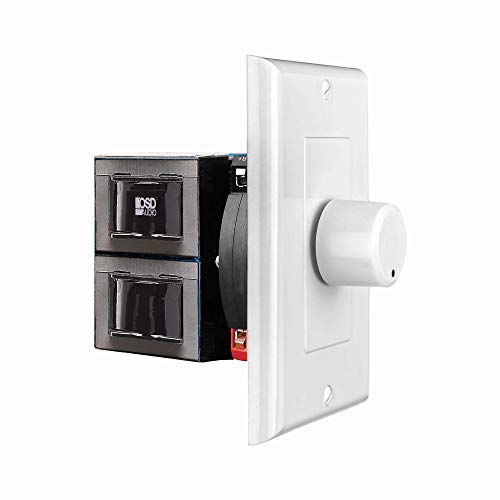
- 100 watts per channel
- Impedance matching for multi-speaker systems
- Includes trim plates and junction box
Best For: Permanent multi-room audio zones
Best Powered Speaker Set
Edifier R1280T Bookshelf Speakers
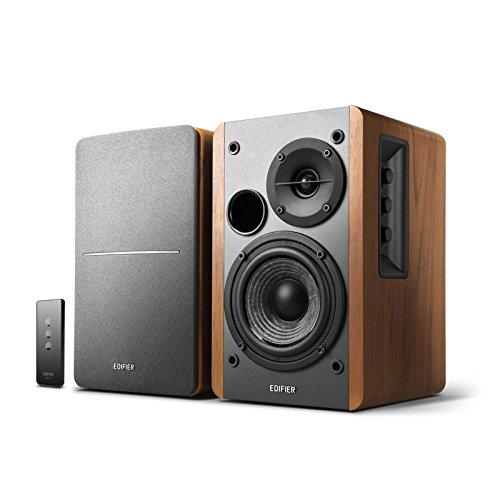
- Remote and side-panel volume controls
- Bass and treble adjustment included
- Two AUX inputs for connected devices
Best For: Desktop and near-field listening
Best Flush-Mount Budget Control

- Flush in-wall rotary design
- Includes mounting hardware and trim frame
- Rated up to 100 watts
Best For: Basic home theater wall control
Best Compact Inline Control
Cubilux 3.5mm Volume Controller

- Stepless inline volume adjustment
- Supports stereo and mono audio
- Compact aluminum-alloy housing
Best For: Powered speakers with 3.5mm input
Best In-Wall Slider Control
100W Impedance-Matching Volume Control
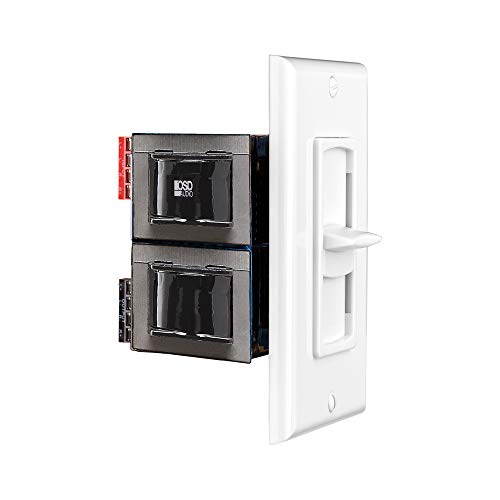
- 100-watt peak rating
- 12-step linear slider
- Supports up to eight pairs of 8-ohm speakers
Best For: Dedicated audio zones needing discreet slider control
Best Dual-Channel Selector
Pyle PVCD15 A/B Volume Controller

- Independent right and left control
- 120-watt load handling
- Supports two stereo channels
Best For: Simple dual-channel home-audio installations
Best High-Power Knob Control
300W Impedance-Matching Volume Control

- 300 watts per channel
- 12-step rotary autoformer control
- Supports up to eight pairs of 8-ohm speakers
Best For: Higher-power multi-room audio systems
Simple Wall-Slider Choice

- Vertical soft-touch sliding operation
- Fits standard junction and gang boxes
- Handles up to 100W
Best For: Clean wall-mounted control for home theater speakers
Flexible Multi-Zone Option
100W Impedance-Matching Controller

- Supports up to 8 pairs of speakers
- 100W passive design requires no extra power
- Suitable for homes, garages, yards, and patios
Best For: Distributed indoor/outdoor audio systems
Best Whole-Home Option – OSD Audio SVC100 In-Wall Volume Control
OSD Audio 100W in Wall Volume Control Impedance Matching for Home Speakers, Rotary Knob White SVC100
Check Price On AmazonThe OSD Audio SVC100 is a practical choice when you need speaker volume controls for bookshelf speakers installed in separate rooms or audio zones. Its 100-watt-per-channel rating, impedance protection, and 12-step rotary knob make it suitable for dedicated and whole-house audio systems.
Best For: Multi-room setups using passive speakers and in-wall volume adjustment.
Pros:
- Rated for up to 100 watts per channel with minimal bass roll-off.
- Impedance matching helps protect an amplifier or receiver with parallel speaker connections.
- Includes trim plates, junction box, and mounting hardware for a clean installation.
- Supports up to eight pairs of 8-ohm speakers with adjustable jumpers.
Cons:
- Requires in-wall wiring and installation in a standard gang box.
- The 12-step knob offers stepped rather than fully continuous adjustment.
Choose this model if you want a permanent, room-by-room control solution rather than a tabletop accessory. Its wiring requirements make it less suitable for temporary or portable systems.
Best Powered Speaker Set – Edifier R1280T Bookshelf Speakers
The Edifier R1280T is a complete powered bookshelf speaker pair with convenient volume adjustment built in. For shoppers comparing speaker volume controls for bookshelf speakers, it offers a remote plus side-panel volume, bass, and treble controls, without requiring a separate in-wall control.
Best For: Desktops, televisions, gaming setups, and other near-field listening systems.
Pros:
- Remote control provides convenient volume adjustment from a distance.
- Side-panel knobs adjust volume, bass, and treble on the active speaker.
- Two AUX inputs allow simultaneous connection of two devices.
- 13mm silk-dome tweeter and 4-inch full-range driver support natural sound reproduction.
Cons:
- These are powered speakers, so they are not an add-on control for an existing passive-speaker system.
- Volume controls are located on the active speaker or remote rather than on a wall.
This is the most straightforward option when you need speakers with accessible volume controls included. It is less appropriate for whole-home distribution or installations requiring a separate wall plate.
Best Flush-Mount Budget Control – Pyle PVC1 Wall Volume Knob
The Pyle PVC1 is a flush in-wall rotary volume control for systems that call for a simple wall-mounted adjustment. It is a useful candidate among speaker volume controls for bookshelf speakers when the speakers are part of a home theater or multi-speaker installation.
Best For: Basic in-wall volume adjustment in home theater and surround-sound systems.
Pros:
- Flush wall-plate design keeps the control unobtrusive.
- Rotary knob provides straightforward manual adjustment.
- Includes a mounting ring, wire nuts, decorative frame, and mounting hardware.
- Listed with a 20 Hz to 20 kHz frequency response and 100-watt maximum output power.
Cons:
- The supplied specifications identify a single audio channel.
- Installation requires in-wall wiring and mounting.
- The notes provide limited information about impedance-matching functionality.
This model makes sense when a simple, low-profile wall control is the priority. For higher-powered or more complex multi-room systems, verify compatibility with the amplifier and speaker wiring before installation.
Best Compact Inline Control – Cubilux 3.5mm Volume Controller
The Cubilux 3.5mm Volume Controller is a portable inline attenuator for speakers or earphones with a compatible 1/8-inch connection. As speaker volume controls for bookshelf speakers, it is best suited to powered speakers or audio sources that accept a 3.5mm stereo connection.
Best For: Compact desktop and portable setups needing quick, stepless volume adjustment.
Pros:
- Stepless knob enables fine volume adjustment.
- Supports stereo or mono audio and can mute output at minimum.
- Aluminum-alloy housing is compact and designed for interference isolation.
- Designed to preserve the original audio signal without static.
Cons:
- It does not amplify sound or increase maximum volume.
- It adjusts audio output only, not microphone volume.
- Requires a compatible 3.5mm connection and is not an in-wall control.
This is a convenient low-cost solution for adding a physical knob between an audio source and compatible powered speakers. It is not the right choice for passive bookshelf speakers or systems that require amplifier-level control.
Best In-Wall Slider Control – 100W Impedance-Matching Volume Control
OSD Audio 100W in Wall Volume Control Impedance Matching for Home Speakers, Slider White VMS100
Check Price On AmazonFor anyone comparing speaker volume controls for bookshelf speakers in a dedicated room or whole-house system, the OSD Audio VMS100 offers a straightforward in-wall slider design. Its 100-watt peak rating, 12-step adjustment, and impedance-matching jumpers make it suited to managing listening levels while helping protect connected equipment.
Best For: Home audio zones where a pop-free slider and flexible impedance protection are priorities.
Pros:
- 100-watt peak rating with minimal bass roll-off.
- 12-step linear slider provides a wide range of listening levels.
- Adjustable jumpers support up to eight pairs of 8-ohm speakers simultaneously.
- Fits a standard gang box and accepts wiring up to 14 gauge.
Cons:
- Slider operation may not suit shoppers who prefer a rotary knob.
- Its in-wall installation requires wiring and a suitable gang box.
The VMS100 is a practical choice for discreet room-by-room control, especially when impedance matching and a linear slider matter more than a tabletop design.
Best Dual-Channel Selector – Pyle PVCD15 A/B Volume Controller
The Pyle PVCD15 is a wall-mounted option for shoppers seeking speaker volume controls for bookshelf speakers with separate left and right channel management. It is designed to control two stereo channels independently and handle up to 120 watts, making it a fit for simple indoor or outdoor home-audio setups.
Best For: Users who need independent control of two stereo channels or up to two speaker pairs.
Pros:
- Controls right and left speakers independently.
- Handles up to 120 watts.
- Supports two separate stereo channels.
- Wall-mounted enclosure is compact at approximately 3 by 4 by 4.75 inches.
Cons:
- The supplied notes specify that the enclosure is not waterproof.
- Its listed 1-ohm impedance detail warrants careful system compatibility checking.
- Available information provides less detail about step count or frequency response than the OSD models.
The PVCD15 stands out for channel flexibility rather than high-power handling, so verify your amplifier and speaker setup before installation.
Best High-Power Knob Control – 300W Impedance-Matching Volume Control
OSD Audio 300W in Wall Volume Control Impedance Matching for Home Speakers, Rotary Knob White SVC300
Check Price On AmazonFor higher-output systems, the OSD Audio SVC300 is one of the more robust speaker volume controls for bookshelf speakers and multi-room audio. It provides 300 watts per channel, a 12-step rotary control, and adjustable impedance matching for managing volume in a dedicated zone.
Best For: Higher-power home-audio systems that need independent room control with a rotary knob.
Pros:
- 300 watts per channel with minimal bass roll-off.
- 12-step autoformer rotary control offers broad volume adjustment.
- Impedance jumpers support up to eight pairs of 8-ohm speakers simultaneously.
- Includes white, ivory, and almond trim plates.
Cons:
- In-wall installation requires wiring and a standard gang box.
- Its higher power capacity may be unnecessary for smaller, lower-powered systems.
The SVC300 is the strongest match in this group for demanding multi-room applications, combining high power handling with impedance protection and flexible trim options.
High-Power Precision Pick – Herdio 12-Position Volume Controller
For shoppers comparing speaker volume controls for bookshelf speakers, the Herdio 100W controller offers a wall-mounted way to adjust multiple speakers. Its 12-position knob, broad compatibility, and included replacement panels make it practical for home audio installations that need repeatable volume settings.
Best For: High-power home audio systems, patios, and setups using multiple speakers.
Pros:
- Supports up to 8 speakers and handles up to 100W.
- 12-position control enables precise, smooth adjustments.
- Includes terminals, replacement panels, screws, and an instruction manual.
Cons:
- Requires screw-in installation and wiring.
- Offers stepped positions rather than continuously variable control.
Choose this Herdio model if you want a durable, installation-ready controller with clear, incremental adjustment for a larger speaker system.
Simple Wall-Slider Choice – Pyle In-Wall Volume Control
If you want speaker volume controls for bookshelf speakers that operate like a wall switch, the Pyle PVC2 uses a vertical sliding control. It fits standard electrical junction or gang boxes and provides a clean, unobtrusive installation for compatible home theater and remote-speaker systems.
Best For: Indoor or outdoor home audio systems where a straightforward wall-mounted slider is preferred.
Pros:
- Fits standard electrical junction or gang boxes.
- Vertical soft-touch slider makes volume changes simple.
- Handles up to 100W and includes a Decora-style wall plate.
Cons:
- Uses a slider rather than a rotary knob.
- Installation requires access to a junction box and speaker wiring.
The Pyle is a practical pick when easy wall-switch-style operation and a standard-size plate matter more than fine-grained rotary control.
Flexible Multi-Zone Option – 100W Impedance-Matching Controller
For speaker volume controls for bookshelf speakers in larger or distributed audio setups, this 100W in-wall controller combines passive operation with impedance matching. It is designed to connect up to 8 pairs of speakers, making it suited to homes, garages, patios, decks, and other areas where flexible placement is useful.
Best For: Multi-zone home audio and indoor/outdoor installations with several speaker pairs.
Pros:
- Supports connection of up to 8 pairs of speakers.
- 100W passive design needs no additional power source.
- Includes three panels, terminals, mounting hardware, and instructions.
Cons:
- Installation requires wall mounting and audio wiring.
- Its multi-speaker capability may be more than a small single-room setup needs.
This model stands out when impedance matching and broad speaker connectivity are priorities, particularly for distributed audio across several indoor or outdoor areas.
How We Picked the Best Speaker Volume Controls for Bookshelf Speakers
We evaluated these products by looking at compatibility, control style, installation requirements, power handling, and everyday usability. The selection includes impedance-matching wall controls for passive speakers, selector-style units for multi-speaker setups, and a compact 3.5mm attenuator for desktop or headphone-related use. We also considered whether each option suits a clean permanent installation or a simpler plug-in arrangement.
Because product specifications and speaker systems vary, treat stated wattage as a compatibility reference rather than a guarantee of performance. Always verify the control’s impedance and wiring instructions before connecting it to an amplifier.
Quick Comparison
| Control type | Best suited for | Main advantage | Key limitation |
|---|---|---|---|
| In-wall rotary control | Installed passive-speaker systems | Familiar, precise adjustment | Requires wiring and wall installation |
| In-wall slider | Rooms needing visual level control | Easy at-a-glance adjustment | May need a compatible wall box and plate |
| Impedance-matching control | Multi-room or multi-pair setups | Helps protect the amplifier when correctly configured | Must match system wiring and speaker load |
| Selector or A/B controller | Two speaker pairs or zone switching | Combines selection and level control | More complex than a basic attenuator |
| 3.5mm attenuator | Powered speakers, computers, and headphones | Simple plug-in installation | Not a replacement for a passive in-wall control |
Key Buying Factors for Speaker Volume Controls for Bookshelf Speakers
Passive or Powered Design
Passive bookshelf speakers need an amplifier and typically use speaker-wire volume controls. Powered models, such as many desktop speakers, already contain amplification and generally work better with a line-level or 3.5mm controller. Do not place a passive in-wall attenuator in a powered speaker’s signal path unless the manufacturer specifically supports that setup.
Power and Impedance Matching
Check the control’s wattage rating against the amplifier and speaker load. For systems using multiple speaker pairs, an impedance-matching model can help maintain a safer load, but only when its settings and wiring are configured correctly. A higher wattage label does not automatically make a control compatible with every amplifier.
Installation and Control Style
Rotary knobs offer familiar, incremental adjustment, while sliders provide quick visual positioning. Confirm wall-box depth, plate dimensions, terminal access, and whether the product includes the required faceplate or mounting hardware. For temporary or rental setups, a compact external controller is usually easier than cutting into a wall.
Signal Path and Sound Quality
Choose a control with suitable frequency response and solid connections. Passive controls should introduce minimal coloration when properly matched, while inexpensive hardware may add noise or channel imbalance if overloaded or poorly connected.
Who Should Buy Which Speaker Volume Controls for Bookshelf Speakers?
- For a permanent whole-home installation: Choose an impedance-matching in-wall rotary or slider control rated for your amplifier and speaker configuration.
- For two speaker pairs or zone switching: Consider a controller with A/B selection, but verify whether it supports simultaneous operation and the required impedance.
- For desktop powered bookshelf speakers: Use a compatible 3.5mm or line-level volume controller rather than a passive speaker-wire attenuator.
- For high-output home audio systems: Favor a higher-rated control, such as a 300W model, only after confirming the amplifier’s output and speaker impedance.
- For the simplest everyday adjustment: A standard rotary knob is usually the most intuitive choice; select a slider when visual level positioning matters more.