The right turntable mat can help control static, resonance, vibration, and unwanted noise between your record and platter. The best choice depends on your turntable’s platter design, cartridge setup, and the sound characteristics you prefer.
We’ve compared 10 popular acrylic, cork, rubber, and hybrid mats to help you find a practical upgrade for cleaner, more consistent vinyl playback without unnecessary guesswork.
Best 10 Turntable Mats for Sound Quality Picks for 2026
Best Bass Upgrade

- Reduces static and crackle
- Supports tighter bass response
- 3mm, 300mm standard 12-inch fit
Best For: White acrylic styling and bass-focused playback
Best Classic Acrylic Option

- Reduces static and playback pops
- Supports tighter bass response
- 295mm fit for standard 12-inch platters
Best For: Black acrylic styling and broad turntable compatibility
Best Resonance Control
Audio-Technica Cork-Rubber Mat

- Absorbs lower-frequency vibration
- 96g mass supports stable tracking
- Helps reduce static pops and clicks
Best For: Resonance control and tracking stability
Best Record-Label Fit
Break Tradition White Acrylic Mat

- Recess keeps records flat
- Supports bass and mid-range clarity
- 297mm, 2.5mm acrylic construction
Best For: Acrylic dampening with record-label support
Best Natural Damping

- 3mm cork helps damp rumble and humming
- Designed to reduce static and pops
- Vintage look for 12-inch platters
Best For: Listeners seeking natural cork damping and a retro setup
Best Budget Rubber Grip

- 3mm rubber-silicone construction
- Non-slip grooves stabilize records
- Recessed label area supports flat playback
Best For: Standard 12-inch turntables needing a simple replacement mat
Best for Vibration Control

- 3mm acrylic helps damp unwanted resonance
- Recessed center keeps records flat
- Frosted finish adds modern visual appeal
Best For: Listeners prioritizing clarity, tracking, and acrylic damping
Acrylic Clarity Pick
Hudson Hi-Fi Acrylic Turntable Mat
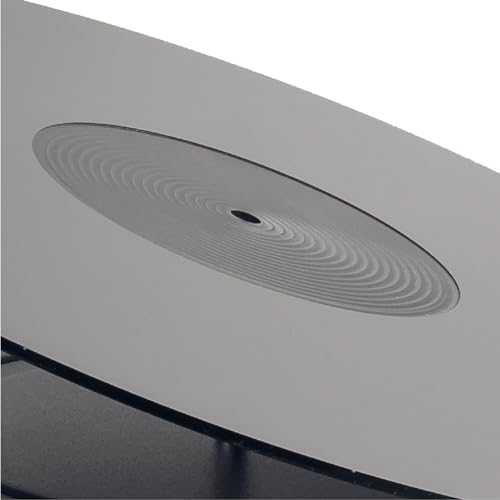
- Acrylic surface supports clearer sound and tighter bass
- Helps control static and micro-vibrations
- CNC-machined with a recessed label area
Best For: Listeners wanting a rigid acrylic upgrade for a standard 12-inch platter
Balanced Vibration Control
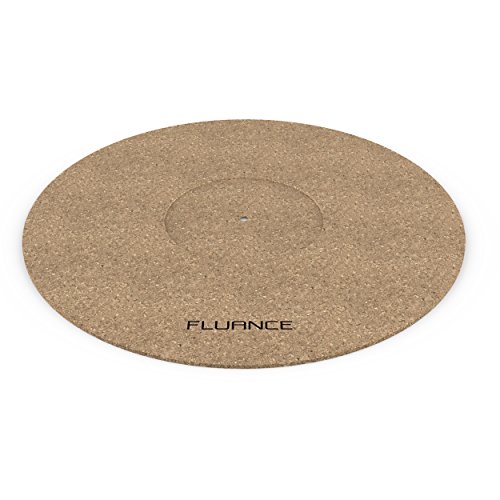
- 3 mm cork dampens micro-vibrations and noise
- Adds traction and helps reduce static
- Fits all 12-inch platters with a label recess
Best For: Felt-mat upgraders seeking cork damping and broad compatibility
Durable Isolation Option
Fluance Silicone Rubber Platter Mat

- Silicone rubber helps damp platter micro-vibrations
- Recessed center keeps LPs flat across label thicknesses
- Durable, non-scratch surface fits standard 12-inch platters
Best For: Listeners wanting a durable rubber mat with dependable isolation
Best Bass Upgrade – PRO SPIN White Acrylic Mat
If you want turntable mats for sound quality with a clean, modern appearance, the PRO SPIN white acrylic mat focuses on reducing static-related noise while supporting a tighter bass response. Its 3mm thickness and 300mm diameter are designed for standard 12-inch platters.
Best For: Listeners seeking a white acrylic mat with bass-focused sound dampening and a contemporary look.
Pros:
- Helps reduce static and crackle for clearer playback.
- Designed to support a fuller, punchier, tighter bass response.
- Fits standard 12-inch platters at 300mm in diameter.
- Anti-static acrylic construction has a sleek white finish.
Cons:
- Its white finish may not suit every turntable setup.
- Compatibility is specified for standard 12-inch platters, so measurements should be checked.
This is a practical choice when sound-dampening and tighter bass are priorities, especially if you also want the mat to make a visual statement.
Best Classic Acrylic Option – Black Acrylic Turntable Mat
This black acrylic mat is a strong option for shoppers comparing turntable mats for sound quality. Its 2.7mm premium acrylic construction is intended to dampen sound, reduce static buildup, and support a tighter bass response on standard 12-inch platters.
Best For: Vinyl listeners wanting a black acrylic slipmat with broad compatibility and static-reduction features.
Pros:
- Helps reduce pops, static, and vibration during playback.
- Supports tighter bass and improved dynamic sound.
- Measures 295mm in diameter for standard 12-inch turntables.
- Compatible with turntables from brands including Audio-Technica, Pioneer DJ, Sony, and Technics.
Cons:
- The 2.7mm thickness may require checking platter and tonearm clearance.
- Specific turntable compatibility should still be confirmed before purchase.
With its understated black finish and sound-dampening design, this mat balances practical playback improvements with a traditional appearance.
Best Resonance Control – Audio-Technica Cork-Rubber Mat
The Audio-Technica AT-SMCR2 takes a different approach to turntable mats for sound quality by combining cork and rubber. The blend is designed to absorb vibration, particularly at lower frequencies, while its added 96g mass helps create a more stable platform for records.
Best For: Record players needing reduced resonance, improved tracking stability, and less static discharge.
Pros:
- Cork and rubber construction absorbs vibration and lower-frequency resonance.
- Added mass can help reduce minor skips and jumps.
- Helps mitigate static buildup, pops, and clicks from static discharge.
- Fits most standard turntables.
Cons:
- At 2mm thick, it may offer a different platter-height change than thicker acrylic mats.
- The cork-and-rubber appearance is less overtly modern than acrylic.
This is the most function-first choice in the group, particularly for listeners who prioritize resonance control and tracking stability over a decorative finish.
Best Record-Label Fit – Break Tradition White Acrylic Mat
For shoppers considering turntable mats for sound quality and record stability, the Break Tradition white acrylic mat combines vibration dampening with a recessed center for the record label. Its 2.5mm thickness and 297mm diameter are designed to fit most turntable platters.
Best For: Vinyl listeners who want acrylic sound dampening plus a center recess to help records stay flat.
Pros:
- Helps reduce static, pops, and unwanted noise.
- Supports tighter bass, improved mid-range, and less splashy sound.
- Record-label recess helps keep records flat on the platter.
- Vibration absorption can improve stylus contact with the grooves.
Cons:
- The 297mm diameter is slightly smaller than a full 300mm mat.
- Compatibility should be checked because the center hole and recess design may not suit every platter.
The label recess gives this mat a useful advantage for records that benefit from a flatter position, while the white acrylic finish adds a modern visual touch.
Best Natural Damping – PRO SPIN Cork Turntable Mat
If you want turntable mats for sound quality with a warm, natural material, this 3mm cork mat is a practical upgrade for a standard 12-inch platter. Its cork construction is designed to reduce static, rumble, humming, and unwanted playback noise while helping records maintain smooth contact.
Best For: Vinyl listeners who want cork-based damping, reduced static, and a vintage look for 33 1/3 and 45 RPM records.
Pros:
- Natural cork construction helps absorb vibration and reduce rumble and humming.
- Designed to reduce static, pops, and dust-related playback distractions.
- 3mm thickness and smooth contact may help support clearer midrange and lower frequencies.
- Retro cork appearance complements vintage-style turntable setups.
Cons:
- The cork finish may not suit modern or minimalist setups.
- It is designed for standard 12-inch records rather than smaller platter formats.
Choose this mat when natural damping and a classic appearance matter more than a highly modern finish. Its combination of cork absorption and anti-static features makes it a sensible sound-focused replacement for a basic slipmat.
Best Budget Rubber Grip – Ywhomal Rubber Turntable Mat
For shoppers comparing turntable mats for sound quality on a budget, this 3mm rubber-silicone mat focuses on stable record support. Non-slip grooves and a recessed label area are designed to help records stay flat during playback, without trimming or turntable modifications.
Best For: Owners of standard 12-inch turntables who want a simple, grippy replacement for an old felt, rubber, or factory mat.
Pros:
- Universal 12-inch fit is listed for many turntable brands and standard platters.
- Non-slip grooves help keep records in place during playback.
- Recessed label area supports flatter record positioning.
- Solid rubber-silicone construction provides a durable, modern black finish.
Cons:
- The rubber material may be less visually distinctive than cork or acrylic.
- Its sound-focused design centers on stability and flat playback rather than advanced resonance tuning.
This is a straightforward choice for replacing a worn or slipping platter mat. Its universal sizing, grip, and label recess make it especially practical for listeners who want an uncomplicated upgrade for everyday records.
Best for Vibration Control – Fluance Acrylic Platter Mat
If your priority is turntable mats for sound quality with a more polished design, the Fluance PM50 uses 3mm acrylic to address unwanted vibration and resonance. Its recessed center helps records sit flat, while the acrylic-and-vinyl combination is designed to reduce static and improve stylus tracking.
Best For: Vinyl enthusiasts seeking acrylic damping, tighter bass response, clearer playback, and a modern frosted appearance.
Pros:
- High-density acrylic is designed to absorb vibration and damp unwanted resonances.
- May support tighter bass, richer midrange, and improved signal clarity.
- Recessed center helps records sit evenly for consistent playback.
- Frosted, semi-transparent finish adds a distinctive visual accent.
Cons:
- Acrylic may be a less traditional choice than felt, rubber, or cork.
- The modern frosted appearance may not match every vintage setup.
The PM50 is the most sound-engineering-focused option of the three, pairing vibration control with static reduction and stable tracking. It is a strong fit when playback clarity and a visually striking platter surface are equally important.
Acrylic Clarity Pick – Hudson Hi-Fi Acrylic Turntable Mat
If you are comparing turntable mats for sound quality, this 3 mm acrylic mat is designed to improve record-to-platter contact while helping control static and micro-vibrations. Its rigid, CNC-machined surface and label recess make it a focused upgrade for compatible 12-inch turntables.
Best For: Listeners seeking a cleaner, more detailed presentation with an acrylic mat that sits directly on the platter.
Pros:
- Acrylic construction is designed to support clearer sound, tighter bass, and improved detail.
- Helps reduce static buildup and unwanted micro-vibrations.
- Precision-machined, flat surface includes a label recess for even record support.
- Fits most standard 12-inch platters and requires no stacking.
Cons:
- Requires removing the existing rubber or felt mat before installation.
- Its 298.5 mm diameter is intended for standard 12-inch platters, not every turntable size.
The Hudson Hi-Fi is a practical choice when you want the rigid, direct-coupling approach of acrylic and a straightforward installation. Confirm platter compatibility and mat clearance before switching.
Balanced Vibration Control – Fluance Cork Turntable Mat
For shoppers evaluating turntable mats for sound quality, the Fluance TA21 uses 3 mm cork to dampen platter micro-vibrations and reduce playback noise. It also adds grip and includes a shallow label recess for broad compatibility with 12-inch platters.
Best For: Vinyl listeners upgrading from a basic felt mat who want cork damping, improved traction, and less static.
Pros:
- Cork construction is designed to dampen micro-vibrations and produce a more detailed signal.
- Insulating cork can help lessen static electricity.
- Improves record-to-platter traction for stable playback.
- Fits all 12-inch diameter platters and includes a 0.5 mm label recess.
Cons:
- The mat requires a grounded turntable for its static-reduction benefit.
- At 3 mm thick, it may change platter height compared with a thinner stock mat.
The TA21 is a versatile cork option with a useful balance of damping, grip, and compatibility. It is especially sensible for replacing a standard felt mat without moving to a rigid acrylic design.
Durable Isolation Option – Fluance Silicone Rubber Platter Mat
This Fluance silicone rubber mat is a durable choice among turntable mats for sound quality, using a flat, non-scratch surface to isolate records from unwanted platter micro-vibrations. Its recessed center helps records sit flat across labels of different thicknesses.
Best For: Record owners who prioritize durable rubber construction, steady traction, and a full, damped presentation.
Pros:
- Silicone rubber helps isolate records from platter micro-vibrations.
- Flat, non-scratch surface is designed for standard 12-inch platters.
- Recessed center helps LPs lay flat regardless of label thickness.
- Durable design conforms to the turntable spindle and supports playback up to 78 rpm.
Cons:
- The rubber design is less focused on the rigid coupling approach of acrylic mats.
- Its 0.1-inch thickness may require checking platter-height clearance on some setups.
The Fluance rubber mat emphasizes dependable handling and vibration damping rather than a specialized material experiment. It is a strong fit when you want a resilient, low-maintenance replacement for a standard platter mat.
How We Picked the Best Turntable Mats for Sound Quality
We focused on materials, thickness, construction, antistatic features, vibration control, and compatibility with standard 12-inch records. The selection includes acrylic mats designed for rigid platter coupling, cork and cork-rubber blends intended to reduce resonance and static, and rubber or silicone options that prioritize grip and damping.
We also considered practical details such as platter clearance, center-hole fit, durability, ease of cleaning, and whether a mat is likely to complement rather than disrupt a turntable’s existing tonearm geometry. A mat is not universally better simply because it is thicker or marketed as audiophile-grade.
Quick Comparison
| Material | Typical Strength | Best For | Potential Trade-Off |
|---|---|---|---|
| Acrylic | Rigid coupling and low static | Clear, detailed playback | May require careful height matching |
| Cork | Natural damping and easy handling | Warm, controlled sound | Can collect dust or wear over time |
| Rubber or silicone | Grip, damping, and durability | Everyday use and vibration control | Sound can vary by platter and record |
| Cork-rubber blend | Balanced damping and stability | General-purpose upgrades | Less specialized than dedicated materials |
Key Buying Factors for Turntable Mats for Sound Quality
Material and Sonic Character
Acrylic mats are often chosen for their rigid, low-static surface and clean presentation. Cork tends to provide a softer interface with useful damping, while rubber and silicone offer strong grip and practical vibration control. Blended materials can be a sensible middle ground if you are unsure which characteristic your system needs.
Thickness and Tonearm Clearance
Check the mat’s stated thickness before buying. Replacing a thin factory mat with a thicker model changes the record’s vertical height and may affect cartridge alignment or vertical tracking angle. A 2mm to 3mm mat is common, but compatibility matters more than the number alone.
Static, Dust, and Record Handling
Antistatic acrylic and rubber options may help reduce crackle and dust attraction, while cork can be easy to lift and handle. No mat eliminates surface noise caused by dirty or damaged records, so regular record cleaning remains important.
Fit and Platter Compatibility
Confirm the diameter, center-hole size, and whether the mat is intended to sit directly on metal, glass, or another platter surface. It should lie flat without rubbing the tonearm, spindle, or platter edge.
Who Should Buy Which Turntable Mats for Sound Quality?
- Choose acrylic if you want a rigid, clean-looking mat with low static and your turntable can accommodate the added height.
- Choose cork if you prefer natural damping, easy record removal, and a cost-effective upgrade.
- Choose cork-rubber if you want a balanced everyday option with both grip and resonance control.
- Choose rubber or silicone if durability, platter grip, and vibration damping matter most.
- Choose a premium branded mat when you want clearly stated dimensions and a better chance of predictable fit with a compatible turntable.
Before purchasing, compare the replacement mat with your original for thickness and diameter. If your turntable already has a well-matched mat, improvements may be subtle; prioritize proper setup, a level surface, clean records, and accurate cartridge alignment alongside the material choice.