The best passive speaker volume controls make it easier to adjust listening levels without adding unnecessary amplification or complicated signal processing. The right choice depends on your connections, speaker layout, and how much control you want at your listening position.
This roundup compares ten options for studio monitoring, home audio, desktop systems, in-wall speakers, and portable line-level setups, with practical buying advice to help narrow the field.
Best 10 Passive Speaker Volume Controls Picks for 2026
Studio Source Selector

- 2x2 source and monitor switching
- Large tactile volume knob
- Sturdy metal studio design
Best For: Desktop studio monitoring and editing suites
Compact Aux Attenuator
Volbox 3.5mm Inline Controller

- Passive 3.5mm stereo attenuation
- Weighted tactile volume knob
- Compact and lightweight design
Best For: Portable and desktop aux audio setups
Balanced Monitor Controller
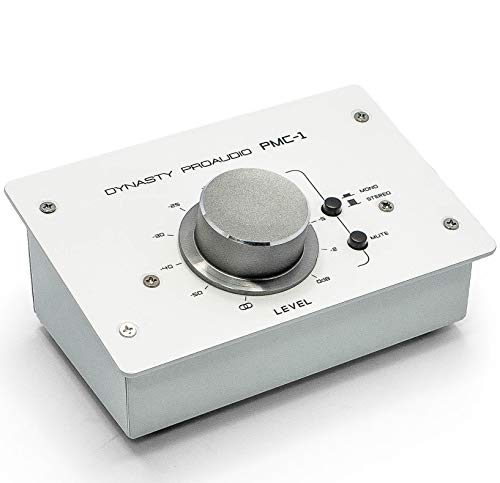
- Large knob for precise attenuation
- Balanced XLR/TRS I/O
- Mute and stereo/mono selection
Best For: Analog studio monitor level control
In-Wall Speaker Control
Pyle PVC1 Wall Mount Volume Knob

- Flush-mount rotary wall plate
- Designed for surround-sound systems
- Includes installation hardware
Best For: Integrated home theater volume adjustment
Compact Hi-Fi Control

- Fully passive RCA volume control
- Smooth ALPS potentiometer
- Compact aluminum enclosure
Best For: RCA-based Hi-Fi systems with active speakers or high-gain amplifiers
Multi-Speaker Wall Control
Pyle PVCD15 In-Wall Controller

- Controls up to two speaker pairs
- Independent left/right adjustment
- Wall-mounted stereo design
Best For: Installed home audio systems with multiple speaker pairs
Studio Fader Precision
Passive XLR Monitor Controller

- Balanced XLR/TRS input and XLR output
- Precise 70 mm volume fader
- No external power required
Best For: Studio monitoring and balanced home audio setups
Simple RCA Control

- Passive RCA volume adjustment
- No power supply required
- Compact aluminum CNC chassis
Best For: Compact indoor RCA audio setups
Precision Attenuation
ALPS Potentiometer RCA Controller

- Fine low-level volume control
- Durable aluminum alloy casing
- Two-channel passive operation
Best For: RCA systems needing precise attenuation
HiFi Line Control

- Stereo RCA input and output
- Mechanical passive volume control
- Compact solid aluminum enclosure
Best For: Simple stereo RCA home audio control
Studio Source Selector – Mackie Big Knob Passive
The Mackie Big Knob Passive is a straightforward choice for passive speaker volume controls in a studio or editing suite. Its large knob provides hands-on level adjustment, while source and monitor-pair switching supports flexible 2×2 setups.
Best For: Studio users who need simple switching between two audio sources and two monitor pairs.
Pros:
- Simple 2×2 source and monitor-pair selection
- Large, classic Big Knob volume control
- Metal construction with a sturdy design
- Includes Pro Tools | First and a 23-plugin Musician Collection
Cons:
- Designed for studio and editing-suite use rather than portable setups
- Provides basic passive control without wireless functionality
Choose this model when dependable, uncomplicated desktop monitoring control matters more than advanced features. Its two-source, two-monitor layout is especially useful for comparing monitoring chains.
Compact Aux Attenuator – Volbox 3.5mm Inline Controller
The Volbox is a compact option for passive speaker volume controls when your setup uses a standard 3.5mm aux connection. Its weighted knob sits inline between compatible audio equipment, providing physical level adjustment without batteries or power.
Best For: Headphones, PC gaming headsets, portable speakers, phones, tablets, and other 3.5mm line-level setups.
Pros:
- Works with standard 3.5mm stereo audio connections
- Passive design requires no power
- Small, lightweight, and travel-ready
- Weighted knob offers tactile adjustment
Cons:
- Limited to 3.5mm stereo connections
- Intended for line-level analog audio rather than balanced studio connections
This is a practical choice for adding a physical volume knob to a compact aux setup. Its usefulness depends on having compatible 3.5mm equipment, but its small footprint makes it easy to place on a desk or carry between locations.
Balanced Monitor Controller – DYNASTY PROAUDIO PMC-1
The DYNASTY PROAUDIO PMC-1 is built for precise passive speaker volume controls between an analog source and active monitors or an amplifier. It combines a large rotary knob with balanced combo XLR/TRS inputs, TRS outputs, and 3.5mm connections for flexible monitoring setups.
Best For: Home or professional monitoring systems that need precise analog level control and balanced connectivity.
Pros:
- Large knob supports fine fingertip level adjustments
- Balanced XLR/TRS inputs and TRS outputs
- Compact metal enclosure designed for durability
- Includes mute and stereo/mono monitoring selection
Cons:
- Requires a wired analog signal path
- More specialized than a basic consumer volume controller
The PMC-1 stands out when balanced connections and monitoring flexibility are priorities. Its passive attenuation and solid metal chassis make it a focused option for controlling levels between an interface or sound card and powered monitors.
In-Wall Speaker Control – Pyle PVC1 Wall Mount Volume Knob
The Pyle PVC1 is a flush-mount option for passive speaker volume controls in home theater and surround-sound installations. Its rotary wall plate is designed to provide convenient in-room adjustment while keeping the control integrated into the wall.
Best For: Home theater and surround-sound systems using a wall-mounted volume adjustment point.
Pros:
- Flush in-wall rotary design
- Includes mounting hardware, wire nuts, and finishing frame
- Compact 3-by-3-inch form factor
- White finish suits common wall-plate installations
Cons:
- Installation is less portable than a desktop controller
- Plastic enclosure may be less rugged than metal alternatives
- Primarily intended for home theater and surround-sound applications
This model makes sense when the volume control needs to become part of the room installation rather than sit on a desk. Verify system compatibility and wiring requirements before fitting it into an existing speaker setup.
Compact Hi-Fi Control – Nobsound Passive Preamp
The Nobsound Hi-Fi Version is a compact choice for passive speaker volume controls when you need straightforward stereo level adjustment between a source and an amplifier or active speakers. Its RCA-only, no-gain design is best suited to systems with a strong output signal and adequate amplifier gain.
Best For: Hi-Fi systems using a DAC, CD player, or PC sound card with active speakers or a high-gain power amplifier.
Pros:
- Fully passive design adds no gain and requires no power source.
- ALPS A50K dual potentiometer provides smooth, precise adjustment.
- Compact aluminum chassis with gold-plated RCA connectors.
Cons:
- Only one RCA input and one RCA output are provided.
- No gain, so it may not suit sources or amplifiers needing signal boost.
This is a focused, low-feature solution for listeners who value a neutral signal path and simple operation. Confirm that your equipment uses RCA connections and provides enough gain before choosing it.
Multi-Speaker Wall Control – Pyle PVCD15 In-Wall Controller
The Pyle PVCD15 is an in-wall option for passive speaker volume controls in a home audio installation. It is designed to handle up to two pairs of indoor or outdoor speakers while allowing independent control of the right and left stereo channels.
Best For: Wall-mounted home audio systems needing dual-channel control for up to two speaker pairs.
Pros:
- Supports up to two pairs of speakers.
- Allows independent right- and left-channel control.
- Wall-mount design suits integrated home audio installations.
- Handles up to 120 watts according to the supplied specifications.
Cons:
- Plastic enclosure is not waterproof.
- Designed for installation rather than portable use.
- Supplied specifications list a 1-ohm impedance, so system compatibility should be checked carefully.
Choose the PVCD15 when installation convenience and multi-speaker routing matter more than portability. Verify the amplifier, speaker wiring, impedance, and power requirements before connecting it.
Studio Fader Precision – Passive XLR Monitor Controller
This passive monitor controller is a strong fit for studio-focused passive speaker volume controls, especially where balanced connections and hands-on fader adjustment are important. It uses XLR/TRS combo inputs and XLR outputs, with no external power required.
Best For: Studio or home audio setups using balanced sources, long cable runs, and powered monitors or other compatible audio equipment.
Pros:
- Balanced combo XLR/TRS inputs and XLR outputs help support clean signal routing.
- Extended 70 mm fader enables precise, smooth level adjustment.
- Passive plug-and-play operation requires no external power.
- Metal construction, gold-plated interfaces, and anti-slip pads support stable use.
Cons:
- Connectivity is centered on balanced XLR/TRS equipment.
- A single fader-based controller may be less suitable for multi-zone speaker systems.
- At about one pound, it is less lightweight than compact basic controllers.
For a desk-based monitoring setup, the long fader and balanced I/O make this a practical choice for controlled, transparent volume changes. Check your source and monitor connections before ordering.
Simple RCA Control – Mini RC11 Volume Controller
TENEALAY RCA Audio Volume Controller, line Volume Control Box, Mini attenuator knob -RC11
Check Price On AmazonThe RC11 is a compact option for passive speaker volume controls when you want quick, hands-on adjustment between RCA-connected audio equipment. Its passive design needs no power and does not amplify the signal, making it a straightforward plug-and-play choice for indoor setups.
Best For: Simple RCA-based volume adjustment in compact home audio or desktop setups.
Pros:
- Adjusts RCA analog volume directly without a power supply.
- Compact aluminum CNC chassis with a lightweight 105 g build.
- Plug-and-play design with RCA input and output sockets.
Cons:
- Provides no amplification function.
- RCA connectivity may not suit systems using other inputs.
The RC11 focuses on convenient, basic attenuation rather than advanced features. Choose it when a small, durable RCA controller is more important than signal boosting or multiple connection formats.
Precision Attenuation – ALPS Potentiometer RCA Controller
This RCA controller is designed for precise passive speaker volume controls, particularly when you need finer adjustment at lower listening levels. Its 100K Ohm ALPS RK27 potentiometer, aluminum casing, and two-channel design make it a feature-rich choice for RCA audio systems.
Best For: Fine-grained volume adjustment with amplifiers, subwoofers, CD players, or studio monitors.
Pros:
- 100K Ohm ALPS RK27 potentiometer supports precise adjustment.
- Full aluminum alloy case is durable and designed to help resist interference.
- Passive, two-channel design requires no external power.
- Rubberized grip helps prevent sliding during operation.
Cons:
- Cannot boost the audio signal.
- Limited to RCA input/output connections.
With its high-precision potentiometer and sturdy enclosure, this model is suited to listeners who want more controlled attenuation than a basic knob provides. Confirm that your system uses compatible RCA connections before buying.
HiFi Line Control – Stereo RCA Analog Attenuator
This stereo RCA attenuator offers a direct way to add passive speaker volume controls to a home audio signal path. It uses a mechanical volume box with two RCA inputs and two RCA outputs, requires no power, and is housed in a compact aluminum case.
Best For: Home audio users who need straightforward stereo RCA level control without amplification.
Pros:
- Provides direct mechanical volume adjustment with no power supply.
- Includes two RCA inputs and two RCA outputs for stereo signal routing.
- Solid aluminum case and knob in a compact design.
- Does not add gain or claim to affect sound quality.
Cons:
- No gain or amplification function.
- RCA-only connectivity limits use with other audio interfaces.
The C3 is a practical, uncomplicated attenuator for a stereo RCA chain. Its two-in, two-out layout is useful when you want inline control while keeping the setup passive and physically compact.
How We Picked These Passive Speaker Volume Controls
We selected products across the main use cases for passive volume adjustment: studio monitor controllers, RCA line-level attenuators, 3.5mm inline controls, and in-wall speaker volume plates. We considered connection type, channel configuration, control design, installation method, likely placement, and the level of adjustment precision each format supports.
Because passive devices do not provide amplification, compatibility matters more than feature count. A controller must match the source and amplifier or powered-speaker inputs, while in-wall models must also suit the speaker wiring and installation environment.
Quick Comparison
- Studio monitors: Choose a dedicated monitor controller with balanced XLR or studio-oriented connections when available.
- RCA home audio: Mini passive preamps and RCA attenuators suit line-level components such as streamers, DACs, and amplifiers.
- Desktop or portable audio: A 3.5mm inline controller is convenient for computers, phones, and powered speakers using an auxiliary connection.
- In-wall speakers: Wall-mounted rotary controls are designed for fixed installations and clean room-level adjustment.
- Multiple speaker pairs: A dual-channel or A/B selector-style unit may be appropriate, but verify its impedance and power-handling specifications first.
Key Buying Factors for Passive Speaker Volume Controls
Connection Type and Signal Path
Check whether the control uses RCA, XLR, 3.5mm, bare speaker wire, or another connector. RCA and 3.5mm products generally operate at line level, while in-wall speaker controls are installed between an amplifier and passive speakers. Do not assume that a line attenuator can replace a speaker-level volume control.
Channels and Speaker Configuration
Stereo listening requires matched left and right attenuation. If you need two zones, two speaker pairs, or an A/B selector, confirm that the unit is designed for that arrangement rather than simply offering two output connectors.
Control Feel and Adjustment Range
A large, smooth knob can be valuable for studio work and careful level matching. For casual listening, a compact knob or wall plate may be more convenient. Look for clear markings and a usable range at normal listening levels.
Impedance, Power, and Compatibility
Passive controls can reduce signal level, but they cannot increase power or correct an underpowered system. Review the manufacturer’s impedance and power guidance, especially for in-wall controls. For powered monitors, confirm that the controller is intended for the input level and connector standard you use.
Installation and Noise Considerations
Desktop units should be stable and easy to reach, while wall plates require compatible electrical boxes, speaker wiring, and suitable installation depth. Good shielding and quality connectors can help reduce hum, but cable layout and the rest of the audio system remain important.
Who Should Buy Which Passive Speaker Volume Controls?
Studio producers and engineers should prioritize a dedicated monitor controller with precise stereo tracking and convenient source or output switching. Home-audio listeners can choose an RCA passive preamp or attenuator when they need simple level control between line-level components. Desktop listeners will typically find a 3.5mm inline controller easiest to install.
Whole-home and in-wall audio users should focus on speaker-level wall controls that match their amplifier, speaker impedance, and wiring layout. If you need to select between speaker pairs, choose a purpose-built selector or dual-channel controller and verify its load requirements before installation.