The best flexible optical audio cables make it easier to connect a TV, soundbar, game console, or receiver when space is tight or the cable must route around furniture. The options in this roundup cover compact short runs, extra-long installations, slim jackets, and right-angle connector designs.
Use the guide below to compare cable length, flexibility, connector clearance, durability, and installation needs before choosing a Toslink cable for your setup.
Best 10 Flexible Optical Audio Cables Picks for 2026
Best Overall
Warrky 6ft Braided Optical Cable

- Japanese Toray core supports high-quality digital audio formats.
- Flexible nylon braid withstands 10,000+ bends.
- CL3-rated and compatible with standard Toslink devices.
Best For: TV-to-soundbar systems and home theaters
Best Long Cable
Warrky 10ft Braided Optical Cable

- Ten-foot length supports longer component runs.
- Braided jacket is flexible and tangle-resistant.
- Supports PCM, Dolby, DTS, and surround sound formats.
Best For: Large entertainment centers and gaming setups
Best Budget Short Cable
Kxable 3ft Optical Audio Cable

- Short length keeps nearby setups tidy.
- Flexible PVC jacket is easy to route.
- Includes connector caps and a one-year warranty.
Best For: Compact TV-to-soundbar connections
Best for Long Runs
20ft KabelDirekt TOSLINK Cable

- 20-foot length for widely spaced components
- Flexible fiber-optic PVC construction
- 36-month manufacturer warranty
Best For: Long-distance TV, soundbar, and receiver connections
Best Slim Design
StarTech 6ft Ultra-Thin Optical Cable

- Ultra-thin, flexible PVC cable
- Six-foot length for typical setups
- Lifetime warranty included
Best For: Clean routing between nearby optical audio components
Best for Compact Setups

- Short length minimizes cable slack
- Flexible, interference-immune fiber optic design
- 24K gold-plated connectors and 36-month warranty
Best For: Nearby TVs, soundbars, consoles, and receivers
Best Long-Reach Pick
iVANKY 10ft Braided Optical Cable

- 10-foot length for flexible component placement
- Toray fiber core supports lossless digital audio
- Braided, CL3-rated construction for durability
Best For: Longer home-theater and gaming connections
Best Slim Routing Option
Adoreen 20ft Ultra-Thin Optical Cable

- 2.2mm profile slips under carpets and through tight spaces
- 20-foot length supports distant connections
- Two-year warranty and protective terminal features
Best For: Concealed, long-distance, or complex cable routing
Best Simple In-Wall Value
Amazon Basics 15ft CL3 Optical Cable
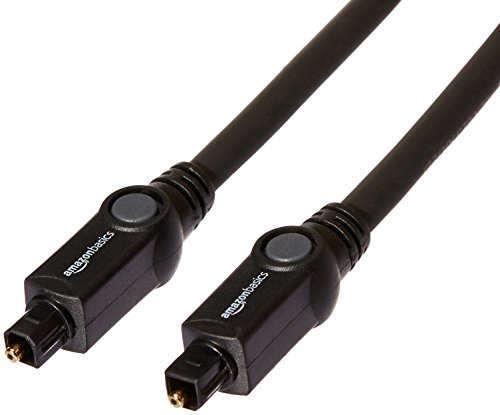
- 15-foot length for flexible component placement
- CL3-rated construction supports in-wall use
- Lightweight PVC jacket and gold-plated connectors
Best For: Straightforward TV, soundbar, and home-theater connections
Best Overall – Warrky 6ft Braided Optical Cable
For shoppers comparing flexible optical audio cables, the 6-foot Warrky offers a strong mix of durability, compatibility, and convenient length. Its Japanese Toray fiber optic core supports uncompressed PCM and several surround-sound formats, while the braided jacket is designed to remain flexible and tangle-free.
Best For: TV-to-soundbar setups, home theaters, and gaming consoles that use standard Toslink ports.
Pros:
- Supports PCM, Dolby Digital Plus, DTS-HD, and 5.1/7.1 surround sound.
- Nylon braid withstands 10,000+ bends and helps resist tangling.
- CL3-rated jacket supports in-wall installation, and the slim housing suits tight spaces.
- Gold-plated connectors provide a snug fit in standard optical ports.
Cons:
- Transmits audio only; video still requires a separate HDMI connection.
- Six feet may be more cable than needed for very short installations.
This is a well-rounded choice when you want a flexible optical audio cable with a useful 6-foot reach, broad device compatibility, and extra installation versatility.
Best for Tight Spaces – EMK 90-Degree Rotating Toslink Cable
The EMK stands out among flexible optical audio cables with a 90-degree plug that can rotate 360 degrees. That design helps route the cable around crowded entertainment centers and reduces severe bending near the optical port.
Best For: Compact setups where a conventional straight optical plug would press against a wall, TV mount, or console.
Pros:
- 90-degree, 360-degree free-rotating plug improves cable routing in narrow spaces.
- Nylon mesh jacket helps protect against kinks and nicks.
- Supports uncompressed PCM and compressed 5.1 to 7.1 surround sound formats.
- Includes an 18-month warranty and 30-day replacement or refund guarantee.
Cons:
- The 3.3-foot length is limited for setups with greater distance between devices.
- The angled connector may be unnecessary where there is ample clearance.
If port clearance is your main concern, this EMK cable’s rotating right-angle design is more useful than simply choosing a longer conventional cable.
Best Long Cable – Warrky 10ft Braided Optical Cable
When a short lead will not reach, this 10-foot Warrky provides extra routing room without giving up the flexible braided construction sought in optical audio cables. It is designed for standard Toslink connections and supports common home-theater and gaming audio formats.
Best For: Longer runs between TVs, soundbars, receivers, gaming consoles, and desktop DACs.
Pros:
- Ten-foot length accommodates distant or carefully routed components.
- Nylon-braided jacket is designed to stay flexible and tangle-free.
- Supports uncompressed PCM, Dolby Digital Plus, DTS-HD, and 5.1/7.1 surround sound.
- CL3-rated construction supports in-wall installation.
Cons:
- Extra length can create unnecessary slack in close-range setups.
- It is intended for optical audio output and does not replace an HDMI video connection.
This is the practical pick for buyers who need reach and routing flexibility, especially for gaming or home-theater layouts where components are not side by side.
Best Budget Short Cable – Kxable 3ft Optical Audio Cable
The Kxable 3-foot model is a straightforward option for short connections. Its flexible PVC jacket makes it easy to route behind a TV or soundbar, while the fiber optic construction is tested for signal transmission and resistance to EMI and RFI interference.
Best For: Close-positioned TVs, soundbars, DVD or Blu-ray players, and gaming systems.
Pros:
- Compact 3-foot length helps avoid excess cable in nearby connections.
- Flexible PVC jacket supports easy routing.
- Removable rubber caps help protect connectors from dust when not in use.
- Includes a one-year warranty and compatibility with common home-theater devices.
Cons:
- Three feet may not reach components placed farther apart.
- The PVC jacket offers less stated bend protection than the braided models in this roundup.
Choose this cable when you need a simple, flexible optical connection for nearby components and do not need the extra reach or CL3-rated construction of the longer options.
Best for Long Runs – 20ft KabelDirekt TOSLINK Cable
For setups where the source and soundbar or receiver are several feet apart, this 20-foot KabelDirekt is a practical choice among flexible optical audio cables. Its fiber-optic construction supports TOSLINK/SPDIF connections while the flexible PVC jacket helps with routing around furniture and home-theater components.
Best For: Long-distance connections between TVs, soundbars, consoles, receivers, and other TOSLINK-equipped devices.
Pros:
- 20-foot length suits widely spaced home-theater equipment.
- Flexible, metal-free PVC fiber-optic design is immune to electrical interference.
- 24K gold-plated connectors resist corrosion.
- Includes a 36-month manufacturer warranty.
Cons:
- The extra-long cable can be more than needed for compact setups.
- It is intended for devices with TOSLINK or S/PDIF optical ports.
Choose this model when cable reach is the priority. Its generous length and flexible jacket make it easier to connect equipment positioned across a room without switching to an electrically conductive audio cable.
Best Slim Design – StarTech 6ft Ultra-Thin Optical Cable
The StarTech THINTOS6 is a six-foot optical SPDIF cable for users who want a compact, flexible connection between compatible audio devices. Its ultra-thin PVC design can be useful when routing a cable behind a media console or through a space where a thicker cable would be inconvenient.
Best For: Neat, mid-length connections between optical-equipped amplifiers, AV receivers, digital audio players, and similar devices.
Pros:
- Ultra-thin construction supports easier cable routing.
- Six-foot length works well for many media-center layouts.
- Male-to-male TOSLINK connectors support optical SPDIF connections.
- Backed by a lifetime warranty.
Cons:
- Six feet may not reach equipment positioned far apart.
- Compatibility is limited to devices with optical audio input ports.
This is a straightforward option when a slim profile matters more than extended reach. It offers the essential male-to-male optical connection without adding unnecessary cable length.
Best for Compact Setups – 3ft KabelDirekt Optical Cable
For short connections between nearby components, this three-foot KabelDirekt is a convenient pick among flexible optical audio cables. It uses male-to-male TOSLINK connectors and a flexible PVC jacket to connect televisions, soundbars, consoles, amplifiers, and other compatible optical equipment.
Best For: Compact media centers where the source and audio device sit close together.
Pros:
- Three-foot length helps reduce excess cable in tight setups.
- Flexible PVC fiber-optic construction is immune to electrical interference.
- 24K gold-plated connectors are corrosion resistant.
- Includes a 36-month manufacturer warranty.
Cons:
- Three feet may be too short for widely separated equipment.
- Requires compatible TOSLINK optical ports.
This cable makes the most sense when devices are positioned close together and a shorter run is easier to manage. It provides a tidy optical link for common TV, soundbar, and home-theater connections.
Best Long-Reach Pick – iVANKY 10ft Braided Optical Cable
For flexible optical audio cables that can span a room without sacrificing durability, the iVANKY 10-foot Toslink cable is a practical choice. Its nylon-braided jacket, Toray fiber core, and CL3 rating suit home theaters, gaming setups, and in-wall routing.
Best For: Longer TV, soundbar, console, and home-theater connections that need flexible routing.
Pros:
- 10-foot length provides extra setup flexibility.
- Japan Toray original fiber core supports lossless digital audio and surround formats.
- Nylon braid is rated to withstand over 16,000 bends.
- CL3 rating supports in-wall installation, while gold-plated connectors resist tarnishing.
Cons:
- Its 10-foot length may be more than needed for compact setups.
- Requires devices with standard Toslink or optical ports.
This is a strong all-around option when you want a durable, flexible cable with extra reach and broad compatibility across TVs, soundbars, receivers, consoles, and DACs.
Best Slim Routing Option – Adoreen 20ft Ultra-Thin Optical Cable
If discreet routing is your priority, the Adoreen is one of the most flexible optical audio cables in this lineup. Its 2.2mm diameter makes it easier to run under carpets or through crowded spaces, while the 20-foot length accommodates distant components.
Best For: Long-distance installations, hidden cable runs, stage systems, and complex entertainment setups.
Pros:
- Ultra-thin 2.2mm design is lightweight and easy to conceal.
- 20-foot length offers substantial placement flexibility.
- Supports PCM and compressed 5.1–7.1 surround formats with low-latency transmission.
- Includes protective caps, reinforced terminals, and a two-year warranty.
Cons:
- The slim construction may not feel as substantial as a thicker braided cable.
- Optical ports are required, and the cable only carries one-way digital audio.
The Adoreen stands out for routing convenience. Choose it when a long, low-profile cable is more important than a heavier jacket or premium-style exterior.
Best Simple In-Wall Value – Amazon Basics 15ft CL3 Optical Cable
The Amazon Basics 15-foot Toslink cable is a straightforward solution for flexible optical audio cables in home entertainment systems. Its lightweight PVC jacket, gold-plated connectors, and CL3 rating make it suitable for connecting a TV, soundbar, receiver, or other compatible audio component.
Best For: Affordable 15-foot TV, soundbar, receiver, and home-theater connections.
Pros:
- 15-foot length helps accommodate wider component layouts.
- CL3-rated, low-smoke construction is suited to in-wall installations.
- Lightweight PVC jacket remains flexible and easy to handle.
- Gold-plated, corrosion-resistant connectors support a clear digital signal.
Cons:
- Compatibility details are less extensive than those listed for the other cables.
- Protective end caps must be removed before use.
This cable is a sensible pick for buyers who want long reach and basic installation flexibility from a recognizable, no-frills option.
How We Picked These Flexible Optical Audio Cables
We selected cables for common home-audio and gaming setups, prioritizing compatibility with standard TOSLINK and S/PDIF optical ports. The lineup includes short 3-foot cables for nearby components, longer 10- and 20-foot options for room-scale routing, ultra-thin designs for narrow spaces, braided jackets for added handling durability, and angled or rotating connectors for difficult port locations.
We also considered practical details such as connector fit, jacket construction, strain relief, rated installation use, and whether the design helps reduce sharp bends. Optical cables carry digital audio through fiber, so correct length and careful routing matter more than cosmetic features alone.
Quick Comparison
- Best for short connections: 3-foot cables are suitable when the TV, soundbar, or source device sits close together.
- Best for tight spaces: Ultra-thin or flexible-jacket cables are easier to route behind televisions and entertainment centers.
- Best for awkward ports: A 90-degree or rotating connector can reduce strain when a device has limited clearance.
- Best for long runs: 10- and 20-foot cables provide more routing freedom, but avoid unnecessary slack and tight bends.
- Best for basic value: A conventional male-to-male Toslink cable is usually all most compatible devices require.
Key Buying Factors for Flexible Optical Audio Cables
Length and Routing
Measure the complete path rather than the straight-line distance between devices. Choose a cable long enough to route cleanly without tension, but not so long that excess cable becomes difficult to manage. For most media consoles, 3 or 6 feet is enough; wall-mounted TVs or separated components may need 10 or 20 feet.
Flexibility and Bend Radius
Look for a cable that can curve naturally behind a TV or cabinet. Flexibility helps during installation, but no Toslink cable should be sharply kinked, crushed, or bent tightly near the connector. Slim jackets save space, while braided coverings may offer better resistance to everyday abrasion.
Connector Clearance
Standard straight connectors work in open installations. If an optical port faces a wall or sits close to another cable, a right-angle or rotating plug may provide a cleaner route and reduce pressure on the device socket.
Compatibility and Protection
Confirm that both components have optical TOSLINK or S/PDIF ports; optical cables do not connect to HDMI ARC, coaxial digital, USB, or analog audio ports. Remove protective caps before installation, insert the plugs fully, and keep the cable ends clean.
Who Should Buy Which Flexible Optical Audio Cables?
Choose a 3-foot model for a compact TV-and-soundbar arrangement, or a 6-foot cable when you need modest routing flexibility. A 10-foot option suits larger entertainment centers and wall-mounted displays. Pick a 20-foot cable only when the equipment is genuinely separated, and consider a slim design if the cable must pass through a narrow gap. For installations with ports pointing toward a wall, an angled or rotating connector can be the most practical choice.