A dependable enclosure can turn an unused SATA hard drive or SSD into practical backup storage without the cost of a new external drive. The right model also makes it easier to reuse older drives, rotate backup media, and expand capacity over time.
These 10 options cover compact 2.5-inch cases, 3.5-inch desktop-drive enclosures, open docking stations, and multi-bay designs. Use the guide below to match the enclosure to your drive size, connection needs, backup routine, and desired level of cooling.
Best 10 Hard Drive Enclosures for Backups Picks for 2026
Best for Quick Drive Swaps
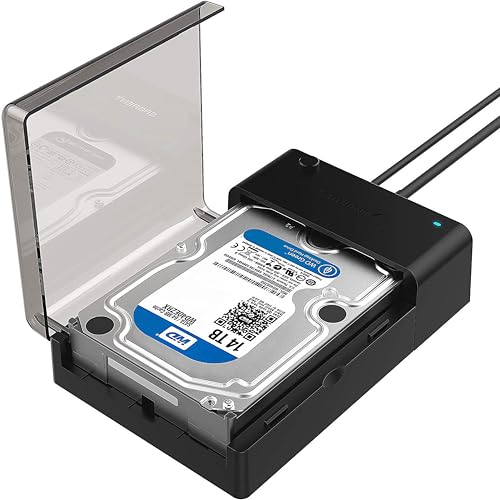
- Accepts bare 2.5-inch and 3.5-inch SATA drives
- Tool-free hot-swapping with USB 3.0
- Includes required 12V adapter for 3.5-inch drives
Best For: Rotating bare SATA drives during backup tasks
Best All-Around SATA Enclosure
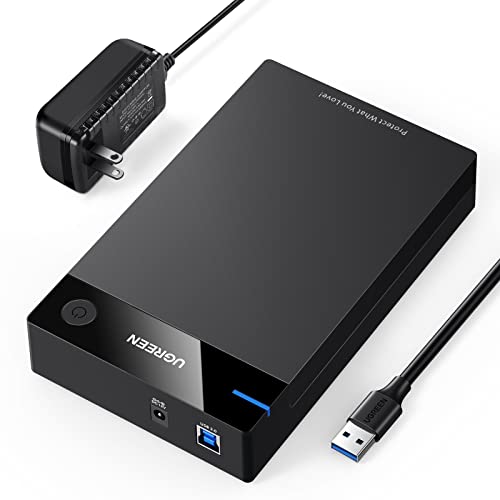
- Supports 2.5-inch and 3.5-inch drives up to 20TB
- Includes USB 3.0 cable and 12V/2A adapter
- UASP support plus shock protection and ventilation
Best For: Mixed-size SATA backup drives
Best for Portable 2.5-Inch Drives
Sabrent Tool-Free 2.5-Inch Enclosure
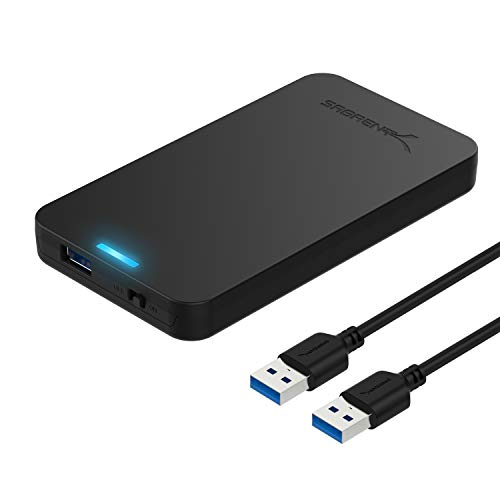
- Designed for standard 2.5-inch SATA HDDs and SSDs
- Tool-free installation with plug-and-play operation
- Compact USB 3.0 enclosure with UASP support
Best For: Portable backups using notebook-size SATA drives
Best Ventilated Dock Design
CLAVOOP 3.5-Inch SATA Enclosure

- Supports 2.5-inch and 3.5-inch SATA drives up to 20TB
- Ventilation, shock protection, and non-slip feet
- Includes 12V adapter, USB cable, LED, and auto-sleep
Best For: Stationary, well-ventilated SATA backup storage
Best Multi-Drive Pick
CENMATE 2-Bay USB 3.0 Enclosure

- Holds two 2.5-inch or 3.5-inch SATA drives
- Tool-free, hot-swappable drive access
- USB-A/C 3.0 and daisy-chain expansion
Best For: Two-drive backup storage and capacity expansion
Best Single-Drive Option
SABRENT USB 3.0 SATA Enclosure
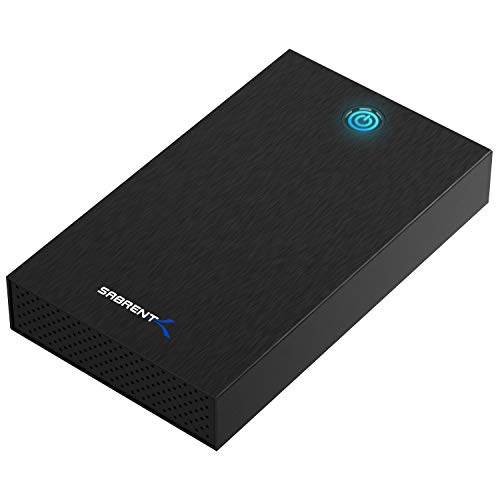
- Fits one 2.5-inch or 3.5-inch SATA drive
- Tool-free setup with UASP support
- Includes a required 12V/2A power adapter
Best For: Single-drive desktop backups
Best Portable 2.5-Inch Pick

- Designed for 2.5-inch SATA drives up to 6TB
- Includes USB-C and USB-A connectivity
- Tool-free, hot-swappable plug-and-play design
Best For: Portable laptop and SSD backups
Best Single-Drive Dock
Aluminum 3.5-Inch USB-C Enclosure

- Supports 2.5- and 3.5-inch SATA drives up to 24TB
- Includes USB-A/USB-C cable and vertical stand
- Aluminum housing with UASP and auto-sleep
Best For: Single-drive backups across computers and compatible consoles
Best Heavy-Duty Pick

- Holds four SATA HDDs or SSDs up to 80TB total
- USB 3.2 Gen 2 delivers up to 10Gbps
- Tool-free, hot-swappable design with cooling fan
Best For: High-capacity multi-drive DAS backup setups
Best Portable Value
Tool-Free 2.5-Inch USB 3.0 Case

- Supports 2.5-inch SATA drives up to 6TB
- Tool-free installation with plug-and-play operation
- Compact transparent case with UASP support
Best For: Portable backups and repurposing laptop SATA drives
Best for Quick Drive Swaps – Sabrent SATA Drive Dock
For backups involving bare SATA drives, this Sabrent docking station offers a simple, tool-free way to connect either a 2.5-inch or 3.5-inch HDD or SSD. It is one of the more convenient hard drive enclosures for backups when you regularly rotate drives, though its USB Type-A connection and SATA-only design require attention before ordering.
Best For: Users who need a lay-flat, hot-swappable dock for bare 2.5-inch or 3.5-inch SATA drives.
Pros:
- Supports SATA I/II/III HDDs and SSDs in both 2.5-inch and 3.5-inch sizes.
- Tool-free, plug-and-play design supports drive swaps without rebooting.
- USB 3.0 with UASP support and an included 12V/2A adapter.
- Works with Windows 10/11, macOS, and Linux without additional drivers.
Cons:
- Does not support IDE/PATA, M.2, SAS, or drives already inside a USB enclosure.
- The host connection is USB Type-A, so USB-C-only computers need an adapter.
- 3.5-inch drives require a wall outlet and the included power adapter.
This is a practical choice for backup workflows that involve bare SATA disks and frequent drive changes. Confirm the drive connector and computer ports first, and remember that S.M.A.R.T. diagnostics do not pass through the USB bridge.
Best All-Around SATA Enclosure – UGREEN 2.5/3.5-Inch SATA Case
The UGREEN external hard drive enclosure is designed for 2.5-inch and 3.5-inch SATA HDDs and SSDs, making it a flexible option for home backup storage. Its USB 3.0 connection, UASP support, included power adapter, and protective interior features provide a balanced setup for connecting large-capacity drives.
Best For: Backup users who want one enclosure for both 2.5-inch and 3.5-inch SATA drives, including drives up to 20TB.
Pros:
- Supports 2.5-inch and 3.5-inch SATA I/II/III HDDs and SSDs up to 20TB.
- USB 3.0 and UASP support provide up to 5Gbps interface speeds.
- Includes a 12V/2A power adapter and USB 3.0 A-to-B cable.
- Rubber strips, ABS construction, and ventilation openings help protect and cool the drive.
Cons:
- It is limited to SATA drives and does not accommodate other drive interfaces.
- 3.5-inch drives require external power from the included adapter.
- Safely eject the drive before unplugging to reduce the risk of data loss.
For mixed-drive households, this UGREEN model is a versatile pick among hard drive enclosures for backups. It is particularly useful if you alternate between notebook-size drives and larger desktop drives, while its console compatibility adds flexibility beyond computer backups.
Best for Portable 2.5-Inch Drives – Sabrent Tool-Free 2.5-Inch Enclosure
This compact Sabrent enclosure turns a 2.5-inch SATA notebook HDD or SSD into a portable USB 3.0 drive. Its tool-free installation and bus-powered design make it a straightforward choice for laptop-drive upgrades, file transfers, and lightweight backup setups where 3.5-inch drive support is unnecessary.
Best For: Users backing up or reusing a single 2.5-inch SATA HDD or SSD in a compact enclosure.
Pros:
- Tool-free design makes drive installation quick and simple.
- USB 3.0 supports up to 5Gbps, with UASP optimization for compatible systems.
- Compact, lightweight enclosure is suitable for portable backup use.
- Plug-and-play and hot-swappable operation requires no drivers.
Cons:
- Supports only standard 2.5-inch SATA drives, not 3.5-inch disks or other interfaces.
- Its listed operating-system support is older, including Windows XP through Windows 8 and Mac OS X or later.
- USB 2.0 connections reduce the interface speed to up to 480Mbps.
If your backup drive is a standard 2.5-inch SATA model, this is a compact and uncomplicated option. It is less suitable for desktop-size drives, but its small footprint makes it convenient for portable hard drive enclosures for backups.
Best Ventilated Dock Design – CLAVOOP 3.5-Inch SATA Enclosure
The CLAVOOP 3.5-inch enclosure combines a lay-flat dock format with broad 2.5-inch and 3.5-inch SATA support. Large ventilation openings, shock-absorbing interior sponges, non-slip pads, an activity LED, and auto-sleep functionality make it a feature-rich option for backup drives that may remain connected for extended periods.
Best For: Users who want a ventilated, stationary enclosure for 2.5-inch or 3.5-inch SATA backup drives up to 20TB.
Pros:
- Supports 2.5-inch and 3.5-inch SATA I/II/III HDDs and SSDs up to 20TB.
- USB 3.0 with UASP support and reported tested read speeds up to 336MB/s.
- Includes a 12V/2A power adapter, USB cable, LED indicator, and auto-sleep function.
- Ventilation openings, shock-proof sponges, and non-slip feet support stable operation.
Cons:
- Not compatible with IDE, mSATA, or M.2 drives.
- 3.5-inch drives require the included external power adapter.
- Actual transfer speeds depend on the connected drive and host system.
This CLAVOOP model is appealing when cooling, stability, and drive-status visibility matter in a backup station. As with other SATA hard drive enclosures for backups, verify your disk interface before buying and use the supplied power adapter for 3.5-inch drives.
Best Multi-Drive Pick – CENMATE 2-Bay USB 3.0 Enclosure
For backup setups that need more than one drive, this CENMATE enclosure is a flexible choice among hard drive enclosures for backups. It supports two 2.5-inch or 3.5-inch SATA HDDs or SSDs, offers USB-A and USB-C connectivity, and provides tool-free access for convenient drive changes.
Best For: Individuals or small businesses managing two SATA drives and expanding external storage.
Pros:
- Dual-bay design supports two 2.5-inch or 3.5-inch SATA drives, up to 20TB per drive.
- Tool-free trays and hot swapping simplify drive installation and replacement.
- Aluminum construction and a built-in fan help with heat management.
- USB 3.0 supports transfer rates up to 5Gbps, with daisy-chain expansion available.
Cons:
- It is a DAS enclosure with no RAID or NAS functionality.
- The fan operates around 40–50 decibels, which may be noticeable in quiet spaces.
Choose this model when two-drive capacity and convenient swapping matter more than built-in RAID. Its cooling fan and broad operating-system compatibility make it practical for larger backup collections, provided you are comfortable with some fan noise.
Best Single-Drive Option – SABRENT USB 3.0 SATA Enclosure
This SABRENT enclosure is a straightforward option for turning one 2.5-inch or 3.5-inch SATA drive into external backup storage. Its tool-free design, aluminum shell, UASP support, and included power adapter make it suitable for desktop backup workflows.
Best For: Users who need a compact enclosure for one SATA HDD or SSD and have access to a wall outlet.
Pros:
- Supports both 2.5-inch and 3.5-inch SATA HDDs and SSDs.
- Tool-free setup allows quick drive installation and swapping.
- USB 3.0 with UASP supports up to 5Gbps theoretical transfer speeds.
- Aluminum housing and an internal shock-absorbing tray add durability and heat dissipation.
Cons:
- Only one drive is supported.
- Requires the included 12V/2A AC adapter and is not USB bus-powered.
- It uses USB-A, so USB-C-only computers need an adapter that is not included.
For a single-drive backup enclosure, the SABRENT keeps installation simple and provides useful physical protection. Check your drive dimensions and host ports before buying, especially if you plan to connect it to a USB-C-only computer.
Best Portable 2.5-Inch Pick – BENFEI USB-C/A SATA Enclosure
For portable backup drives, the BENFEI enclosure is designed specifically for 2.5-inch SATA HDDs and SSDs. Its integrated USB Type-C/Type-A connection, tool-free installation, and compact design make it convenient for moving files between computers and compatible devices.
Best For: Laptop users and anyone reusing a 2.5-inch SATA drive for portable backups.
Pros:
- Supports 2.5-inch SATA I/II/III drives up to 6TB and 7/9.5mm thick.
- USB Type-C and Type-A connectivity improves connection flexibility.
- Tool-free, plug-and-play installation requires no driver.
- UASP support enables transfer rates up to 5Gbps and the enclosure is hot-swappable.
Cons:
- It supports only one 2.5-inch drive.
- It is not designed for 3.5-inch drives or capacities above 6TB.
- The integrated cable design may be less convenient if you need a different cable length.
The BENFEI is a practical choice when portability and USB-C compatibility are priorities. Confirm that your drive is a supported 2.5-inch SATA model and within the stated thickness and capacity limits before using it for backups.
Best Single-Drive Dock – Aluminum 3.5-Inch USB-C Enclosure
For backups using a single 3.5-inch SATA drive, the RSHTECH enclosure combines broad host compatibility with an aluminum housing, a detachable USB-A/USB-C cable, and support for drives up to 24TB. Its vertical stand also helps conserve desk space.
Best For: Desktop, laptop, gaming-console, and smart-TV users backing up one 2.5- or 3.5-inch SATA drive.
Pros:
- Supports one 2.5- or 3.5-inch SATA HDD or SSD up to 24TB.
- Includes a 2-in-1 3.3-foot USB-A/USB-C cable for flexible connections.
- Aluminum housing, bottom vents, removable stand, and automatic sleep mode.
- UASP support and data transfer speeds of up to 5Gbps via USB.
Cons:
- Holds only one drive, so it is less suitable for multi-drive backup workflows.
- Designed for SATA drives rather than other drive interfaces.
This is a practical single-drive choice when capacity, flexible connectivity, and a stable desktop setup matter more than RAID or multi-bay expansion.
Best Heavy-Duty Pick – 4-Bay 10Gbps Enclosure
For larger backup collections, the CENMATE 4-bay enclosure accommodates up to four 2.5- or 3.5-inch SATA HDDs or SSDs and provides USB 3.2 Gen 2 connectivity. Its tool-free, hot-swappable design makes changing drives convenient, while the built-in fan helps manage heat.
Best For: Individuals and businesses consolidating multiple SATA drives into a high-capacity external storage system.
Pros:
- Four bays support a combined capacity of up to 80TB, with up to 20TB per drive.
- USB 3.2 Gen 2 supports transfer rates up to 10Gbps under suitable conditions.
- Tool-free installation and hot swapping simplify drive replacement.
- Aluminum construction and a built-in 2-inch fan support cooling.
Cons:
- It is a DAS enclosure with no RAID or NAS functionality.
- The fan produces approximately 40–50 decibels of noise.
- Its larger four-bay design takes more desk space than a single-drive enclosure.
This model is the strongest fit for capacity-focused backup setups that need several independent drives, provided fan noise and the lack of RAID or NAS are acceptable.
Best Portable Value – Tool-Free 2.5-Inch USB 3.0 Case
The ORICO 2139U3 is a compact option for backups from a spare 2.5-inch SATA HDD or SSD. Its tool-free installation, transparent case, included USB-A cable, and plug-and-play operation make it easy to turn an existing laptop drive into portable external storage.
Best For: Portable backups, file transfers, and repurposing one 2.5-inch SATA drive for use with PCs, laptops, TVs, or PS4 systems.
Pros:
- Tool-free, plug-and-play installation requires no driver.
- Supports 2.5-inch 7mm and 9.5mm SATA drives up to 6TB.
- Transparent enclosure lets you see the installed drive without opening it.
- USB 3.0 with UASP offers up to 5Gbps and is backward compatible with USB 2.0 and 1.1.
Cons:
- Supports only one 2.5-inch drive and up to 6TB.
- Plastic construction provides less substantial protection than an aluminum enclosure.
- Includes a USB-A cable rather than a USB-C cable.
Choose this enclosure when portability and simple drive reuse are priorities. It is a straightforward fit for smaller backup jobs, especially if your source drive is already a 2.5-inch SATA model.
How We Picked the Best Hard Drive Enclosures for Backups
We compared these enclosures by drive compatibility, connection type, installation method, cooling, portability, and multi-drive support. For backup use, we prioritized designs that make drives easy to install and remove while offering stable USB connectivity and useful protection around the drive.
We also considered whether each enclosure is better suited to occasional drive cloning, everyday external storage, or a larger backup setup with multiple disks. Compatibility details matter, so verify the supported SATA format, drive height, capacity guidance, and included cables before buying.
Quick Comparison
- Best for occasional drive access: A docking station lets you insert bare 2.5-inch or 3.5-inch SATA drives without mounting them in a case.
- Best for portability: A tool-free 2.5-inch enclosure is compact and usually works well with laptop hard drives and SATA SSDs.
- Best for desktop backups: A dedicated 3.5-inch enclosure typically includes an external power supply needed by larger HDDs.
- Best for multiple drives: Two- and four-bay enclosures simplify access to several disks but require more desk space and careful airflow planning.
- Best for newer computers: USB-C models reduce adapter dependence, though actual performance still depends on the host port and cable.
Key Buying Factors for Hard Drive Enclosures for Backups
Drive Size and Power
Confirm whether you need a 2.5-inch enclosure, a 3.5-inch enclosure, or support for both. Most 2.5-inch SATA SSDs and laptop drives can draw power over USB, while 3.5-inch HDDs generally need a separate power adapter.
USB Speed and Connector
USB 3.0 is sufficient for many hard-drive backups, but USB 3.2 Gen 2 can shorten transfers when paired with a fast SSD and compatible computer. Check whether the enclosure uses USB-A, USB-C, or both, and remember that the slowest component sets the real-world speed.
Cooling and Sustained Transfers
Large HDDs can become warm during long backups. Aluminum bodies may help dissipate heat, while fan-equipped multi-bay models are more appropriate for repeated or simultaneous transfers. Keep ventilation clear and avoid stacking heat-producing devices.
Installation and Protection
Tool-free covers are convenient for drive swaps, but a secured internal mount can be preferable for a drive that stays connected. Look for stable feet, a robust enclosure shell, and a cable that fits securely.
Who Should Buy Which Hard Drive Enclosures for Backups?
Choose a compact 2.5-inch case if you are repurposing a laptop drive or SATA SSD and want a portable backup. Select a 3.5-inch enclosure or dock for full-size desktop HDDs. A dock is ideal for rotating bare drives, cloning, or recovery work, while a closed case is better for a disk that remains attached.
For photographers, small offices, and users managing several backup disks, a two- or four-bay enclosure can reduce cable clutter and speed up drive access. However, multi-bay hardware is not automatically a RAID system; check the specifications carefully if redundancy, independent drive access, or enclosure-level data management is important. Regardless of model, maintain at least one additional backup copy disconnected or stored elsewhere.