Choosing the right amplifier can make a home studio sound cleaner, louder, and more controlled without adding unnecessary noise or distortion.
This roundup focuses on practical, buyer-friendly picks that suit different studio setups, from compact desktop rigs to rack-mounted systems.
Best 10 Power Amplifiers for Home Studios Picks for 2026
Wireless Desktop Amp
Fosi Audio BT20A Pro Bluetooth 5.0 Amplifier
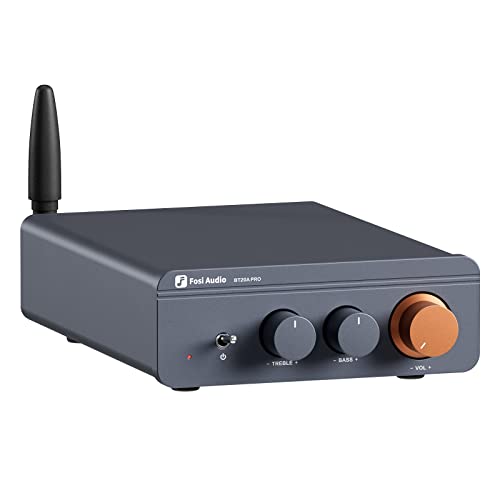
- 300W x 2 output for passive speakers
- Bluetooth 5.0 with memory pairing
- Bass/treble control plus swappable op-amps
Best For: Small home studio or desktop passive speaker setups
Reference Rack Power
Behringer A800 Professional 800 Watt Amplifier

- 2 x 400W into 4 ohms
- Convection cooling for quiet operation
- Bridged mono mode with clip indicators
Best For: Passive monitor setups in a home studio rack
Integrated Audiophile Choice
Yamaha A-S801BL Natural Sound Amplifier

- 100W + 100W stereo output
- USB DAC with DSD and high-res PCM support
- Optical, coaxial, phono, and analog inputs
Best For: Integrated studio-and-hi-fi setups with multiple sources
Rackmount DJ Power
Rockville RPA5 2-Channel Power Amplifier
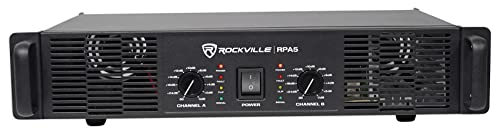
- 200W RMS per channel at 4 ohms
- Built-in crossover with stereo/mono switching
- 2U rackmount design with XLR, RCA, and Speakon outputs
Best For: Rack-based studio or DJ-style passive speaker setups
Compact Bluetooth Stereo Amp

- Bluetooth, RCA, USB, SD, and FM inputs
- 200W peak / 100W RMS continuous output
- Bass, treble, mic volume, and remote control
Best For: Small home studio or desktop audio setups
Pro Rack Power Workhorse
Crown XLi800 2-Channel Amplifier

- 300W continuous per channel at 4 ohms
- 600W maximum bridged output
- Forced air cooling and flexible I/O
Best For: Rack-mounted home studio or pro audio setups
High-Power Rack Mixer Amp
Pyle PTA1000BT Bluetooth Amplifier

- 2000W max bridged or 1000W per channel
- Bluetooth, TRS, XLR, SpeakOn, and USB-A inputs
- Rack-mountable with cooling fan and LCD
Best For: High-output home studio or rack audio setups
Clean Hi-Res 2.1 Pick
Fosi Audio BT20A MAX Stereo Power Amplifier
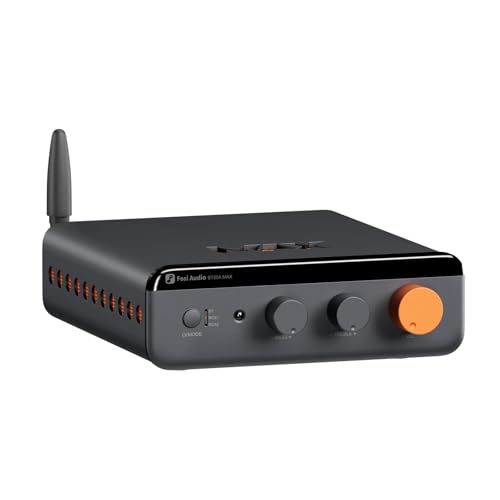
- Low-distortion stereo amp with high SNR.
- Bluetooth 6.0 supports LDAC and aptX codecs.
- Includes dual RCA, sub output, remote, and tone controls.
Best For: Home studios and compact listening setups with passive speakers and a subwoofer
Feature-Packed Karaoke Amp
Pyle 6-Channel Bluetooth Home Amplifier

- 750W peak power for multi-speaker use.
- Two mic inputs with talk-over for paging and karaoke.
- Bluetooth, USB, micro SD, AUX, FM, and RCA inputs.
Best For: Karaoke setups, PA-style home audio, and multi-source rooms
Budget Multi-Input Amp
Donner Bluetooth 5.0 Stereo Audio Amplifier

- 4-channel amp with 440W peak output.
- Bluetooth 5.0, USB, SD, RCA, AUX, and FM inputs.
- Dual mic jacks with independent controls.
Best For: Budget users needing a flexible amp for home audio or karaoke
Wireless Desktop Amp – Fosi Audio BT20A Pro Bluetooth 5.0 Amplifier
If you want compact power amplifiers for home studios that can also handle casual playback, the Fosi Audio BT20A Pro is a flexible pick. Its TPA3255-based design delivers strong output for passive speakers, while Bluetooth 5.0, bass and treble controls, and swappable op-amps give you room to tailor the setup to your space.
Best For: Desktop or small-room setups that need a compact amp with tone control and Bluetooth convenience.
Pros:
- 300W x 2 output for passive speakers
- Bluetooth 5.0 with pairing memory and disconnect option
- Bass and treble controls for basic sound shaping
- Replaceable op-amps for customization
Cons:
- Focused on simple stereo amplification rather than studio routing features
- Requires passive speakers to use
- Best suited to compact listening and monitoring setups
For home studios that need an affordable, space-saving amplifier, this model offers a practical mix of power and convenience. The adjustable tone controls and customizable op-amp design make it more adaptable than many basic mini amps.
Reference Rack Power – Behringer A800 Professional 800 Watt Amplifier
Among power amplifiers for home studios, the Behringer A800 stands out if you want a straightforward reference-class amp for passive monitors or other speakers. It is built for recording studios, post-production, and live sound, with 2 x 400 watts into 4 ohms, bridged mono capability, and convection cooling for quiet operation.
Best For: Studio users who want a rack-ready amplifier for passive monitors and clean, quiet operation.
Pros:
- 2 x 400W into 4 ohms for substantial output
- Bridged mono mode for added flexibility
- Convection cooling supports noise-free operation
- Clip indicators and level meter help monitor performance
Cons:
- Rack form factor is less compact than mini desktop amps
- Designed around passive speakers rather than powered monitors
- More amplifier than a simple all-in-one home audio solution
If you need a dependable amp with studio-oriented features, this one is built to stay out of the way and do the job. Its quiet cooling and monitoring tools make it a strong fit for more serious home-studio playback chains.
Integrated Audiophile Choice – Yamaha A-S801BL Natural Sound Amplifier
If your home studio setup needs one of the more versatile power amplifiers for home studios, the Yamaha A-S801BL combines integrated stereo amplification with useful digital inputs. It delivers 100W plus 100W, includes USB DAC support for high-resolution audio formats, and adds optical, coaxial, phono, and analog inputs for broader system integration.
Best For: Users who want an integrated stereo amp with DAC features and multiple input options.
Pros:
- 100W + 100W output for stereo playback
- USB DAC supports DSD and high-resolution PCM
- Optical, coaxial, phono, and analog inputs
- Speaker A/B and A+B switching for flexible routing
Cons:
- Bulkier and heavier than compact mini amplifiers
- Less focused on rack-style pro audio use
- Overkill if you only need a simple power amp
This is a strong choice when your studio listening chain also doubles as a serious home audio setup. The built-in DAC and broad input selection make it easy to connect different sources without extra gear.
Rackmount DJ Power – Rockville RPA5 2-Channel Power Amplifier
For home studios that need more rugged power amplifiers for home studios and event-style flexibility, the Rockville RPA5 is built around a rack-mountable 2U design. It offers 200W RMS per channel at 4 ohms, bridged operation, a built-in crossover, and multiple input and output options for adapting to different speaker setups.
Best For: Rack systems that need a versatile stereo or bridged amplifier with broad connectivity.
Pros:
- 200W RMS per channel at 4 ohms
- Bridged mode with up to 400W RMS at 8 ohms
- Built-in crossover and stereo/mono switching
- Rack-mountable 2U chassis with handles
Cons:
- Larger than compact desktop amplifiers
- More utility-focused than audiophile-oriented
- Best matched to passive speakers and pro-style gear
If your setup needs practical connectivity and rack-friendly hardware, the RPA5 is designed to be easy to integrate. Its cooling, protection circuitry, and flexible I/O make it a solid fit for demanding use.
Compact Bluetooth Stereo Amp – Pyle 200W Home Audio Receiver
If you want power amplifiers for home studios with simple wireless playback and basic mic control, this Pyle stereo amp is a practical budget pick. It offers Bluetooth streaming, RCA input, USB/SD playback, and FM radio, plus front-panel EQ controls for bass, treble, and master volume.
Best For: Small home studio or desktop setups that need a compact amp with Bluetooth and multiple playback inputs.
Pros:
- 200W peak power and 100W RMS continuous power for two speakers
- Bluetooth, RCA, USB, SD, and FM support for flexible source options
- Mic inputs plus bass, treble, and master volume controls
- LED display and remote control included for convenient operation
Cons:
- Only a 2-channel design, so it is not for larger multi-speaker systems
- Peak power rating is more ambitious than the continuous RMS output
- Built for general home audio use rather than a dedicated studio monitor amp
For a home studio where convenience matters more than heavy-duty output, this amp covers the basics well. It is strongest as a compact all-in-one receiver for casual monitoring, playback, and microphone use.
Pro Rack Power Workhorse – Crown XLi800 2-Channel Amplifier
Crown XLi800 Two-channel, 600-Watt Bridged 8Ω Power Amplifier. Professional DJ, PA, Stage Amp. Black
Check Price On AmazonAmong power amplifiers for home studios, the Crown XLi800 stands out for users who want a more professional rack-style unit with solid continuous output. It delivers 300W continuous per channel at 4 ohms, supports bridged operation up to 600W maximum, and includes forced air cooling with flexible I/O.
Best For: Home studio owners who want a rack-mountable pro amplifier with straightforward high-output stereo or bridged use.
Pros:
- 300W continuous per channel at 4 ohms
- 600W maximum bridged output for higher-power applications
- Forced air cooling helps manage heat during longer sessions
- Flexible input/output setup in a rugged rack-style format
Cons:
- Larger and heavier than compact desktop amps
- Does not include Bluetooth or media playback features
- More of a pro audio amp than a feature-rich home receiver
This is the most straightforward performance-first option in the group. If you need reliable rack-mounted amplification without extra consumer features, the XLi800 is built for that job.
High-Power Rack Mixer Amp – Pyle PTA1000BT Bluetooth Amplifier
If you need power amplifiers for home studios that can also handle bigger signal chains, the Pyle PTA1000BT offers a lot of connectivity in a rack-mountable design. It features Bluetooth, TRS and XLR inputs, SpeakOn outputs, USB-A playback, bridge mode, and built-in cooling fans.
Best For: Users who want a high-output rack amplifier with modern input options and bridged mode flexibility.
Pros:
- Up to 2000W max in bridged mode or 1000W per channel in stereo
- Bluetooth plus TRS, XLR, SpeakOn, and USB-A support
- Front panel LCD and status LEDs for easier monitoring
- Built-in cooling fan helps control heat during heavier use
Cons:
- Higher power than many small home studio setups need
- Rack form factor is less compact than desktop-style amps
- Feature set is broad, which may be more than a basic monitor rig requires
This amp is the most connectivity-heavy choice here, with enough output for more demanding setups. It makes sense when you want a rack unit that can bridge power, stream wirelessly, and accept pro-style inputs.
Clean Hi-Res 2.1 Pick – Fosi Audio BT20A MAX Stereo Power Amplifier
If you’re comparing power amplifiers for home studios, the Fosi Audio BT20A MAX stands out for clean playback, flexible tuning, and simple 2.1 system building. It pairs a TPA3255-based design with PFFB technology, low distortion, and high-SNR performance, so it makes more sense for monitoring-focused listening than for flashy features.
Best For: Home studios and compact listening setups that need a clean stereo amp with subwoofer support.
Pros:
- Ultra-low distortion and high SNR for a cleaner signal path.
- Bluetooth 6.0 with LDAC, aptX Lossless, aptX HD, and other high-res codec support.
- Dual RCA inputs plus dedicated subwoofer output for 2.1 setups.
- Remote control, tone/bypass modes, 12V trigger input, and HPF adjustment add practical control.
Cons:
- Best used with passive speakers; it is not a full studio interface or mixer.
- At extended peak power, the fan will ramp up as part of normal cooling operation.
Overall, this is the most refinement-focused option here, especially if you want a compact amplifier that keeps noise low and gives you useful tuning tools. It fits better in a home studio or desktop audio chain than a feature-heavy all-in-one receiver.
Feature-Packed Karaoke Amp – Pyle 6-Channel Bluetooth Home Amplifier
For buyers looking at power amplifiers for home studios with more of a utility-first approach, the Pyle 6-channel model leans into inputs, mic handling, and room-filling output. Its 750W peak rating, Bluetooth streaming, USB/micro SD playback, and multiple RCA and microphone connections make it more of a flexible all-purpose amp than a minimalist monitoring choice.
Best For: Karaoke setups, multi-speaker rooms, and home audio spaces that need microphones and lots of input options.
Pros:
- 750W peak output with support for multiple 4-8 ohm speakers.
- Bluetooth streaming plus USB, micro SD, AUX, FM radio, and RCA/subwoofer connections.
- Two microphone inputs and talk-over function for announcements or paging.
- Includes remote control and integrated equalizer controls.
Cons:
- More of a general-purpose PA/home entertainment amp than a focused studio amplifier.
- Its large feature set may be unnecessary if you only need simple stereo playback.
This is a good pick if your setup needs microphone support and lots of source flexibility in one box. It is less about precision monitoring and more about being a practical control hub for bigger home audio tasks.
Budget Multi-Input Amp – Donner Bluetooth 5.0 Stereo Audio Amplifier
If you want power amplifiers for home studios that prioritize connectivity over complexity, the Donner MAMP5 offers a straightforward mix of stereo output, Bluetooth 5.0, and multiple wired inputs. Its 4-channel design, tone controls, and dual mic jacks make it a practical option for basic home audio rooms, rehearsal spaces, or studio-adjacent setups.
Best For: Budget-minded users who need a flexible amp for home audio, basic studio use, or karaoke.
Pros:
- 4-channel design with independent control and 440W peak power.
- Bluetooth 5.0 for more stable connections and up to 40+ feet of range.
- Multiple inputs including USB, SD, RCA, AUX, and FM radio.
- Dual 1/4-inch mic jacks with separate controls for events or karaoke.
Cons:
- Remote control only adjusts MP3, BT, and FM volume.
- Requires passive speakers to play audio.
The MAMP5 is best viewed as a flexible budget amplifier rather than a dedicated studio monitor amp. It offers a lot of source compatibility and mic support for the money, which can be valuable if your room does double duty.
How We Picked the Best Power Amplifiers for Home Studios
We focused on Power Amplifiers for Home Studios that balance clean output, usable connectivity, sensible form factor, and overall value. For studio use, the goal is not just raw wattage; it is stable performance, low noise, and enough headroom to drive your monitors or passive speakers comfortably.
We also favored models with straightforward inputs, dependable build quality, and features that make real-world setup easier, such as Bluetooth for convenience, rack-mount support for studio installs, or integrated controls for flexible use.
Quick Comparison
In general, compact Class D amps are best for small desktop studios, while heavier-duty rack units are better for larger rooms, passive monitor setups, or multi-use spaces. Integrated stereo amplifiers can be a better fit if you want a more versatile listening system that is not strictly limited to monitoring.
If you need the simplest path, choose a compact two-channel amp. If you need more output or plan to power multiple sources, look at rackable or high-headroom models. Matching the amp to your speakers matters more than chasing the biggest power number.
Key Buying Factors for Power Amplifiers for Home Studios
Power and Headroom
Check continuous output, not just peak wattage. Your amp should provide enough clean headroom for your speaker sensitivity and room size without being pushed into distortion.
Noise Floor and Signal Quality
For studio monitoring, low hiss and clean signal handling are essential. Look for an amp that stays quiet at idle and does not color the sound more than you want.
Inputs and Connectivity
RCA, XLR, TRS, and speaker outputs all matter depending on your setup. The best choice is the one that connects cleanly to your interface, mixer, or controller without extra adapters.
Size, Cooling, and Placement
Compact amps work well on desks, but rack-mount units may be better for organized studio furniture or shared audio setups. Adequate ventilation is important if you plan long sessions.
Use Case Fit
Some Power Amplifiers for Home Studios are better for pure monitoring, while others double as casual playback or karaoke solutions. Choose based on whether you want a dedicated studio tool or a more flexible home audio device.
Who Should Buy Which Power Amplifiers for Home Studios?
If you are building a small project studio, a compact stereo amp is usually the smartest choice. If you need a more robust setup for passive monitors, larger rooms, or rack integration, choose a more powerful professional model.
If you want one unit for both studio listening and general home use, an integrated amplifier with multiple inputs may offer the best versatility. For the best results, match your amp to your speakers, room size, and the way you actually work.