Looking for loop stations under 300 that actually make writing, practicing, and performing easier? The right looper can turn a simple riff into a full arrangement, helping you build ideas fast without stretching your budget.
In this roundup, we focused on practical features, dependable operation, and real-world value so you can choose a loop station that fits your setup and your playing style.
Best 10 Loop Stations Under 300 Picks for 2026
Premium Multi-Track Looper

- Three stereo tracks with dedicated controls
- Up to 3 hours of recording and 99 memories
- Expression pedal support for real-time effects
Best For: players who want extensive track control and onboard memory
Budget Looper With Tuner

- 9 loops with 40 minutes total record time
- Built-in tuner for quick setup
- USB import/export for wav loop files
Best For: players who want simple looping with tuner support
Touchpad Phrase Synth Loop

- Touchpad-controlled synthesizer and loop recorder
- 250 sound programs with four loop banks
- Editor software for sample and settings management
Best For: performers who want expressive live phrase creation
High-Capacity Compact Looper

- 40 storage slots and 160 minutes total recording
- Dual-footswitch control with LED feedback
- USB import/export/delete support for tracks
Best For: guitarists who want compact looping with lots of storage
Dual-Track Flexibility
Valeton VLP-200 Multi-Track Sampler

- Two looper modes: SERIAL and FREE
- 24-bit, 48 kHz recording quality
- 100 stereo drum rhythms with MIDI support
Best For: Players who want dual-loop flexibility and built-in rhythm tools
Memory Expansion Pick

- Up to 16 hours with microSD card
- Compact stereo looper with JamSync
- USB transfer via JamManager HD software
Best For: Loopers who need extended storage and easy PC transfer
Micro Jam Combo
MOOER Groove Loop Drum Machine Pedal

- Looper and drum machine in one micro pedal
- 16 drum grooves across 3 modes
- Independent level controls for loop and drum
Best For: Guitarists who want a mini looper with built-in rhythm
Auto-Accompaniment Looper

- Auto bass and drum accompaniment
- Looper with undo/redo controls
- 12 genres, 12 styles, variable tempo
Best For: Guitarists who want backing tracks and looping in one pedal
Dual-Stereo Performance Looper
Pigtronix Infinity 2 Looper Pedal
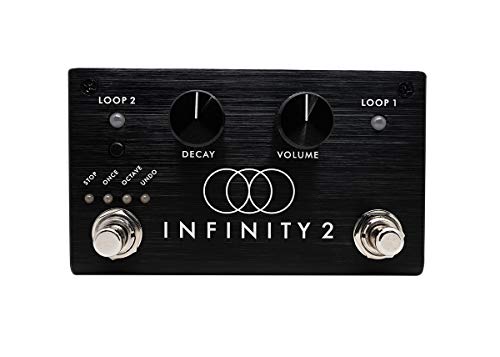
- Dual-stereo looping with stereo I/O
- Up to 5 minutes of loop time
- Stutter and octave shift effects
Best For: Players wanting a stereo performance looper with extra effects
Phrase-Saving Looper
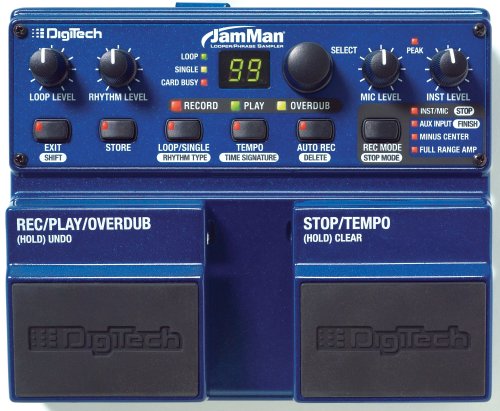
- Stores up to 99 loops
- Expandable to 6.5 hours with 2GB card
- USB backup and hands-free recording
Best For: Players who need lots of loop memory and easy backup
Premium Multi-Track Looper – BOSS RC-300 Loop Station
If you’re comparing loop stations under 300 and want a feature-rich floor unit, the BOSS RC-300 stands out for its three stereo tracks, dedicated footswitches, and hands-on faders. It’s built for players who want more control over live looping, with onboard storage and real-time effects control available via expression pedal.
Best For: Guitarists and performers who want a full-featured loop station with separate track control and onboard memory.
Pros:
- Three stereo tracks each with dedicated footswitches and controls
- Dedicated fader per track for straightforward level balancing
- Up to three hours of internal recording and 99 onboard memories
- Expression pedal support for real-time effects control
Cons:
- Larger floor unit than simpler looper pedals
- May be more than needed if you only want basic looping
The RC-300 is a strong pick when control and capacity matter more than a minimal footprint. Its track layout and memory count make it better suited to players building layered performances than to those after a simple one-button looper.
Budget Looper With Tuner – LEKATO 9-Loop Pedal
For buyers shopping loop stations under 300 and looking for a simple, practical pedal, the LEKATO looper keeps the focus on easy operation. It offers 9 loops, a built-in tuner, and USB file transfer, making it a convenient option for practice and basic recording.
Best For: Players who want an easy-to-use looper with tuner and USB transfer in a compact format.
Pros:
- 9 loops with up to 40 minutes total recording time
- Built-in high-sensitivity tuner for quick tuning
- USB upload/download support for wav loop files
- Single-knob operation for loop playback volume
Cons:
- Single loop recording tops out at 10 minutes
- Basic control layout may not suit players wanting advanced track management
This is a sensible choice if you want uncomplicated looping plus a tuner in one pedal. Its feature set is geared toward straightforward use rather than deep live-performance control.
Touchpad Phrase Synth Loop – Korg Kaossilator Pro+
If you’re browsing loop stations under 300 and want something more performance-focused, the Korg Kaossilator Pro+ combines a phrase synthesizer with loop recording. Its touchpad-based playing style and four loop banks make it ideal for creating and layering sounds in a more experimental way.
Best For: Performers who want a touch-controlled synth and loop recorder for live phrase building.
Pros:
- Freely playable synthesizer with touchpad sound control
- 250 sound programs for a wide range of styles
- Four infinitely stackable loop banks
- Editor software for managing samples and settings
Cons:
- Less like a traditional guitar looper pedal
- Heavier and more tabletop-oriented than compact floor units
The Kaossilator Pro+ is a creative tool for players who want looping tied to sound design and performance expression. It makes the most sense if your goal is to build layered phrases, not just capture guitar loops.
High-Capacity Compact Looper – FLAMMA FF01 Looper Pedal
Among loop stations under 300, the FLAMMA FF01 is aimed at players who want lots of storage in a straightforward pedal. It offers 40 storage slots, up to 160 minutes of recording, and USB support for managing WAV files on a computer.
Best For: Guitarists who want a compact looper with high storage capacity and simple dual-footswitch control.
Pros:
- 40 storage slots with up to 160 minutes total recording
- Dual-footswitch operation for recording, overdubbing, playback, and clearing
- Real-time LED strip shows loop progress
- USB support for importing, exporting, and deleting tracks
Cons:
- Limited to 4 minutes per loop
- Fewer advanced performance controls than larger loop stations
The FF01 is a practical option if storage capacity and easy foot control are your priorities. Its mix of USB management and visual feedback makes it well suited to players who like to organize loops on a computer.
Dual-Track Flexibility – Valeton VLP-200 Multi-Track Sampler
If you want loop stations under 300 that can do more than basic repeat playback, the Valeton VLP-200 stands out with two full-featured loopers and built-in drum patterns. Its SERIAL and FREE collaboration modes make it easier to layer parts or switch song sections, while the 24-bit/48 kHz recording spec keeps the sound quality firmly in practical gigging territory.
Best For: Players who want two-loop flexibility, drum support, and MIDI/CTRL connectivity in a compact setup.
Pros:
- Two looper collaboration modes: SERIAL and FREE
- 24-bit, 48 kHz sampling for professional-quality recording
- 100 stereo drum rhythms across 16 drum kit styles
- CTRL and MIDI I/O for external control and synchronization
Cons:
- More complex than a simple single-button looper
- Best value depends on whether you’ll use the drum and MIDI features
Overall, the VLP-200 is a strong pick for players who want a looping pedal that can also handle rhythm support and device sync. It offers a lot of functionality for the category without drifting away from the needs of guitar practice or live performance.
Memory Expansion Pick – Digitech JamMan Solo HD
The Digitech JamMan Solo HD is a practical option if you’re comparing loop stations under 300 and want long looping capacity in a compact stereo pedal. It offers up to 16 hours of looping time with a microSD card, plus USB transfer to and from your PC for easier loop management.
Best For: Loopers who want extended storage, stereo operation, and simple syncing with other JamSync-compatible units.
Pros:
- Up to 16 hours of looping time with microSD expansion
- Compact stereo looper design
- JamSync support for synchronizing multiple compatible loopers
- USB connection with JamManager HD software for transferring loops
Cons:
- On-board memory is limited to 35 minutes without microSD expansion
- Focuses more on looping workflow than on built-in performance extras
This pedal makes sense if storage and transfer convenience matter more than a pile of extra effects. The included power supply and drum tracks add utility, but the main appeal is still the straightforward stereo looping platform.
Micro Jam Combo – MOOER Groove Loop Drum Machine Pedal
The MOOER Groove Loop is a tiny looper-and-drum-machine combo for players who want a simple solution among loop stations under 300. It combines a micro looper with 16 drum grooves, and its three modes let you use the looper, the drum machine, or both together.
Best For: Guitarists who want a mini looping pedal with built-in rhythm support and independent mix control.
Pros:
- Looper and drum machine in one micro pedal
- 3 modes: LOOPER, DRUM, and LOOPER + DRUM
- 16 total drum grooves with 8 styles and 2 variations each
- Independent playback level controls for looper and drum parts
Cons:
- 20-minute loop capacity is modest compared with larger units
- Mini size may feel limited for users wanting advanced control
For players who value a small footprint and quick practice-friendly rhythm support, the Groove Loop is an easy fit. It is less about deep loop storage and more about giving you a compact, straightforward jamming tool.
Auto-Accompaniment Looper – DigiTech Trio+ Band Creator
If you want one of the most capable loop stations under 300 for songwriting and practice, the DigiTech Trio+ stands out for its automatic bass and drum accompaniment. Choose a genre and style, then start playing—the pedal listens and builds backing parts while the looper lets you record, play back, undo, and redo on the fly. It also lets you change tempo without affecting pitch, which is useful when testing ideas.
Best For: Guitarists who want a looper that also creates automatic backing tracks for practice and composition.
Pros:
- Automatically generates bass and drum parts from your playing
- Includes 12 genres, 12 styles, and variable tempo control
- Looper footswitch handles record, play, undo, and redo
- Includes patch cables and power supply
Cons:
- More complex than a basic looper pedal
- Requires time to learn its band-creator workflow
This is a strong pick if you want more than looping alone, since it combines accompaniment generation with looping in one pedal. The added control and backing parts make it especially practical for solo practice and writing.
Dual-Stereo Performance Looper – Pigtronix Infinity 2 Looper Pedal
The Pigtronix Infinity 2 is a compact option to consider when comparing loop stations under 300 for performance-focused use. It offers dual-stereo looping, up to 5 minutes of loop time, stereo I/O, and routing options like dry/wet control. The included effects such as stutter and octave shift add some creative flexibility without making the pedal overly complicated.
Best For: Players who want a stereo looper with performance features and simple hands-on control.
Pros:
- Dual-stereo looper with stereo I/O
- Up to 5 minutes of looping time
- Includes stutter and octave shift effects
- Compact footprint for pedalboard use
Cons:
- Loop time is shorter than some multi-phrase units
- Less focused on backing-track creation than the Trio+
For players who want a straightforward looper with stereo operation and real-time performance tricks, this is an appealing choice. It keeps the feature set focused on looping and stage use rather than broader accompaniment tools.
Phrase-Saving Looper – DigiTech JamMan Looper
If your priority in loop stations under 300 is storing ideas for later, the DigiTech JamMan is built for that workflow. It can save up to 99 independent loops, supports hands-free recording and soloing, and can be expanded with a 2GB card for up to 6.5 hours of audio. USB connectivity also helps you back up loops to a computer so you do not lose them.
Best For: Players who want to store, organize, and back up many loops and phrase ideas.
Pros:
- Stores up to 99 independent loops
- Expandable to 2GB for up to 6.5 hours of audio
- Hands-free record and solo operation
- USB connection for computer transfer and backup
Cons:
- Larger and heavier than some compact loopers
- Older design compared with newer compact pedals
This is a practical option if you build a lot of loop ideas and need memory, backup, and phrase management. It is less about flashy effects and more about dependable storing and overdubbing.
How We Picked These Loop Stations Under 300
We focused on models that deliver the best mix of sound quality, ease of use, and value at a sub-$300 price point. Priority went to loop stations that offer straightforward controls, solid recording time, useful connectivity, and enough flexibility for practice or performance. We also looked at workflow features that matter most in real use, such as undo/redo support, stereo operation, rhythm functions, and durable footswitch design.
Quick Comparison: What Stands Out
Not every looper serves the same purpose. Some Loop Stations Under 300 are ideal for simple layering and fast songwriting, while others add drum patterns, multiple phrase memories, or broader performance tools. If you want the simplest path to looping, a compact single-footswitch unit may be enough. If you need longer phrases, storage, or band-style backing support, a more advanced multi-function model is usually the better choice.
Key Buying Factors for Loop Stations Under 300
Recording Time and Memory
Check total record time, overdub flexibility, and phrase storage. Longer recording time helps if you build songs from extended sections, while memory slots matter if you want to save ideas for later.
Footswitch Layout and Workflow
A looper should be easy to control without breaking your rhythm. Look for clear start/stop behavior, accessible undo functions, and footswitch spacing that feels comfortable during live use.
Drum Patterns and Sync Features
Some Loop Stations Under 300 include built-in rhythms or drum-machine features that make solo practice more musical. These are especially helpful for home players and singer-songwriters who want a fuller backing track feel.
Inputs, Outputs, and Power
Make sure the pedal matches your rig. Stereo I/O, USB connectivity, aux input, and included power supplies can all improve convenience. For pedalboard users, size and power draw are worth checking before buying.
Who Should Buy Which Loop Stations Under 300?
If you want a simple practice tool, choose a compact looper that is easy to learn and quick to operate. If you write songs, look for longer memory and flexible overdubbing. If you perform solo, a model with rhythm support or multi-track capability may be the best fit. Players who want the most creative control should lean toward feature-rich units, while budget-conscious beginners may prefer a straightforward looper that covers the essentials without a steep learning curve.
For most buyers, the best choice among Loop Stations Under 300 is the one that matches your workflow first and your feature list second. A looper that feels intuitive will get used more often, which matters more than having every extra function on paper.