If you want to record classic gameplay cleanly, the right capture card can make a huge difference. Whether you are preserving old footage or streaming retro sessions, you need stable input, simple setup, and image quality you can trust.
This roundup highlights the best options for a capture card for retro consoles in 2026, with a focus on compatibility, passthrough performance, and value for everyday buyers.
Best 10 Capture Card for Retro Consoles Picks for 2026
Retro Tape-to-TV Bridge
VHS/AV to Digital Capture With HDMI Loop Out
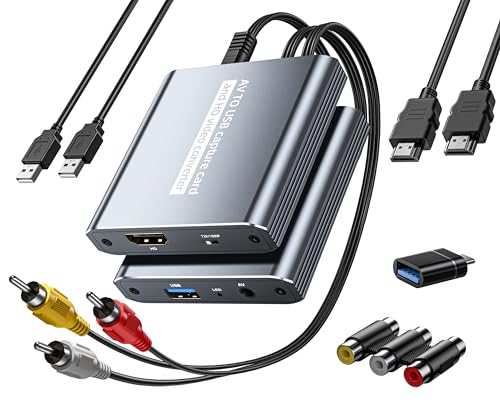
- Captures VHS, VCR, Hi8, PS2, Wii, and DVD sources
- HDMI loop-out supports live preview on a TV or monitor
- Includes RCA, HDMI, and USB-C accessories
Best For: Users digitizing retro AV gear who want live HDMI monitoring
Low-Latency Stream Box
1080p60 HDMI Capture With Mic Input

- Records 1080p60 with up to 4K30 input support
- Mic input and headphone output for commentary
- Direct USB 3.0 connection for low-latency use
Best For: HDMI retro setups and streamers adding live commentary
Classic AV Digitizer
RCA to USB Capture for Vintage Consoles

- Captures RCA and S-Video sources to USB
- Supports Windows and Mac with NTSC/PAL formats
- Plug-and-play design with no external power
Best For: People converting RCA-based retro consoles and analog video
HDMI Game Capture Hub
1080p60 Capture With 4K Pass-Through

- Captures HDMI gameplay at 1080p60
- Adds 4K pass-through and real-time loop-out
- Includes mic-in for commentary
Best For: HDMI retro gaming setups needing capture and pass-through
Retro Console Starter Pick
AXHDCAP 1080P HDMI Capture Card

- Plug-and-play with no driver install
- HDMI input up to 4K 60FPS, capture to 1080p
- Works with OBS, Zoom, Twitch, YouTube
Best For: Simple HDMI retro console capture on a budget
Portable USB 3.0 Pick
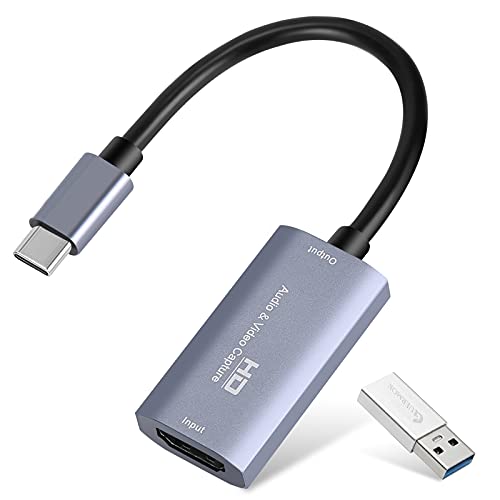
- USB 3.0 capture up to 1080p 60FPS
- Plug-and-play with no driver install
- Portable build with wide platform support
Best For: Portable 1080p60 capture from HDMI retro consoles
Balanced Retro Gaming Pick

- 1080p 60FPS USB output with low latency
- Plug-and-play across major OS platforms
- 2-in-1 USB-A/USB-C cable design
Best For: Compact all-around capture for retro and modern consoles
Retro Console Streamer Pick
4K HDMI Capture Card for 1080P 60FPS
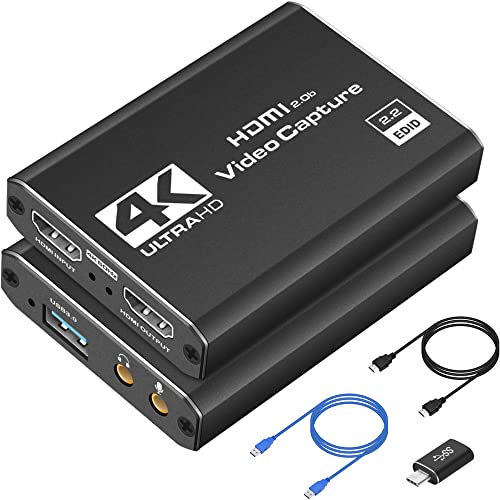
- 1080P 60FPS capture with 4K HDMI input support
- Plug-and-play USB 3.0 setup with no drivers
- HDMI passthrough for low-latency gameplay
Best For: Streamers and retro gamers who want a simple, portable HDMI capture setup
Portable Multi-Device Choice
Acer HDMI to USB 3.0 Capture Card

- 1080P 60FPS capture with up to 4K 30FPS input
- USB-A and USB-C connectors for wider compatibility
- Works with Windows, Mac, Android, and iPadOS 17+
Best For: Buyers who want a compact, broadly compatible capture card for consoles and mobile devices
Budget Passthrough Option
4K HDMI Capture Card with Mic-In

- 1080p capture with HDMI loop-out passthrough
- Mic-in port supports external commentary
- Works with Windows and Mac plus OBS
Best For: Retro gamers who want a simple capture card with passthrough and mic input
Retro Tape-to-TV Bridge – VHS/AV to Digital Capture With HDMI Loop Out
If you want a capture card for retro consoles that can also handle old tapes and AV gear, this Fulfalic unit is built around analog-to-digital conversion plus HDMI loop-out. It works with VHS, VCR, DVD, Hi8, PS2, Wii, and other RCA-connected devices, so you can capture footage to a computer while previewing it on a bigger HDMI display.
Best For: People preserving retro console or tape footage who also want live HDMI monitoring while they record.
Pros:
- Captures analog AV sources to digital files on a PC.
- HDMI loop-out lets you watch on a TV or monitor while recording.
- Includes RCA/AV cables, HDMI cable, and a USB-C adapter.
- Supports open-source capture software like OBS and PotPlayer.
Cons:
- Requires separate capture software before use.
- Audio setup in OBS may require a restart after configuration.
This is a practical choice if your priority is preserving older AV sources and monitoring the signal in real time. The included accessories and broad device support make it easier to connect classic gear without piecing together extras.
Low-Latency Stream Box – 1080p60 HDMI Capture With Mic Input
This capture card for retro consoles is aimed more at HDMI systems than analog gear, but it stands out for smooth 1080p60 recording and low-latency loop-out. It supports up to 4K30 input, works with common streaming software, and can be a solid pick if your retro setup runs through an HDMI converter or modded console output.
Best For: Streamers and players who want 1080p60 capture with microphone commentary support.
Pros:
- Captures at 1080p60 with up to 4K30 input support.
- Includes 3.5mm microphone input and headphone output.
- Offers low-latency signal loop-out for live play.
- Compatible with Windows, Linux, and macOS.
Cons:
- Designed for HDMI sources, not native RCA/AV input.
- Must be connected directly to a USB 3.0 port, not a hub or extension cable.
If your retro gaming setup already outputs HDMI, this card focuses on the essentials: clean capture, real-time output, and simple commentary support. It is better suited to streaming than to analog tape conversion.
Classic AV Digitizer – RCA to USB Capture for Vintage Consoles
For anyone shopping for a capture card for retro consoles that still use RCA or S-Video, this USB video capture device is built to convert analog sources into digital files on a PC. It supports VHS, VCR, Hi8, DV, camcorders, and other RCA-connected devices, making it a straightforward option for old-game and old-video workflows.
Best For: Users who need a simple RCA-to-USB converter for legacy AV devices.
Pros:
- Converts RCA composite input to 720p USB output.
- Supports RCA and S-Video source devices.
- Works with Windows and Mac, including NTSC and PAL formats.
- Plug-and-play design with no external power required.
Cons:
- Output is limited to 720p rather than full HD capture.
- Requires capture software such as OBS Studio or PotPlayer.
This model is best when compatibility with older analog equipment matters more than high-end capture specs. Its simple setup and broad format support make it a reliable bridge from vintage AV gear to a modern computer.
HDMI Game Capture Hub – 1080p60 Capture With 4K Pass-Through
If your retro console setup already outputs HDMI, this capture card for retro consoles offers a cleaner streaming path with 1080p60 recording and 4K pass-through. It also adds mic-in support and real-time loop-out, so it can work well for gameplay capture, commentary, and live monitoring from a single compact device.
Best For: HDMI-based retro gaming setups that need smooth capture and pass-through.
Pros:
- Records at 1080p60 with low latency.
- Includes 4K pass-through and HDMI loop-out.
- Supports mic-in for external commentary.
- Works with Windows, macOS, Linux, and iPadOS 17+.
Cons:
- Only captures HDMI sources, not native RCA/AV input.
- Mic support is limited to 3.5mm TRS standard headset mics.
For HDMI retro gaming, this is a practical all-around option because it balances capture quality, passthrough, and simple setup. It is especially useful if you want to play on an external display while recording clean footage at the same time.
Retro Console Starter Pick – AXHDCAP 1080P HDMI Capture Card
If you need a capture card for retro consoles that keeps setup simple, the Audio Express AXHDCAP is a practical HDMI-to-USB option. It records up to 1080p over USB 2.0 and supports 4K HDMI input, so it fits straightforward streaming, recording, and teaching workflows without extra drivers or external power.
Best For: Budget-minded buyers who want plug-and-play capture for HDMI-based retro consoles and basic streaming.
Pros:
- Plug-and-play design with no driver or external power requirement
- Supports HDMI input up to 4K 60FPS and USB capture output up to 1080p 30Hz
- Ultra-low latency real-time preview for live recording and streaming
- Works with Windows, MacOS, and Linux plus OBS, Zoom, Twitch, and YouTube
Cons:
- USB 2.0 only, so it is not built for higher-speed capture workflows
- Capture output is limited to 1080p 30Hz according to the notes
- Only useful for HDMI sources, not for adding HDMI output to a laptop or PC
This is a straightforward, no-frills pick for retro console owners who want an easy way to bring HDMI gameplay into a computer. The main tradeoff is the older USB 2.0 connection, but for simple capture tasks it keeps the process accessible.
Portable USB 3.0 Pick – Guermok 1080P60 Capture Card
The Guermok video capture card is a strong capture card for retro consoles if you want smoother 1080p60 recording through USB 3.0. Its lightweight build, plug-and-play setup, and broad device support make it a flexible choice for capturing HDMI gameplay from classic and modern consoles alike.
Best For: Users who want a portable USB 3.0 capture card for fluid 1080p60 console recording.
Pros:
- Captures up to 1080p 60FPS with USB 3.0 transfer
- Supports low-latency preview for live gaming and recording
- No driver or external power needed for setup
- Wide compatibility with Windows, Mac, Linux, Android, OBS, VLC, and more
Cons:
- For capture use only, so it is not intended for direct screen casting to a monitor or TV
- Using adapters may require flipping the card to ensure USB 3.0 recognition
- Sound setup in OBS may require a software restart after configuration
For retro console players who care about smoother motion and easy portability, this model offers a compelling balance of speed and convenience. Just make sure you use a proper USB 3.0 connection to get the best results.
Balanced Retro Gaming Pick – BENFEI 1080P60 Capture Card
The BENFEI video/audio capture card is a well-rounded capture card for retro consoles if you want a simple HDMI-to-USB solution with 1080p60 output. It is designed for plug-and-play use across major systems and supports capture from consoles like Switch, PS4, PS5, and Xbox when HDCP is disabled where required.
Best For: Buyers who want a compact, easy-to-use capture card for retro and modern console recording.
Pros:
- Up to 1080p 60FPS USB output with HDMI input up to 4K 30Hz
- Plug-and-play operation with no driver installation
- Ultra-low latency design with no picture tearing or flickering noted
- 2-in-1 USB Type-A/Type-C cord and durable braided cable
Cons:
- PS4 and PS5 require HDCP to be turned off
- iPhone is not supported, and iPadOS needs version 17 or higher
- Not the highest-output option if you need capture above 1080p
For most retro console capture setups, this model hits a practical middle ground of portability, compatibility, and easy setup. It is especially appealing if you want a compact unit that can move between different devices and software with minimal fuss.
Retro Console Streamer Pick – 4K HDMI Capture Card for 1080P 60FPS
If you want a capture card for retro consoles that also handles modern gear, this USB 3.0 model is built around easy HDMI capture at 1080P 60FPS. It works plug-and-play on Windows and Mac, supports OBS, Streamlabs, and XSplit, and includes HDMI passthrough for low-lag gameplay while you record or stream.
Best For: Streamers and retro gamers who want a simple, portable HDMI capture setup for consoles and cameras.
Pros:
- Captures smooth 1080P 60FPS video with 4K HDMI input support.
- Plug-and-play over USB 3.0 with no drivers needed.
- Works with PS5, Xbox, Switch, PCs, Macs, and DSLR cameras.
- Includes passthrough for low-latency gameplay and real-time viewing.
Cons:
- Requires a USB 3.0 port for best performance.
- Only HDMI-based devices are supported.
Overall, this is a flexible capture option if you want one device that can cover retro console setups with HDMI output as well as newer systems. The compact design and bundled adapters make it especially convenient for travel or temporary recording stations.
Portable Multi-Device Choice – Acer HDMI to USB 3.0 Capture Card
This capture card for retro consoles is a strong pick if you want broad device support and a straightforward plug-and-play setup. It captures up to 1080P 60FPS, accepts up to 4K 30FPS input, and uses a USB 3.0 connection for smooth streaming from consoles, cameras, and computers.
Best For: Buyers who want a compact, broadly compatible capture card for consoles, laptops, and mobile devices.
Pros:
- Captures up to 1080P 60FPS with 4K 30FPS input support.
- USB-A and USB-C 2-in-1 design improves compatibility.
- Works with Windows, Mac, Linux, Android, and iPadOS 17+.
- Supports OBS Studio, QuickTime Player, TikTok, Twitch, and YouTube.
Cons:
- One-way HDMI-to-USB transmission only.
- Needs a USB 3.0 port for best results.
For retro console setups, this card is appealing because it keeps the workflow simple while covering a wide range of platforms. The aluminum housing and lightweight design also make it a practical carry-along option for frequent setup changes.
Budget Passthrough Option – 4K HDMI Capture Card with Mic-In
If you need a capture card for retro consoles and want a budget-friendly way to add commentary, this HDMI-to-USB 3.0 model keeps the setup focused on basic streaming and recording. It supports 1080P capture, HDMI loop-out for no-delay play, and a mic-in port for external voice commentary.
Best For: Retro gamers who want a simple capture card with passthrough and microphone input for commentary.
Pros:
- Captures up to 1080p and supports HDMI input up to 4K30/60 and 1080p120/144Hz.
- Includes HDMI loop-out for real-time play with no delay.
- Mic-in support lets you add external commentary.
- Works with Windows and Mac software like OBS and VLC.
Cons:
- Output is limited to up to 2K30Hz.
- Warranty is short at 60 days.
This is a sensible choice if your priority is straightforward capture rather than extra features. The loop-out and microphone input give it useful core functionality for console recording sessions without making the setup complicated.
Choosing a Capture Card for Retro Consoles is mostly about matching the card to your source. Some older systems output composite, S-Video, or component through adapters, while others are best handled through HDMI converters. Before buying, confirm the card supports your signal path and the software you plan to use.
How We Picked the Best Capture Card for Retro Consoles
We prioritized broad compatibility, dependable capture at 1080p, low-latency monitoring, and straightforward USB connectivity. We also favored models with pass-through for playability, since that matters a lot when recording or streaming older consoles.
Quick Comparison
For the simplest setup, HDMI-focused cards are usually best if your retro console already uses an upscaler or converter. If you are working with legacy AV sources, choose a model that supports RCA input directly or pair a converter with a stable USB capture device. For the most flexible use, look for 1080p60 capture, 4K passthrough, and UVC-style plug-and-play operation.
Key Buying Factors for a Capture Card for Retro Consoles
Input Type
Check whether you need HDMI input only or support for composite RCA, AV, or component via adapter. This is the biggest compatibility issue for older systems.
Capture Quality
1080p at 60fps is the sweet spot for most buyers. It keeps motion smooth for action games and gives you enough detail for clean uploads.
Passthrough and Latency
If you plan to play while recording, low-latency monitoring and passthrough help reduce delay and avoid a frustrating experience.
Software and Device Support
Look for broad support on Windows, macOS, and common recording tools. Simple plug-and-play support can save a lot of setup time.
Analog Conversion Needs
Many retro systems need an external scaler or AV-to-HDMI converter before capture. Make sure the entire chain is compatible, not just the capture card itself.
Who Should Buy Which Capture Card for Retro Consoles?
If you want the easiest modern setup, choose a card with HDMI capture and passthrough. If your priority is preserving older tapes or AV console output, pick a model that can handle analog sources or works reliably with your preferred converter. Streamers should focus on 1080p60 stability, while collectors archiving footage may care more about signal consistency and clean audio input than extra features.
In short, the best Capture Card for Retro Consoles is the one that fits your console’s output, your display chain, and your workflow. Keep those three things aligned, and you will get far better results than buying purely on resolution claims.