Low-frequency buildup can make a home studio sound boomy, uneven, and difficult to mix accurately. The right corner treatment helps control problem bass without taking over the room.
We compared 10 bass traps for home studio use across size, construction, installation flexibility, coverage, and value so you can choose treatment that fits your room and recording goals.
Best 10 Bass Traps for Home Studio Picks for 2026
Classic Low-End Control
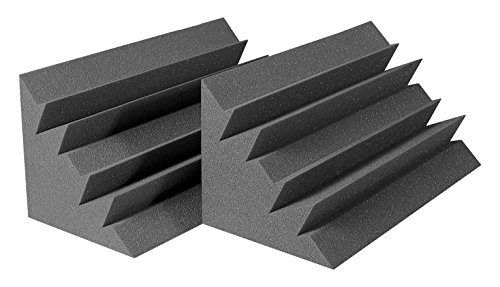
- Targets room modes and low-end rumble
- 12-by-12-by-24-inch format
- Suitable for walls, ceilings, and corners
Best For: Flexible low-frequency treatment in home studios
Budget Corner Coverage
8-Pack Acoustic Foam Bass Traps

- Eight high-density foam corner traps
- Targets standing waves and low frequencies
- Fire-retardant B1 performance noted
Best For: Affordable multi-corner treatment
Decor-Friendly Acoustic Control
REBAT Narrow Corner Bass Traps

- Oak HDF and acoustic foam construction
- Combines absorption and diffusion
- Includes double-sided mounting tape
Best For: Compact, design-conscious studio treatment
Simple Studio Installation

- Four lightweight acoustic foam blocks
- Targets low and mid frequencies
- Flexible wall, ceiling, and corner mounting
Best For: Starter treatment for small studios and media rooms
Wood-Framed Control

- Two 24-by-12-inch corner traps
- Solid wood frame and fabric finish
- Targets low-frequency echoes and reverb
Best For: Finished-looking home studios and listening rooms
Easy-Mount Coverage
Focusound Foam Corner Bass Traps

- Four high-density foam corner wedges
- Includes removable double-sided tape
- Designed to reduce bass reflections and reverb
Best For: Renters and small recording or podcast rooms
High-Quantity Foam Treatment

- 12 dense polyurethane foam panels
- Extra thickness targets low-pitched sound
- Cuttable and suitable for wall or ceiling mounting
Best For: Multi-corner treatment in studios and vocal booths
Compact Corner Control
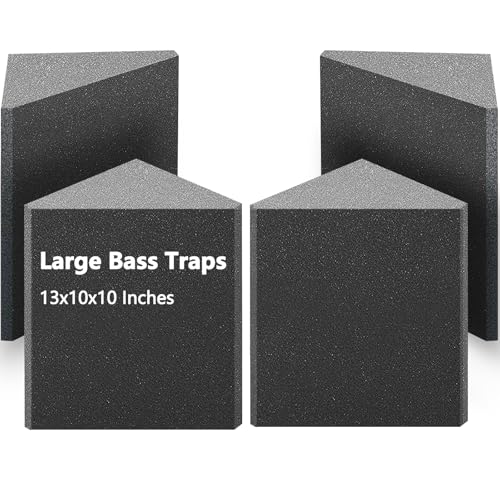
- Four-pack of corner acoustic foam
- Helps reduce bass buildup and echoes
- Lightweight and easy to reposition
Best For: Portable treatment in home studios and theaters
High-Density Coverage

- Eight corner traps for broader coverage
- 30kg/m³ polyurethane foam construction
- Can be cut to fit wall and ceiling corners
Best For: Studios and home theaters needing multiple traps
Deep Triangular Treatment

- Four-pack with deep triangular foam design
- Includes double-sided adhesive dots
- Helps reduce bass buildup and reflections
Best For: Quick corner treatment in studios and home cinemas
Classic Low-End Control – Auralex LENRD Bass Traps
For anyone comparing bass traps for home studio use, the Auralex LENRD offers a substantial 12-by-12-by-24-inch form designed for corners, walls, or ceilings. Its focus is reducing room modes, smoothing low-frequency response, and taming low-end rumble.
Best For: Home-studio owners who want a versatile, substantial trap for low-frequency control.
Pros:
- Designed to reduce room modes and low-end rumble
- Helps smooth the low-frequency response of a room
- Can be used on walls, ceilings, or in corners
- Precision surface profiling supports its acoustic treatment design
Cons:
- The two-pack may provide limited coverage for larger rooms
- Its 12-inch profile requires adequate mounting space
The LENRD is a straightforward choice when low-frequency problems are the priority and you need flexible placement options. Plan your installation around its larger dimensions and the number of room corners requiring treatment.
Budget Corner Coverage – 8-Pack Acoustic Foam Bass Traps
This eight-piece foam set is a practical option for bass traps for home studio setups, especially when you want to treat multiple corners. The high-density polyurethane foam is intended to improve low-frequency response, reduce standing waves, and clarify the sound.
Best For: Budget-conscious users treating several corners in studios, podcast rooms, or home theaters.
Pros:
- Eight pieces provide broader corner coverage
- Designed to absorb low-frequency standing waves
- High-density foam has CA117-tested, B1 fire-retardant performance
- Suitable for studios, podcast rooms, theaters, and other spaces
Cons:
- Double-sided tape or spray adhesive is not included
- Compressed pieces need 24–48 hours in a ventilated place to expand
- Foam construction may offer a different visual finish than wood treatments
This set stands out for quantity and installation flexibility. It is particularly useful when multiple corners need treatment, provided you are prepared to supply mounting materials and allow the foam to recover after unpacking.
Decor-Friendly Acoustic Control – REBAT Narrow Corner Bass Traps
These REBAT traps offer a more furniture-like approach to bass traps for home studio rooms. Their laminated HDF and acoustic foam construction is designed for low and mid frequencies, while the oak finish can integrate more naturally with a room’s decor.
Best For: Studio owners seeking narrow, oak-finish corner treatment with absorption and diffusion.
Pros:
- Perforated wood and acoustic foam target low and mid frequencies
- Provides absorption and diffusion in a compact corner format
- Rated with an overall NRC of 0.41 and a 63Hz–2000Hz scattering range
- Double-sided adhesive tape is included for installation
Cons:
- The two-pack may not cover every corner in a larger room
- Wall-to-ceiling installation may require additional construction adhesive
- Its 19.7-by-9.25-by-4-inch size may require careful corner positioning
The REBAT is a strong fit when appearance matters alongside acoustic treatment. Its narrow oak design and combined absorption-diffusion approach make it a polished alternative to exposed foam, though expanded coverage may require additional packs.
Simple Studio Installation – JBER Corner Bass Traps
The JBER four-pack is a compact option for bass traps for home studio applications, with foam blocks designed for low- and mid-frequency absorption. Its corner-focused shape can help flatten room response while remaining suitable for studios, podcasts, home cinemas, and living spaces.
Best For: Users who want lightweight, flexible corner treatment for a small studio or media room.
Pros:
- Designed to absorb low- and mid-frequency sound
- Four-piece package offers useful starter coverage
- Can be mounted in corners, horizontally on walls, or between walls and ceilings
- Supports installation with glue, double-sided tape, or nails
Cons:
- Mounting supplies are not specified as included
- The 7-inch size may provide less coverage than larger traps
- A four-pack may be insufficient for rooms needing treatment in many corners
JBER’s main advantage is adaptability: the lightweight foam can be positioned in several ways and suits a range of room types. It is a sensible starting point for targeted treatment, especially where simple installation is important.
Wood-Framed Control – Wooden Corner Bass Traps
For shoppers comparing bass traps for home studio use, this two-piece wooden option combines a solid wood frame with a fabric-covered fiberglass interior. Its 24-by-12-inch format is designed for trihedral corners and aims to reduce low-frequency buildup, reverb, and flutter echoes in small to medium-sized rooms.
Best For: Home studios, listening rooms, home theaters, podcasts, and buyers who prefer a finished wooden design.
Pros:
- Solid wood frame with a classic fabric-covered appearance.
- Designed to address low-frequency corner problems and standing waves.
- Flame-retardant, recyclable, odorless, and non-toxic materials are listed.
- Suitable for recording, mixing, and general home entertainment spaces.
Cons:
- Only two traps are included, so larger rooms may require additional treatment.
- The listed item weight is 20.5 pounds, which may make handling and mounting more demanding.
- Specific mounting hardware is not provided in the supplied details.
This is a practical pick when appearance matters alongside acoustic treatment. The wooden construction gives it a more furniture-like presentation, while the corner-focused design targets common low- and mid-frequency problems.
Easy-Mount Coverage – Focusound Foam Corner Bass Traps
This four-pack is a straightforward choice for shoppers seeking bass traps for home studio corners. The 16.5-by-6.3-by-12-inch foam wedges use updated 30 kg/m³ density to help reduce low-frequency reflections, bass reverb, and unwanted echoes in recording and listening spaces.
Best For: Home studios, podcast rooms, rehearsal spaces, control rooms, and home theaters where removable installation is important.
Pros:
- Four corner wedges provide broader coverage than a two-piece set.
- Updated 30 kg/m³ density is intended to improve low-frequency absorption.
- Includes 30 pieces of removable, washable double-sided adhesive tape.
- High-density, fireproof, and non-toxic material is specified.
Cons:
- Each wedge requires six pieces of tape for installation.
- Foam construction may offer a less finished appearance than framed traps.
- The supplied details do not specify total room coverage.
Focusound stands out for its four-piece quantity and included removable adhesive. It is a useful option for renters or anyone wanting to treat multiple corners without committing to permanent wall hardware.
High-Quantity Foam Treatment – TroyStudio Dense Bass Traps
For anyone outfitting several corners, these bass traps for home studio setups come as a 12-piece pack of dense polyurethane foam panels. Each 4-by-4-by-12-inch piece is designed to attenuate low-pitched sounds, reduce echoes and overlapping reflections, and improve clarity in recording or listening spaces.
Best For: Buyers who need many lightweight corner pieces for studios, vocal booths, music rooms, home theaters, or multipurpose rooms.
Pros:
- Pack includes 12 lightweight panels for treating multiple corners.
- Extra thickness and density are intended to improve bass absorption over regular foam.
- Panels can be cut and mounted between walls, floors, or ceilings.
- Flame-retardant, odorless, and non-toxic polyurethane is specified.
Cons:
- Adhesive and other mounting accessories are sold separately.
- The compact 4-by-4-inch profile may provide less physical volume than larger corner wedges.
- Black foam may not suit every room’s décor.
This pack offers the most pieces of the three options, making it well suited to broader corner coverage. Its light weight and cuttable construction also give users flexibility, provided they plan for a separate mounting solution.
Compact Corner Control – Large Delta Bass Traps
For a straightforward way to add bass traps for home studio use, this four-pack places lightweight acoustic foam in the corners where low-frequency sound can collect. Its corner-focused design is intended to reduce bass buildup, echoes, and reverberation.
Best For: Home studios, theaters, and rooms needing movable corner treatment.
Pros:
- Designed specifically for wall corners, where low frequencies may build up.
- High-quality acoustic foam helps reduce unwanted echoes and reverberation.
- Lightweight, compact construction makes the pieces easy to move and position.
- Four-pack provides multiple corner-treatment pieces.
Cons:
- The notes do not specify included mounting hardware.
- At 10 x 10 x 13 inches, coverage may be limited for larger rooms.
This is a practical starter option if you want portable corner treatment without a complicated installation process. It is best suited to smaller spaces where simple placement and flexibility matter.
High-Density Coverage – Focusound 8-Pack Bass Traps
These bass traps for home studio setups use higher-density polyurethane foam to address low-frequency reflections in recording and listening spaces. The eight-pack offers broad corner coverage, while the lightweight material can be cut to fit different spaces.
Best For: Recording studios, vocal rooms, control rooms, and home theaters needing multiple corner traps.
Pros:
- Eight-piece pack supports treatment across several corners.
- 30kg/m³ polyurethane foam is described as higher density and thickness.
- Designed to help manage low-frequency sound, echoes, and reverberation.
- Lightweight and easy to cut for fitting between walls and ceilings.
Cons:
- Adhesive is not included.
- The recommended double-sided tape must be purchased separately.
Choose this set when quantity and installation flexibility are priorities. Its eight-piece format suits more extensive treatment, but plan for separate mounting supplies before installation.
Deep Triangular Treatment – Triangular Corner Bass Traps
For bass traps for home studio corners, this four-pack uses a deep triangular profile to fit into wall corners and help control low-frequency buildup. Included adhesive dots make setup more convenient for recording, podcasting, gaming, and home cinema spaces.
Best For: Users who want quick-install corner treatment with included mounting dots.
Pros:
- Triangular design provides more treatment depth than flat wall panels.
- 16.5-inch-wide by 12-inch-deep profile is made for wall corners.
- Includes double-sided adhesive dots for convenient mounting.
- Suitable for studios, podcast rooms, gaming rooms, and home cinemas.
Cons:
- Only four traps are included, offering less coverage than an eight-pack.
- Adhesive-dot mounting may be less flexible than a removable installation method.
This set stands out for its deeper triangular shape and included mounting accessories. It is a convenient choice when you want to install a basic four-corner treatment quickly.
How We Picked the Best Bass Traps for Home Studio Use
We focused on products designed for room-corner placement, where low-frequency energy commonly accumulates. Our comparison considers the number of panels included, dimensions, material density, corner fit, visual finish, and whether the design suits a compact bedroom studio, dedicated mixing room, home theater, or recording space.
Because bass control depends on coverage and placement—not just product labeling—we included compact foam corner blocks, larger wedge and super-chunk designs, narrow decorative options, and wooden traps. We also considered how easily each style can be combined with additional acoustic treatment.
Quick Comparison
- Best for straightforward coverage: Multi-pack foam corner traps make it easier to treat several corners at once.
- Best for larger rooms: Oversized or super-chunk traps generally provide more physical volume in each corner.
- Best for smaller spaces: Narrow corner models save room while adding targeted absorption.
- Best for appearance: Wooden or finished panels can blend more naturally with home interiors.
- Best for flexible experimentation: Lightweight foam panels are easier to reposition and expand over time.
Key Buying Factors for Bass Traps for Home Studio
Size and Corner Coverage
Check each panel’s width, depth, and height before ordering. Larger traps occupy more corner volume and can offer broader coverage, but they may interfere with doors, shelves, windows, or furniture. Measure usable corners rather than relying only on room size.
Material and Density
Acoustic foam is lightweight and convenient, while thicker or more substantial constructions can provide greater absorption potential. Look for clear specifications instead of assuming that the words “soundproof” or “bass trap” guarantee isolation or deep-bass performance.
Placement and Installation
Prioritize the vertical corners behind or beside the listening position, then add treatment where bass remains uneven. Confirm whether mounting hardware is included. Adhesive mounting is convenient, but removable brackets, corner shelves, or friction-fit placement may be better for renters.
Fire Safety and Room Use
For an always-used studio, verify the manufacturer’s fire-retardant claims and product documentation. Keep traps clear of heaters, lights, and electrical equipment, and avoid blocking ventilation or exits.
Room Balance
Bass traps work best as part of a balanced acoustic plan. Pair corner treatment with broadband panels at reflection points and, when possible, a rug, curtains, or other furnishings that reduce excessive high-frequency reflections without making the room unnaturally dull.
Who Should Buy Which Bass Traps for Home Studio?
Choose compact foam traps if you are starting in a bedroom studio, need affordable coverage, or expect to rearrange the room. Multi-packs are useful when several corners need treatment.
Choose larger wedge or super-chunk traps if low-end accuracy is your main concern and you have enough corner depth. These are a better fit for dedicated rooms where maximum coverage matters more than preserving floor space.
Choose narrow or finished wooden traps if the studio is also a living space and appearance is important. They can be easier to integrate, though you should compare their dimensions and absorption claims carefully.
Whichever option you choose, start with the worst-sounding corners, listen again from the mixing position, and expand treatment gradually rather than covering every surface at once.