Choosing the right amplifier can make or break your sound. The best power amplifiers deliver clean headroom, stable output, and enough flexibility to match your speakers and room size.
We focused on models that balance wattage, connectivity, protection features, and real-world value so you can narrow down the best fit faster.
Best 10 Power Amplifiers Picks for 2026
High-Power Rack Workhorse

- 2 x 2,000W into 2 ohms
- 4,000W bridged at 4 ohms
- XLR/TRS inputs with pro speaker connectors
Best For: DJs, bands, and venue installs needing high-output rack power
Bluetooth-Friendly Budget Rack Amp

- 2000W peak bridged or 1000W per channel
- Bluetooth and USB-A playback support
- TRS, XLR, speakON, and binding post connections
Best For: Small venues and practice spaces needing Bluetooth plus rack convenience
Reference-Grade Stereo Amp
Behringer A800 Reference Amplifier

- 2 x 400W into 4 ohms
- Quiet convection-cooled operation
- Built for studios and hi-fi systems
Best For: Studio monitors, post-production, and hi-fi listening
Club-Ready DJ Powerhouse
Rockville RPA12 Rack Amplifier

- 5000W peak and 1400W RMS output
- Built-in limiter and selectable crossover
- Stereo, parallel, and bridged modes
Best For: Concerts and club systems needing power plus protection
High-Power DSP Amp
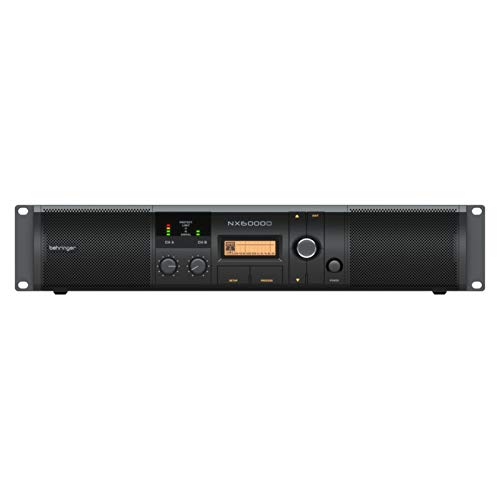
- 2 x 3000W into 4 ohms
- Lightweight at under 13.2 lbs
- Built-in DSP with crossover and EQ
Best For: DJs and PA setups needing high output with onboard processing
Reliable Mid-Power Amp

- 300W continuous per channel at 4 ohms
- 600W maximum bridged output
- Forced air cooling with flexible I/O
Best For: Small to mid-sized PA and DJ systems
Rackmount DJ Amp
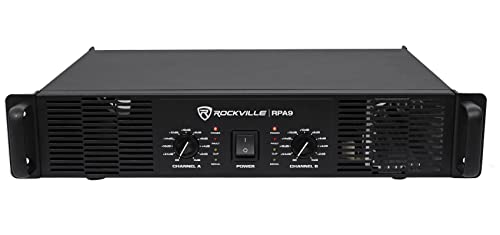
- 3000W peak / 800W RMS
- XLR, 1/4-inch, RCA, speakON, and banana connections
- Built-in crossover with stereo and bridged modes
Best For: Mobile DJs and live event rack setups
Club-Ready 750W Stereo Amp

- 750-watt 2-channel output
- ATR for accelerated transient response
- 22.9-pound rack-friendly build
Best For: DJs and small live sound systems
Rack-Mount DJ Workhorse
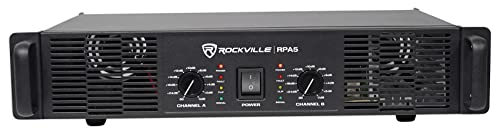
- 200W RMS per channel at 4 ohms
- Built-in crossover with stereo/mono modes
- XLR, RCA, Speakon, and banana connectivity
Best For: DJs and rack-mounted sound rigs
High-Output Pro Amplifier

- 2 x 1,000W at 2 ohms, 2,000W bridged
- Clip LEDs and low-frequency filters
- XLR/TRS inputs with pro speaker outputs
Best For: Large PA systems and installed audio
High-Power Rack Workhorse – Behringer Europower EP4000
If you need power amplifiers for demanding PA setups, the Behringer Europower EP4000 is built for high-output, flexible drive in a rack-friendly form. It delivers serious wattage in stereo or bridge mode, includes multiple input options, and adds filtering plus monitoring tools that help you keep a live system under control.
Best For: DJs, bands, and venue installs that need a high-output rack amplifier with broad connectivity.
Pros:
- 2 x 2,000 watts into 2 ohms or 2 x 1,400 watts into 4 ohms
- 4,000 watts into 4 ohms in bridge mode for bigger single-channel runs
- XLR and 1/4" TRS inputs plus professional speaker connectors and touch-proof binding posts
- Selectable 30 Hz or 50 Hz low-frequency filters help remove infra-sound
Cons:
- Heavier than some alternatives at 38.4 pounds
- No Bluetooth or built-in media playback features
Overall, this is a straightforward power amplifier for users who want output, connectivity, and control more than extra consumer features. The EP4000 is especially practical if you already rely on wired pro audio gear and need a unit that can handle serious speaker loads.
Bluetooth-Friendly Budget Rack Amp – Pyle PTA1000BT Rack Amplifier
For buyers comparing power amplifiers with more modern convenience features, the Pyle PTA1000BT adds Bluetooth streaming and USB-A playback to a bridgeable 2-channel rack design. It supports multiple input and output types, making it a flexible pick for basic sound reinforcement where wireless playback and simple rack mounting matter.
Best For: Small venues, practice spaces, and users who want Bluetooth plus rack-mount amplifier flexibility.
Pros:
- 2000W peak output in bridged mode or 1000W per channel stereo
- Bluetooth connectivity for wireless streaming from common devices
- Multiple inputs and outputs: TRS, XLR, speakON, and binding posts
- Front-panel LCD and LED indicators for signal, clip, protect, and power status
Cons:
- Peak power rating is more prominent than RMS details in the supplied notes
- Not as stripped-down or studio-focused as some pro-only amplifiers
This model makes sense if convenience is part of your checklist, not just raw output. The PTA1000BT blends rack-ready connectivity with Bluetooth and cooling fans, which can be useful for lighter-duty PA setups and general-purpose audio use.
Reference-Grade Stereo Amp – Behringer A800 Reference Amplifier
If you are shopping power amplifiers for studio or hi-fi use, the Behringer A800 focuses on clean, practical output rather than flashy extras. It offers a reference-class, ultra-linear design, convection cooling for quiet operation, and enough flexibility to drive passive speakers in studio, post-production, live sound, or home listening setups.
Best For: Studio monitors, post-production rooms, and hi-fi listeners who want quiet, accurate amplification.
Pros:
- 2 x 400 watts into 4 ohms for stereo use
- 800 watts into 8 ohms in bridged mono operation
- Ultra-low impedance design can drive virtually any passive speaker
- Advanced convection cooling supports noise-free, stable operation
Cons:
- Lower maximum output than larger PA-focused amplifiers
- No Bluetooth, USB, or other playback features
The A800 is a strong fit when the goal is dependable sound quality and low-noise operation instead of maximum club power. For controlled listening environments, it delivers the kind of straightforward performance many buyers want from a reference amp.
Club-Ready DJ Powerhouse – Rockville RPA12 Rack Amplifier
The Rockville RPA12 is aimed at buyers who want power amplifiers for larger live sound jobs, with high output, bridgeable operation, and built-in protection tools. Its crossover, limiter, and multiple operating modes make it a practical fit for PA speakers or subwoofer-oriented setups where control matters as much as wattage.
Best For: Concerts, clubs, and event setups that need a powerful rack amp with protection and crossover features.
Pros:
- 5000W peak and 1400W RMS for strong output in demanding systems
- Bridgeable design with Stereo, Parallel, and Bridged operating modes
- Built-in limiter helps protect speakers during heavy use
- Crossover switch offers bypass, 80 Hz, and 160 Hz settings
Cons:
- Heavier chassis at 26 pounds
- No wireless or media playback features
This amplifier is geared toward users who want a lot of control along with serious output. If your system benefits from a crossover, limiter, and flexible operating modes, the RPA12 is a solid rackmount option.
High-Power DSP Amp – Behringer NX6000D
For buyers comparing power amplifiers for big sound systems, the Behringer NX6000D stands out with very high output, lightweight construction, and built-in DSP. It is designed for users who need strong, reliable power for pro audio, bass, or venue use without adding much rack weight.
Best For: DJs, PA systems, and bass-heavy setups that need high output plus onboard DSP control.
Pros:
- Delivers up to 2 x 3000 watts into 4 ohms for substantial output.
- Weighs less than 13.2 lbs, making it easier to transport and rack.
- Includes DSP with delay, crossover, EQ, dynamics, and lockable security settings.
- Uses Class-D amplification and a switch-mode power supply for efficient operation.
Cons:
- Feature set may be more complex than needed for simple setups.
- Optimized for pro audio use, so it may be overkill for smaller systems.
The NX6000D is a practical choice if you want one of the more capable power amplifiers in a compact form. Its combination of high wattage, DSP, and low weight makes it a strong fit for demanding audio rigs.
Reliable Mid-Power Amp – Crown XLi800
Crown XLi800 Two-channel, 600-Watt Bridged 8Ω Power Amplifier. Professional DJ, PA, Stage Amp. Black
Check Price On AmazonAmong practical power amplifiers for PA, DJ, and stage use, the Crown XLi800 offers straightforward two-channel operation with solid continuous output. It is a simple, rack-friendly option for users who want dependable amplification without extra processing features.
Best For: Small to mid-sized PA rigs, DJs, and stage systems that need basic two-channel amplification.
Pros:
- Provides 300W continuous per channel at 4 ohms.
- Supports bridged operation up to 600W maximum output.
- Includes selectable input voltage and flexible I/O.
- Forced air cooling helps support stable operation.
Cons:
- Lower output than larger rack amplifiers in this roundup.
- Lacks the DSP tools found on more feature-heavy models.
The XLi800 is a sensible pick when reliability and simplicity matter more than advanced control. It fits well in setups that need a straightforward amplifier for everyday professional audio use.
Rackmount DJ Amp – Rockville RPA9
For shoppers evaluating power amplifiers for live sound or mobile DJ work, the Rockville RPA9 combines rackmount convenience with broad connectivity and built-in crossover support. It is aimed at users who want a versatile amplifier for larger venues and mixed audio setups.
Best For: Mobile DJs, live events, and rack-based pro audio systems that need flexible inputs and outputs.
Pros:
- Rated at 3000W peak and 800W RMS for high-output applications.
- Includes XLR, 1/4-inch, and RCA inputs plus speakON and banana outputs.
- Built-in crossover and stereo/bridged modes add setup flexibility.
- Dual fans and heat sink design help prevent overheating during long sessions.
Cons:
- Peak power figure is much higher than its RMS rating, so real-world output is lower than the headline number.
- Heavier-duty rack design may be more than casual users need.
The RPA9 makes sense if you need a flexible rackmount amp that can connect to common pro audio gear. Its cooling, I/O options, and mode switching make it well suited to event-driven use.
Club-Ready 750W Stereo Amp – Behringer KM750
If you’re comparing power amplifiers for a compact PA or rehearsal rig, the Behringer KM750 is built around 750 watts of 2-channel output and ATR (Accelerated Transient Response) for fast, punchy delivery. It is a straightforward choice when you want a stereo amp that can handle demanding speaker setups without a lot of extra complexity.
Best For: DJs, small live sound systems, and budget-conscious users who want solid stereo power.
Pros:
- 750-watt 2-channel design for stereo amplification.
- ATR technology is designed for accelerated transient response.
- Manageable 22.9-pound weight for a pro-style amp.
- Compact rack-friendly dimensions for system installs.
Cons:
- Product notes do not list detailed connectivity or protection features.
- Best suited to straightforward stereo use rather than feature-heavy setups.
Overall, the KM750 is a practical pick if you want a no-nonsense power amplifier with substantial output and a simple two-channel layout. Its appeal is the combination of rated power, ATR support, and a form factor that fits common rack setups.
Rack-Mount DJ Workhorse – Rockville RPA5
Among power amplifiers in the DJ and install category, the Rockville RPA5 stands out for flexible operation and practical connectivity. It delivers 200W RMS per channel at 4 ohms, or 400W RMS bridged at 8 ohms, and includes a built-in crossover plus stereo/mono switching for different speaker configurations.
Best For: DJs, rack-mounted rigs, and users who need adaptable stereo or bridged operation.
Pros:
- 200W RMS per channel at 4 ohms, or 400W RMS bridged at 8 ohms.
- Built-in crossover and stereo/mono switch for flexible setups.
- Dual quiet cooling fans and IC-controlled protection circuitry.
- Wide input/output support including XLR, 1/4″, RCA, Speakon, and banana connections.
Cons:
- Best fit for rack systems rather than ultra-portable use.
- Peak output figures are much higher than its RMS rating, so real-world expectations should center on RMS power.
The RPA5 is a strong utility amplifier if you value routing options and rack convenience. Its mix of cooling, protection, and connector flexibility makes it easy to integrate into a variety of pro audio and DJ setups.
High-Output Pro Amplifier – Behringer EP2000
If you need power amplifiers for larger PA duties, the Behringer EP2000 brings serious output with 2 x 1,000 watts into 2 ohms, 2 x 750 watts into 4 ohms, and 2,000 watts in bridge mode. It also adds practical monitoring and filtering tools, making it a useful option when you want strong output and simple control over low-frequency content.
Best For: Higher-power live sound, installed systems, and users who want bridge mode flexibility.
Pros:
- High rated power: 2 x 1,000 watts at 2 ohms and 2,000 watts bridged.
- Signal and clip LEDs help monitor performance.
- Selectable 30 Hz or 50 Hz low-frequency filters.
- XLR and 1/4″ TRS inputs plus professional speaker connectors and touch-proof binding posts.
Cons:
- Weighs 34.6 pounds, so it is less convenient for frequent carry.
- Large output capacity may be more than needed for smaller systems.
For buyers focused on headroom and install-ready flexibility, the EP2000 is the most powerful option in this group. Its combination of bridge mode, input compatibility, and low-frequency filtering makes it especially practical in pro audio setups.
How We Picked These Power Amplifiers
We prioritized output ratings, channel configuration, load stability, cooling, input/output options, and overall suitability for PA, DJ, stage, and install use. For Power Amplifiers, the best choice is not always the highest wattage number; it is the model that can run your speakers safely and consistently at the level you actually need.
Quick Comparison
Higher-output rack models are better suited to larger PA systems, DJ booths, and performance spaces, while lower-wattage or reference-style amps can make more sense for smaller rigs, monitor duties, or home audio setups. If you need DSP or modern system control, look for added processing features. If you want straightforward operation, a simpler two-channel design may be the better pick.
Key Buying Factors for Power Amplifiers
Power and Impedance
Match the amplifier’s rated power to your speaker’s continuous handling and confirm what it delivers at 4 ohms, 8 ohms, or bridged mode. Overbuying slightly is often safer than running an underpowered amp into clipping.
Channels and Configuration
Two-channel amps are the most versatile for stereo systems, dual speakers, or bridged mono applications. If you plan to expand later, consider whether the amp supports the routing and wiring setup you may need.
Inputs, Outputs, and Integration
Look for XLR, TRS, Speakon, or other connections that fit your existing gear. Built-in Bluetooth or USB can be convenient, but traditional balanced inputs usually matter more for reliable professional use.
Cooling and Protection
A well-designed cooling system and protection circuitry help prevent shutdowns during long sessions. This is especially important for events, installations, and high-volume playback.
Who Should Buy Which Power Amplifiers?
If you want a simple, dependable amp for small to mid-size systems, a lower-wattage unit can be plenty. For DJs, live sound, and club-style playback, choose a higher-output model with flexible connectivity and strong thermal management. If your priority is clean reference playback or a home setup, look for an amplifier that emphasizes low distortion and stable everyday performance. In short, the right Power Amplifiers depend on your speakers, room size, and how hard you plan to push the system.