Choosing the right handheld field recorder can make the difference between usable audio and a take that needs to be redone. From simple voice capture to field-ready stereo recording, today’s portable recorders cover a wide range of workflows.
Below, we’ve rounded up 10 strong options for filmmakers, musicians, podcasters, and content creators who want reliable sound in a compact format.
Best 10 Handheld Field Recorders Picks for 2026
Most Flexible Input Setup
Zoom H5 4-Track Handheld Recorder
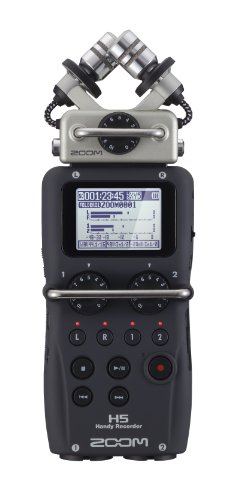
- Interchangeable capsules for flexible setups
- Four-track recording with two XLR/TRS inputs
- USB audio interface with loop back support
Best For: Filmmakers and musicians who need adaptable input options.
Best 32-Bit Stereo Value
TASCAM DR-05XP 32-Bit Float Recorder

- 32-bit float, 24-bit, and 16-bit recording modes
- Omnidirectional mics handle up to 125dB SPL
- USB-C 2-in/2-out audio interface
Best For: Anyone wanting a simple stereo recorder with 32-bit float.
Smallest Easy-Capture Pick
Zoom H1 Essential Stereo Recorder

- X/Y stereo mics with 32-bit float capture
- USB-C microphone mode for calls and streaming
- Compact, lightweight design for travel
Best For: Creators who want a small stereo recorder for quick content capture.
Most Adjustable Stereo Pick
TASCAM DR-07XP Adjustable Stereo Recorder

- AB/XY condenser mics for flexible stereo capture
- 32-bit float plus MP3 recording modes
- USB-C 2-in/2-out audio interface
Best For: People who want adjustable stereo microphones in a handheld recorder.
Essential 4-Track Upgrade for Creators
Zoom H4 Essential 4-Track Handheld Recorder

- 4-track 32-bit float recording
- Built-in stereo mics plus 2 XLR/TRS inputs
- USB-C recording and SD card backup
Best For: Creators who want flexible handheld recording for music, interviews, and video audio
Compact Stereo Starter Recorder
Zoom H1 Portable Stereo Recorder

- Built-in X/Y stereo microphones
- Records WAV or MP3 up to 320 kbps
- Very light, pocket-friendly design
Best For: People who want a simple portable recorder for quick stereo captures
High-Input 6-Track Workhorse
Zoom H6 Essential 6-Track Handheld Recorder

- 6-track 32-bit float recording
- Four XLR/TRS inputs plus built-in X/Y mics
- USB audio interface with SD card backup
Best For: Users who need a flexible handheld recorder for multi-source shoots and live recording
Compact 32-Bit Float Field Kit
Zoom F3 32-Bit Float Field Recorder Bundle

- 32-bit float capture helps prevent clipping without gain adjustments.
- Two XLR mic/line inputs support mics and line-level sources.
- Bundle includes batteries, 64GB card, cable, and travel bag.
Best For: Portable field recording with pro-grade no-clipping audio
Accessibility-Focused Handheld Recorder
Zoom H2 Essential Handheld Recorder

- Three built-in mics and nine patterns expand recording options.
- 32-bit float/96kHz capture reduces gain-setting worries.
- USB mic plus SD backup and Bluetooth sync add flexibility.
Best For: Users who want a simple, flexible handheld recorder with built-in mics
Portable Stereo Capture Pick
Xvive XV1-R Portable Stereo Audio Recorder

- 32-bit float recording helps prevent gain-related distortion.
- X/Y mics handle loud sources up to 130 dB SPL.
- USB-C mic mode supports PC, Mac, iOS, and Android.
Best For: Compact stereo field recording with simple USB mic support
Most Flexible Input Setup – Zoom H5 4-Track Handheld Recorder
If you want handheld field recorders that can adapt to different shoots and sessions, the Zoom H5 stands out for its interchangeable input capsule system and practical four-track recording. It is built for filmmakers and musicians who need XLR inputs, phantom power, and a recorder that can double as a USB audio interface.
Best For: Filmmakers, musicians, and creators who want a flexible handheld recorder with swap-in capsules and XLR connectivity.
Pros:
- Interchangeable input capsules let you swap the mic setup as needed.
- Detachable XYH-5 capsule includes shock-mounted mics to reduce handling noise.
- Four-track simultaneous recording gives you more capture options.
- Two XLR/TRS combo inputs support selectable phantom power and a -20dB pad.
Cons:
- Uses 2 AA batteries, so runtime depends on spare batteries being available.
- Records to SD/SDHC cards up to 32GB, which is more limited than newer high-capacity options.
- Best suited to users who will actually use the capsule system and XLR inputs.
The H5 is a strong choice if you need a handheld recorder that can move between filming, music, and interface duties without feeling basic. Its real value is in the input flexibility and safety-focused recording tools.
Best 32-Bit Stereo Value – TASCAM DR-05XP 32-Bit Float Recorder
The TASCAM DR-05XP is a straightforward option among handheld field recorders if you want stereo capture with modern 32-bit float support. It is aimed at music, voice, meetings, and audio-for-video work, while also doubling as a USB-C audio interface for computer recording.
Best For: Creators who want easy handheld stereo recording with 32-bit float and USB-C interface support.
Pros:
- Supports 32-bit float, 24-bit, and 16-bit recording modes.
- Omnidirectional condenser mics are rated for loud environments up to 125dB SPL.
- Works as a 2-in/2-out USB-C audio interface.
- Up to 17.5 hours of operation on two AA batteries.
Cons:
- SD card and batteries are not included.
- Built-in stereo mics are the main capture method, so it is less expandable than recorder systems with interchangeable capsules.
- Best when you want simple stereo recording rather than a more complex multichannel setup.
This model is a practical pick if you want a compact recorder that handles loud sources without adding much setup friction. It is especially appealing for users who want a clean path from handheld recording to computer-based work.
Smallest Easy-Capture Pick – Zoom H1 Essential Stereo Recorder
The Zoom H1 Essential is a compact choice in handheld field recorders for creators who want clear stereo audio without a complicated setup. Its X/Y stereo mics, 32-bit float capture, and USB-C microphone mode make it useful for content creation, voice work, and quick recordings on the move.
Best For: Content creators, podcasters, and musicians who want a small, easy-to-use stereo recorder.
Pros:
- Captures clear stereo audio with X/Y microphones.
- 32-bit float helps deliver clip-free audio.
- USB-C microphone mode works for livestreams, meetings, calls, and desktop or mobile recording.
- Lightweight design makes it easy to carry for quick field use.
Cons:
- Runs on 2 AAA batteries, so you will want spares for longer sessions.
- Records for about 10 hours, which is less than some larger handheld recorders.
- Best for stereo capture rather than more advanced input expansion.
This is a smart pick if your priority is portable, polished stereo sound for everyday content. It focuses on simplicity, clear voice capture, and flexible USB-C use rather than pro-level expandability.
Most Adjustable Stereo Pick – TASCAM DR-07XP Adjustable Stereo Recorder
The TASCAM DR-07XP is a versatile option in handheld field recorders if you want adjustable stereo mics and modern recording modes in a portable body. It is designed for music, meetings, voice, and audio-for-video work, and it can also function as a USB-C audio interface.
Best For: Users who want adjustable stereo microphones and a simple handheld recorder for mixed recording tasks.
Pros:
- Stereo AB/XY condenser microphones give you more placement flexibility.
- Supports 32-bit float, 24-bit, 16-bit, and MP3 recording modes.
- 3.5mm mic/ext in jack supports plug-in power.
- Works as a 2-in/2-out USB-C audio interface.
Cons:
- Memory card is not included.
- Uses 2 AA batteries, which are sold separately.
- Best suited to stereo recording rather than multi-input expansion.
This recorder makes sense if you want a practical stereo handheld with adjustable mic behavior and broad compatibility. The combination of 32-bit float support and USB-C interface mode gives it useful versatility without overcomplicating the workflow.
Essential 4-Track Upgrade for Creators – Zoom H4 Essential 4-Track Handheld Recorder
The Zoom H4 Essential is a strong fit for handheld field recorders when you need a practical way to capture interviews, music, podcasts, video audio, and live performances. Its built-in stereo microphones, two XLR/TRS inputs, and 32-bit float recording are aimed at reducing distortion worries while still keeping setup flexible.
Best For: Musicians, podcasters, filmmakers, and anyone who wants a simple handheld recorder with extra input flexibility.
Pros:
- 4-track recording with 32-bit float helps reduce the risk of distorted takes
- Built-in stereo mics plus two XLR/TRS inputs support mics, instruments, and mixers
- USB-C connection works for recording or streaming to a phone, tablet, or computer
- Spoken menu guidance can make the recorder easier to navigate
Cons:
- Runs on 2 AA batteries, so battery planning matters for longer sessions
- Less compact than a very basic pocket recorder
- Designed for guided use, which may not appeal to users wanting a minimal interface
Overall, the H4 Essential is a versatile middle-ground choice if you want handheld field recorders that can handle both simple stereo capture and more involved multi-source work. It balances convenience, input options, and backup recording to SD card for a broad range of creative uses.
Compact Stereo Starter Recorder – Zoom H1 Portable Stereo Recorder
The Zoom H1 is a straightforward option in handheld field recorders if you want a lightweight stereo recorder for quick capture jobs. Its built-in X/Y mics, WAV and MP3 recording options, and USB connectivity make it a simple tool for notes, ambience, and basic portable audio work.
Best For: Users who want a compact, easy portable recorder for stereo capture and everyday field use.
Pros:
- Built-in stereo X/Y microphones help capture a wide stereo image
- Supports WAV and MP3 recording for flexible file size and quality choices
- Very light at 2.08 ounces for easy carry
- Up to 10 hours of battery life and up to 100 hours of recording time
Cons:
- Only includes built-in stereo mics, so input flexibility is limited
- Older model compared with newer feature-rich handheld recorders
- No current U.S. warranty listed in the supplied details
For buyers who mainly need a small recorder for straightforward stereo capture, the H1 stays appealing because it is simple, portable, and practical. It is best viewed as a basic field recorder rather than a multi-input production hub.
High-Input 6-Track Workhorse – Zoom H6 Essential 6-Track Handheld Recorder
The Zoom H6 Essential is built for bigger handheld field recorder jobs where track count and input options matter. With 6-track 32-bit float recording, four XLR/TRS combo inputs, and built-in X/Y mics, it is aimed at capturing multiple sources cleanly without losing takes to clipping.
Best For: Recordists who need more inputs and more track capacity for bands, interviews, and live events.
Pros:
- 6-track 32-bit float recording helps avoid distorted audio across multiple sources
- Four XLR/TRS combo inputs give you room for vocals, instruments, and other gear
- Built-in X/Y mics can capture up to 135 dB SPL
- Can also work as a USB audio interface while recording to SD card
Cons:
- Uses 4 AAA batteries, which is more to manage than smaller recorders
- At 450 g, it is less lightweight than compact handheld options
- More recorder than casual users may need for basic stereo jobs
If your handheld field recorder needs lean toward multi-source production, the H6 Essential offers a serious step up in flexibility. The interchangeable capsule system and USB interface support make it especially useful for creators who want one device to cover several workflows.
Compact 32-Bit Float Field Kit – Zoom F3 32-Bit Float Field Recorder Bundle
If you want handheld field recorders that prioritize clean capture over menu-heavy setup, the Zoom F3 is built around 32-bit float recording and dual A/D converters for distortion-free audio. It handles soft dialogue and loud sources without gain adjustments, and the bundle adds batteries, storage, cables, and a travel bag for immediate use in the field.
Best For: Filmmakers, journalists, and sound designers who need a portable 2-input recorder with no-clipping recording.
Pros:
- 32-bit float recording with dual A/D converters helps avoid clipping and gain staging hassles.
- Two balanced mic/line inputs with locking XLR jacks and switchable +48V phantom power.
- Records uncompressed BWF to microSDHC/microSDXC cards up to 1TB.
- USB-C connectivity supports file transfers and 2×2 USB audio interface use.
Cons:
- Two-input design is less flexible than larger multi-channel handheld field recorders.
- No built-in microphone is highlighted in the supplied details.
Overall, the F3 is a practical choice when the main priority is reliable, high-dynamic-range capture in a compact recorder. The included accessories make it especially appealing if you want a ready-to-go field kit rather than a bare unit.
Accessibility-Focused Handheld Recorder – Zoom H2 Essential Handheld Recorder
Among handheld field recorders, the Zoom H2 Essential stands out for its three built-in microphones, nine selectable recording patterns, and 32-bit float/96kHz capture. It is a strong fit if you want a simple handheld recorder that can handle interviews, stereo ambience, and backup recording to SD while also working as a USB mic.
Best For: Musicians, podcasters, filmmakers, and field recorders who want flexible built-in mics and easy 32-bit float operation.
Pros:
- Three built-in mics with nine recording patterns offer broad capture options.
- 32-bit float recording reduces the need to set gain manually.
- Can record to SD card while also functioning as a USB microphone.
- Bluetooth timecode sync supports multiple-unit recording setups.
Cons:
- Uses two AA batteries rather than a built-in rechargeable battery.
- Built-in mics may be less adaptable than XLR-based recorder setups.
This is a versatile pick if you want a handheld recorder that is easy to deploy in the field and simple to integrate into computer-based workflows. The accessibility features and multiple recording modes add value for a wide range of users.
Portable Stereo Capture Pick – Xvive XV1-R Portable Stereo Audio Recorder
If you are comparing handheld field recorders for compact stereo capture, the Xvive XV1-R focuses on 32-bit float recording, X/Y microphones, and portable operation. It supports WAV and AAC recording, includes USB microphone functionality, and adds features like auto-record and pre-record for everyday field use.
Best For: Musicians, podcasters, filmmakers, and anyone who wants a lightweight stereo recorder with 32-bit float capture.
Pros:
- X/Y microphones are rated for clean capture up to 130 dB SPL.
- 32-bit float recording helps avoid distortion from incorrect gain settings.
- USB-C mic mode works with PC, Mac, iOS, and Android devices.
- Auto-record, pre-record, and noise reduction add convenience in the field.
Cons:
- No headphone jack is listed in the supplied details.
- Maximum recording time is listed at up to 12 hours, which may be limiting for long sessions.
The XV1-R is a solid option if you want a compact recorder geared toward stereo work and easy USB use. It is especially attractive for users who value portability and simple operation over more advanced input expandability.
How We Picked These Handheld Field Recorders
We focused on models that balance sound quality, ease of use, portability, and creator-friendly features. Priority went to units with clear recording options, dependable onboard microphones or inputs, useful power and storage choices, and enough flexibility for both casual and professional use.
We also considered modern features that matter in Handheld Field Recorders, including 32-bit float recording, USB-C connectivity, adjustable microphone patterns, and multi-track capability. That helps narrow the list to recorders that are practical for real-world field work, not just spec sheets.
Quick Comparison: Which Type Fits Your Workflow?
If you want a simple grab-and-go recorder for interviews or ambient sound, a compact stereo model is usually the easiest choice. If you record music, multiple speakers, or run camera audio, look for more inputs and stronger monitoring controls. For the most demanding environments, 32-bit float models can reduce the risk of clipping and make gain staging simpler.
Key Buying Factors for Handheld Field Recorders
Recording quality: Look at sample rate, bit depth, microphone design, and whether the recorder supports 32-bit float. These features affect how forgiving the recorder is in loud or unpredictable settings.
Inputs and expandability: Some Handheld Field Recorders are built for quick stereo capture, while others support external mics, instruments, and multi-source recording. Choose based on how often you need to connect gear.
Portability and battery life: A smaller recorder is easier to carry, but make sure it still offers the runtime and controls you need in the field.
Workflow features: USB audio interface mode, auto record, adjustable mics, and easy file handling can save time during shoots, interviews, and sessions.
Monitoring and control: A good screen, physical buttons, headphone monitoring, and level indicators make recording safer when you cannot re-capture the sound.
Who Should Buy What
Filmmakers: Choose a recorder with flexible inputs, strong monitoring, and dependable stereo or multi-track capture for location audio.
Musicians: Look for cleaner inputs, better dynamic handling, and models that can handle rehearsals, songwriting, and live ideas without distortion.
Podcasters and interviewers: Simpler Handheld Field Recorders with easy operation, USB-C support, and clear voice capture are often the best fit.
Travel and ambient sound recordists: Compact stereo recorders are ideal when size, speed, and convenience matter more than advanced routing.
In the end, the best Handheld Field Recorders are the ones that fit how you actually work. Match the feature set to your recording style, and you’ll get cleaner audio with less setup friction.