The best Wi-Fi router with parental controls can do more than connect your devices. It can help manage screen time, restrict unsuitable content, prioritize important traffic, and give parents clearer visibility into home internet use.
This roundup compares 10 options ranging from affordable Wi-Fi 5 models to faster Wi-Fi 6 routers and mesh systems. Consider coverage, control features, subscription costs, and the number of connected devices before choosing.
Best 10 Wi Fi Router with Parental Controls Picks for 2026
Best Overall Wi-Fi 6 Value

- AX3000 Wi-Fi 6 performance
- HomeCare parental controls and security
- OFDMA, MU-MIMO, and Gigabit ports
Best For: Families wanting strong controls and modern multi-device performance
Best Budget Wi-Fi 6 Pick

- AX1800 dual-band Wi-Fi 6
- OFDMA and four high-gain antennas
- WPA3, VPN, Alexa, and EasyMesh support
Best For: Budget-conscious homes upgrading to Wi-Fi 6
Best Advanced Family Controls

- Powerful parental controls and traffic monitoring
- Threat Prevention and flexible VPN tools
- 4x4 Wi-Fi 5 with up to 2.53 Gbps
Best For: Advanced households wanting detailed network oversight
Best Affordable Small-Home Option

- AC1200 dual-band wireless performance
- Parental controls and app management
- EasyMesh, guest Wi-Fi, and WPA3
Best For: Smaller homes needing an affordable, simple router
Best All-Around WiFi 6 Pick

- WiFi 6 with MU-MIMO and OFDMA
- Subscription-free AiProtection Classic security
- Four Gigabit LAN ports and AiMesh support
Best For: Families wanting balanced performance, controls, and security
Best Mesh Option for Families

- Expandable whole-home mesh design
- HomeCare parental controls and QoS
- One network name for smoother roaming
Best For: Families prioritizing flexible coverage and simple management
Best for Speed and Scheduling

- WiFi 6 speeds up to about 3000 Mbps
- Parental-control scheduling included
- AiMesh, VPN, and multi-device efficiency features
Best For: Busy households needing faster WiFi and access scheduling
Best Wi-Fi 6 Value

- Wi-Fi 6 with OFDMA and MU-MIMO
- 300/1201 Mbps dual-band ratings
- Parental controls and four gigabit LAN ports
Best For: Families wanting an efficient Wi-Fi 6 router with parental controls
Best Renewed Option
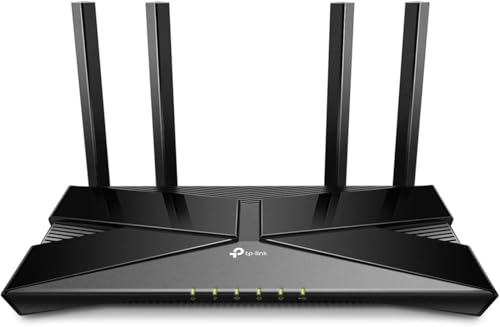
- Wi-Fi 6 with OFDMA and MU-MIMO
- 1.5 GHz tri-core processor
- App setup, beamforming, and parental controls
Best For: Budget-focused shoppers comfortable with a 90-day renewed-product warranty
Best Parental-Control Simplicity

- Profile-based parental controls
- AC1200 dual-band wireless
- Four gigabit LAN ports and mesh roaming
Best For: Families prioritizing simple activity controls and wired connectivity
Best Overall Wi-Fi 6 Value – TP-Link Archer AX50
The TP-Link Archer AX50 is a strong choice if you want a Wi-Fi router with parental controls and modern Wi-Fi 6 performance. Its dual-band AX3000 design, OFDMA support, Gigabit ports, and built-in HomeCare provide a practical mix of speed, capacity, security, and family-management features.
Best For: Families that need robust parental controls alongside fast streaming, gaming, and everyday connectivity.
Pros:
- Wi-Fi 6 speeds up to 3 Gbps across the dual bands.
- Built-in HomeCare includes parental controls, antivirus, and QoS.
- OFDMA and MU-MIMO help connect multiple devices efficiently.
- Includes five Gigabit-capable ports and works with major internet providers.
Cons:
- A separate modem is required for most internet services.
- Coverage details vary across the supplied specifications, so placement and home layout matter.
Choose the Archer AX50 when parental controls are a priority but you do not want to sacrifice Wi-Fi 6 capacity. It is especially appealing for busy households with several simultaneous streams, games, and connected devices.
Best Budget Wi-Fi 6 Pick – TP-Link Archer AX21
The TP-Link Archer AX21 is a practical Wi-Fi router with parental controls for households moving to Wi-Fi 6 on a budget. It offers dual-band AX1800 performance, OFDMA, four high-gain antennas, beamforming, and app-based management, while also supporting WPA3 and EasyMesh expansion.
Best For: Value-focused households seeking dependable Wi-Fi 6 coverage and straightforward network management.
Pros:
- Wi-Fi 6 dual-band throughput up to 1.8 Gbps.
- OFDMA supports communication with multiple devices simultaneously.
- Four high-gain antennas, beamforming, and an advanced FEM support coverage.
- Supports WPA3, VPN servers, Alexa control, and EasyMesh.
Cons:
- The supplied notes do not specify the exact parental-control feature set.
- A separate modem is required for internet access.
The Archer AX21 makes sense if you want the efficiency of Wi-Fi 6 without stepping up to a higher-speed model. Confirm the available parental-control options in the Tether app if detailed scheduling or filtering is essential to your setup.
Best Advanced Family Controls – Synology RT2600ac
The Synology RT2600ac is a Wi-Fi router with parental controls aimed at users who want deeper network management. Its Synology Router Manager platform adds traffic monitoring, bandwidth management, Threat Prevention, VPN tools, and powerful parental-control capabilities to a 4×4 Wi-Fi 5 router.
Best For: Families and advanced users who value detailed traffic controls, monitoring, and security tools over the newest Wi-Fi generation.
Pros:
- Powerful parental controls with Layer 7 traffic control and monitoring.
- Threat Prevention and multiple VPN options add network-management depth.
- 4×4 802.11ac radios with MU-MIMO deliver up to 2.53 Gbps wireless speed.
- Supports Dual WAN for load balancing or failover.
Cons:
- Uses Wi-Fi 5 rather than Wi-Fi 6.
- Its advanced features may require more setup than a basic router.
- Mesh expansion is available, but additional compatible equipment is needed.
Consider the RT2600ac when parental controls are only one part of your networking requirements. Its SRM software is the standout feature for households that want visibility and control over what devices are doing, though Wi-Fi 6 models may be a better fit for buyers prioritizing the latest wireless standard.
Best Affordable Small-Home Option – TP-Link Archer A54
The TP-Link Archer A54 is a straightforward Wi-Fi router with parental controls for smaller homes and basic broadband plans. It combines dual-band AC1200 performance, four external antennas, app management, WPA3 security, guest Wi-Fi, and EasyMesh compatibility in an accessible package.
Best For: Smaller homes seeking an inexpensive router with basic family-management and wireless features.
Pros:
- Dual-band speeds total up to 1,200 Mbps.
- Four external antennas support coverage up to 1,000 square feet.
- Includes app-based management, guest Wi-Fi, and parental controls.
- Supports WPA3, Access Point mode, and EasyMesh expansion.
Cons:
- Uses Wi-Fi 5 rather than Wi-Fi 6.
- Its four Ethernet ports are Fast Ethernet rather than Gigabit.
- A separate modem is required for most internet providers.
The Archer A54 is a sensible basic option when affordability and simple parental controls matter more than maximum throughput. It fits smaller spaces well, but households with faster-than-100 Mbps wired needs or many demanding devices should consider a faster model.
Best All-Around WiFi 6 Pick – ASUS RT-AX1800S
If you want a capable wi fi router with parental controls for a connected home, the ASUS RT-AX1800S combines WiFi 6 performance, app-based management, and subscription-free AiProtection Classic security. Its dual-band design and four Gigabit LAN ports make it practical for streaming, gaming, and smart-home devices.
Best For: Families seeking a balanced WiFi 6 router with parental controls, built-in security, and VPN access.
Pros:
- WiFi 6 with MU-MIMO and OFDMA for improved efficiency across multiple devices.
- AiProtection Classic provides subscription-free network security.
- Four Gigabit LAN ports support wired gaming, streaming, and smart-home equipment.
- AiMesh compatibility allows the network to be expanded with compatible ASUS routers.
Cons:
- It is a dual-band router rather than a tri-band model.
- Actual coverage and throughput vary with building materials, traffic, and network conditions.
The RT-AX1800S is a sensible middle-ground option: it adds modern WiFi 6 efficiency and useful parental-control features without requiring a subscription for its listed security tools.
Best Mesh Option for Families – TP-Link Deco M5
The TP-Link Deco M5 is a practical choice if your search for a wi fi router with parental controls centers on whole-home coverage. Its mesh design creates one network name and password, while TP-Link HomeCare adds parental controls, security tools, and Quality of Service features through the Deco app.
Best For: Homes that need expandable mesh coverage and straightforward app-guided parental controls.
Pros:
- Mesh system can be expanded with additional Deco units.
- HomeCare includes parental controls, security features, and QoS tools.
- Single WiFi name and password support smoother movement around the home.
- App-guided setup is designed to be completed in a few steps.
Cons:
- This listing includes one Deco unit, so larger homes may require additional units.
- It uses WiFi 5 rather than WiFi 6.
- The single unit has one listed port.
Choose the Deco M5 when coverage flexibility and simple family-network management matter more than having the newest WiFi generation. Expansion lets the system adapt as coverage needs change.
Best for Speed and Scheduling – ASUS RT-AX3000S
The ASUS RT-AX3000S is a strong fit for shoppers seeking a high-speed wi fi router with parental controls. It supports WiFi 6, offers combined speeds of about 3000 Mbps, and includes parental-control scheduling alongside VPN features and AiMesh expansion.
Best For: Busy households with many devices that want faster WiFi 6 performance and scheduled access controls.
Pros:
- WiFi 6 dual-band speeds are rated at up to about 3000 Mbps combined.
- Parental-control scheduling helps organize device access.
- MU-MIMO and OFDMA support simultaneous connections more efficiently.
- AiMesh compatibility enables expansion with compatible ASUS routers.
Cons:
- It is a dual-band design, not a tri-band system.
- Actual speeds and coverage depend on environmental and network conditions.
- Its listed LAN port bandwidth is 1000 Mbps, which may limit wired multi-gigabit setups.
For households where speed and scheduling are priorities, the RT-AX3000S offers a more capable WiFi 6 platform than the slower mesh option here, while retaining ASUS expansion and VPN features.
Best Wi-Fi 6 Value – TP-Link Archer AX10
If you want a Wi-Fi router with parental controls and modern wireless performance, the TP-Link Archer AX10 is a strong all-around option. Its Wi-Fi 6 support, dual-band speeds, OFDMA, and MU-MIMO are suited to busy homes with streaming, gaming, video calls, and smart-home devices.
Best For: Families seeking an affordable Wi-Fi 6 router with parental controls, broad device compatibility, and four gigabit LAN ports.
Pros:
- Wi-Fi 6 features include OFDMA, MU-MIMO, and 1024-QAM for improved network efficiency.
- Dual-band speeds reach 300 Mbps on 2.4 GHz and 1201 Mbps on 5 GHz.
- Beamforming, OneMesh compatibility, guest mode, and app-based control add flexibility.
- Includes four gigabit LAN ports and supports WPA3 security.
Cons:
- A modem is required for most internet service providers.
- Fixed antennas limit physical positioning adjustments.
The Archer AX10 balances current Wi-Fi 6 capabilities with practical home-network features. It is a sensible pick when parental controls and dependable performance matter more than premium mesh hardware.
Best Renewed Option – TP-Link Archer AX10 Renewed
The renewed TP-Link Archer AX10 offers a Wi-Fi router with parental controls for households that want Wi-Fi 6 features at a potentially lower upfront cost. It combines dual-band connectivity, a 1.5 GHz tri-core processor, beamforming, and setup through the TP-Link Tether app.
Best For: Budget-conscious buyers who want Wi-Fi 6, app-based setup, and parental-control functionality in a renewed router.
Pros:
- Wi-Fi 6 supports OFDMA, 1024-QAM, and MU-MIMO for handling multiple devices.
- Dual-band ratings are up to 300 Mbps on 2.4 GHz and 1201 Mbps on 5 GHz.
- The 1.5 GHz tri-core processor is designed for smooth communication across connected devices.
- Beamforming and WPA3 support add coverage and security features.
Cons:
- As a renewed product, it carries a 90-day limited warranty.
- The supplied details list four ports, but do not specify four gigabit LAN ports as clearly as the new model.
This model has the same Archer AX10 identity and core Wi-Fi 6 capabilities, but its renewed status makes warranty coverage an important buying consideration. It fits shoppers prioritizing features and value over a longer manufacturer warranty.
Best Parental-Control Simplicity – D-Link DIR-1260 AC1200 Router
The D-Link DIR-1260 is a practical Wi-Fi router with parental controls for families that prefer profile-based management of kids’ online activity. Its AC1200 dual-band wireless, high-power amplifiers, mesh smart roaming, and gigabit wired ports support everyday home networking and gaming.
Best For: Families wanting straightforward profile-based parental controls, strong dual-band coverage, and multiple gigabit Ethernet connections.
Pros:
- Profile-based parental controls make it easier to manage children’s online activity.
- AC1200 dual-band speeds reach 300 Mbps on 2.4 GHz and 867 Mbps on 5 GHz.
- High-power amplifiers and mesh smart roaming help extend and maintain coverage.
- Includes a gigabit WAN port and four gigabit LAN ports for wired devices.
Cons:
- Uses Wi-Fi 5 (802.11ac), rather than the newer Wi-Fi 6 standard.
- The supplied details list a maximum upstream data transfer rate of 1200 Mbps, so actual performance depends on the network and connected devices.
The DIR-1260 is less future-focused than the Wi-Fi 6 alternatives, but its profile-based controls and gigabit connectivity make it appealing for a family network. It is especially suitable when parental management and coverage are the main priorities.
How We Picked the Best Wi Fi Router with Parental Controls
We focused on routers that offer practical parental-control features alongside dependable everyday performance. The selection includes Wi-Fi 5 and Wi-Fi 6 models, standalone routers, and a mesh option so shoppers can match the system to their home size and budget.
We also considered scheduling tools, content filtering, device profiles, guest networking, security features, wired port capacity, VPN support, and whether advanced controls require a paid subscription. Because parental-control functions can vary by firmware version, always confirm current features in the manufacturer’s app or support documentation.
Quick Comparison
| Best For | What to Prioritize | Recommended Type |
|---|---|---|
| Small apartments | Simple setup and reliable dual-band coverage | Affordable Wi-Fi 5 or Wi-Fi 6 router |
| Busy family homes | Device profiles, schedules, and stronger capacity | Wi-Fi 6 router with app-based controls |
| Large or multi-story homes | Whole-home coverage and roaming | Mesh system |
| Advanced users | Detailed management, VPN, and security tools | Feature-rich router such as a Synology or ASUS model |
Key Buying Factors for a Wi-Fi Router with Parental Controls
Control Quality and Ease of Use
Look for separate device or family profiles, bedtime schedules, pause controls, age-appropriate content filters, and usage reports. A clear mobile app is often more valuable than a long feature list because controls need to be easy to adjust quickly.
Coverage and Wireless Standard
Wi-Fi 6 generally handles crowded networks and many connected devices more efficiently than older Wi-Fi 5 hardware. However, router placement, wall materials, internet speed, and home layout matter just as much. Choose a mesh system when one router cannot provide consistent coverage.
Security and Subscription Requirements
Check whether parental controls, threat protection, or security monitoring are included indefinitely or limited to a trial. Subscription-free controls can reduce long-term cost, while paid services may provide more advanced filtering and reporting.
Ports, Speed, and Expansion
Gigabit Ethernet ports are useful for smart TVs, consoles, workstations, and access points. Consider WAN speed if you have fast broadband, and look for mesh or extender compatibility if you expect to expand coverage later.
Who Should Buy Which Wi Fi Router with Parental Controls?
Choose an affordable dual-band model if you need basic scheduling and content restrictions for a small home. A Wi-Fi 6 option is a better fit for families with numerous phones, laptops, streaming devices, and smart-home products. Select a mesh system for larger homes or persistent dead zones. Buyers who want deeper configuration, VPN capabilities, bandwidth management, or more detailed network oversight should consider the feature-rich ASUS or Synology choices.
Before buying, verify that the router’s parental-control features work with your preferred devices and operating systems. Also compare app ratings, firmware support, and return policies, since software quality can have a major effect on the ownership experience.