Adding a dedicated volume control can make a whole-home, theater, or desktop audio system easier to use without reaching for an amplifier or phone. The best options balance smooth adjustment, installation style, power handling, and compatibility with your speakers.
This roundup compares 10 speaker volume controls under $100, including in-wall rotary and sliding models, outdoor-rated designs, and a desktop XLR controller for near-field systems.
Best 10 Speaker Volume Controls Under 100 Picks for 2026
Whole-Home Power
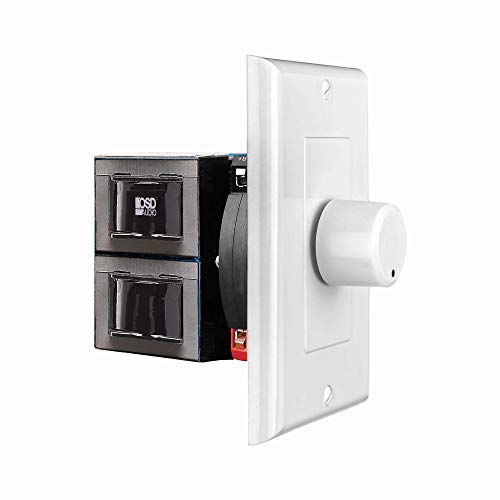
- 100W per channel with minimal bass roll-off
- Impedance matching for multi-speaker systems
- 12-step in-wall rotary control
Best For: Dedicated audio zones and whole-house speaker distribution
Desktop Simplicity

- Balanced XLR connectivity
- Power-free analog level control
- Single smooth rotary knob
Best For: Desktop speakers with balanced XLR connections
Multi-Room Hi-Fi

- 100W impedance-matching wall control
- Supports up to eight speaker pairs
- 12-step knob with white and ivory plates
Best For: Multi-room home, office, and business audio
Easy Slider Control

- 100-watt load handling
- Vertical multi-position volume slider
- Fits standard junction and gang boxes
Best For: Simple in-wall control for home theater and remote speakers
Best Simple Slide Control
Monoprice MVL-100 Wall Volume Controller
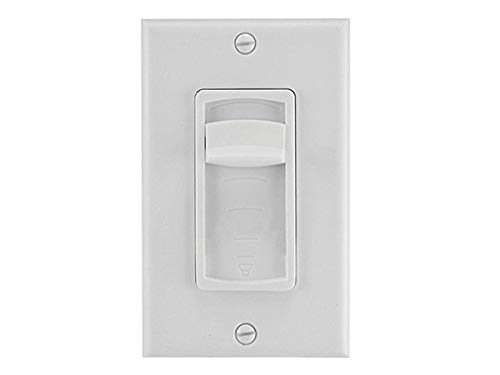
- 12-position slide control with off and maximum settings
- Rated for up to 100 watts per channel
- Works with 4- to 16-ohm speaker systems
Best For: Indoor systems needing a basic wall-mounted slide control
Best Single-Speaker Control
Vaiyer 10-Step In-Wall Volume Control
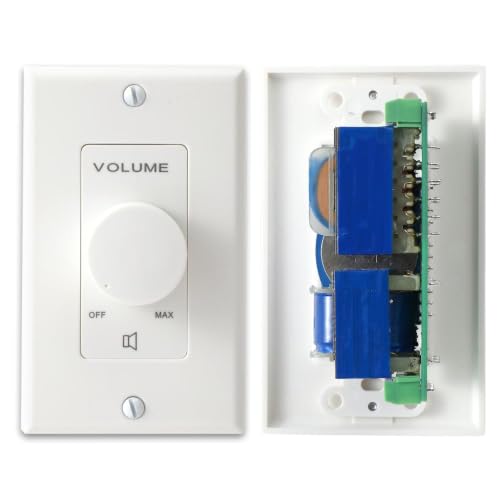
- 10-step rotary adjustment
- 75W RMS / 150W max per channel
- Includes wallplates and wire nuts
Best For: Localized control of one distributed-audio speaker
Best Compact Wall-Mount Option
Pyle PVC1 Rotary Volume Control

- Flush in-wall rotary design
- Listed for up to 100W
- Includes frame, wall plate, and hardware
Best For: Indoor home theater and surround-sound installations
Best Multi-Speaker Flexibility
ST-VC100 Impedance-Matching Controller

- Connects up to eight speaker pairs
- 100W passive power handling
- Designed for indoor and outdoor placements
Best For: Multi-room systems with several speaker pairs
Whole-Home Power – OSD Audio SVC100
OSD Audio 100W in Wall Volume Control Impedance Matching for Home Speakers, Rotary Knob White SVC100
Check Price On AmazonThe OSD Audio SVC100 is a practical choice for speaker volume controls under 100 when you need independent adjustment in a dedicated audio zone. Its 100-watt-per-channel rating, impedance matching, and in-wall rotary design suit whole-house audio systems.
Best For: Dedicated rooms and multi-zone home audio installations using up to eight pairs of 8-ohm speakers.
Pros:
- 100 watts per channel with minimal bass roll-off
- Impedance protection helps stabilize parallel speaker loads
- 12-step knob, junction box, and white, ivory, and almond trim plates included
Cons:
- Requires in-wall installation and wiring
- Rotary control may not suit users who prefer a slider
With support for up to eight speaker pairs and compatibility with up to 14-gauge wiring, this is a flexible wired solution for permanent room-by-room volume control.
Desktop Simplicity – TC Electronic Level Pilot X
TC Electronic Level Pilot X Desktop Speaker Volume Controller with XLR Connectivity
Check Price On AmazonThe TC Electronic Level Pilot X is a straightforward option among speaker volume controls under 100 for desktop setups with balanced XLR connections. It provides computer-independent analog level adjustment through one ergonomic rotary knob.
Best For: Desktop speakers or studio-style systems that use balanced XLR connectivity.
Pros:
- Fully balanced design with XLR connectors
- Power-free operation requires no supply
- Smooth, ergonomic rotary control
Cons:
- Designed for XLR-connected systems rather than in-wall speaker wiring
- Offers one desktop control instead of separate room-zone controls
Its compact desktop format and passive operation make it a convenient way to adjust analog speaker level without adding another powered device to the setup.
Multi-Room Hi-Fi – RECOIL VC-R100 Wall Knob
The RECOIL VC-R100 is a strong candidate for speaker volume controls under 100 in home, office, or business installations. This 100-watt wall-mount knob offers 12-step adjustment, impedance matching, and support for up to eight pairs of 8-ohm speakers.
Best For: Multi-room systems that need flush wall-mounted control and broad speaker distribution.
Pros:
- 100-watt maximum output with minimal bass roll-off
- 12-step rotary control for independent area adjustment
- Includes white and ivory plates plus installation accessories
Cons:
- Requires wall installation and speaker wiring
- Its listed connectivity and installation details may require careful system matching
With a stated 20Hz–20kHz frequency range and impedance-matching jumpers, the VC-R100 is built for distributed audio where consistent, accessible room control matters.
Easy Slider Control – Pyle PVC2 In-Wall Slider
The Pyle PVC2 offers a simple sliding alternative for speaker volume controls under 100. It installs like a light switch in a standard junction box and handles loads up to 100 watts for compatible home theater, indoor, or outdoor speaker systems.
Best For: Standard wall installations where a vertical sliding volume control is easier to use than a rotary knob.
Pros:
- Vertical multi-position slider provides quick volume adjustment
- Fits standard electrical junction or gang boxes
- Compatible with audio and video systems and handles up to 100 watts
Cons:
- Uses a slider rather than a rotary control
- Requires setting the amplifier level before adjusting the remote speaker volume
The included Decora-style wall plate gives the PVC2 a clean, familiar appearance, while its straightforward installation suits basic remote-speaker control applications.
Best Outdoor Pick – OSD Audio OVC100 Weather-Resistant Volume Control
For speaker volume controls under 100, the OSD Audio OVC100 is a practical choice for outdoor systems that need weather resistance and impedance protection. Its knob adjusts connected speakers without exceeding the amplifier or receiver’s master-volume setting.
Best For: Outdoor decks, patios, pool areas, and multi-speaker installations requiring a weather-resistant wall control.
Pros:
- Weatherproof enclosure designed for rain, snow, heat, and changing outdoor conditions.
- Impedance-matching switch helps stabilize the ohm load and protect connected equipment.
- Supports up to eight pairs of stereo speakers and handles up to 100 watts.
- Detachable lock-slip wire connectors and included wall-mount hardware simplify installation.
Cons:
- It cannot increase volume beyond the amplifier or receiver’s master setting.
- Its larger enclosure may be less suitable where a compact control is preferred.
The OVC100 stands out when outdoor durability and system protection matter as much as basic volume adjustment. It is a strong fit for distributed audio setups, especially those using multiple speaker pairs.
Best Simple Slide Control – Monoprice MVL-100 Wall Volume Controller
Among speaker volume controls under 100, the Monoprice MVL-100 offers straightforward wall-mounted adjustment through a 12-position slide control. It is rated for speaker systems up to 100 watts per channel and impedance from 4 to 16 ohms.
Best For: Indoor speaker systems where a simple white slide-style wall control is preferred.
Pros:
- Supports up to 100 watts per channel.
- Compatible with speaker impedances from 4 to 16 ohms.
- Provides 12 settings, including minimum/off and maximum volume.
- Wall-mounted slide design offers direct, easy-to-understand operation.
Cons:
- A wall mounting bracket is not included.
- The slide interface may be less precise for users who prefer a rotary knob.
The MVL-100 is a no-frills option for installations that need accessible volume control without extra features. Confirm the mounting hardware and speaker power requirements before installation.
Best Multi-Speaker Knob – Herdio 100W In-Wall Volume Controller
The Herdio 100W controller is one of the more flexible speaker volume controls under 100 for home audio installations. Its 12-position knob provides incremental adjustment, while the design can manage up to eight speakers in a compatible high-power setup.
Best For: Home audio systems that need smooth rotary adjustment and support for multiple connected speakers.
Pros:
- 12-position knob enables incremental volume adjustment.
- Designed to drive and control up to eight speakers.
- Standard mounting holes or pins support recessed wall installation.
- Includes two terminals, replacement panels, screws, and an instruction manual.
Cons:
- The supplied notes do not specify weather resistance for outdoor installation.
- Compatibility with a particular amplifier or speaker impedance should be verified before fitting.
With its smooth rotary control, multi-speaker capability, and included installation accessories, the Herdio is a practical choice for distributed indoor audio. Its replacement panels also provide some flexibility when matching the installation.
Best Single-Speaker Control – Vaiyer 10-Step In-Wall Volume Control
For shoppers comparing speaker volume controls under 100, the Vaiyer is a straightforward in-wall option for adjusting one speaker independently. Its 10-step rotary control, standard wall-box installation, and included wallplates suit compact distributed-audio setups.
Best For: Rooms or spaces with one installed speaker that need localized volume adjustment.
Pros:
- Provides 10 positions from full-off to full-on.
- Handles up to 75W RMS and 150W maximum per channel.
- Includes standard and decorator wallplates plus wire nuts.
- Accepts 16–22 gauge wire and fits a standard electrical wall box.
Cons:
- Designed specifically for single-speaker control.
- Uses stepped adjustment rather than a continuously variable control.
The Vaiyer focuses on simple, localized control rather than broad system connectivity. It is a practical pick when a clean wall-mounted installation and moderate power handling matter more than controlling multiple speaker pairs.
Best Compact Wall-Mount Option – Pyle PVC1 Rotary Volume Control
The Pyle PVC1 is a compact flush in-wall volume control to consider among speaker volume controls under 100. Its rotary-style wall plate is intended for home theater and surround-sound installations, with mounting hardware and finishing components included.
Best For: Home theater or surround-sound systems needing a discreet wall-mounted volume adjustment.
Pros:
- Uses a flush in-wall rotary-style design.
- Supports speaker systems with a listed maximum output power of 100 watts.
- Includes a mounting ring, installation wire nuts, wall plate, decorative frame, and hardware.
- Measures approximately 3 inches by 3 inches by 3 inches.
Cons:
- The supplied specifications list one audio channel.
- Its connectivity details include inconsistent USB references, so buyers should verify system compatibility before installation.
- Waterproofing is not provided.
With its small footprint and decorative finishing frame, the PVC1 is aimed at tidy indoor installations. Confirm the wiring and system requirements first, particularly if your setup needs more than one channel or outdoor use.
Best Multi-Speaker Flexibility – ST-VC100 Impedance-Matching Controller
For larger setups shopping for speaker volume controls under 100, this ST-VC100 offers impedance matching and support for up to eight pairs of speakers. Its passive 100W design can be installed in homes, garages, yards, decks, porches, or patios without requiring an additional power source.
Best For: Multi-room or indoor/outdoor audio systems with several speaker pairs.
Pros:
- Supports connection of up to eight pairs of speakers.
- Provides 100W power handling with a passive design.
- Offers impedance matching for broader system flexibility.
- Package includes the controller, panels, terminals, screws, and instruction manual.
Cons:
- Its larger multi-speaker capability may be unnecessary for a single-speaker room.
- The supplied notes do not specify the number of volume adjustment steps or control style.
- Installation requires wall mounting and terminal connections.
The ST-VC100 stands out when speaker distribution is the priority. Its eight-pair capacity and passive operation make it more suitable for expansive audio layouts than simple one-room volume control, provided the 100W rating fits the system.
How We Picked the Best Speaker Volume Controls Under 100
We focused on practical controls priced below $100 and compared the features that matter most during installation and everyday use. These include rated power handling, impedance matching, control style, connection format, installation requirements, and suitability for indoor or outdoor locations. We also separated passive in-wall controls from desktop controllers because they serve different audio setups.
Product specifications can vary by seller and revision, so confirm the current power rating, wiring configuration, and included mounting hardware before ordering. A volume control should be installed between compatible amplifier and speaker wiring, with power turned off during installation.
Quick Comparison
| Control type | Best suited for | What to check |
|---|---|---|
| In-wall rotary | Permanent home audio installations | Impedance matching, wall-box fit, power rating |
| In-wall slider | Fast visual level adjustments | Plate dimensions and slider travel |
| Outdoor-rated | Patios, porches, and exterior speaker zones | Weather-resistant enclosure and mounting location |
| Desktop XLR | Powered monitors and desktop speakers | Balanced XLR compatibility and cable reach |
Key Buying Factors for Speaker Volume Controls Under $100
Power Handling and Impedance Matching
Choose a controller rated for at least the amplifier’s expected output and the speaker system’s load. Impedance-matching models are especially useful with multi-room systems or multiple speaker pairs because they help protect the amplifier from an unsuitable combined load. Do not assume a higher wattage label automatically makes a control compatible with every system.
Installation Style
Rotary knobs offer familiar, precise adjustment, while sliders provide an immediate visual indication of level. Flush in-wall models create a clean finish but may require an electrical box, suitable wall depth, and access to speaker cable. Check plate size and terminal layout before cutting into the wall.
Connections and System Type
Most in-wall units use speaker-level wiring and passive attenuation. A desktop unit with XLR connections is intended for compatible line-level equipment and should not be substituted for an in-wall speaker control. Match the controller’s connection type to the signal path, not simply to the speaker brand.
Indoor or Outdoor Use
For patios and other exposed areas, select a model with a weather-resistant enclosure and install it in a location protected from direct water whenever possible. Indoor-only controls may corrode or fail when exposed to humidity.
Who Should Buy Which Speaker Volume Controls Under 100?
- For a standard home theater or room installation: Choose an in-wall rotary control with impedance matching and a suitable power rating.
- For a modern, quick-glance interface: Consider a sliding control if visible level position matters more than a traditional knob.
- For several speaker pairs or zones: Prioritize impedance matching and verify the amplifier’s minimum supported load.
- For patios or outdoor rooms: Use an outdoor-rated controller and follow the manufacturer’s placement guidance.
- For powered desktop monitors: Choose the XLR desktop controller only when your equipment supports balanced XLR connections.
Before buying, confirm the amplifier type, speaker impedance, wiring path, available wall space, and required power rating. Those checks matter more than cosmetic differences and will help ensure your chosen control operates safely and smoothly.