The right in-wall volume control makes whole-home audio easier to manage without reaching for an amplifier or app every time you want a small adjustment. These controls range from compact rotary knobs to high-power and multi-zone models designed for more demanding installations.
Below, we compare 10 options by power handling, wiring flexibility, control style, and installation needs so you can choose a dependable match for your speakers and amplifier.
Best 10 Speaker Volume Controls for Home Audio Picks for 2026
Best Whole-Home Zone Pick
OSD Audio SVC100 In-Wall Volume Control
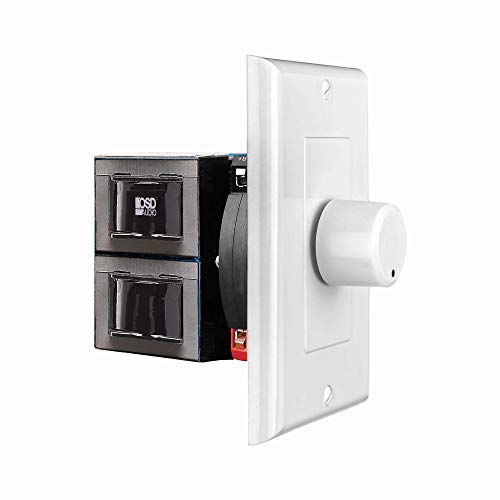
- 100W per channel with minimal bass roll-off
- Supports up to eight pairs of 8-ohm speakers
- Includes impedance protection and three trim colors
Best For: Whole-home audio zones with multiple speaker pairs
Best High-Power 70V/100V Option
Rockville VOL70200 Zone Controller

- Handles up to 200 watts per zone
- Compatible with 70V/100V systems
- 12-step control with an off position
Best For: High-power 70V/100V residential or commercial zones
Best Hi-Fi Multi-Room Value
RECOIL VC-R100 Wall-Mount Volume Control

- 100W per channel with minimal bass roll-off
- Supports up to eight pairs of 8-ohm speakers
- 20Hz–20kHz stated frequency response
Best For: Multi-room systems seeking wall-mounted hi-fi control
Best Simple Slider Control
Monoprice MVL-100 Speaker Volume Controller
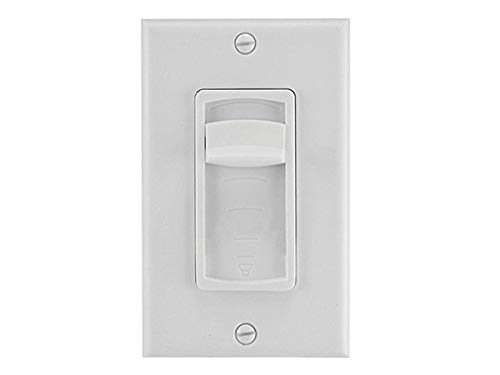
- Supports up to 100W per channel
- Compatible with 4–16 ohm speakers
- 12-position wall-mounted slider
Best For: Simple speaker systems needing tactile slider control
Impedance-Safe Power Handling
Monoprice 300W Rotary Volume Control

- Supports up to 300W amplifier output
- Connects multiple speaker pairs to one amp
- Fits standard single-gang low-voltage boxes
Best For: High-power multi-pair speaker installations
Simple Sliding Control
Pyle In-Wall Speaker Volume Fader

- Vertical sliding volume adjustment
- Fits standard junction and gang boxes
- Handles loads up to 100W
Best For: Home theater and distributed-speaker installations
Best Impedance-Matching Pick
Monoprice 100W Rotary Volume Control

- Supports multiple speaker pairs on one amplifier or receiver
- Impedance matching helps protect compatible amplifiers
- Fits standard single-gang low-voltage installations
Best For: Multi-speaker home entertainment systems up to 100 watts
Best Simple In-Wall Control
Pyle PVC1 Wall Mount Volume Knob

- Flush rotary wall plate for wired home audio
- Includes mounting and finishing hardware
- Specified for stereo systems up to 100 watts
Best For: Basic home theater and surround-sound installations
Best Dual-Channel Option
Pyle PVCD15 A/B Speaker Controller

- Independently controls right and left speakers
- Handles loads up to 120 watts
- Supports up to two pairs of indoor or outdoor speakers
Best For: Home audio systems needing separate dual-channel adjustment
Best Whole-Home Zone Pick – OSD Audio SVC100 In-Wall Volume Control
OSD Audio 100W in Wall Volume Control Impedance Matching for Home Speakers, Rotary Knob White SVC100
Check Price On AmazonThe OSD Audio SVC100 is a practical choice when you need speaker volume controls for home audio across dedicated rooms or zones. Its 100-watt-per-channel rating, impedance matching, and 12-step rotary knob support flexible whole-house installations.
Best For: Whole-home audio systems with multiple 8-ohm speaker pairs and independently controlled listening zones.
Pros:
- Handles up to 100 watts per channel with minimal bass roll-off.
- Adjustable jumpers can support up to eight pairs of 8-ohm speakers.
- Includes impedance protection and white, ivory, and almond trim plates.
- Fits a standard gang box and accepts wiring up to 14 gauge.
Cons:
- Installation requires in-wall wiring and a suitable gang box.
- The rotary design may be less convenient for shoppers who prefer sliders or digital controls.
With its impedance-matching design and included trim options, the SVC100 is a well-rounded solution for distributed home audio. Verify amplifier compatibility and box depth before installation.
Best High-Power 70V/100V Option – Rockville VOL70200 Zone Controller
The Rockville VOL70200 is designed for speaker volume controls for home audio and other zone-based systems using 70V or 100V distribution. Its 200-watt handling and 12-step rotary attenuation make it suited to higher-power installations.
Best For: Residential or commercial audio zones built around compatible 70V/100V systems.
Pros:
- Handles audio zones up to 200 watts.
- Uses a compact single-gang design for standard electrical boxes.
- Offers 0–10 volume settings plus an absolute off position.
- Includes a detachable euro-block terminal and mounting screws.
Cons:
- It is intended for 70V/100V systems rather than general low-impedance speaker setups.
- A backless or 4.5-inch-deep junction box is recommended for ventilation.
This controller stands out for power handling and straightforward zone adjustment, especially in distributed-audio installations. Confirm that your amplifier and speaker system use the required 70V or 100V architecture.
Best Hi-Fi Multi-Room Value – RECOIL VC-R100 Wall-Mount Volume Control
The RECOIL VC-R100 provides speaker volume controls for home audio when you want independent adjustment in different rooms. It combines 100-watt-per-channel handling, impedance-matching jumpers, and a 12-step rotary knob for multi-speaker systems.
Best For: Multi-room home, office, or business audio systems requiring wall-mounted independent volume control.
Pros:
- Rated for 100 watts per channel with minimal bass roll-off.
- Supports up to eight pairs of 8-ohm speakers through adjustable jumpers.
- Provides a stated 20Hz–20kHz frequency response.
- Includes white and ivory plates plus installation accessories.
Cons:
- Requires in-wall or wall-mount installation.
- The 12-step knob offers less continuous adjustment than a digital controller.
The VC-R100 is a strong fit for distributed audio where maintaining a broad hi-fi frequency response matters. Its multi-speaker support is useful, but installation should account for the system’s impedance and wiring requirements.
Best Simple Slider Control – Monoprice MVL-100 Speaker Volume Controller
The Monoprice MVL-100 is a straightforward option for speaker volume controls for home audio, using a familiar wall-mounted slider instead of a rotary knob. It supports systems rated up to 100 watts per channel and speaker impedances from 4 to 16 ohms.
Best For: Basic wall-mounted speaker systems where a tactile 12-position slider is preferred.
Pros:
- Supports up to 100 watts per channel.
- Works with speaker impedances from 4 to 16 ohms.
- Provides 12 positions, including minimum/off and maximum settings.
- Uses screw terminals and a white ABS plastic housing.
Cons:
- A wall mounting bracket is not included.
- The supplied notes do not indicate impedance-matching protection.
- Its 12-position slider is less granular than continuous volume adjustment.
This is a sensible budget-style choice for uncomplicated installations, particularly if you already have the required mounting hardware. Check the wall-box arrangement and speaker load before wiring it into the system.
High-Power Precision – Herdio 100W Wall Volume Control
The Herdio 100W Volume Control is a practical choice when you need speaker volume controls for home audio with straightforward wall-mounted adjustment. Its 12-position knob is designed for smooth changes across compatible home or professional audio systems.
Best For: Multi-speaker home audio setups requiring precise, centralized wall control.
Pros:
- 12-position rotary adjustment supports precise volume changes.
- Can drive up to eight speakers in suitable high-power audio setups.
- Includes replacement panels, terminals, screws, and an instruction manual.
- Standard mounting holes or pins support relatively simple installation or replacement.
Cons:
- Rated for 100W, so it is not the right match for systems exceeding that capacity.
- Installation requires screw-in wall mounting and audio-system wiring.
With its smooth rotary operation and included installation hardware, the Herdio is suited to users who want a traditional in-wall knob and flexible multi-speaker control.
Impedance-Safe Power Handling – Monoprice 300W Rotary Volume Control
Monoprice 300W Rotary Impedance Matching Speaker Volume Control - with Color Kit
Check Price On AmazonThe Monoprice 300W Rotary Impedance Matching Speaker Volume Control is built for speaker volume controls for home audio where amplifier protection and multiple speaker pairs are priorities. Its impedance-matching design helps present a suitable overall impedance to the amplifier.
Best For: Higher-power installations connecting multiple speaker pairs to one amplifier or receiver.
Pros:
- Supports amplifiers with up to 300 watts of output power.
- Allows multiple speaker pairs to connect to a single amplifier or receiver.
- Impedance matching is designed to help prevent amplifier damage from an unsuitable overall impedance.
- Fits standard single-gang low-voltage junction boxes or mounting brackets.
Cons:
- Its larger, 1.17-pound construction may require more planning than a simpler controller.
- The supplied notes do not specify the number of volume positions or detailed installation hardware.
This Monoprice model stands out when power capacity and impedance management matter more than a long list of adjustment features.
Simple Sliding Control – Pyle In-Wall Speaker Volume Fader
The Pyle PVC2 offers speaker volume controls for home audio in a familiar wall-switch format. Its vertical sliding fader fits standard junction or gang boxes and provides simple adjustment for indoor, outdoor, or home-theater remote speakers.
Best For: Home theater and distributed-speaker systems needing an easy-to-use in-wall slider.
Pros:
- Vertical sliding control makes volume changes straightforward.
- Fits standard electrical junction or gang boxes.
- Handles loads up to 100 watts.
- Includes a Decora-style wall plate for a clean installation.
Cons:
- The 100W load rating limits suitability for higher-powered systems.
- It uses a slider rather than a rotary control, which may not suit every installation preference.
- Proper operation requires setting the amplifier volume above normal listening level first.
For users who prefer a simple light-switch-style control, the Pyle combines standard wall sizing with a soft-touch vertical fader and broad audio-system compatibility.
Best Impedance-Matching Pick – Monoprice 100W Rotary Volume Control
For home audio setups that need speaker volume controls for home audio and support for multiple speaker pairs, this Monoprice rotary control adds impedance matching to the installation. It is rated for amplifiers up to 100 watts and fits standard single-gang low-voltage junction boxes or mounting brackets.
Best For: Home entertainment systems using multiple speaker pairs with a compatible amplifier or receiver.
Pros:
- Supports connecting multiple speaker pairs to one amplifier or receiver.
- Impedance matching helps keep the load presented to the amplifier high enough to help prevent damage.
- Handles amplifiers with up to 100 watts of output power.
- Fits standard single-gang low-voltage boxes or mounting brackets.
Cons:
- Its 100-watt rating may not suit higher-powered amplifiers.
- It requires a wired, wall-mounted installation.
- The enclosure combines metal and plastic rather than being fully metal.
This is the most installation-focused option in the group, especially when impedance management matters. Choose it when your system uses multiple speaker pairs and stays within its 100-watt capacity.
Best Simple In-Wall Control – Pyle PVC1 Wall Mount Volume Knob
The Pyle PVC1 is a flush, wall-mounted rotary knob for listeners who want straightforward speaker volume controls for home audio. Its supplied mounting ring, wall plate, finishing frame, wire nuts, and hardware support a clean in-wall installation for home theater or surround-sound systems.
Best For: Users wanting a simple white rotary volume plate for a wired home theater or surround-sound installation.
Pros:
- Flush in-wall plate provides a conventional wall-control format.
- Includes a mounting ring, installation wire nuts, decorative frame, and mounting hardware.
- Designed for stereo use and listed for up to 100 watts of speaker output power.
- Offers a 20 Hz–20 kHz frequency-response specification.
Cons:
- The supplied details do not mention impedance matching.
- It is intended for wired installation rather than wireless control.
- The listed impedance is 1 ohm, so system compatibility should be checked carefully.
With its included installation parts and understated white plate, the PVC1 is a practical choice for a basic in-wall control. Verify the system’s impedance and power requirements before installing it.
Best Dual-Channel Option – Pyle PVCD15 A/B Speaker Controller
The Pyle PVCD15 is a useful choice among speaker volume controls for home audio when separate left and right adjustment is important. Its dual-channel design independently controls the right and left speakers, while the controller can handle up to two pairs of indoor or outdoor speakers and a 120-watt load.
Best For: Home audio systems needing independent right/left control and support for up to two speaker pairs.
Pros:
- Independently controls the right and left speakers.
- Handles up to a 120-watt load.
- Can control two separate stereo channels.
- Supports up to two pairs of indoor or outdoor speakers.
Cons:
- The supplied details do not specify impedance matching.
- It requires wall-mounted installation and a wired power source.
- The listed impedance is 1 ohm, so compatibility should be confirmed before use.
The PVCD15 stands out for its dual-channel flexibility and higher stated load handling than the other listed Pyle option. It makes the most sense when independent channel control is more valuable than a basic single-knob setup.
How We Picked These Speaker Volume Controls for Home Audio
We focused on the specifications that matter during a real installation: rated wattage, impedance matching, control format, compatibility with speaker pairs or zones, and the type of system each model is intended to serve. The selection includes rotary and slide controls, standard low-impedance home-audio models, 70V/100V zone controllers, and options with selector or dual-channel functionality.
Power ratings are useful for comparison, but they should not be treated as a guarantee of compatibility. Your amplifier output, speaker impedance, wiring length, and installation environment all affect the correct choice. Models with impedance matching are particularly useful when multiple speaker pairs share one amplifier channel.
Quick Comparison
| Best For | Look For |
|---|---|
| Typical in-wall stereo speakers | 100W impedance-matching rotary control |
| Higher-powered systems | 200W or 300W rated control |
| Commercial or distributed audio | 70V/100V zone controller |
| Fast visual adjustments | Slide-style volume control |
| Multiple speakers or sources | Selector, dual-channel, or multi-pair support |
Key Buying Factors for Speaker Volume Controls for Home Audio
Power and Impedance
Choose a controller whose wattage comfortably exceeds the power your amplifier will deliver to the connected speakers. Confirm whether the control supports 4-ohm, 6-ohm, or 8-ohm speakers, and check its impedance-matching settings if you are connecting multiple pairs. A high wattage rating alone does not make a controller suitable for every system.
System Type
Most residential installations use standard low-impedance speaker wiring. A 70V/100V controller is intended for distributed-audio systems and should be paired with compatible transformer-based speakers and amplification. Do not substitute one type for the other without confirming the entire signal chain.
Control Layout and Installation
Rotary knobs provide familiar, incremental adjustments, while sliders offer quick visual positioning. Measure the electrical box, wall depth, and faceplate area before buying. Verify terminal access, wire gauge compatibility, and whether the finish or included color plates suit the room.
Channels and Zones
A single control may manage one stereo zone, while dual-channel or selector models can handle separate channels, speaker pairs, or source-routing tasks. Read the wiring diagram carefully before installation, especially when combining multiple speakers on one amplifier.
Who Should Buy Which Speaker Volume Controls for Home Audio?
For a typical living room or bedroom: Choose a 100W impedance-matching rotary model for straightforward, discreet control.
For higher-output systems: Consider a 200W or 300W model, but only after confirming amplifier and speaker ratings.
For commercial-style distributed audio: Select a dedicated 70V/100V zone controller and compatible equipment.
For flexible installations: Look for selector, dual-channel, or multi-pair support when one amplifier serves several speaker locations.
If you are unsure about impedance, load calculations, or in-wall electrical requirements, consult the product wiring instructions or a qualified installer before connecting the system.