The right rudder pedals can make takeoffs, landings, taxiing, and coordinated turns feel far more controlled. Adjustable tension is especially useful because it lets you tailor resistance and centering to your aircraft preferences, desk space, and flying style.
Our roundup covers compact entry-level sets, console-compatible options, and premium metal pedals for serious home cockpits. Use the buying guide below to narrow the choices by compatibility, adjustability, construction, and budget.
Best 10 Flight Simulator Pedals with Adjustable Tension Picks for 2026
Best Xbox-Compatible Pick
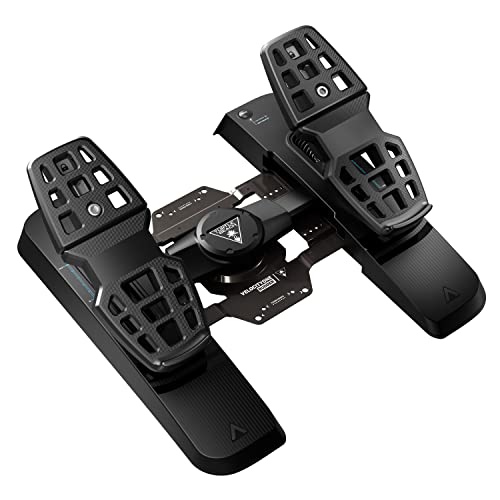
- Swappable springs and adjustable pedal width
- Differential brakes for ground control
- Works with PC and supported Xbox setups
Best For: Xbox and PC pilots seeking configurable pedals
Best Complete Flight Pack

- Includes joystick, throttle, and pedals
- Ambidextrous 16-button joystick
- PC USB compatibility with TARGET mapping software
Best For: PC beginners wanting a complete control bundle
Best Adjustable Aluminum Pedals
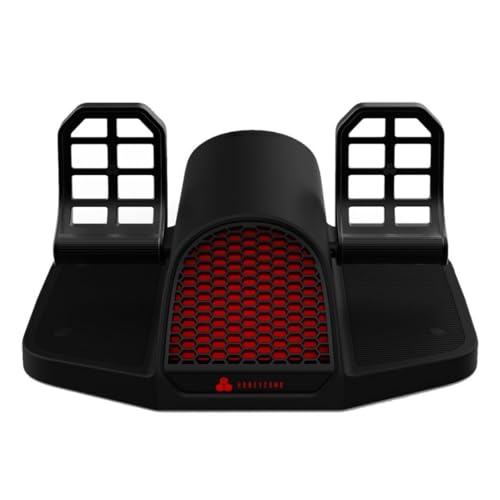
- Adjustable tension knob and pedal angles
- Durable aluminum construction
- Anti-slip strips and deployable carpet spikes
Best For: Dedicated PC or Mac simulator stations
Best Premium Resistance Control

- Adjustable spring resistance with multiple positions
- Suspended Pendul_r mechanism
- H.E.A.R.T magnetic sensors for precise input
Best For: Serious PC pilots with dedicated simulator stations
Best Adjustable-Tension Pick
Logitech G Pro Flight Rudder Pedals
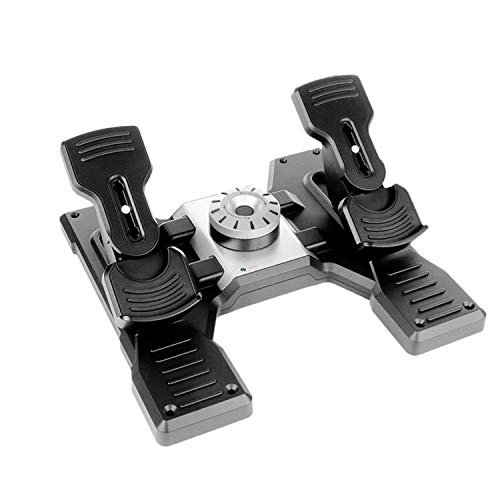
- Adjustable tension dial
- Self-centering rudder axis
- Differential toe brakes
Best For: PC pilots seeking tunable resistance and practical ground control
Best Premium Construction
Honeycomb Charlie Rudder Pedals

- Aluminum construction
- Adjustable tension and pedal angle
- Hall-effect magnetic sensors
Best For: PC or Mac pilots seeking stable, configurable pedals
Best Multi-Platform Option
Thrustmaster TFRP Rudder Pedals

- Adjustable resistance
- Long-travel self-centering axis
- PC, PS5, and Xbox support
Best For: Pilots needing adjustable pedals across PC and consoles
Premium Metal Control

- Full-metal aluminum and stainless-steel construction
- Quick-swappable springs and three control modes
- Hall sensors with adjustable damping options
Best For: Serious flight-sim users wanting durable, configurable pedals
Complete Xbox Setup

- Includes HOTAS controls and TFRP rudder pedals
- Compatible with PC and Xbox Series consoles
- Adjustable resistance and smooth slide-rail steering
Best For: Pilots wanting a complete PC or Xbox flight-control bundle
Adjustable Helicopter Feel

- Adjustable damping dial and infinitely adjustable stroke
- Metal construction with multiple pedal positions
- Plug-and-play USB Hall sensor system
Best For: Helicopter-sim users seeking customizable damping and fit
Best Xbox-Compatible Pick – VelocityOne Rudder Pedals
For flight simulator pedals with adjustable tension, the Turtle Beach VelocityOne stands out with swappable springs, adjustable pedal width, and separate differential brakes. It connects by USB on Windows PCs and supports Xbox consoles when used with the VelocityOne Flight Control System.
Best For: Xbox and PC pilots who want configurable pedals and a stable platform.
Pros:
- Swappable springs and adjustable pedal width help tailor the feel.
- Differential brakes add useful ground-control input.
- Hall Effect sensors cover all axes, with a non-slip base for stability.
Cons:
- Xbox use requires the VelocityOne Flight Control System.
- At 13.3 pounds, it is relatively heavy to move between sessions.
The interchangeable pedals and springs make this a flexible choice, especially for users who want one setup across PC and Xbox. Its broad feature set is best suited to pilots who value adjustability over a minimal footprint.
Best Complete Flight Pack – T16000M FCS Flight Pack
The Thrustmaster T16000M FCS Flight Pack is a practical PC bundle for newcomers who want a joystick, throttle, and pedals together. Its pedals are part of the package, while the joystick provides a twist rudder, 16 buttons, and four independent axes.
Best For: PC beginners who want an all-in-one flight-control package.
Pros:
- Includes the flightstick, throttle, and pedals in one bundle.
- Ambidextrous joystick supports left- or right-handed use.
- TARGET software supports custom mapping profiles.
Cons:
- The supplied notes do not identify adjustable pedal tension.
- It is compatible with PC through Windows USB, not listed for consoles.
This is the bundle to consider when you need a complete starting setup rather than standalone pedals. However, buyers specifically prioritizing flight simulator pedals with adjustable tension should look to the dedicated pedal models in this roundup.
Best Adjustable Aluminum Pedals – Charlie Rudder Pedals
Honeycomb’s Charlie Rudder Pedals are designed for pilots seeking flight simulator pedals with adjustable tension and a durable build. The aluminum chassis, adjustable tension knob, adjustable pedal angles, and magnetic Hall Effect sensors provide a configurable setup for PC and Mac users.
Best For: Desktop simulator users who want adjustable geometry and a metal construction.
Pros:
- Adjustable tension knob and pedal angles support personalized setup.
- Aluminum construction and a belt drive system are built for durability.
- High-friction strips and deployable carpet spikes help limit slipping.
Cons:
- Xbox Series X|S compatibility requires the Honeycomb Xbox Hub.
- Its listed weight is 7.75 kg, which may make repositioning inconvenient.
With multiple physical adjustments and anti-slip features, the Charlie is a strong fit for a dedicated cockpit or desktop station. Its compatibility covers major PC and Mac flight software, while Xbox users need additional hardware.
Best Premium Resistance Control – TPR Rudder Pedals
The Thrustmaster TPR Rudder Pedals are a PC-focused option for pilots who want flight simulator pedals with adjustable tension and a realistic motion design. Their Pendul_r suspended mechanism, adjustable spring system, and H.E.A.R.T magnetic sensors target smooth, precise rudder corrections.
Best For: Serious PC flight-simulation enthusiasts who want tunable resistance and precise yaw control.
Pros:
- Two springs and multiple positioning options let you tune resistance.
- Pendul_r technology provides suspended, fluid pedal movement.
- H.E.A.R.T magnetic sensors are designed for accurate, wear-resistant input.
Cons:
- Compatibility is listed for PC only.
- At 20.2 pounds, it is the heaviest model in this selection.
- The larger 18.8-by-18-by-14.1-inch dimensions may require dedicated space.
This model is aimed at enthusiasts who care more about adjustable resistance and pedal feel than portability. Its substantial size and weight suit a permanent simulator station, while the magnetic sensing supports fine yaw adjustments.
Best Adjustable-Tension Pick – Logitech G Pro Flight Rudder Pedals
The Logitech G Pro Flight Rudder Pedals are a practical choice if you want flight simulator pedals with adjustable tension and a familiar self-centering feel. Their tension dial lets you tailor resistance for lighter general-aviation handling or a heavier jet-like response, while differential toe brakes add useful ground control.
Best For: PC pilots who want adjustable resistance, self-centering control, and differential toe brakes.
Pros:
- Adjustable tension dial supports different aircraft-feel preferences.
- Self-centering rudder axis provides smooth, accurate control.
- Differential toe brakes improve runway and taxi control.
Cons:
- Compatibility is listed for Windows 7, 8, 8.1, and 10 rather than consoles.
- The pedals use USB connectivity and require a desktop setup.
With a compact feature set, metal components, and straightforward PC compatibility, this is a well-rounded option for simmers who prioritize tunable pedal resistance without moving into a more specialized system.
Best Premium Construction – Honeycomb Charlie Rudder Pedals
The Honeycomb Charlie Rudder Pedals combine adjustable pedal tension with aluminum construction and Hall-effect sensors. The belt-drive system is designed for precise coordination, while the adjustable angle, grip pads, and deployable carpet spikes help tailor the setup and limit unwanted movement.
Best For: PC and Mac pilots wanting adjustable fit, magnetic sensing, and a sturdy metal pedal platform.
Pros:
- Adjustable pedal tension and angle accommodate different preferences.
- Hall-effect sensors support precise input coordination.
- Aluminum construction, grip pads, and carpet spikes emphasize stability.
- Works with Microsoft Flight Simulator, X-Plane 12, and Prepar3D.
Cons:
- Its listed 10 kg weight may be less convenient for frequent repositioning.
- Xbox Series X|S compatibility requires the Honeycomb Xbox Hub.
The Charlie is geared toward pilots who want a more substantial control set with adjustable ergonomics and strong floor contact. Its broad PC and Mac software compatibility adds flexibility for multi-simulator setups.
Best Multi-Platform Option – Thrustmaster TFRP Rudder Pedals
The Thrustmaster TFRP is a versatile choice among flight simulator pedals with adjustable tension, offering adjustable resistance alongside a self-centering rudder axis and long travel. Its aluminum rail system is designed for smooth movement, and the pedals support PC, PlayStation 5, and Xbox Series X|S setups.
Best For: Pilots who want adjustable resistance and console compatibility in one pedal set.
Pros:
- Adjustable resistance helps tailor the pedal feel.
- Long rudder travel supports smooth, precise maneuvers.
- Self-centering axis and aluminum rails promote consistent control.
- Compatible with PC, PS5, and Xbox Series X|S.
Cons:
- The supplied notes do not describe a separate adjustable toe-brake tension control.
- Its broad console support may be unnecessary for PC-only users.
The TFRP stands out when platform flexibility matters. It combines adjustable resistance with a long-travel rudder axis and differential braking, making it a practical fit for pilots moving between computer and console flight simulation.
Premium Metal Control – Orion Metal Rudder Pedals
For pilots seeking flight simulator pedals with adjustable tension, the WINCTRL Orion stands out with its full-metal construction, Hall sensors, and quick-swappable spring and damper setup. It supports different control profiles, including self-centering fixed-wing use and no-centering helicopter-style control.
Best For: Enthusiasts and cockpit users who want robust metal pedals with customizable damping and multiple operating modes.
Pros:
- All-metal aviation-grade aluminum frame with stainless-steel stress components.
- Quick, tool-free switching between three control modes.
- Hall sensors on the main and pedal shafts provide precise input detection.
- Large anti-slip supports and a full-foot pedal design suit longer sessions.
Cons:
- Its substantial metal construction may be more than casual desktop users need.
- Advanced setup options may require more adjustment than simpler pedals.
The Orion is a highly configurable choice when adjustable tension, durable materials, and realistic control feel matter more than a minimal setup.
Complete Xbox Setup – T-Flight Full Kit HOTAS
The Thrustmaster T-Flight Full Kit combines a HOTAS joystick, detachable throttle, and TFRP rudder pedals for a ready-to-use flight control package. Its adjustable resistance and smooth S.M.A.R.T. slide rail system make it a practical entry point for players looking for flight simulator pedals with adjustable tension, especially on PC or Xbox.
Best For: Xbox and PC pilots who want a complete HOTAS-and-pedals bundle rather than pedals alone.
Pros:
- Official Xbox integration with dedicated Guide, View, and Menu buttons.
- Includes joystick, throttle, and rudder pedals in one package.
- S.M.A.R.T. slide rail system is designed for smooth rudder steering.
- Full-foot pedal surfaces and removable heel rests support longer sessions.
Cons:
- The pedals are part of a bundle, so it is less suitable if you only need rudder controls.
- The package is relatively large and weighs 12.4 pounds.
This kit makes the most sense for newcomers or console pilots who value broad compatibility and a complete control layout over specialized metal pedal construction.
Adjustable Helicopter Feel – SN-2 Damper Rudder Pedals
The SN-2 Damper Version is built for users who want flight simulator pedals with adjustable tension and a helicopter-oriented control feel. Its adjustable damping dial, multi-angle design, Hall sensor, and configurable pedal positions allow pilots to tune response for lighter aircraft or heavier simulated flight controls.
Best For: Helicopter-sim enthusiasts and users who want adjustable damping, travel, and pedal positioning in a metal design.
Pros:
- Adjustable damping dial supports lighter or more resistant control response.
- 6061 and 6063 aluminum-alloy construction provides a metal platform.
- Five pedal holes, three rocker-height positions, and infinitely adjustable stroke.
- 8,192-bit non-contact Hall sensor and plug-and-play USB operation.
Cons:
- The product is relatively large at 47.5 x 28 x 19 cm.
- Its helicopter-focused feature set may be unnecessary for basic fixed-wing use.
With extensive mechanical adjustment and a dedicated damping dial, the SN-2 is a strong fit for pilots who want to fine-tune both resistance and foot-control geometry.
How We Picked the Best Flight Simulator Pedals with Adjustable Tension
We focused on pedal sets that offer meaningful control for flight simulation, with particular attention to adjustable tension, centering behavior, brake inputs, compatibility, construction, and installation requirements. The selection includes USB rudder pedals for PC, console-friendly models, complete HOTAS packages, and higher-end metal designs. Because “adjustable tension” can describe different mechanisms, check each product’s specifications to confirm whether it uses interchangeable springs, a damper, adjustable resistance, or another centering system.
We also considered how easily each option can fit into a typical home setup. A premium pedal set is not automatically the best choice if it is too wide, too heavy, or incompatible with your simulator platform.
Quick Comparison
| What to Compare | Best For | What to Check |
|---|---|---|
| Entry-level pedals | New sim pilots and casual use | Compatibility, plastic durability, and available adjustment |
| Midrange USB pedals | Regular PC or console simulation | Brake axes, software support, and footprint |
| Metal pedals | Frequent use and cockpit builds | Mounting, weight, spring or damper options, and calibration |
| Complete flight packages | Buyers starting from scratch | Included controls and upgrade limitations |
Key Buying Factors for Flight Simulator Pedals with Adjustable Tension
Compatibility and Connections
Confirm support for your platform before comparing features. PC pedals commonly connect through USB, while Xbox and PlayStation compatibility may depend on a matching throttle, HOTAS base, or officially supported ecosystem. Also verify compatibility with your preferred simulator and whether separate drivers or configuration software are needed.
Tension, Centering, and Feel
Adjustable resistance helps you avoid pedals that feel too loose or too stiff. Spring systems are usually simple to tune and replace, while dampers can provide smoother, more progressive movement. Look for a clear adjustment range and a reliable center-return mechanism. Helicopter and fixed-wing pilots may prefer different resistance and travel characteristics.
Brake Controls and Travel
Independent toe brakes are valuable for taxiing, differential braking, and realistic landing procedures. Check whether the brake axes are separate, how much travel they provide, and whether they can be calibrated independently from the rudder axis.
Build Quality and Mounting
Metal frames generally offer more stability and long-term durability, but they are heavier and often cost more. Compact pedals are easier to store but may slide during aggressive inputs. Rubber feet, mounting holes, adjustable angles, and overall width matter if you fly at a desk rather than in a permanent cockpit.
Calibration and Maintenance
Hall-effect sensors can reduce mechanical wear and provide consistent input, although correct calibration remains essential. Leave enough clearance for full pedal travel, secure loose cables, and test the center position before every major simulator session.
Who Should Buy Which Flight Simulator Pedals with Adjustable Tension?
New pilots and occasional users: Choose an affordable, broadly compatible set or a complete HOTAS package if you still need a flight stick and throttle.
PC simmers who want customization: Look for USB pedals with adjustable tension, independent toe brakes, and configuration software. These features provide room to tune the controls as your experience grows.
Console players: Prioritize officially supported Xbox or PlayStation compatibility and verify whether the pedals must connect through another controller or HOTAS system.
Dedicated cockpit builders: Premium metal pedals with a damper, replaceable springs, solid mounting, and Hall-effect sensors are usually worth considering for stability and frequent use.
Helicopter-focused pilots: Favor smooth travel, controllable resistance, and a center feel that does not fight small yaw corrections. A multi-angle design can also help position the pedals comfortably in a specialized setup.